
You are currently browsing the category archive for the ‘Education’ category.
To ensure a balanced and rigorous analysis, this essay presents the strongest versions of arguments from activists, skeptics, and the neutral public, avoiding caricature and grounding claims in verifiable evidence.
Meanings of “Trans Rights Are Human Rights”
To Activists: For trans activists, this slogan is an axiomatic declaration: transgender individuals, as humans, deserve the same fundamental rights—life, liberty, dignity—as anyone else. It frames trans-specific demands, like legal gender recognition or access to preferred facilities, as inalienable entitlements, equating opposition with dehumanization. Activists argue that systemic discrimination—evidenced by 44 trans homicides in the U.S. in 2020 (Human Rights Campaign)—necessitates such forceful rhetoric to secure basic protections, akin to historical civil rights struggles.
To Skeptics: Skeptics view the slogan as a rhetorical sleight-of-hand, conflating universal human rights with contested policy demands, such as self-ID laws or medical interventions for minors. They argue it sidesteps concerns like women’s safety in single-sex spaces or fairness in sports, where biological differences (e.g., testosterone levels) may justify distinctions. A 2018 Pew Research poll shows 59% of Americans support trans nondiscrimination but only 49% back trans inclusion in women’s sports, reflecting nuanced concerns the slogan obscures. Skeptics see it as dogmatic, stifling debate.
To the Neutral Public: For the uninitiated, the slogan resonates as a call for fairness, aligning with humanistic values. Studies like Jones et al. (2018) show 70% of Americans acknowledge trans marginalization, supporting the slogan’s plea for equality. Yet, its vagueness—what constitutes “trans rights”?—leaves neutrals susceptible to emotional appeal without clarity on policy implications, like balancing trans inclusion with sex-based protections, leading to passive or conflicted support.
Meanings of “Trans Women Are Women”
To Activists: This slogan asserts that trans women are women in essence, with gender identity overriding biology or socialization. It demands societal alignment—language, policies, spaces—with this reality. Activists cite psychological evidence: gender dysphoria’s distress, alleviated by affirmation (American Psychological Association, 2015), justifies equating identity with womanhood to reduce harm, like the 40% suicide attempt rate among trans adults (2015 U.S. Transgender Survey). Denying this, they argue, invalidates trans existence.
To Skeptics: Skeptics see the slogan as a semantic overreach, redefining “woman” to prioritize self-perception over material realities—biology, chromosomes, reproductive capacity. They argue it erases distinctions critical to sex-based protections, like in prisons or sports, where trans women’s retained physical advantages (Hilton & Lundberg, 2021) could disadvantage cis women. The slogan’s circularity—“women” as those who identify as “women”—is viewed as intellectually dishonest, foreclosing debate about tangible impacts.
To the Neutral Public: Neutrals interpret the slogan as an empathetic gesture, affirming trans women’s lived experiences in a spirit of inclusivity. Yet, when biological realities—e.g., sex-based medical screenings—clash with its absolutism, neutrals may feel unease. They support inclusion but seek practical resolutions, like separate sports categories, reflecting a desire for fairness without fully endorsing either side’s stance. The slogan’s simplicity both compels and confuses.
Rhetorical Efficacy of Sloganeering
Slogans thrive on brevity and emotional charge. Nelson and Kinder (1996) describe them as “issue frames,” emphasizing narratives like justice while sidelining trade-offs. “Trans rights are human rights” shames critics by invoking universalism, while “Trans women are women” asserts an unassailable truth. Leeper et al. (2020) note that emotionally charged slogans trigger heuristic processing, bypassing rational scrutiny—a strength for mobilization but a weakness for dialogue. Polletta and Jasper (2001) highlight their role in forging collective identity, though at the cost of suppressing internal dissent.
Yet, Bishin et al. (2016) warn of backlash: dogmatic slogans alienate moderates. Their study on gay rights (1992–2000) found that while “love is love” boosted marriage equality support, it hardened traditionalist opposition—a parallel to trans slogans’ polarizing effect. Moscowitz (2013) adds that media amplification, including on platforms like X, can distort messaging, with corporate co-optation diluting radical demands into “homonormative” branding (Duggan, in DeFilippis et al., 2018). Slogans are potent but divisive, amplifying support while corroding nuanced discourse.
TQ+ Piggybacking on LGB Struggles
TQ+ activism’s alignment with LGB successes, particularly post-2015 marriage equality (Obergefell v. Hodges), leverages moral and institutional capital. DeFilippis et al. (2018) note that groups like the Human Rights Campaign pivoted to trans issues, adopting slogans echoing LGB campaigns (e.g., “Gay rights are human rights”). This frames trans rights as the “next frontier,” a narrative Greig (2021) critiques as rewriting history to erase LGB-T tensions. Activists argue shared marginalization justifies this coalition; LGB victories provided legal precedents and cultural acceptance for TQ+ issues.
Skeptics, including LGB groups like LGB Alliance (formed 2019), see this as opportunism. Murib (2018) documents friction, with critics arguing TQ+ demands (e.g., self-ID) dilute sex-based rights, particularly for lesbians. Jones et al. (2018) show a public opinion gap—62% support gay rights, 49% trans rights—suggesting TQ+/- piggybacking struggles to inherit LGB’s broader acceptance. Cohen (1999) warns that this strategy sidelines intersectional issues, like economic precarity for trans people of color, echoing LGB critiques of marriage-centric activism.
Conclusion
The slogans “Trans rights are human rights” and “Trans women are women” are rhetorical juggernauts, unifying activists and swaying neutrals through moral clarity. Yet, their thought-terminating nature—shutting down scrutiny of competing rights or material realities—alienates skeptics and risks backlash. Piggybacking on LGB successes amplifies TQ+ visibility but fractures coalitions by obscuring distinct priorities. The strongest arguments reveal legitimate aims: activists seek justice for a marginalized group; skeptics defend empirical distinctions; neutrals balance empathy with pragmatism. Scholarly evidence urges intersectional, coalition-based activism to bridge divides—lest these slogans, for all their fire, corrode the unity they claim to champion.

References
- American Psychological Association. (2015). Guidelines for Psychological Practice with Transgender and Gender Nonconforming People. American Psychologist, 70(9), 832–864.
- Bishin, B., Hayes, T., Incantalupo, M., & Smith, C. A. (2016). Opinion Backlash and Public Attitudes. American Journal of Political Science, 60(3), 625–648.
- Cohen, C. J. (1999). The Boundaries of Blackness. University of Chicago Press.
- DeFilippis, J., Yarbrough, M., & Jones, A. (Eds.). (2018). Queer Activism After Marriage Equality. Routledge.
- Greig, J. (2021). [Article referenced in LGB Alliance critique]. Cited in Wikipedia: LGB Alliance.
- Hilton, E. N., & Lundberg, T. R. (2021). Transgender Women in the Female Category of Sport. Sports Medicine, 51(2), 199–214.
- Human Rights Campaign. (2020). Fatal Violence Against the Transgender and Gender Non-Conforming Community in 2020.
- Jones, P. E., Brewer, P. R., Young, D. G., Lambe, J. L., & Hoffman, L. H. (2018). Explaining Public Opinion toward Transgender People. Public Opinion Quarterly, 82(2), 252–278.
- Leeper, T. J., Hobolt, S. B., & Tilley, J. (2020). Measuring Subgroup Preferences in Conjoint Experiments. Political Analysis, 28, 207–221.
- Moscowitz, L. (2013). The Battle over Marriage. University of Illinois Press.
- Murib, Z. (2018). Trumpism, Citizenship, and the Future of the LGBTQ Movement. Politics & Gender, 14, 649–672.
- Nelson, T. E., & Kinder, D. R. (1996). Issue Frames and Group-Centrism in American Public Opinion. Journal of Politics, 58(4), 1055–1078.
- Polletta, F., & Jasper, J. M. (2001). Collective Identity and Social Movements. Annual Review of Sociology, 27, 283–305.
- U.S. Transgender Survey. (2015). National Center for Transgender Equality.
The illogical nature of a centrally planned economy.
Karl Marx envisioned a socialist system where the state abolishes capitalism, seizing the means of production to allocate resources according to collective needs. In this framework, central planners would determine what goods to produce, theoretically eliminating the profit motive and class disparities. Marx’s theory assumed that a planned economy could efficiently coordinate production and distribution without the market mechanisms inherent in capitalism.
Ludwig von Mises, in his groundbreaking 1920 essay Economic Calculation in the Socialist Commonwealth, challenged this vision by exposing a fundamental flaw: the absence of market prices renders rational economic planning impossible. Mises argued that prices, generated through supply and demand in a free market, convey critical information about scarcity, consumer preferences, and production costs. Without these prices, central planners lack a mechanism to assess the relative value of resources or to make informed decisions about what to produce, in what quantities, or at what cost. For example, without price signals, planners cannot determine whether steel is better allocated to building bridges or manufacturing tools, leading to inefficiency and waste.
Mises’ critique directly refutes Marx’s socialist framework by demonstrating that the absence of market prices dismantles the logic of economic coordination. He did not argue that socialism was immoral but that it was impractical, as it lacked a functional method for economic calculation. Without prices to guide resource allocation, a socialist economy cannot rationally prioritize production or evaluate trade-offs, resulting in chaos rather than a coherent economy. Mises’ insight underscores the indispensability of market mechanisms, positioning capitalism as a logical necessity for economic order.

Central planning too limited.
Karl Marx’s vision of socialism relied on central planners to orchestrate production and distribution, assuming they could gather and process the necessary information to meet societal needs. In Marx’s framework, a centralized authority would replace the decentralized market, directing resources to eliminate inefficiencies and inequities inherent in capitalism. This approach presumed that planners could acquire comprehensive knowledge of economic conditions to allocate resources effectively.
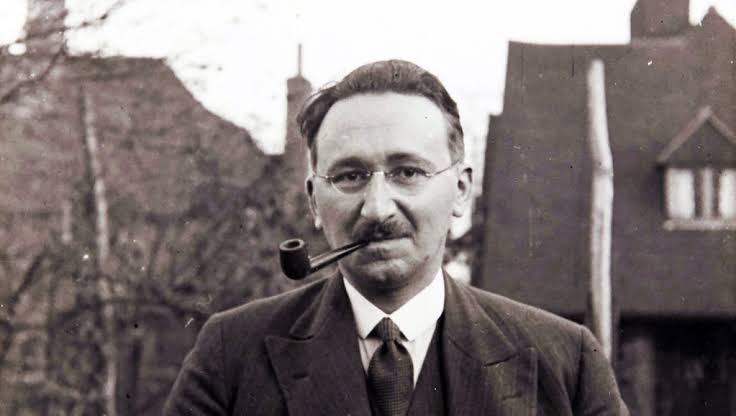
F.A. Hayek, in his seminal works such as The Use of Knowledge in Society (1945), refuted this by arguing that no central planner could possibly possess the dispersed, tacit knowledge held by individuals across society. Hayek emphasized that prices in a market economy are not mere numbers but dynamic signals that aggregate and communicate localized information about needs, preferences, and resource scarcities. For instance, a rising price for lumber signals increased demand or limited supply, prompting producers and consumers to adjust without any single authority needing to understand the full context of every transaction.
Hayek’s insight directly challenges Marx’s centralized model by demonstrating that the spontaneous coordination enabled by market prices surpasses the capabilities of any planner, expert, or algorithm. Prices encapsulate fragmented knowledge—such as a farmer’s awareness of crop yields or a manufacturer’s grasp of production costs—that no central authority could fully replicate. By enabling individuals to act on this dispersed information, markets achieve efficient resource allocation without requiring a comprehensive plan, rendering Marx’s vision of centralized control not only impractical but fundamentally incapable of matching the adaptive complexity of a price-driven economy.
This checklist arms readers to dissect vague “woke” claims with evidence and reason, countering the polysemic manipulation of terms like DEI (Diversity, Equity, Inclusion), diversity, inclusion, safe spaces, and kindness. It refines my critique of Philosophy Professor Letitia Meynell’s essay, “How to talk about political correctness and wokeness without falling into a trap” (https://theconversation.com/how-to-talk-about-political-correctness-and-wokeness-without-falling-into-a-trap-227412), which advocates dialogue but overlooks “woke” rhetoric’s deliberate ambiguity. Similar oversights appear in works like Robin DiAngelo’s White Fragility, which assume systemic harm without proof. By exposing the Motte and Bailey strategy—illustrated with dual examples—and proposing an evidence-based alternative to the Marxist oppressor/oppressed lens, this checklist ensures rigorous, unifying discourse. Each criterion includes diverse references and, where relevant, Meynell’s quotes for standalone clarity.
1. Definitional Clarity: Is the Term or Claim Clearly Defined?
- Rationale: “Woke” terms exploit polysemy, shifting meanings to evade scrutiny. Meynell writes, “Typically, ‘wokeness’ and ‘woke ideology’ are terms of abuse, used against a variety of practices that, despite their diversity, have a similar character.” Her vagueness allows “woke” to glide between empathy and coercion, a common tactic.
- Evaluation Questions:
- Does the claim define terms (e.g., “diversity,” “safe space”) explicitly in context?
- Is the term’s usage consistent, or does it shift between benign and prescriptive senses?
- Can the proponent articulate boundaries (e.g., what constitutes “inclusion”)?
- Action: Demand a concrete definition and test its consistency. If meanings shift, flag the ambiguity as a rhetorical dodge.
- References:
- Haidt, J., & Twenge, J. (2021). The Coddling of the American Mind. Penguin Books. (Critiques vague “safety” rhetoric.)
- McWhorter, J. (2021). Woke Racism: How a New Religion Has Betrayed Black America. Portfolio. (Analyzes DEI polysemy.)
2. Evidence of Harm: Is the Claimed Harm Substantiated?
- Rationale: Meynell asserts, “The practice implicitly endorses or maintains unjust or otherwise pernicious attitudes about the group that facilitate discrimination and various other harms against them.” She assumes systemic harm without evidence, a frequent “woke” flaw. Authentic claims require data, not anecdotes.
- Evaluation Questions:
- Is there data (e.g., studies, statistics) linking the practice to measurable harm (e.g., disparities)?
- Does the claim rely on subjective offense or unproven systemic bias?
- Are alternative explanations (e.g., socioeconomic factors) considered?
- Action: Require quantitative or qualitative evidence. If absent, challenge the claim’s validity.
- References:
- Oswald, F. L., et al. (2013). Predicting ethnic and racial discrimination: A meta-analysis of IAT criterion studies. Journal of Personality and Social Psychology, 105(2), 171–192. (Questions implicit bias impact.)
- Sunstein, C. R. (2019). Conformity: The Power of Social Influences. NYU Press. (Examines weak links between norms and harm.)
3. Contextual Appropriateness: Is the Intervention Proportionate?
- Rationale: Meynell’s example—calling out an antisemitic slur—is clear, but many interventions overreach. She writes, “Real effort is required to learn to see injustices that are embedded in our ordinary language and everyday practices.” Context matters; blanket prescriptions stifle discourse.
- Evaluation Questions:
- Does the intervention match the harm’s severity (e.g., education vs. punishment)?
- Is the practice’s context (e.g., intent, norms) considered?
- Does the intervention risk chilling free expression?
- Action: Assess proportionality. Propose context-sensitive alternatives.
- References:
- Lukianoff, G., & Haidt, J. (2018). The Coddling of the American Mind. Penguin Books. (Critiques overprotective policies.)
- Volokh, E. (2021). The First Amendment and Cancel Culture. Harvard Journal of Law & Public Policy, 44(3), 689–702. (Analyzes speech restrictions.)
4. Reciprocity in Dialogue: Does the Proponent Engage Critically?
- Rationale: Meynell urges critics to “make a sincere attempt to understand the woke intervenor’s perspective,” but spares advocates scrutiny. Dialogue requires both sides to justify claims, not dismiss dissent as “nasty.”
- Evaluation Questions:
- Does the proponent provide evidence or rely on moral assertions?
- Are they open to counterarguments or label dissenters ignorant?
- Do they acknowledge opposing views’ validity?
- Action: Pose evidence-based challenges. Note deflections as non-reciprocal.
- References:
- Rauch, J. (2021). The Constitution of Knowledge: A Defense of Truth. Brookings Institution Press. (Advocates open discourse.)
- Murray, D. (2022). The War on the West. HarperCollins. (Critiques one-sided moralizing.)
5. Motte and Bailey Detection: Is the Claim Defensible or Overreaching?
- Rationale: The Motte and Bailey strategy defends innocuous ideals (motte) to justify contentious policies (bailey). For example, in 2020, “inclusion” (motte) defended deplatforming speakers (bailey) at universities, deflecting censorship concerns by retreating to “protecting marginalized groups.” Similarly, “kindness” (motte) justifies speech codes (bailey), dodging free speech critiques.
- Evaluation Questions:
- Does the claim pivot from a benign principle (e.g., “kindness”) to a prescriptive mandate (e.g., speech restrictions)?
- Is the motte (empathy, fairness) separable from the bailey (coercion)?
- Can the proponent defend the bailey without retreating to the motte?
- Action: Identify motte and bailey. Challenge the bailey’s logic and evidence.
- References:
- Shackel, N. (2005). The Vacuity of Postmodernist Methodology. Metaphilosophy, 36(3), 295–320. (Defines Motte and Bailey.)
- Pluckrose, H., & Lindsay, J. (2020). Cynical Theories. Pitchstone Publishing. (Analyzes “woke” rhetoric.)
6. Impact on Unity: Does the Claim Foster Cohesion or Division?
- Rationale: Meynell’s vision of “a more just and peaceful society” ignores how “woke” claims vilify dissenters, fracturing communities. Prioritizing group identities (e.g., via DEI quotas) over individual merit exacerbates division. A 2021 Cato Institute survey found 66% of Americans fear expressing views due to social repercussions.
- Evaluation Questions:
- Does the claim promote mutual understanding or alienate groups?
- Are dissenters labeled harmful without evidence?
- Does the intervention prioritize ideology over common ground?
- Action: Evaluate social impact. Propose alternatives emphasizing shared values.
- References:
- Cato Institute. (2021). National Survey: Americans’ Free Speech Concerns. cato.org. (Quantifies social fear.)
- Twenge, J. M. (2023). Generations: The Real Differences Between Gen Z, Millennials, Gen X, Boomers, and Silents. Atria Books. (Discusses polarization.)
7. Alternative Truth-Seeking Framework: Is the Claim Grounded in Objective Reality?
- Rationale: “Woke” claims often use a Marxist oppressor/oppressed lens, framing issues as power struggles without evidence. An alternative prioritizes objective reality via falsifiable data and universal principles (e.g., merit). For example, to evaluate gender pay gaps, regression analysis of education, experience, and hours worked can reveal causes beyond systemic sexism.
- Evaluation Questions:
- Does the claim rely on a binary oppressor/oppressed model or multifactorial causes?
- Are truth claims supported by falsifiable data (e.g., statistical analyses)?
- Does the framework allow universal principles over group narratives?
- Action: Challenge unempirical claims. Propose analyses rooted in objective metrics.
- References:
- Sowell, T. (2020). Charter Schools and Their Enemies. Basic Books. (Challenges systemic racism narratives with data.)
- Popper, K. (2002). The Logic of Scientific Discovery. Routledge. (Advocates falsifiability.)
8. Application to Key “Woke” Domains
- DEI:
- Check polysemy: Does “equity” mean equal opportunity or outcomes? Demand data on outcomes (e.g., hiring gaps).
- References: McWhorter (2021); Sowell (2020).
- Safe Spaces:
- Assess if “safety” means physical protection or ideological conformity. Challenge speech-limiting policies.
- References: Lukianoff & Haidt (2018); Volokh (2021).
- Kindness:
- Distinguish empathy from performative mandates. Question “kindness” that suppresses critique.
- References: Pluckrose & Lindsay (2020); Rauch (2021).
Summary Table: Key Criteria for Evaluating “Woke” Claims
| Criterion | Core Question |
|---|---|
| Definitional Clarity | Is the term (e.g., “diversity”) clearly defined and consistent? |
| Evidence of Harm | Is the claimed harm backed by data, not just anecdotes? |
| Contextual Appropriateness | Is the intervention proportionate to the issue’s context? |
| Reciprocity in Dialogue | Does the proponent engage critically with counterarguments? |
| Motte and Bailey Detection | Does the claim shift from benign ideals to contentious policies? |
| Impact on Unity | Does the claim foster cohesion or alienate groups? |
| Truth-Seeking Framework | Is the claim grounded in falsifiable data and objective reality? |
Conclusion
This checklist dismantles “woke” polysemy by demanding clarity, evidence, and reciprocity. It exposes the Motte and Bailey trap and counters Meynell’s oversight in assuming systemic harm, a flaw echoed in broader “woke” apologetics. By grounding discourse in objective reality over Marxist binaries, it fosters a just, unified society. Clarity is the antidote to ideological overreach.
Bibliography
Below is a bibliography for the references cited in the “Checklist for Evaluating ‘Woke’ Claims,” formatted in APA style with URLs where available.
- Banaji, M. R., & Greenwald, A. G. (2013). Blindspot: Hidden Biases of Good People. Delacorte Press.
- Cato Institute. (2021). National Survey: Americans’ Free Speech Concerns. Cato Institute. https://www.cato.org/publications/survey-reports/national-survey-americans-free-speech-concerns
- Haidt, J., & Twenge, J. (2021). The Coddling of the American Mind. Penguin Books. https://www.penguinrandomhouse.com/books/562756/the-coddling-of-the-american-mind-by-greg-lukianoff-and-jonathan-haidt/
- Lukianoff, G., & Haidt, J. (2018). The Coddling of the American Mind. Penguin Books. https://www.penguinrandomhouse.com/books/562756/the-coddling-of-the-american-mind-by-greg-lukianoff-and-jonathan-haidt/
- McWhorter, J. (2021). Woke Racism: How a New Religion Has Betrayed Black America. Portfolio. https://www.penguinrandomhouse.com/books/670138/woke-racism-by-john-mcwhorter/
- Murray, D. (2022). The War on the West. HarperCollins. https://www.harpercollins.com/products/the-war-on-the-west-douglas-murray
- Oswald, F. L., Mitchell, G., Blanton, H., Jaccard, J., & Tetlock, P. E. (2013). Predicting ethnic and racial discrimination: A meta-analysis of IAT criterion studies. Journal of Personality and Social Psychology, 105(2), 171–192. https://doi.org/10.1037/a0032734
- Pluckrose, H., & Lindsay, J. (2020). Cynical Theories. Pitchstone Publishing. https://www.pitchstonepublishing.com/shop/cynical-theories
- Popper, K. (2002). The Logic of Scientific Discovery. Routledge. https://www.routledge.com/The-Logic-of-Scientific-Discovery/Popper/p/book/9780415278447
- Rauch, J. (2021). The Constitution of Knowledge: A Defense of Truth. Brookings Institution Press. https://www.brookings.edu/book/the-constitution-of-knowledge/
- Shackel, N. (2005). The vacuity of postmodernist methodology. Metaphilosophy, 36(3), 295–320. https://doi.org/10.1111/j.1467-9973.2005.00380.x
- Sowell, T. (2020). Charter Schools and Their Enemies. Basic Books. https://www.basicbooks.com/titles/thomas-sowell/charter-schools-and-their-enemies/9781541675131/
- Sunstein, C. R. (2019). Conformity: The Power of Social Influences. NYU Press. https://nyupress.org/9781479867837/conformity/
- Twenge, J. M. (2023). Generations: The Real Differences Between Gen Z, Millennials, Gen X, Boomers, and Silents. Atria Books. https://www.simonandschuster.com/books/Generations/Jean-M-Twenge/9781982181611
- Volokh, E. (2021). The First Amendment and cancel culture. Harvard Journal of Law & Public Policy, 44(3), 689–702. https://www.harvard-jlpp.com/wp-content/uploads/sites/21/2021/09/Volokh-Final.pdf
In recent years, we’ve seen protests that aren’t just peaceful marches but also aren’t as extreme as riots or wars. These actions are often called “mid-level violence.” Groups like activists and Antifa—a loosely organized movement against fascism—use them to fight what they see as unfair systems or dangerous ideas. This primer will explain what mid-level violence is, how it works, and why it can be both helpful and tricky.
What Is Mid-Level Violence and How Is It Used?
Mid-level violence is more intense than peaceful protests but less destructive than full-scale chaos. Think of actions like breaking windows, clashing with opponents in the street, or disrupting events. These groups use it to show they’re serious about their cause, whether it’s stopping oppression or challenging authority.
To make it work, they use specific tactics:
- Black umbrellas: Protesters hold these up to hide their faces from cameras, so police can’t easily identify them.
- Noisemakers: Loud horns or drums create confusion, overwhelming police or opponents.
- Filming confrontations: They record everything with their phones, especially if police or others react in a way that looks bad, to share their side of the story.
These tools help them push their message and protect themselves while doing it.
Why Does It Work Best With a Low-Information Audience?
These tactics are most effective when people don’t know the full story. Imagine you see a short video online of police pushing protesters. It might make you think the police are wrong—unless you saw what happened earlier, like protesters throwing things. This is called a “low-information audience”—people who only get a small piece of the puzzle.
Social media makes this even stronger. Videos spread fast, and people react before digging deeper. A clip that looks dramatic can get tons of attention, shaping opinions without showing the whole picture.
What Are the Risks?
While mid-level violence can grab attention and rally support, it has downsides. It can scare off people who aren’t sure where they stand—sometimes called “moderates.” If all they see is chaos, they might turn away from the cause. It can also make society more divided, as groups stop talking and start fighting instead. So, while it’s a powerful tool, it can backfire and make things harder to fix.
Why Understanding This Matters
Knowing how mid-level violence works helps us make sense of today’s protests. It reminds us to look past quick videos and find the full story. By doing that, we can figure out what’s really going on and work toward solutions that bring people together, not push them apart.

As a parent, you want your child’s education to focus on facts, skills, and values that prepare them for life. But in some classrooms, teachers are introducing queer theory—a radical ideology that challenges traditional norms about gender, sexuality, and society. This guide will help you understand what’s happening, why it’s a problem, and how you can take action to protect your child.
What Is the “Motte and Bailey” Tactic?
Imagine a castle with a strong, defensible tower (the “motte”) and a large, less defensible courtyard (the “bailey”). The motte and bailey tactic is a trick where someone makes a bold, controversial claim (the bailey) but, when challenged, retreats to a safer, less controversial claim (the motte). In education, this looks like:
- The Bailey (bold claim): Teachers say they’re “queering the curriculum” to challenge norms and promote radical ideas about gender and sexuality.
- The Motte (safe claim): When parents object, teachers retreat to saying they’re just being “inclusive” or “teaching diversity.”
This tactic makes it hard to argue against without seeming like you’re against inclusion. But inclusion and queerness are not the same thing, and it’s important to know the difference.
Key Terms You Need to Know
- Inclusivity: Making sure all students feel welcome and respected, regardless of their background (e.g., race, religion, disability). True inclusivity is about kindness and fairness, not ideology.
- Queer: Originally a slur, this term has been reclaimed by some to describe non-traditional sexual orientations or gender identities. In education, it often means challenging or rejecting societal norms.
- Queering the Curriculum: This means adding queer theory to lessons. Queer theory isn’t just about acceptance—it’s about questioning and destabilizing what’s considered “normal” (e.g., traditional family structures, biological sex). In elementary schools, this can confuse young children who need clear, factual learning.
Coercive and Deceptive Tactics Used in Schools
Some teachers push queer theory while dismissing parents’ concerns. Here are the main tactics they use:
- Hiding Behind “Inclusivity”: Teachers claim they’re just being inclusive, but they’re actually promoting queer ideology. For example, they might say they’re “teaching inclusively” to make it sound harmless, even though they’re introducing complex ideas about gender and sexuality.
- Using Critical Theory: Teachers use methods like critical literacy, which encourages students to question power and norms. This might sound educational, but it’s often a way to push activism instead of facts—too advanced and ideological for young kids.
- Ignoring Parents: When parents object, teachers might offer small compromises (like letting a child skip a lesson) but won’t change the overall curriculum. They dismiss concerns as unimportant or unreasonable.
- Leveraging Policy: Teachers use school rules or laws to defend their actions, even if parents disagree. This makes parents feel like they have no say.
These tactics are coercive because they force queer ideology into classrooms while sidelining parents. They’re deceptive because they hide behind feel-good words like “inclusivity” to avoid real discussion.
Why This Is a Problem
- It’s Not Age-Appropriate: Elementary students need to focus on basics like reading and math, not complex ideas about gender and sexuality.
- It Undermines Parental Authority: Parents should have a say in what their kids learn. Ignoring you breaks that trust.
- It Confuses Children: Challenging basic truths (like boys and girls) can unsettle young kids who need stability.
- It’s Activism, Not Education: Schools should teach facts, not push political ideas.
What Parents Can Do to Stop It
You have the power to protect your child’s education. Here’s how:
- Educate Yourself:
- Learn what queer theory is and how it’s used in schools. Look up articles or videos online.
- Ask for your school’s curriculum details—lesson plans, books, anything they’re teaching.
- Talk to Teachers:
- Ask clear questions: “What are you teaching about gender or sexuality? Why is this in the curriculum?”
- Stay calm but firm: “I’m all for kindness, but I’m worried about ideology in the classroom.”
- Engage with School Boards:
- Go to meetings and speak up. Bring examples of what’s being taught.
- Suggest focusing on core skills instead of controversial topics.
- Form Parent Groups:
- Team up with other parents who feel the same way.
- Share info and plan together—maybe write a group letter to the school.
- Monitor What Your Child Learns:
- Talk to your kid about their day. Check their homework or classwork.
- If something seems off, write it down and raise it with the teacher.
- Use Legal Resources:
- If the school won’t listen, talk to a lawyer who knows education law.
- Look up your state’s rules on parental rights.
- Advocate for Policy Changes:
- Push for rules that let parents approve or get notified about sensitive topics.
- Back school board members who care about parents’ voices.
- Consider Alternatives:
- If the school won’t budge, look into private schools or homeschooling.
- Find options that match your values and focus on real learning.
Final Thoughts
You’re your child’s best defender. Don’t let schools brush you off or confuse you with buzzwords. Demand clear answers and a focus on age-appropriate, fact-based education. By staying informed and active, you can keep your child’s classroom a place for learning—not ideology.

Philosophy Professor Letitia Meynell in this portion of an essay postulates how we need to deal with ‘woke’ in our society. I read the essay and found that it misses one of the key aspects of ‘woke’ and that is the use of polysemy to confuse the meanings of words and terms. Let’s read her essay together and then propose a some counters to her arguments. A long read, but it is necessary to see how ‘woke’ works in the wild and what you can do to counter it.
“A few years ago, there was considerable anxiety in some quarters about “political correctness,” particularly at universities. Now it’s known as wokeness, and even though the terminology has changed, the concerns are much the same.
Some years ago, I offered an analysis of political correctness that equally pertains to wokeness today. What interests me are ways to think about and discuss political correctness/wokeness so as to avoid polarizing polemics and increase mutual understanding.
The goal is to help us all envision and create a more just and peaceful society by talking with each other rather than talking past each other.
‘Woke interventions’
Typically, “wokeness” and “woke ideology” are terms of abuse, used against a variety of practices that, despite their diversity, have a similar character. Often, what is dismissed as “woke” is a new practice that is recommended, requested, enacted or enforced as a replacement for an old one.
These practices range from changing the names of streets, institutions and buildings to determining who reads to pre-school children in libraries and altering the words we use in polite conversation.
When a practice is identified as “woke,” there is an implication that the non-woke practice is better or at least equally good. Thus the dismissal of something as “woke” is an endorsement of some alternative.
If we stop there, all we will see is a power struggle between progressive and conservative values. To dig deeper, I am going to share a particular case of calling out, or language policing, as an example of wokeness.
This incident happened to a Jewish friend of mine when we were students. She was directing a play about the Holocaust and, during auditions, a young woman casually used the word “Jew” to mean cheat. When my friend challenged this, the young woman asserted that it wasn’t offensive; it was just the way people from her town talked.
In the wrong
I use this example because I think it’s clear this young woman was in the wrong. My friend wasn’t being overly sensitive and was right to call her out.
But this example is also useful because it’s fairly typical of cases where someone attempts a “woke intervention” and it’s rejected — someone follows a practice that is common in their community, a “woke” intervenor calls it out, and the person responds not with an apology or even a question, but with outright dismissal.
Often, such responses come with an explicit criticism that the “woke” intervenor is over-sensitive, irrational or controlling. Sometimes, the original speaker claims victimization at being targeted, ironically displaying the hypersensitivity often attributed to people described as woke.
Three claims
In thinking about this and similar situations, it strikes me that woke interventions tend to share the same kinds of motivations. They boil down to the following three claims about the targeted practice that justify the woke intervention:
- The practice is offensive to the members of a group to which it pertains;
- The practice implies something that is false about this group and reflects and reinforces this inaccuracy;
- The practice implicitly endorses or maintains unjust or otherwise pernicious attitudes about the group that facilitate discrimination and various other harms against them.
So, in my friend’s case, she was right to call out this young woman, who had insulted her to her face and implied something about the Jewish community that is not only false but dangerously and perniciously antisemitic.
Now, in any particular instance, it is an open question whether, in fact, a specific term or practice is offensive, inaccurate or facilitates discrimination. This is where the difficult work starts.
Real effort is required to learn to see injustices that are embedded in our ordinary language and everyday practices.
Social psychological work on implicit biases suggests that good intentions and heartfelt commitments are not enough. It takes integrity and courage to critically examine our own behaviour and engage in honest conversations with people who claim we have hurt them.
However, once we recognize what’s at stake, to dismiss something as woke is a refusal to even consider the possibility that the targeted practice might be offensive, premised on false or inaccurate claims or discriminatory or harmful.
Defensiveness
Often such refusals are grounded in defensiveness and embarrassment. I suspect many of us can recognize the young woman’s sense of shock, hurt and denial at being called out for her behaviour.
But for those who disagree with a woke intervention, the right response is not glib dismissal or bombastic accusations of “being cancelled.”
Rather — after a sincere attempt to understand the woke intervenor’s perspective and consider the relevant facts — the right response is a respectful, tempered explanation of why they believe their remarks or actions were neither premised on false claims nor discriminatory. An apology may be in order. After all, at the very least, one has inadvertently insulted someone.
If my analysis is correct, we can now see why the knee-jerk dismissal of something as “woke” is so nasty; it amounts to a self-righteous choice not only to insult or denigrate others but to protect one’s ignorance and support injustice.
Unless we learn to talk with each other rather than past each other, it’s difficult to see how we can ever achieve peace on Earth or truly show our good will to each other.”
Refuting Wokeness: Clarity Over Obfuscation
Introduction: The Polysemy Trap
Philosophy Professor Letitia Meynell, in her essay on navigating “wokeness,” seeks to foster dialogue about contentious social practices. Yet her analysis falters by overlooking a critical feature of “woke”: its polysemy, which obscures meaning and confounds discourse. The activist Left often deploys poorly defined terms, resisting crystallization into cohesive arguments. This ambiguity is deliberate, enabling the Motte and Bailey strategy—where “woke” advocates defend controversial policies under the guise of innocuous ideals. For supporters, “woke” connotes kindness, empathy, and social awareness; in practice, it can manifest as discrimination against perceived “oppressor” groups. Meynell’s failure to grapple with this duality undermines her vision of mutual understanding, necessitating a sharper critique.
Engaging Meynell’s Core Claims
Meynell posits that “woke interventions” target practices deemed offensive, false, or discriminatory, citing an antisemitic slur used casually during a play audition as a clear case of harm. Her framework, at its strongest, is not a dogmatic defense of all interventions but a call to assess practices critically: might they offend a group, misrepresent them, or perpetuate unjust attitudes? She urges critics to engage intervenors’ perspectives before dismissing their concerns, a reasonable plea for open-mindedness rooted in social psychological research on implicit biases.
Yet this approach stumbles on two counts. First, it ignores the polysemy of “woke,” which allows advocates to glide between benign ideals and coercive measures. A call for inclusive language (the motte) can escalate into punitive actions (the bailey), as seen in the 2018 case of a University of Michigan professor disciplined for refusing to use preferred pronouns, despite no evidence of discriminatory intent. Meynell’s essay elides this slippage, presenting interventions as primarily corrective. Second, her reliance on subjective offense risks overreach. While the antisemitic slur is unequivocally harmful, many “woke” targets—debates over cultural appropriation or microaggressions—hinge on context and interpretation. Absent clear criteria for harm, interventions can stifle discourse, a tension Meynell underestimates.
The Unproven Premise of Systemic Harm
Meynell’s most compelling claim is that “woke interventions” address practices that “implicitly endorse or maintain unjust attitudes,” facilitating discrimination. She invokes implicit bias research to argue that good intentions cannot preclude harm—a point with merit, as biases can operate unconsciously. Yet she assumes systemic harm as axiomatic, demanding critics disprove it rather than requiring proponents to prove it. Research on implicit bias, like the Implicit Association Test (IAT), faces scrutiny for weak predictive validity in real-world behavior (Oswald et al., 2013). Correlation is not causation; asserting that everyday practices inherently perpetuate discrimination requires evidence—say, data linking specific language to measurable disparities. By sidestepping this rigor, Meynell inverts rational inquiry, undermining her call for “honest conversations.”
The Motte and Bailey’s Polarizing Effect
The polysemy of “woke” fuels a rhetorical sleight-of-hand: the Motte and Bailey strategy. In the motte, “woke” is empathy—uplifting the marginalized, fostering inclusion. In the bailey, it justifies policies that alienate or vilify, often without substantiating harm. Consider the 2020 backlash against J.K. Rowling, labeled “transphobic” for questioning gender ideology, despite her nuanced arguments. Such interventions, cloaked in moral righteousness, suppress debate. Meynell’s essay endorses the motte, ignoring the bailey’s divisive impact. A 2021 Cato Institute survey found 66% of Americans fear expressing political views due to social repercussions, suggesting “woke” practices can fracture rather than unite. Polysemy exacerbates this: without shared definitions, dialogue devolves into mutual incomprehension—a debacle Meynell’s framework fails to address.
A Path to True Dialogue
Meynell’s vision of dialogue is laudable but lopsided. She rightly urges critics to consider intervenors’ perspectives, yet spares advocates the same scrutiny. True dialogue demands reciprocity: proponents must substantiate harm with evidence—statistical impacts, not anecdotal offense—while critics must articulate principled objections, such as free speech or empirical skepticism. Meynell’s call for critics to offer “tempered explanations” or apologies assumes intervenors’ claims are prima facie valid, tilting the scales. Dismissing dissent as “nasty” or “self-righteous” poisons discourse, as does the polysemic dodge that shields “woke” policies from critique. A just society requires evidence-based debate: terms defined, assumptions tested, ambiguity exposed.
Conclusion
Meynell’s essay, at its core, aspires to bridge divides through reflection on social practices. Yet it falters by ignoring the polysemy of “woke” and presuming systemic harm without proof. Her prescriptive tone—demanding critics justify dissent while excusing advocates’ vagueness—corrodes the mutual understanding she champions. By dismantling the Motte and Bailey tactic and grounding discourse in evidence, we can forge a society that is both just and cohesive. Clarity, not obfuscation, is the path forward.
References
- Oswald, F. L., Mitchell, G., Blanton, H., Jaccard, J., & Tetlock, P. E. (2013). Predicting ethnic and racial discrimination: A meta-analysis of IAT criterion studies. Journal of Personality and Social Psychology, 105(2), 171–192.
- Cato Institute. (2021). National Survey: Americans’ Free Speech Concerns. Retrieved from cato.org.











 bleatmop
 Mystro


 Dead Wild Roses
Your opinions…