
You are currently browsing the category archive for the ‘Education’ category.
An Alternate Theory Worker Exploitation under Capitalism.
Karl Marx argued that capitalists exploit workers by appropriating the surplus value generated by labor, framing profit as the result of systemic theft within the production process. In Marx’s view, capitalists accumulate wealth by paying workers less than the value their labor produces, perpetuating class conflict and portraying profit as inherently unjust. This perspective casts capitalists as parasitic, extracting wealth without contributing equivalent value to the economic system.
Eugen Böhm-Bawerk, a prominent Austrian economist, countered this narrative with his theory of time preference, articulated in works like Capital and Interest (1884). He posited that individuals naturally prefer present goods over future goods, meaning workers value immediate wages over delayed returns. Capitalists, by contrast, provide those wages upfront, investing capital and bearing the uncertainty of future profits. This exchange is not exploitative but a mutually beneficial arrangement where workers receive immediate income, while capitalists assume the risk and delay gratification, hoping their investments yield returns over time.
Böhm-Bawerk’s framework refutes Marx by redefining profit as compensation for time, risk, and strategic planning, rather than exploitation. Capitalists undertake the burden of forgoing present consumption, managing resources, and navigating market uncertainties. Their profit, when realized, reflects the value of their foresight and willingness to wait, not the theft of labor’s output. This perspective shifts the economic narrative from class struggle to a cooperative process where both workers and capitalists fulfill distinct, voluntary roles based on their preferences and economic realities.

Marx’s Theory of Value Refuted.
Karl Marx posited that the value of a commodity is derived from the labor expended in its production, anchoring value in the objective measure of labor time. This labor theory of value underpinned Marx’s economic framework, tying value to the collective effort of workers and framing economic systems as driven by class dynamics and exploitation. Marx’s perspective suggested that the intrinsic worth of goods is measurable through the labor they embody, irrespective of individual perceptions or desires.
In contrast, Carl Menger, a founder of the Austrian School, argued in his seminal work, Principles of Economics (1871), that value originates from individual subjective preferences, not labor. Menger’s theory of subjective value asserts that the worth of a good is determined by the utility it provides to an individual, which varies based on personal needs, circumstances, and scarcity. For instance, a violin holds immense value to a musician who cherishes its utility, yet it may be worthless to someone indifferent to music. Similarly, food is far more valuable to a starving person than to someone satiated, illustrating that value is not fixed but contingent on human desires and context.
Menger’s emphasis on subjective valuation directly refutes Marx’s labor-centric model by demonstrating that labor alone does not dictate a good’s worth. Instead, value emerges from the interplay of individual needs and the marginal utility of goods—how much additional satisfaction a person gains from consuming one more unit. This insight shifts the focus from collective labor to individual choice, undermining Marx’s framework by highlighting that economic value is a dynamic, human-driven phenomenon, shaped by personal priorities rather than an objective labor metric.
Reading long threads on X sucks, so I asked Grok to combine a great threat into an “essential read” essay on what is happening in California.

The recent riots in Los Angeles, as depicted in a post by Wokal Distance on X (dated June 9, 2025), reveal a level of organization that challenges the notion of spontaneous public unrest. The accompanying images show protesters strategically using barricades made from traffic cones and benches, suggesting premeditated planning rather than an impromptu reaction to the Immigration and Customs Enforcement (ICE) raids. Wokal Distance argues that these riots are “designed to look chaotic to cover up the fact that they’re well funded, exceptionally organized, and carried out by well-trained activists using intelligent, highly developed tactics.” This perspective is supported by the visible preparation, including the distribution of shields and the use of coordinated tactics, which indicate a structured effort rather than a random outburst of anger.
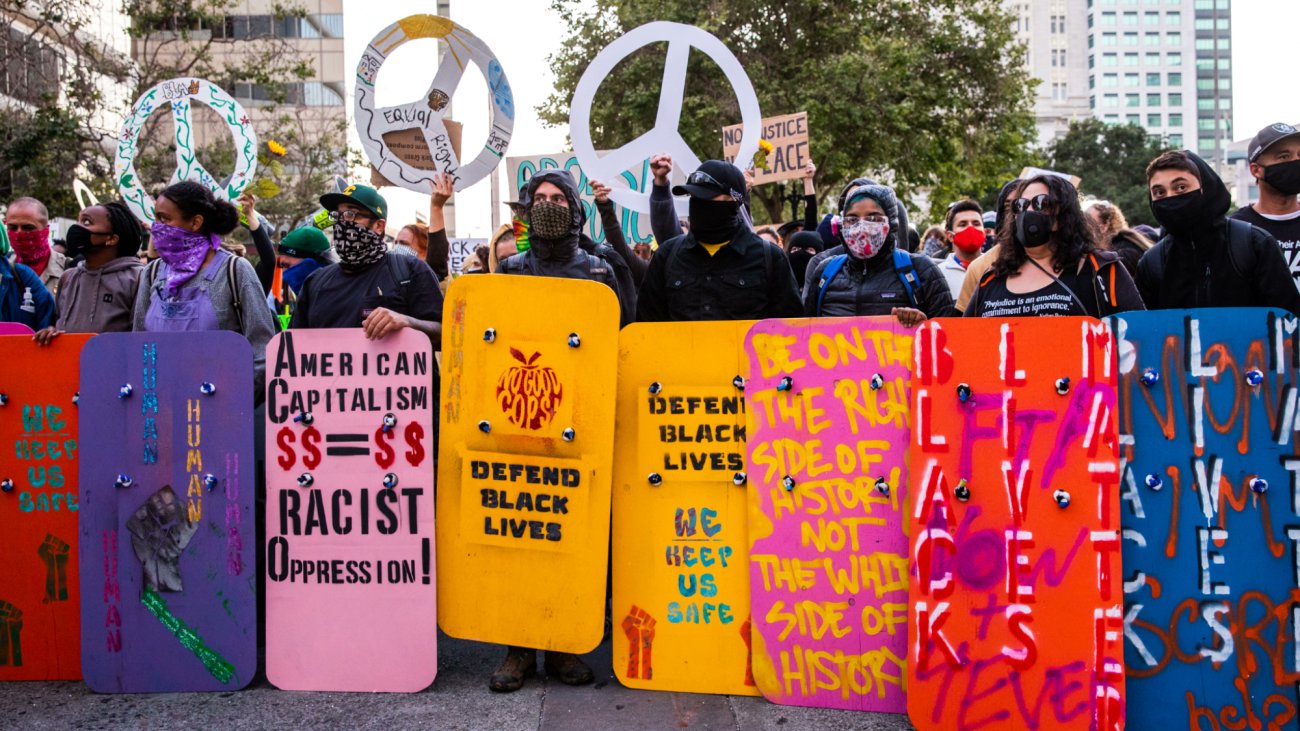
The tactical use of shields, as highlighted in the post, further underscores the organized nature of these protests. The images reveal protesters equipped with plywood shields disguised as cardboard signs, a method previously employed during the 2020 Black Lives Matter protests and the 2024 pro-Hamas riots. Wokal Distance notes that crafting each shield requires approximately three hours, a process that involves activists dedicating entire days to preparation. This level of commitment and resource allocation points to a well-funded operation, possibly linked to broader activist networks. The presence of a Home Depot bucket in the imagery suggests a centralized supply chain, reinforcing the idea that these materials are systematically distributed to participants, a tactic also observed in past organized protests.
Beyond physical preparation, the riots employ sophisticated strategies aimed at manipulating public perception and pressuring authorities. Wokal Distance outlines a “decision dilemma” tactic, where protesters create situations—such as blocking roads with barricades—that force authorities into no-win scenarios, regardless of their response. This is complemented by the “real action is your target’s reaction” approach, where any overreaction by police is leveraged to portray protesters as sympathetic underdogs. The inclusion of a baby in the protest, as mentioned, serves as a calculated move to heighten this sympathy, placing law enforcement in an impossible position where any use of force could be spun as an attack on the vulnerable. These tactics are designed to play to an external audience, shaping the narrative through media coverage and social platforms.
The theoretical foundation for these strategies, as explained by Wokal Distance, draws from radical academic works and activist training manuals, such as “Beautiful Trouble.” This book, co-authored by individuals with whom Wokal Distance has personal experience, provides a blueprint for using violence and disruption to gain political leverage. The post references historical examples, like the 2000 Summit of the Americas protests with their color-coded zones (Green, Yellow, Red) for varying levels of action, illustrating a long-standing tradition of planned escalation. This intellectual backing, combined with the practical execution seen in Los Angeles, suggests a movement informed by decades of activist theory and real-world application.
In conclusion, the Los Angeles riots, as analyzed by Wokal Distance, are far from spontaneous; they are a meticulously orchestrated campaign with roots in both funding and ideology. The involvement of well-trained activists, the use of pre-fabricated tools, and the application of strategic theories highlight a concerted effort to influence political outcomes. While the immediate trigger may be the ICE raids, the deeper structure points to broader networks, potentially involving figures like Neville Singham, as suggested in related threads by @DataRepublican. As the situation unfolds, understanding these dynamics is crucial for crafting an effective response that avoids the traps set by these calculated tactics.
**Reference:** Wokal Distance. (2025, June 9). [Post on X]. https://x.com/wokal_distance/status/1931953269775188449
 il
il
The Alberta government’s recent initiative to establish provincewide standards for school library materials, announced on May 26, 2025, underscores the critical role of parental input in ensuring that educational resources align with community values and developmental needs. The online survey, open until June 6, 2025, seeks feedback from Albertans to create consistent guidelines for selecting age-appropriate materials, particularly addressing concerns about sexually explicit content in K-12 school libraries. Parental involvement is essential because parents, as primary caregivers, have a vested interest in their children’s moral and intellectual development. They possess unique insights into their children’s emotional and psychological readiness, which standardized systems may overlook. By involving parents, the government ensures that library materials reflect the values and expectations of the families they serve, fostering trust and transparency in the education system. As Education Minister Demetrios Nicolaides emphasized, the goal is to create “guardrails” to protect students from accessing inappropriate content, such as graphic novels containing explicit depictions of sexual acts, molestation, or self-harm, which were found in some Edmonton and Calgary school libraries.
Ensuring age-appropriate materials in school libraries is paramount to safeguarding children’s well-being and supporting their developmental stages. Young students, particularly in elementary and junior high schools, are at formative stages where exposure to graphic content—such as nudity, explicit sexual acts, or themes of molestation—can be confusing or harmful. The Alberta government’s survey highlights specific concerns about four graphic novels, including Gender Queer by Maia Kobabe and Fun Home by Alison Bechdel, which contain explicit content deemed inappropriate for K-9 students. Age-appropriate materials should align with cognitive and emotional maturity, providing resources that educate without overwhelming or exposing children to mature themes prematurely. School libraries must balance fostering a love for reading with ensuring content is suitable for the intended age group, as outlined in the government’s call for developmentally appropriate resources to meet diverse student needs. This approach not only protects students but also supports teachers and librarians in curating collections that enhance learning while respecting parental expectations.
Critics often argue that restricting access to certain materials constitutes censorship or a “book ban,” potentially limiting students’ exposure to diverse perspectives, especially on topics like 2SLGBTQ+ identities. This perspective, voiced by the Alberta Teachers’ Association (ATA) and others, suggests that such standards could disproportionately target marginalized communities and stifle students’ ability to see themselves represented in literature. While diversity in literature is important, this argument overlooks the distinction between censorship and age-appropriate curation. The Alberta government explicitly states that the initiative is not about banning books but about establishing consistent standards to ensure materials are suitable for specific age groups. For instance, Nicolaides clarified that content related to 2SLGBTQ+ themes is not the target; the focus is on graphic sexual content, regardless of subject matter. A book on astrophysics with explicit imagery would face the same scrutiny, demonstrating that the policy aims to protect, not exclude. Moreover, existing school board processes, like those in Edmonton and Calgary, already include mechanisms for reviewing content, suggesting that standardized guidelines would enhance, not replace, professional judgment.
Another common counterargument is that restricting access to certain materials could hinder students’ ability to access information about sensitive topics, such as sexual abuse, which may be critical for their safety. Some, including voices on social media, argue that libraries provide a safe space for students to explore topics that parents might not address at home, citing cases where books helped children identify and report abuse. While this concern is valid, it does not negate the need for age-appropriate standards. Libraries can still provide educational resources on sensitive topics, such as body safety or abuse prevention, without including graphic depictions unsuitable for young readers. The government’s survey asks who should determine appropriateness—options include teachers, librarians, parents, or students—indicating a collaborative approach that values professional expertise alongside parental input. By setting clear standards, schools can ensure that resources on critical topics are accessible in a manner that respects developmental readiness, thus maintaining a balance between safety and education.
In conclusion, the Alberta government’s survey on school library materials reflects a commitment to balancing parental input with the need for age-appropriate resources, ensuring that school libraries remain safe and supportive environments for students. By involving parents, the government acknowledges their role in shaping educational content that aligns with community values and protects children from inappropriate material. While critics raise concerns about censorship or restricted access to vital information, these arguments fail to account for the nuanced approach of setting consistent, transparent standards rather than outright bans. The initiative, set to inform policies for the 2025-26 school year, aims to create a framework where professional judgment, parental concerns, and student needs converge. Albertans’ participation in the survey will be crucial in shaping a system that prioritizes both educational freedom and the well-being of young learners.

Read the paper here.
Introduction
The 2016 paper “Glaciers, gender, and science: A feminist glaciology framework for global environmental change research” by Mark Carey, M. Jackson, Alessandro Antonello, and Jaclyn Rushing, published in Progress in Human Geography (Glaciers, gender, and science), introduces a feminist glaciology framework that examines how gender dynamics influence the study of glaciers. The authors propose four components: knowledge producers, gendered science, systems of scientific domination, and alternative representations of glaciers. They argue that glaciers are not just physical entities but are embedded in social, cultural, and political contexts, challenging the notion that “ice is just ice.” While this interdisciplinary approach has sparked interest for its inclusivity, it has also faced significant criticism for claims perceived as unscientific or overly ideological, such as attributing sentience to glaciers or equating artistic representations with scientific knowledge. These claims, often labeled as controversial, have been debated in academic and public spheres, with critics arguing they dilute scientific rigor (National Post). This essay critically examines these claims and refutes them using scientific principles, emphasizing the importance of empirical evidence in glaciological research.
Claim 1: Glaciers as Sentient or Culturally Active
One of the paper’s most striking assertions is the inclusion of indigenous “folk glaciologies,” which suggest glaciers possess agency or sentience, such as narratives from Canada’s Yukon Territory where glaciers are believed to “listen” or be offended by actions like cooking with grease (Cruikshank, 2005). The authors present these beliefs as valid forms of knowledge, challenging the dominance of Western scientific perspectives. While indigenous narratives are valuable for understanding cultural relationships with the environment, they do not align with scientific definitions of sentience. Sentience, in biological terms, refers to the capacity to perceive or feel, typically requiring a nervous system or cognitive structures found in living organisms. Glaciers, composed of compressed snow and ice, are inanimate physical systems governed by physical processes like accumulation and ablation. No empirical evidence supports the idea that glaciers can perceive or respond to human actions in a sentient manner. Conflating cultural beliefs with scientific knowledge risks undermining the objectivity required for studying glacier dynamics, which is critical for addressing climate change. While respecting cultural diversity, science must prioritize testable, reproducible data over spiritual or anecdotal interpretations.
Claim 2: Masculinist Domination in Glaciology
The paper argues that glaciology has been shaped by “masculinist ideologies,” with scientific credibility historically tied to attributes like heroism, risk-taking, and conquest, often associated with masculinity. It cites examples like 19th-century glaciologist John Tyndall, whose mountaineering feats bolstered his scientific reputation, and notes that women comprised less than 20% of authors in major glaciology journals in 2009 (Carey et al., 2016). The authors suggest that these gendered dynamics marginalize alternative knowledge forms. While it is true that science, including glaciology, has historically been male-dominated, the validity of scientific research should be judged by its methodology, data, and conclusions, not the gender of its producers. Modern science strives for objectivity and inclusivity, with significant progress in diversifying STEM fields. For instance, the National Science Foundation’s 2021 report, Women, Minorities, and Persons with Disabilities in Science and Engineering (NSF 2021 Report), indicates that women now earn more bachelor’s and master’s degrees than men across all fields, and their representation in science and engineering has increased, with women earning 27% of doctoral degrees in these fields in 2018. Initiatives like the NSF’s ADVANCE program further promote gender equity in STEM. While acknowledging historical imbalances, the focus should remain on the quality of scientific output, which transcends gender.
Claim 3: Art and Literature as Valid Scientific Knowledge
The paper advocates for incorporating art and literature, such as Katie Paterson’s glacier sound projects or literary works reimagining gender in polar exploration, as legitimate ways of understanding glaciers. These “alternative representations” are presented as enriching glaciological knowledge by emphasizing emotional and cultural dimensions. While art and literature can provide valuable insights into human perceptions of glaciers, they do not meet the standards of scientific inquiry, which relies on systematic observation, experimentation, and reproducibility. For example, scientific studies of glaciers involve measuring ice core data or modeling glacial retreat, which provide quantifiable insights into climate change. Artistic works, while evocative, lack the rigor and verifiability required for scientific conclusions. Critics of the paper, as noted in a 2016 National Post article (Feminist Glaciology Backlash), have called such claims “gibberish” for blurring the lines between science and subjective expression. While art can complement scientific understanding by raising awareness or inspiring action, it should not be equated with the empirical methods needed to address environmental challenges.
Claim 4: Western Science as Colonial and Patriarchal
The authors assert that glaciology is complicit in colonial, imperial, and patriarchal systems, citing examples like Cold War ice core drilling for military purposes. They argue that these systems marginalize non-Western and indigenous knowledge, such as folk glaciologies. While science has historically been influenced by societal power structures, the scientific method itself is a universal tool designed to produce objective, reproducible results. Ice core data, for instance, has provided critical insights into past climates, benefiting global climate research regardless of its historical context. The critique of Western science as inherently colonial overlooks the fact that science is practiced globally, with contributions from diverse cultures. The NSF’s 2021 report highlights increasing diversity in STEM, including efforts to include underrepresented groups, suggesting that science is evolving to be more inclusive. While historical critiques are valid, they should not overshadow the scientific method’s ability to generate reliable knowledge when applied rigorously.
Claim 5: Rejection of “Ice is Just Ice”
The paper challenges the notion that glaciers are neutral, apolitical objects, framing them as “cryoscapes” with social, cultural, and gendered significance. While glaciers indeed hold cultural importance—evident in indigenous stories or artistic depictions—their scientific study focuses on physical properties like mass balance and melting rates, which are critical for understanding climate change. The assertion that glaciers are inherently gendered or political risks overcomplicating their study without contributing to actionable scientific outcomes. For example, glacier retreat models rely on physical data, not cultural narratives, to predict sea-level rise. While interdisciplinary perspectives can enrich public engagement with science, the core of glaciological research must remain grounded in empirical evidence to address pressing environmental issues effectively.
Conclusion
The feminist glaciology framework offers a thought-provoking perspective on how gender and culture intersect with environmental science, highlighting the need for inclusivity in knowledge production. However, claims such as attributing sentience to glaciers, equating art with science, or framing science as inherently colonial stretch beyond the boundaries of empirical inquiry. These assertions, while aiming to broaden perspectives, risk diluting the scientific rigor needed to study glaciers and address climate change. A balanced approach that respects cultural and artistic contributions while prioritizing evidence-based methods is essential for advancing our understanding of glaciers and their role in a changing world. By focusing on data-driven research and fostering inclusivity, science can remain both equitable and effective.
Freedom of speech is a cornerstone of Canadian democracy, enshrined in Section 2(b) of the Canadian Charter of Rights and Freedoms, which protects the right to express one’s opinions and beliefs without fear of censorship or reprisal. This fundamental right fosters open dialogue, encourages diverse perspectives, and underpins a free and democratic society. However, in recent years, the rise of Diversity, Equity, and Inclusion (DEI) initiatives, often rooted in ideological frameworks that prioritize certain narratives over others, has posed challenges to free expression. The case of Margaret Munn, a teacher candidate at the University of Western Ontario (UWO), exemplifies how such initiatives can suppress dissenting voices. Munn faced significant repercussions for expressing views critical of DEI and decolonization policies during her teacher training, highlighting a troubling trend where ideological conformity overshadows open discourse (FSU Canada, 2024).
Margaret Munn’s experience at UWO illustrates the chilling effect of DEI initiatives on academic freedom and free speech. As a mature student in the Bachelor of Education program, Munn was required to demonstrate “professionalism” by aligning with DEI and decolonization principles, which she found overly prescriptive. When she expressed concerns about these frameworks and their impact on educational practices, she faced accusations of unprofessionalism and was ultimately expelled from her practicum placement. This led to her inability to complete her degree, effectively derailing her career aspirations (FSU Canada, 2024). The Faculty of Education’s response, as detailed in court documents, emphasized adherence to institutional values over open debate, suggesting that questioning DEI principles was incompatible with professional standards (Court File No. CV-24-00002418-0000, 2024). This case underscores how DEI initiatives, when rigidly enforced, can create an environment where only approved viewpoints are tolerated, stifling the very diversity of thought they claim to promote.
The broader implications of Munn’s case reflect a growing tension between free speech and ideological mandates in Canadian institutions. DEI frameworks often emphasize collective equity over individual rights, which can lead to policies that prioritize certain groups’ sensitivities over open dialogue. At UWO, Munn was penalized not for harmful actions but for her intellectual dissent, which was deemed a violation of the faculty’s commitment to inclusivity (Quillette, 2024). This approach mirrors a wider trend where “woke” ideologies—encompassing DEI, decolonization, and related social justice frameworks—impose speech codes that limit what can be said or questioned. Such restrictions risk creating echo chambers, where only ideologically aligned perspectives are permitted, undermining the principles of academic inquiry and free expression that universities are meant to uphold. The suppression of Munn’s voice demonstrates how these initiatives can weaponize concepts like professionalism to silence dissent, eroding the pluralistic foundation of Canadian society.
Defending freedom of speech requires acknowledging that true diversity includes diversity of thought, even when those thoughts challenge prevailing ideologies. The Munn case highlights the need for institutions to prioritize open debate over ideological conformity. Universities, as bastions of intellectual freedom, should foster environments where students and faculty can question policies like DEI without fear of retribution. The Faculty Solidarity Unit (FSU) argues that Munn’s expulsion reflects a systemic issue where academic institutions prioritize ideological goals over Charter-protected rights (FSU Canada, 2024). Protecting free speech does not mean endorsing every viewpoint but ensuring that all perspectives can be expressed and debated without penalty. By contrast, the rigid application of DEI frameworks, as seen at UWO, risks creating a hierarchy of acceptable speech, where only certain ideas are deemed safe or professional, undermining the democratic principles that allow Canada to thrive.
In conclusion, the case of Margaret Munn vs. University of Western Ontario serves as a cautionary tale about the erosion of freedom of speech in Canada under the guise of DEI and related ideological initiatives. While these frameworks aim to promote inclusivity, their implementation can suppress dissenting voices, as seen in Munn’s expulsion for questioning institutional policies. Freedom of speech is not just a legal right but a cultural necessity that enables robust debate and the pursuit of truth. To safeguard this right, Canadian institutions must resist the temptation to enforce ideological conformity and instead embrace open dialogue, even when it challenges prevailing norms. By doing so, they can uphold the values of a free and democratic society where all voices, including those like Munn’s, are heard and respected (Quillette, 2024).
References
- FSU Canada. (2024). Margaret Munn v. University of Western Ontario. Retrieved from https://fsucanada.ca/margaret-munn-v-university-of-western-ontario/
- Court File No. CV-24-00002418-0000. (2024). Munn v. University of Western Ontario. Retrieved from https://acrobat.adobe.com/id/urn:aaid:sc:US:325ae543-0142-4ab4-9bb6-c79bae4e4571?viewer%21megaVerb=group-discover
- Quillette. (2024). Lessons from a Teachers’ College Battle over Free Speech and Decolonization. Retrieved from https://quillette.com/2024/11/29/lessons-from-a-teachers-college-battle-over-free-speech-and-decolonization/

In this series, we’ve explored the oppressor/oppressed lens—a framework that divides society into those with power (oppressors) and those without (oppressed). The first post traced its roots to the Combahee River Collective, Paulo Freire, and Kimberlé Crenshaw, showing how intersectionality and class consciousness shaped a tool for naming systemic injustice, though Freire’s ideological focus sidelined factual learning. The second post examined its modern applications through Judith Butler’s fluid view of power, Robin DiAngelo’s struggle session-like workshops, and John McWhorter’s critique of its dogmatic turn. While the lens has illuminated real harms, it often oversimplifies morality, fosters division, and stifles dialogue. In this final post, we’ll dig into its deepest limitations with insights from Peter Boghossian, James Lindsay, Jonathan Haidt, bell hooks, and Joe L. Kincheloe. Then, we’ll propose a more nuanced moral framework for navigating our complex world.
The Lens’s Fatal Flaws
The oppressor/oppressed lens promises clarity: identify the oppressor, uplift the oppressed, and justice follows. But in practice, it falters as a universal moral guide. It reduces people to group identities, suppresses critical inquiry, and fuels tribalism, leaving little room for the messy realities of human experience. Five thinkers help us see why—and point toward a better way.
Peter Boghossian: Stifling Inquiry
Peter Boghossian, in How to Have Impossible Conversations (2019), argues that the oppressor/oppressed lens creates ideological echo chambers where questioning is taboo. He describes how labeling someone an “oppressor” based on identity—like race or gender—shuts down dialogue, as dissent is framed as defending privilege. For example, in a college seminar, a student questioning a claim about systemic racism might be silenced with accusations of “fragility,” echoing DiAngelo’s tactics. Boghossian emphasizes that true critical thinking requires open inquiry, not moral litmus tests. The lens’s binary framing discourages this, turning discussions into battles over who’s “right” rather than what’s true. By prioritizing ideology over evidence, it undermines the very understanding it seeks to foster.
James Lindsay: Ideological Rigidity
James Lindsay, through his work in Cynical Theories (2020) and on New Discourses (https://newdiscourses.com/), argues that the oppressor/oppressed lens, rooted in critical theory, imposes a power-obsessed worldview that distorts reality and suppresses dialogue. He contends that the lens reduces every issue—from education to science—to a battle between oppressors and oppressed, deeming “oppressed” perspectives inherently valid and “oppressor” ones suspect. For example, Lindsay cites school restorative justice programs, which often prioritize systemic oppression narratives over individual accountability, leading to increased classroom disruption (New Discourses Podcast, Ep. 160). On X, a scientific study might be dismissed as “colonial” if it challenges the lens, ignoring empirical evidence. Lindsay warns that this creates a moral absolutism where questioning the lens is equated with upholding oppression, stifling reason and fostering division. Like Freire’s class consciousness, this rigid ideology prioritizes narrative over nuance, limiting our ability to address complex problems.
Jonathan Haidt: Moral Tribalism
Jonathan Haidt, in The Coddling of the American Mind (2018) and The Righteous Mind (2012), shows how the lens fuels moral tribalism—dividing society into “us” (the oppressed or their allies) and “them” (the oppressors). He argues that it amplifies cognitive distortions, like catastrophizing, where minor slights are seen as existential threats. For example, a workplace disagreements might escalate into accusations of “oppression” if framed through the lens, as seen in DiAngelo-inspired DEI sessions. Haidt’s research on moral foundations suggests humans value not just fairness (the lens’s focus) but also loyalty, care, and liberty. By fixating on oppression, the lens neglects these other values, alienating people who might otherwise support justice. This tribalism turns potential allies into enemies, undermining collective progress.
bell hooks: Division Over Solidarity
bell hooks, in Feminist Theory: From Margin to Center (1984), critiques the oppressor/oppressed lens for fostering division rather than solidarity. She argues that pitting groups against each other—men vs. women, white vs. Black—reinforces hierarchies rather than dismantling them. For hooks, true liberation requires love and mutual understanding, not just naming oppressors. For instance, a feminist movement that vilifies all men as oppressors, as the lens might encourage, alienates male allies and ignores how class or race complicates gender dynamics. hooks’ vision of a “beloved community” emphasizes shared humanity over binary conflict, offering a moral framework that transcends the lens’s zero-sum approach.
Joe L. Kincheloe: Contextual Complexity
Joe L. Kincheloe, in Critical Constructivism: A Primer (2005), offers a nuanced alternative to the oppressor/oppressed lens by emphasizing that knowledge and power are co-constructed through social, cultural, and historical contexts. Building on social constructivism, Kincheloe argues that truth is negotiated through critical dialogue and evidence, not merely a function of power, rejecting the radical relativism that can accompany postmodern interpretations. He advocates empowering students to analyze their realities collaboratively, questioning how power shapes knowledge without reducing issues to a binary of oppressors vs. oppressed. For example, a teacher might guide students to investigate how local economic policies impact their community, fostering shared inquiry that considers multiple perspectives and real-world consequences. Kincheloe critiques universalizing frameworks like the oppressor/oppressed lens for ignoring local nuances and individual agency. By promoting a critical consciousness rooted in contextual, evidence-based analysis, he supports a moral framework that values complexity and collaboration over ideological absolutes.
A Better Way Forward
The oppressor/oppressed lens has illuminated systemic wrongs, from Maya’s workplace barriers to the interlocking oppressions Crenshaw described. But as Boghossian, Lindsay, Haidt, hooks, and Kincheloe show, it falls short as a moral compass. It stifles inquiry, rigidifies thought, fuels tribalism, divides communities, and oversimplifies power. So, what’s the alternative?
A more nuanced moral framework starts with three principles:
- Context Over Categories: Instead of judging people by group identities, consider their actions and circumstances. A white worker struggling with poverty isn’t inherently an “oppressor,” just as a wealthy person of color isn’t automatically “oppressed.” Context, as Kincheloe’s critical constructivism and Butler’s performativity suggest, reveals the fluidity of power.
- Dialogue Over Dogma: Following Boghossian and hooks, prioritize open conversation over moral litmus tests. Ask questions, listen, and assume good faith, even when views differ. This builds bridges, not walls.
- Shared Humanity Over Tribalism: Inspired by hooks and Haidt, focus on common values—care, fairness, resilience—rather than pitting groups against each other. Solutions to injustice come from collaboration, not zero-sum battles.
In practice, this might look like a workplace addressing Maya’s barriers by examining hiring data and fostering inclusive policies, not just hosting struggle sessions. Or an X discussion where users debate ideas with evidence, not identity-based accusations. This framework doesn’t ignore systemic issues—it builds on the lens’s insights—but approaches them with humility, curiosity, and a commitment to unity.
Closing Thoughts
The oppressor/oppressed lens gave voice to the marginalized, but it’s not the whole story. Its binary moralism, as we’ve seen, often divides more than it heals. By embracing context, dialogue, and shared humanity, we can move toward a morality that honors complexity and fosters progress. What do you think of this approach? Share your thoughts in the comments—I’d love to hear how you navigate these issues.
Sources: Peter Boghossian’s How to Have Impossible Conversations (2019), James Lindsay and Helen Pluckrose’s Cynical Theories (2020), New Discourses (https://newdiscourses.com/), Jonathan Haidt’s The Coddling of the American Mind (2018) and The Righteous Mind (2012), bell hooks’ Feminist Theory: From Margin to Center (1984), Joe L. Kincheloe’s Critical Constructivism: A Primer (2005, p. 23).
Epilogue: Reflecting on Truth and a Path Forward
This series has unpacked the oppressor/oppressed lens, a framework that shapes how we view justice and morality. We traced its roots to intersectionality and class consciousness, explored its modern misuses—from struggle sessions to dogmatic cancellations—and critiqued its limitations with insights on power, tribalism, and solidarity. The lens reveals systemic wrongs, like Maya’s workplace barriers, but its binary moralism often fuels division over dialogue.
We proposed a better way: a moral framework of context over categories, dialogue over dogma, and shared humanity over tribalism. This approach tackles injustice with nuance—think workplaces analyzing hiring data, not just moral confessions, or X debates grounded in evidence, not accusations. It honors complexity while fostering progress.
Why explore these ideas? For me, it’s about pursuing objective truth and working across divides—the only way forward, in my view. The lens’s ideology, from rigid narratives to tribal pile-ons, obscures truth and fractures us. I’m driven to seek truth through reason, as Kincheloe’s critical constructivism urges, and to bridge gaps, as hooks’ beloved community envisions. Truth and unity require tough conversations, not moral absolutes.
I invite you to reflect: How does the lens shape your world? Can we collaborate across divides? Try applying context and dialogue in your next discussion—whether at work or online. Share your thoughts in the comments. Let’s build a path forward together.











 bleatmop
 Mystro


 Dead Wild Roses
Your opinions…