
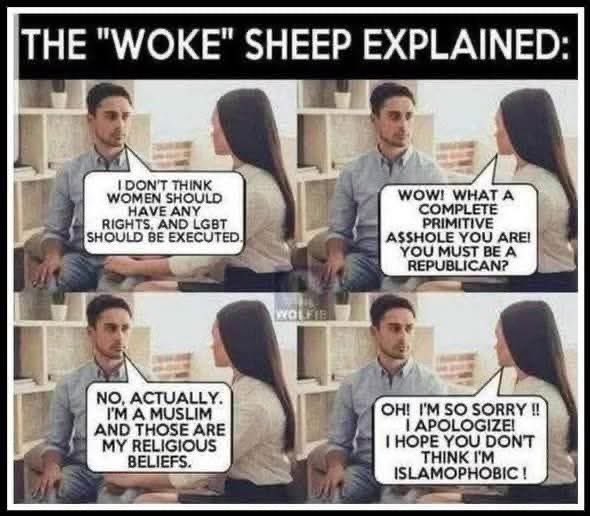
The meme is considered “fairly accurate” by critics of progressive politics because it captures a perceived double standard: while left-leaning activists routinely and aggressively condemn anti-LGBTQ+ views among Christians (e.g., evangelical opposition to same-sex marriage), they often hesitate to apply the same scrutiny to similar or stronger opposition within Muslim communities, instead framing such criticism as Islamophobic or culturally insensitive.
Surveys consistently show that Muslims, particularly in Europe and Muslim-majority countries, hold more conservative attitudes toward homosexuality than the general Western population—often viewing it as morally unacceptable due to religious interpretations—yet progressive voices tend to prioritize anti-Islamophobia efforts, sometimes downplaying or excusing these views under cultural relativism or minority protection. This selective outrage, observers argue, reflects a hierarchy of sensitivities where fear of racism accusations trumps consistent advocacy for LGBTQ+ rights, allowing illiberal positions to persist unchallenged in one context while being fiercely opposed in another.











 bleatmop
 Mystro
 The Arbourist


 Dead Wild Roses
Leave a comment
Comments feed for this article