
You are currently browsing the category archive for the ‘Gender Issues’ category.

The accompanying meme asks why women are increasingly described as “menstruators,” “pregnant people” and “cervix-havers,” while men appear less frequently as “ejaculators” or “penis people.”
The absolute comparison is imperfect. Some medical organizations now use expressions such as “people with prostates.” That does not answer the objection; it merely demonstrates that the same ideology can make language equally absurd in both directions.
Sex is a biological reality, not an identity. The Canadian Institutes of Health Research defines sex through biological attributes including chromosomes, hormones and reproductive anatomy.[1] Personal feelings may affect how someone wishes to dress, live or be addressed, but they cannot transform a male body into a female one or vice versa.
No male requires a Pap test, becomes pregnant or menstruates. No female develops prostate or testicular cancer. A female who identifies as a man may still require cervical screening, but that is because she remains female. Her identity does not make cervical cancer a male health issue.
Nor does saying that women menstruate imply that every woman currently menstruates. Children, post-menopausal women, women with certain medical conditions and women who have undergone surgery remain female. Ordinary category language has never required every member of a class to display every characteristic associated with it.
The linguistic transformation therefore serves another purpose. Once woman is redefined as an internal identity available to males, it can no longer reliably name the female sex. Yet medicine, law and politics still require a way to discuss female bodies. Women are consequently reassembled as lists of organs and functions: uterus-havers, menstruators and birthing bodies.
That is the anti-woman streak within transgender ideology. It does not merely ask that a small number of people be treated courteously. It demands that women surrender the language required to describe themselves as a sex class—and then presents their disappearance as inclusion.
This matters beyond wounded sensibilities. Women’s health research depends upon recognizing sex differences; Health Canada explicitly warns that failing to study women as a distinct sex can obscure clinically important differences in treatment and outcomes.[2] The same clarity is necessary when discussing pregnancy, sexual violence, sport and sex discrimination.
Courtesy toward individuals does not require institutions to falsify material reality. Medical professionals can treat every patient with dignity while recording sex accurately and speaking plainly about which sex is affected by a condition.
Women are not menstruators, cervix-havers or birthing bodies. They are women. Language that cannot say so is not inclusive; it has simply made women harder to name.
References
- Canadian Institutes of Health Research, “What is gender? What is sex?”
https://cihr-irsc.gc.ca/e/48642.html - Health Canada, “Considerations for Inclusion of Women in Clinical Trials and Analysis of Data by Sex.”
https://www.canada.ca/en/health-canada/services/drugs-health-products/drug-products/applications-submissions/guidance-documents/clinical-trials/considerations-inclusion-women-clinical-trials-analysis-data-sex-differences.html - Trans Care BC, “Gender-Inclusive Language: Clinical Settings.”
https://www.transcarebc.ca/sites/default/files/2024-03/Gender_Inclusive_Language_Clinical.pdf
One of the stranger features of the debate over gender identity is that women are still expected to apologize for noticing when policies affect them.
When male bodies enter female prisons, shelters, changing rooms or athletic categories, sex matters. When children are placed on a medical pathway with lifelong consequences, sex matters. When crime statistics, scholarships or political representation are organized by sex, definitions matter. Refusing to pretend otherwise is not hatred; it is the beginning of an honest discussion.
Women & Girls Alberta is an Alberta-based, women-led organization working to restore sex-based rights and protections in law, public policy and everyday life. Its platform reflects something I have argued repeatedly on this site: individual dignity does not require society to abandon material reality.
The organization focuses on the practical conflicts created when self-declared gender identity is allowed to override sex. These include women’s sports, prison safety, rape-crisis services, bodily privacy, lesbian boundaries, women’s scholarships, accurate crime statistics and single-sex spaces. Its issues section brings these concerns together rather than treating each controversy as an isolated incident.
 That matters because institutional change often occurs quietly. A definition changes inside a policy manual. A reporting category becomes unreliable. A woman raises a privacy or safeguarding concern and discovers that the institution has already decided which questions may be asked. By the time the public notices, the new rule is presented as settled practice rather than a political choice that should have been debated.
Women & Girls Alberta is doing more than issuing statements. The organization collects legislation, policy developments, documented cases and Canadian news concerning the erosion of sex-based protections. Its stated mandate includes providing sex-based policy analysis, supporting legislative clarity and creating opportunities for public discussion. Readers can examine its sources and arguments for themselves rather than being asked to accept a slogan.
Especially valuable is its confidential reporting platform, through which women can document experiences involving prisons, hospitals, shelters, schools, workplaces, sports and government programs. The organization says submissions can be made without an account or a name through a system built on the open-source GlobaLeaks platform, and it provides additional precautions for people concerned about professional retaliation or identification.
The point is not to declare every allegation true merely because it has been submitted. The point is to gather accounts, documents and recurring patterns that institutions may otherwise ignore. Evidence cannot be examined until people are permitted to report it.
The strongest argument from the other side should be acknowledged: transgender people are entitled to safety, civil treatment and protection from genuine discrimination. Nothing about defending women’s sex-based rights requires cruelty toward anyone. But compassion cannot mean that every competing interest disappears. Nor can one group’s desire for recognition automatically override another group’s privacy, safety, freedom of association or right to fair competition.
A pluralistic society must be capable of protecting individuals without demanding that women surrender the language needed to describe their bodies, their boundaries and their rights.
That is why I support the work of Women & Girls Alberta. It is giving women a place to speak, documenting policies that deserve public scrutiny and insisting that biological sex remains a legitimate and sometimes indispensable legal category.
Visit the Women & Girls Alberta website, read its platform, examine the evidence and share its work. Those who agree with its mission can also subscribe, contribute or help ensure that women who have something important to report know where they can be heard.
Women should not need permission to defend rights that exist because they are women.
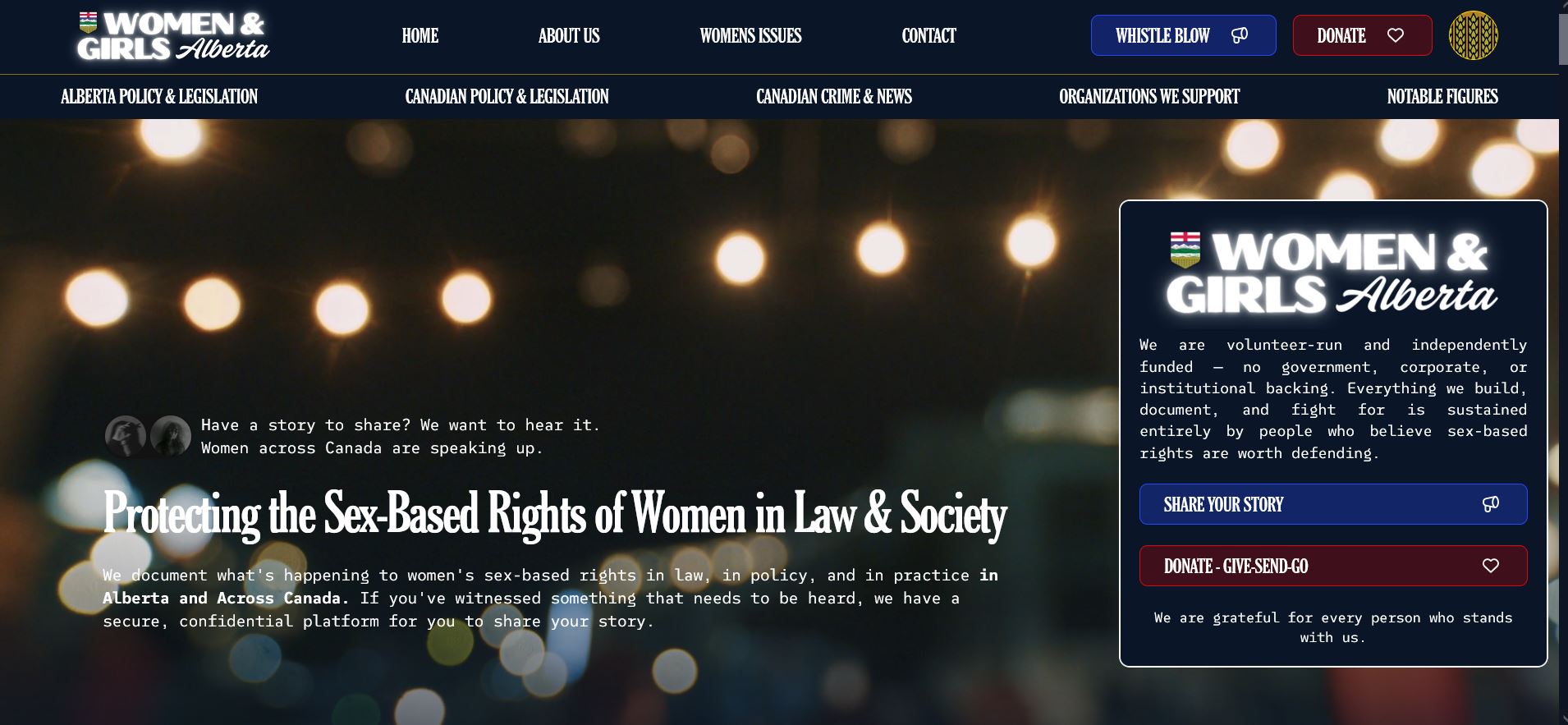
For decades, the political Left told women it alone could be trusted to defend their rights.
But the promise was narrower than advertised. In practice, women’s rights often meant abortion access, workplace rhetoric, and the expectation that women would keep voting for the party that claimed ownership over “women’s issues.”
Then a harder test arrived.
What happens when women ask for boundaries? What happens when girls say they do not want males in their changing rooms? What happens when female athletes say their category exists for a reason? What happens when women insist that privacy, dignity, safety, and fair competition are not bigotry?
The institutional Left’s answer has been revealing.
It did not defend women’s boundaries. It explained them away. It did not defend sex-based language. It tried to make it unspeakable. It did not defend the female category in law, sport, prisons, shelters, or public policy. It subordinated that category to gender identity and then demanded that women pretend nothing meaningful had changed.
That is the betrayal.
To be clear, no decent society should delight in the distress of young people struggling with identity. Even the Supreme Court majority in West Virginia v. B. P. J. emphasized that student-athletes on both sides deserve respect and should not be ostracized or vilified. (Supreme Court)
But respect is not the same thing as surrendering reality.
The question before the Court was whether schools may maintain women’s and girls’ sports teams for biological females under Title IX and the Equal Protection Clause. (Supreme Court) The Court reversed the lower-court rulings, holding that states may preserve sex-separated athletic categories. Sotomayor, joined by Kagan and Jackson, concurred in part and dissented in part. (Supreme Court)
That legal result matters because it cuts through the fog.
Female bodies are not symbolic. Women’s spaces are not symbolic. Girls’ sports are not a therapeutic exercise for male validation. They are material institutions built around material differences.
The Left used to understand power when women named it. It used to understand boundaries when women asserted them. It used to understand that “no” is a complete sentence.
Now, too often, women are told that saying no is hateful. That naming sex is cruel. That defending female-only spaces is exclusionary. That fairness for girls must yield to affirmation for males.
A movement that cannot respect women’s boundaries cannot credibly claim to protect women.
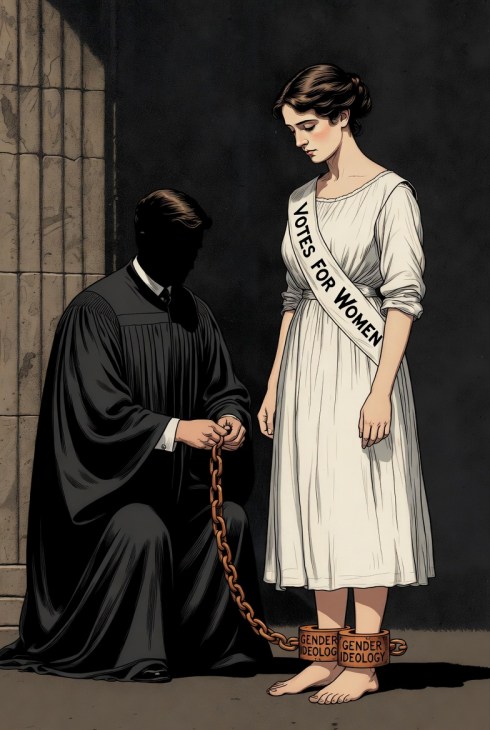
The Left did not merely lose a court case.
It exposed the limits of its feminism.
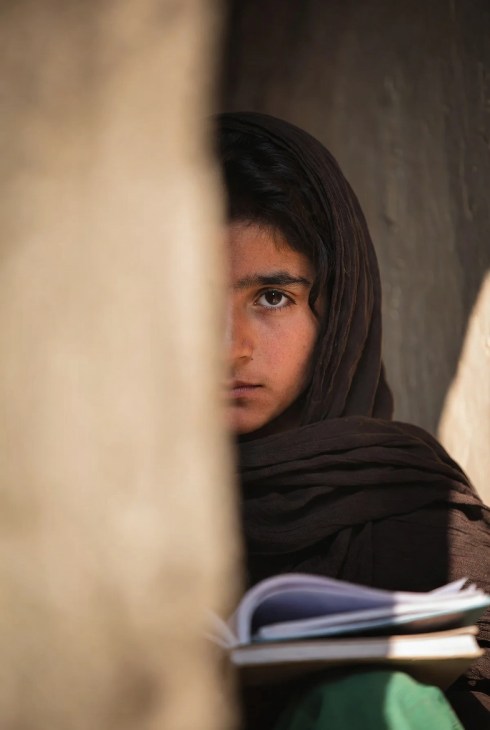
A fictional composite in three vignettes about a girl coming of age under Taliban rule.
II. The Road That Needed A Boy
My mother woke with one hand pressed beneath her ribs.
She did not make a sound. I watched from my mat as the room brightened by slow degrees and my brother scratched himself awake for school. When he kicked off his blanket, his foot struck my ankle.
“Move,” he said.
I moved.
My mother closed her eyes.
At breakfast she broke the bread but did not eat it. My father had already gone to see a man about flour, and my brother was late and angry because his book was missing. It was under his own blanket. I saw the corner before he did, but waited while he lifted the cushion, cursed softly, and accused me of moving it.
“It is there,” I said, pointing.
He snatched it up.
“You should have said.”
My mother’s hand tightened under the table, only a little, only enough for me to see.
I lowered my eyes to the bread.
My brother left with crumbs on his sleeve and his bag half open. The gate knocked against the wall when he kicked it wide. A moment later his voice joined the other boys in the lane, careless and rising, already beyond the house.
My mother stood when he was gone, took two steps toward the stove, and stopped.
I reached her before she touched the wall. She leaned against me with only part of her weight, the way women lean when they are trying not to admit they have leaned at all.
“Sit,” I whispered.
She shook her head.
“Water first.”
I brought it. She drank and pressed the cup back into my hands without looking at me. The skin around her mouth had gone grey.
“We should go to the clinic,” I said.
She looked toward the gate.
My father was gone. My brother was gone. My uncle lived across the old road but might already be at the market. My cousin Farid sometimes came in the mornings, though he came when he wished and left when he wished, being fifteen and male and therefore important in ways no one had asked him to earn.
The clinic was not far. I could walk there with my mother before the sun cleared the neighbour’s roof. I knew the route better than Farid did: past the broken drain, left at the green door, around the corner where boys played football with a cloth ball, then straight until the road widened near the pharmacy.
I could have gone.
I did not move toward the gate.
My mother saw that too.
“Maybe it will pass,” she said.
She tried to stand straighter and failed.
I helped her to the cushion near the wall, then went to the shelf where she kept the old medicine paper folded inside a tin. I knew which one it was because she had taken the same tablets before, when the pain came after carrying water in winter. The writing had faded, but I could still read enough of it.
I had always been good at reading.
Outside, a cart rolled past. Men spoke near the corner. One laughed, and the laugh came through the gate as if the wood were thinner than before.
I folded the paper smaller and placed it beside the cup.
“We need someone to take us,” my mother said.
Us.
The word sat between us with its little insult folded inside it. She needed medicine; what we needed first was a boy.
By midmorning the room had grown warm. My mother sat with her back to the wall, eyes half closed, lips moving without sound. I swept the courtyard because I could not sit, then swept it again though the dust only moved from one side to another. When I bent near the gate, I heard girls laughing somewhere beyond the lane.
Not girls my age.
Small ones.
They passed like a handful of birds thrown into the morning, schoolbags bumping against their sides, shoes striking the road in quick uneven taps. One of them sang the first line of a lesson and forgot the rest. Another corrected her. They argued and kept walking.
I held the broom still until their voices were gone.
Then I swept the same clean place a third time.
Farid came near midday.
He did not knock properly, only called from outside as if our door owed him an answer. My mother straightened before I opened it. She wiped her face with the edge of her scarf and told me to bring the outer covering.
The cloth hung on a peg near the door.
I had worn it many times by then, but each time there was a moment — small, almost nothing — when my body remembered air on my face. The pause was brief. No one would have noticed it unless they were watching for rebellion.
I noticed it.
I put the covering on.
The room changed at once. The edges of things dulled; the door became a shape, the floor a dim path, my own hands something I had to lift close to see clearly. I adjusted the cloth where it fell near my eyes, then lowered it because Farid’s shadow had crossed the threshold.
He did not look sick. He looked bored.
“What is wrong with her?” he asked.
“With my mother?”
He shrugged, already glancing back toward the lane.
I handed him the folded medicine paper.
He looked at it, turned it once, then handed it back.
“You tell them.”
I kept my hand closed around the paper.
At the gate my mother paused, not from modesty but pain. Farid sighed, wanting us to know he had somewhere else to be.
I wanted to tell him she had waited half the morning for his permission to be ill.
Instead I stepped behind my mother and made sure the cloth did not catch in the latch.
The lane was brighter than I expected.
It always is, after days inside. The first glare made me blink, and for a moment the world disappeared; there was only cloth, footsteps, and the knowledge of where the road should be. My feet found the dip near the drain, the flat stone by the neighbour’s door, the place where rain had eaten a channel along the edge of the lane.
Farid walked ahead.
He took the wrong turn.
My mother did not notice. Her breath had shortened, and she was watching the ground in front of her feet. I stopped at the corner, then caught myself and stepped after him.
“Farid,” I said.
He kept walking.
“Farid.”
He turned, annoyed.
“That way,” I said, pointing with two fingers low at my side.
He looked at the road, then at me, then back at the road.
“I know.”
He came past us without hurrying.
We followed.
Near the football corner, three boys had drawn lines in the dust with a stick. They stopped playing when we passed. One of them was younger than me and stared because boys learn early that looking costs them nothing. Farid told them to move, and they did, slowly, dragging their feet through the lines they had made.
My mother’s sleeve brushed mine. I matched her pace.
At the wider road, a truck passed carrying men in the back. One held a rifle across his knees. Another tapped a stick against the metal side in a steady, bored rhythm. They were not looking at us, and still my mother shifted closer to the wall until her shoulder nearly touched the mud brick.
I shifted with her.
The wall was warm from the sun, though none of its warmth reached inside the cloth.
A woman ahead of us did the same thing, turning half-sideways with a child tucked behind her. When the truck moved on, no one spoke. The woman waited three breaths before stepping away from the wall, as if the road had to become safe again by itself.
At the pharmacy, the man behind the counter knew Farid’s name but not ours.
“What do you need?” he asked him.
Farid looked at me.
I held out the paper.
The pharmacist took it, squinting at the old writing. “Who is this for?”
“My aunt,” Farid said.
The man looked past him, toward my mother, then away. “Pain here?” He touched his own side.
My mother nodded.
“Fever?”
She opened her mouth.
Nothing came out.
Her eyes flicked to Farid, who was looking at a box of sweets near the counter.
“Yes,” I said softly.
The pharmacist’s eyes moved to me. Not sharply, not kindly either, only enough that I remembered where a girl’s voice was meant to stay.
My mother answered then, barely louder than the rustle of cloth. “No fever.”
The pharmacist took down a small packet and began explaining the tablets to Farid, who listened with the solemn face of someone trusted with knowledge he did not intend to carry far.
“After food,” the man said.
Farid nodded.
“Not too many.”
Farid nodded again.
“Morning and night.”
Farid looked toward the door.
I counted each instruction on my fingers inside the cloth where no one could see.
Morning.
Night.
Food.
Not too many.
When the pharmacist wrapped the packet, Farid reached for it before I could. My mother paid. The coins shook once in her hand, and I moved closer so my sleeve hid it.
Outside, Farid gave me the medicine only after we had turned away from the shop.
“You heard?” he asked.
I nodded.
“Good. I forgot.”
He laughed a little, as if this were charming.
On the way home, we passed the old beauty shop.
The sign was still there, though someone had scraped the painted face until only the mouth remained. Dust clouded the windows. A notice had been pasted to the door months ago and was peeling at one corner.
My cousin had gone there before her wedding.
I remembered her holding out her hands for us to admire, palms painted red, fingers curled as if she were carrying water she did not want to spill. Everyone had laughed because she would not touch anything until the colour dried. For one afternoon she had moved through the rooms slowly and grandly, pleased with herself, letting the younger girls look.
Now the shop stood with its mouth scratched away.
Farid saw me looking.
“Places like that made women foolish,” he said.
My mother kept walking.
I lowered my eyes, but not before I caught my reflection in the dusty window: cloth, shadow, the suggestion of a face that no longer belonged fully to the street.
At home, Farid did not come inside. He had done his duty and was already late for whatever boys do when no one is measuring their steps. My mother thanked him. He shrugged and went down the lane, kicking a stone ahead of him until it bounced into the drain.
I closed the gate.
The latch stuck, so I lifted it and tried again.
Inside, the house received us without interest: stove, wall, water jar, folded quilts, the chest beneath them. My mother sat slowly, one hand under her ribs, and I gave her the tablets after tearing the packet carefully along the edge.
“Morning and night,” I said. “After food. Not too many.”
She looked at me for a moment.
Then she nodded.
I poured water. She swallowed the first tablet and leaned back with her eyes closed. The covering had left a red line across her forehead. I wanted to touch it, but she looked too tired to be comforted.
In the courtyard, I shook dust from my covering.
Before I lifted it from my shoulders, I checked the gate.
Closed.
Then the windows.
Empty.
Then the roofline.
No one.
Only then did I pull the cloth back from my face.
Air touched my skin.
I stood with the covering gathered in both hands, breathing as quietly as I could. The courtyard wall rose above me, sun on the top half, shadow on the lower. A crack ran through one corner where last winter’s rain had softened the mud brick. I had watched that crack widen for months.
A small brown bird landed on the wall.
It hopped once, turned its head, and looked down into the courtyard with one bright eye. Nothing about it was beautiful. It was dusty and ordinary, the colour of road and seed husks. It opened its beak and gave a quick, careless sound.
I did not move.
The bird hopped again, closer to the edge. Its feet gripped the wall without asking whether the wall permitted it. Then it lifted itself into the air and crossed into the neighbour’s courtyard, where I could not see it anymore.
I stood there until my mother called my name.
The sound came through the house, tired and small.
I folded the covering carefully: outside from inside, dusty from clean, seen from unseen. By the door, my school shoes waited behind the water jar, still angled toward the gate.
I almost moved them back.
Then footsteps passed outside, and I carried the covering inside.
This is a fictional composite, told through three brief vignettes, about a girl coming of age under Taliban rule in Afghanistan.
Her name is Zahra. She is not one real girl, but she stands in for many: girls whose schools were closed, whose movements were restricted, whose voices were lowered, whose futures were discussed by others before they were old enough to understand what was being taken.
The purpose is not to sensationalize suffering. It is to show, quietly and plainly, what theocratic power does when it reaches into the daily life of a girl: the books hidden away, the gate closed, the words swallowed, the future made smaller one obedience at a time.
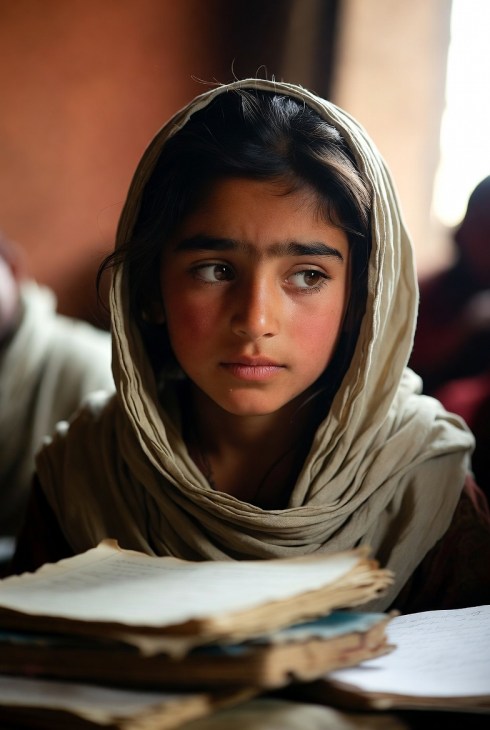
I. The Day School Ended
My name is Zahra, and last year I still ran to school.
Mariam and I used to race from the corner where the road dipped, skirts catching dust, scarves slipping. She would say the teacher was going to scold us; I would tell her she would be scolded first because her scarf made her look like a goat tangled in laundry. By the time we reached the green gate, we were holding our sides, trying to breathe quietly and failing, already guilty and already happy.
This morning, before prayer, my brother kicked the wall in his sleep and knocked dust from the mud brick.
He slept with one arm flung out from the blanket, mouth open, hair flattened on one side, as if sleep itself gave boys more room than it gave girls. When my mother bent over him and shook his shoulder, he dragged the quilt over his head and made a low miserable sound, the kind boys make when the world asks them to rise and they believe the request itself is an injury.
“Get up,” she whispered.
He did not move until she said, “Your father will hear.” Then he sat up slowly, face swollen with sleep, scratching at his stomach while the house gathered itself around morning: the kettle lid clicking on the stove, my father coughing once from the other room, someone outside sweeping a courtyard in long dry pulls.
“I don’t want to go,” my brother said.
My mother picked up his shirt from the floor and shook it once. “Then go unwilling.”
He looked at me as if I might laugh, so I lowered my eyes to the blanket before he could see anything cross my face.
His slate lay near my foot, its corner chipped, one side clouded with old sums half-wiped away. He had left it there the night before, careless as always, and I moved my toes back so I would not touch it by accident.
My own shoes waited beside the door, dusty at the toes, the right lace still shorter than the left because I had tied it too quickly on the last morning I went to school. Mariam had been calling for me from the lane, impatient and bright, and I had bent over the knot with one hand on the doorframe, laughing because she was always early when she claimed to be late.
They still fit.
I knew because two nights ago, after everyone slept, I had put them on and stood beside the door long enough to feel the shape of the old morning rise through my feet.
My brother complained that his shoes were tight, and my mother told him to bring them closer. She pressed the leather with her thumb, frowned, and said he was growing again. When he suggested he might stay home, my father coughed from the other room, and my brother reached for the shoes without another word.
The chest was beneath the folded quilts, not hidden exactly, but not offered to the room either. I waited until my mother turned back toward the stove before lifting the lid. It gave a small wooden complaint, and I paused with one hand still on the edge, listening to see whether the sound had reached anyone.
No one looked at me, so I opened it the rest of the way.
The books were wrapped in my aunt’s old scarf: mathematics, Dari, science with the corner chewed by a mouse, and my English reader, thin and soft from use. When I rested my hand on it, the classroom came back so suddenly that I had to press my fingers flat against the cover: chalk dust, damp wool in winter, the cheap orange soap our teacher used, the warmth near the stove where all of us pretended not to shiver.
Then my brother knocked over a cup.
The sound closed the chest for me before I had decided to close it.
Tea spread across the floor. My mother said his name sharply, and he grabbed a cloth only to push the spill wider. I went to help, stopped because he had hands and could wipe his own mess, then saw my mother look at me.
I took the cloth from him.
By the time he was ready, the sun had reached the top of the courtyard wall. He shoved bread into his mouth, tucked his slate under one arm, forgot his book, cursed softly when my mother sent him back for it, and then kicked the gate open with his heel because both hands were full.
“Do not kick the gate,” my mother called, but he was already outside, where the other boys waited in the lane.
Their voices came through the open gate in pieces: a joke, a shove, someone laughing too loudly, someone calling for my brother to hurry. He ran to meet them with his bag slapping against his back, his own voice rising to join theirs before he reached the corner.
The gate swung half shut behind him, and I moved toward it before I knew I had moved, only one step, small enough to deny if anyone asked.
My mother’s hand touched my sleeve.
She did not pull, because she did not need to. I stepped back, and she went to the gate and closed it with her hip. The latch fell into place while I stood there holding the wet cloth in both hands.
After breakfast I rinsed the cups, swept the courtyard, shook crumbs from the bread cloth, and folded my brother’s shirt from yesterday. There was ink on one sleeve, and I rubbed at it with water until the fabric darkened under my fingers, though the stain only spread and made a larger shadow. Near the back wall, my father’s coat hung from a peg with burrs clinging to the hem, so I picked them out one by one and set them in a little pile on the floor.
My mother kneaded dough beside me, pressing, folding, turning, and I matched her rhythm without meaning to: pick and drop, pick and drop, pick and—
From somewhere beyond the houses came the sound of boys reciting.
I knew the shape of it at once, even before I could hear the words. The teacher asked; the class answered, not together exactly, because boys never answered together properly. One voice rushed ahead, two lagged behind, and one shouted because he liked the sound of himself.
My hand closed around a burr, and the point went into my thumb.
I put it in my mouth before the blood could show where my mother might see.
The recitation came again, louder this time, lifted by the wind and broken against the courtyard wall, and I picked up the coat and shook it hard, though there was nothing left to shake out.
In the afternoon, my aunt came with Mariam, who is seven and still small enough for school.
She entered with dust on her hem and a notebook clutched against her chest. Her cheeks were red from the cold, and she smelled of outside air. Before she had even greeted my mother properly, she climbed beside me and pushed the notebook into my lap.
“Zahra, look.”
Her letters leaned across the page, some too fat, some too thin, some collapsing into the next as if they were tired. She had pressed too hard with the pencil, denting the paper beneath each line, and I reached for her hand before remembering myself. I folded my hands together instead.
“Very good,” I said.
She smiled as if I had given her something precious.
The pencil was still behind her ear, the yellow paint bitten at the end. I could see exactly what she was doing wrong, how she held it too high and forced the letters from the shoulder instead of letting the wrist guide them. The correction rose into my mouth so naturally that I nearly spoke it, but my aunt was sitting across from us, and my mother had gone still near the stove.
I swallowed the words.
Mariam turned the page and showed me more. The second page was worse, one letter even facing the wrong direction, and I smoothed the curled corner with my thumb while looking long enough for the urge to fix it to pass.
“Will you come back to school when they let big girls come?” she asked.
My aunt adjusted the edge of her scarf. My mother wiped flour from her wrist though her hands were already clean. Outside, a cart rolled past and one wheel struck a stone.
The silence answered for us.
Mariam looked from face to face, still expecting one of the grown women to make the world make sense again. When no one did, I smiled because she was little, and because little girls should be allowed to keep foolish hopes a little longer.
“Show me the next page,” I said.
After they left, I found an old pencil under the chest. It was short, bitten at one end, split near the point, the kind of pencil no one would think important enough to take. I held it in my palm while my mother and aunt spoke near the door in voices that were not secret, only low, which is different.
When my aunt finally went home, I rolled the pencil once between my fingers and slipped it into my sleeve before I had decided what I was hiding it from.
At evening, my brother lay on his stomach near the lamp, schoolbook open, feet moving lazily in the air. He had ink on his sleeve again. The stain I had rubbed earlier was still there, only wider now.
He frowned at a word and said my name.
I looked up from the onions.
“How do you spell this?”
He pushed the book toward me without moving from his stomach. I wiped my hands on my dress and leaned close enough to see, though the answer came before my eyes had finished reaching the page. My finger rose automatically, the way it had for years in class.
I pulled it back as if the page had burned me.
He waited.
I told him the letters slowly, and he wrote them badly, with the second one crooked and wrong. For a moment I watched the mistake settle on the page, black and permanent, while the lamp flame bent sideways and recovered.
“Is that right?” he asked.
“Yes,” I said.
He shrugged and turned the page, and I went back to the onions. The knife slipped once against my finger, barely touching skin, not enough to bleed.
After everyone slept, I opened the chest again.
This time I moved slowly, because the hinge complained near the top, and I knew how far I could lift the lid before the sound carried. I reached inside by feel: cloth, book edge, notebook. The pencil in my sleeve had left a grey mark against my wrist.
I sat with my back to the wall while the house breathed around me: my brother’s uneven sleep, my father’s heavier one, my mother turning once on her mat. Somewhere outside, a dog barked and stopped.
The notebook opened to a blank page. The lines were faint but still there, and I wrote the date carefully because my teacher had once said careless dates made careless minds. Then I held the pencil above the next line and tried to picture my classroom: the green gate, the cracked step near the door, the teacher’s blue scarf, my place beside the window.
I could see all of it.
When I tried to remember what grade I would be in now, my hand began to shake, so I placed it flat against the page until it stopped.
On the first line beneath the date, I wrote:
Future
The pencil point broke on the last letter, making a sound so small I looked toward my mother to see whether she had heard it.
She had not.
I sat for a long time with the broken pencil in my hand, feeling the rough edge of the wood with my thumb. Then I wrapped the notebook again and slid it beneath the books, not on top where it had been before. When I closed the chest, the latch did not catch, so I opened it again, lifted the cloth, tucked one corner of the scarf out of sight, and closed it properly.
In the dark, I took my school shoes from beside the door and placed them behind the water jar.
Not hidden.
Not exactly.
Just somewhere no one would ask why they were still waiting.
Intersectionality was supposed to widen moral vision. It was supposed to help us notice people whom ordinary politics missed: the poor, the powerless, the socially disposable, the ones institutions found easy to ignore. In the UK grooming-gang scandals, fashionable activism too often managed the reverse. It did not merely fail to see vulnerable girls clearly. It helped teach institutions which facts were too dangerous to see.
“The answer is equality under reality. No exemptions. No euphemisms. No protected categories of fact.”
That failure has affected women and girls in the UK directly, and it still has to be discussed.
This is not a claim that every feminist organization said nothing. Some did necessary frontline work. Some supported survivors. Some backed reinvestigations, better data collection, and reforms to the criminal justice system. But institutional service provision is not the same thing as public moral leadership. When thousands of girls were exploited, trafficked, raped, dismissed, and disbelieved, the response from much of fashionable feminism was nowhere near equal to the horror. There was no great reckoning. No sustained mass campaign. No “believe these girls” moment of the kind the activist class knows perfectly well how to create when the story fits its preferred map.
And that is the point. The facts crossed the wrong political wires.
 Many of the victims were poor, working-class girls. Some were in care. Many had already been written off as difficult, damaged, promiscuous, unreliable, or not worth the trouble. They were exactly the kind of girls feminism should have defended without hesitation. But in several major local scandals, the perpetrators did not fit the easier script. Naming patterns around ethnicity, culture, community silence, misogyny, and institutional cowardice risked giving ammunition to the wrong people. So the moral machinery jammed.
The official record is blunt enough. In Rotherham, the Jay report estimated that around 1,400 children were sexually exploited between 1997 and 2013. It described girls raped by multiple perpetrators, trafficked between towns, threatened with guns, beaten, intimidated, and treated with contempt by police and other adults who should have protected them. The report also recorded institutional nervousness around naming perpetrators’ ethnic origins, including concern that doing so would be seen as racist or damage community cohesion.
A decade later, the Casey audit found that the problem had not been honestly mastered. Ethnicity was still not recorded for two-thirds of perpetrators in the national data. National evidence remained too poor to support simple claims, but local evidence from several force areas showed enough disproportionality involving Asian and Pakistani-heritage men to require further examination. Casey’s point was not racial blame. It was moral adulthood: refusing to examine these questions fails victims and leaves the field open to political extremists.
This is the coalition-protection filter in bureaucratic form. Under it, facts are no longer first tested by whether they are true. They are tested by whether they protect the approved political coalition. Will this strengthen the anti-racist narrative? Will it risk “Islamophobia”? Will the far right use it? Will it embarrass multicultural institutions? Will it complicate the story activists prefer to tell about power?
Those concerns are not invented from nothing. Bad actors do exploit real suffering for ugly ends. Racists have used these scandals to smear entire communities, and that should be rejected plainly. But the existence of bad actors cannot become a veto over truth. A fact does not stop being true because a deplorable notices it. A victim does not become less abused because her testimony is politically inconvenient. When that becomes difficult to say, fashionable intersectionality has moved from caution into moral irresponsibility.
At its best, intersectionality noticed that vulnerability is not always single-file. A poor girl in care is not simply “female.” She is female, poor, young, institutionally dependent, socially disposable, and already mistrusted by the adults around her. A serious intersectional feminism should have seen these girls with devastating clarity.
Too often, activist intersectionality became something else: an oppression-ranking system that sorted people into moral categories before listening to them. It encouraged activists to ask not “What happened?” but “Which group has more structural power?” Some vulnerabilities became politically legible; others became inconvenient noise. When the victim map and perpetrator map did not align cleanly, the abused girls were pushed behind the narrative.
That is an evasive machine, built to blur moral accountability and weaken allegiance to truth.
Oppression-based claims become dangerous distortions of reality when they stop being tested as claims and start being treated as moral credentials. They are not insight by default. They are not evidence by default. They are not compassion by default. A theory of power that cannot survive contact with awkward facts is not a serious moral framework. It is a shield.
In the grooming-gang scandals, the cost of that distortion was not academic. Girls paid when police treated them as troublemakers. They paid when social services minimized what was happening. They paid when officials avoided naming patterns for fear of racism accusations. They paid when public institutions became more anxious about community cohesion than child protection. And they continue to pay when debate is still diverted away from truth and toward reputation management.
The answer is not racial blame, collective guilt, or the lie that all abuse belongs to one community, one religion, or one ethnicity. That would be false and unjust.
The answer is equality under reality.
“Oppression-based claims become dangerous distortions of reality when they stop being tested as claims and start being treated as moral credentials.”
If white men offend, name it. If Pakistani-heritage men offend, name it. If institutions fail because of sexism, say so. If they fail because of class contempt, say so. If they fail because officials are frightened of being called racist, say so. If cultural attitudes toward women, outsiders, shame, honour, or sexual entitlement play a role in a specific pattern of offending, investigate it honestly. No exemptions. No euphemisms. No protected categories of fact.
Truth-based analysis is not cruelty. It is the minimum requirement for justice.
The girls failed by these scandals did not need a theory that arranged them neatly inside an activist diagram. They needed adults who could see them, believe them, protect them, and tell the truth about what had been done to them.
Intersectionality promised to see the overlooked.
These girls were overlooked anyway.
That should shame everyone who claims to care about women.
The Alberta Medical Association and the Canadian Pediatric Society want Canadians to believe the debate over pediatric gender medicine is settled. It is not.
When Premier Danielle Smith announced restrictions on transgender medical interventions for minors, major medical bodies responded with the language of emergency. The Canadian Pediatric Society warned that Alberta’s policy would undermine the rights of transgender children and youth. The Alberta Medical Association’s pediatrics section argued that the government was targeting an already vulnerable population. The public message was clear enough: responsible doctors affirm; politicians interfere; children suffer.
 But that framing hides the central problem. There is no stable international medical consensus on pediatric transition. In fact, several European jurisdictions have moved in the opposite direction from Canada’s professional bodies, not because they have stopped caring about distressed children, but because they have begun applying more ordinary standards of evidence to extraordinary interventions.
That distinction matters. Puberty blockers and cross-sex hormones are not counselling, kindness, or protection from bullying. They are medical interventions into the development of physiologically healthy children and adolescents, often at an age when identity, sexuality, mental health, peer influence, family conflict, and neurodevelopmental conditions are still in motion. A serious medical institution should be able to say that without sounding frightened of its own profession.
Instead, Canadian medical institutions often speak as if caution itself is the danger.
The most revealing example is the suicide argument. Parents and voters have been told, sometimes openly and sometimes by implication, that restricting pediatric transition will kill children. The activist version is familiar: would you rather have a dead daughter or a trans son? The political version is not much better. Former Calgary mayor Naheed Nenshi told Premier Smith that “votes aren’t worth a few dead kids.”
That is not clinical reasoning. It is emotional coercion applied to frightened parents.
The evidence does not support the crude version of the claim. A 2024 Finnish register study in BMJ Mental Health examined more than 2,000 adolescents referred to gender identity services and compared them with more than 16,000 matched controls. The authors found that suicide deaths were rare, and that once psychiatric treatment history was accounted for, gender-referred youth did not show higher all-cause or suicide mortality than controls. The study does not say these young people are not distressed. It says the simple story — affirm or they die — is not evidence-based medicine.
That should change the conversation. Many adolescents presenting to gender clinics also carry depression, anxiety, autism, trauma histories, eating disorders, family instability, social isolation, or other serious mental-health burdens. If those burdens are treated as secondary to gender identity, medicine risks narrowing the diagnostic lens at exactly the moment it should be widening it.
This is one of the main lessons of the Cass Review in the United Kingdom. Cass did not recommend abandoning children with gender distress. It called for a more holistic model of care, better assessment, stronger evidence, and far more caution around medical pathways. NHS England subsequently stopped the routine prescription of puberty blockers for gender dysphoria in minors, moving them into a research setting rather than ordinary clinical use.
That is not a small update. It is a major warning to every country that imported the affirmative model and then treated dissent as bigotry.
The “pause button” metaphor has also aged badly. Puberty is not a decorative inconvenience. It is a central developmental process involving bones, brain maturation, sexual function, fertility, and identity formation. Cass specifically warned against assuming that drugs used for precocious puberty will have the same outcomes when used for children and adolescents with gender dysphoria. The medical context is different. The child is different. The purpose of the intervention is different. Pretending otherwise is not compassion; it is bad reasoning in therapeutic language.
The pathway concern is equally serious. If blockers were merely neutral time-buying devices, we would expect many children to pause, mature, and then step away from medicalization. But the available evidence shows high rates of progression from puberty blockers to cross-sex hormones. That does not prove every case is mishandled, and it does not prove no patient benefits. It does mean the intervention may help create the very path it claims merely to delay.
Other countries have noticed. France’s National Academy of Medicine urged “great medical caution” in treating gender-related distress in children and adolescents, citing vulnerability and the possibility of serious complications. The UK has moved puberty blockers away from routine use. Scotland paused new prescriptions for minors after the Cass Review. These are not fringe developments. They are evidence institutions pulling back after years of clinical momentum.
Canada’s professional bodies should be wrestling publicly with that reversal. Instead, they often sound as though the old consensus still exists.
“Institutional capture does not mean every doctor is corrupt. It means the institution has absorbed a political frame so deeply that it struggles to distinguish care from affirmation, caution from cruelty, and disagreement from harm.”
This is where the word “capture” becomes fair, but only if we are precise. Institutional capture does not mean every doctor is corrupt. It does not mean every pediatrician agrees with activists. It does not mean every child with gender distress is confused, lying, or socially influenced. It means the institution has absorbed a political frame so deeply that it struggles to distinguish care from affirmation, caution from cruelty, and disagreement from harm.
That is dangerous in any field. It is worse in pediatrics.
Children with gender distress deserve serious care. They deserve protection from bullying, family cruelty, humiliation, and ideological exploitation from every direction. They deserve psychological assessment, treatment for co-occurring mental-health problems, family involvement where safe, and adults who can tolerate uncertainty. The modern clinic population is also not the same as the older, smaller cohort of mostly childhood-onset cases; many services have seen a sharp rise in adolescent presentations, often with complex psychiatric and developmental profiles. A small number may continue to experience severe, persistent dysphoria into adulthood and may eventually choose medical transition. But that possibility does not justify allowing pediatric care to default into an affirmation-first pathway.
The honest position is not “do nothing.” The honest position is slow down, assess carefully, treat comorbidities, use exploratory psychological care rather than ideological confirmation, stop using suicide as a rhetorical weapon, and stop pretending that uncertain evidence becomes settled science because a professional association says so.
Medicine earns public trust when it disciplines itself. It loses that trust when it borrows the moral posture of activism and then demands deference as science.
The AMA and CPS still have a choice. They can defend vulnerable children by telling the whole truth: that distress is real, that cruelty is wrong, that some cases are complex, and that the evidence for routine medical transition in minors is weaker than Canadians have been led to believe. Or they can continue treating democratic oversight and parental caution as the real threat, while countries that reviewed the evidence more seriously move toward restraint.
“Medicine earns public trust when it disciplines itself. It loses that trust when it borrows the moral posture of activism and then demands deference as science.”
The issue is not whether vulnerable youth should be helped. They should.
The issue is whether Canadian medical institutions can still tell the difference between helping children and protecting an ideology from scrutiny.
Right now, the answer is not reassuring.











 bleatmop
 Mystro
 The Arbourist


 Dead Wild Roses
Your opinions…