
You are currently browsing the tag archive for the ‘Gender Affirming Care’ tag.
Manitoba Premier Wab Kinew wants children under 16 kept off social media and AI chatbots.
Good.
Not because the policy is automatically workable. Kids are talented little smugglers, and the internet has more holes than any government net. But the premise is sound enough: children are not miniature adults. Their judgment is still forming. Their resilience is still forming. Their sense of self is still being built under pressure from machines designed to harvest attention, anxiety, loneliness, status hunger, and imitation.
Anyone who has spent time in a school already knows this. The phone does not stay in the phone. It follows children into classrooms, friendships, sleep, family life, and self-understanding, dragging the emotional weather of the internet behind it.
So Kinew is not wrong to worry about the infinite scroll.
But now comes the circle no one should be asked to square.
If children under 16 are too developmentally immature to responsibly use TikTok, Instagram, Snapchat, or AI chatbots, how are they mature enough to consent to medical interventions that can alter puberty, sexual development, fertility, and future bodily integrity?
That is not a cheap gotcha. It is the question.
The same adult world cannot say a 15-year-old is too vulnerable for algorithmic identity machines, then turn around and treat that same 15-year-old as a sovereign authority on an identity framework often first encountered, rehearsed, and socially reinforced online. The developmental premise cannot change just because the political subject changes.
This is where the phrase “gender-affirming care” does too much work.
It bundles together counselling, social transition, names, pronouns, puberty blockers, cross-sex hormones, surgeries, legal changes, and an institutional framework that treats affirmation as the default moral response. Once the label is accepted, scrutiny begins to sound cruel. Caution becomes “denial of care.” Questions become “hate.”
That is how a medical culture loses discipline.
None of this requires pretending that gender dysphoria is fake. It is not. Some young people are genuinely distressed, and they deserve compassion, seriousness, and protection from bullying or humiliation.
But compassion is not the same thing as medical acceleration.
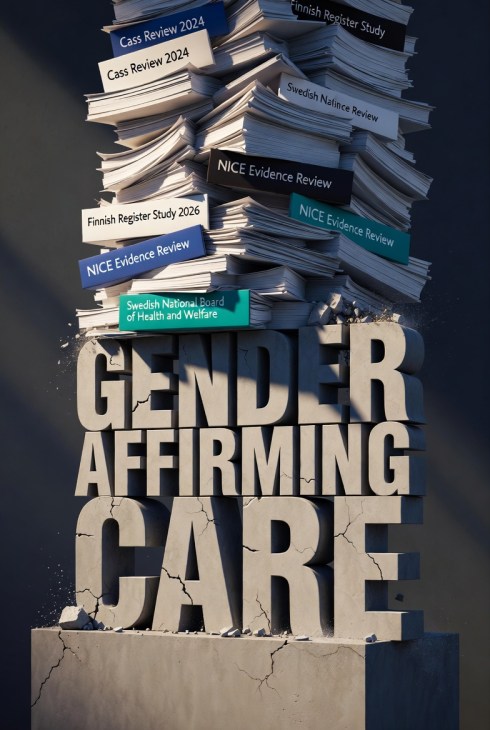
The evidence base for pediatric gender medicine is not as settled as activists and professional bodies spent years pretending. The Cass Review in England found serious weaknesses in the evidence behind youth gender services and pushed the NHS toward a more cautious model. NHS England stopped routine prescribing of puberty blockers for minors in 2024, and the U.K. government later made restrictions on puberty blockers indefinite, citing expert advice about safety risks. (NHS England)
That was not an American culture-war panic. It was a major health system responding to an evidentiary rupture.
NHS England has also moved toward greater caution around masculinising and feminising hormones for minors, including a 2026 consultation on whether those treatments should remain a routine option for under-18s. (The Guardian)
Meanwhile, Manitoba’s own Gender Diversity and Affirming Action for Youth program says hormone blockers may be discussed for some youth early in puberty, while gender-affirming hormones may be discussed for youth who have completed puberty. Shared Health Manitoba has also described puberty blockers as delaying physical and sexual maturity for youth who have not yet entered or completed puberty. (Shared Health)
So the contradiction is not imaginary.
Kinew’s child-safety argument depends on one claim: children under 16 are developmentally vulnerable. They are susceptible to manipulation, emotional contagion, social pressure, adult incentives, and systems they do not fully understand.
Exactly.
Now apply that consistently.
Protect children from addictive apps. Protect them from algorithmic sexualization. Protect them from online mobs and chatbot intimacy. But also protect them from adults who treat adolescent distress as proof of an inner essence that must be medically affirmed before the child has finished becoming herself.
A sane society can hold two thoughts at once.
First, distressed children deserve care.
Second, because they are children, adults owe them caution.
Patience is not cruelty. Hesitation is not hatred. Preserving a child’s future options is not oppression.
Kinew has stumbled into the right premise. Children are not miniature adults. If that is true when the subject is social media, it does not magically become false when the subject changes to puberty blockers, cross-sex hormones, fertility, and future sexual development.
The standard cannot be: fragile when scrolling, sovereign when affirming.
That is not child protection. That is politics choosing which vulnerabilities count.
Kinew has been hoisted by his own petard. The only question is whether anyone in his political world is willing to notice.

References
Wab Kinew / Manitoba youth social media and AI chatbot ban coverage: (650 CKOM)
NHS England, Clinical policy: puberty suppressing hormones: (NHS England)
U.K. government, Ban on puberty blockers to be made indefinite on experts’ advice: (GOV.UK)
U.K. government explainer, Puberty blockers: what you need to know: (healthmedia.blog.gov.uk)
NHS England / U.K. parliamentary briefing on hormone treatment policy for children and young people: (House of Commons Library)
Shared Health Manitoba, GDAAY program description: (Shared Health)
Shared Health Manitoba, Supporting Trans Youth to “Live Their Best Life”: (Shared Health)
The public case for pediatric gender medicine is simple enough. Medical intervention is supposed to reduce distress and improve mental-health outcomes.
That claim matters because the interventions are not minor. Puberty blockers, cross-sex hormones, and related medical pathways are presented to parents, policymakers, and the public as serious treatments for serious suffering. Their case does not rest on compassion alone. It rests on the claim that they work.
The trouble is that the strongest population-level data now available does not show that happening.
A new Finnish nationwide register study reports severe psychiatric morbidity before referral, continued severe psychiatric morbidity after referral, and no sign that psychiatric need subsides after medical gender reassignment. The study does not prove that treatment caused worsening. It does, however, cut directly against confident claims that these interventions reliably resolve the underlying distress in young people.
Terms fixed in advance
This subject is saturated with semantic drift, so a few terms need fixing at the outset.
By pediatric gender medicine, I mean the medical management of gender-distressed minors and young people through interventions such as puberty blockers, cross-sex hormones, and, where applicable, surgical pathways. By psychiatric morbidity, I mean the study’s outcome measure: need for specialist psychiatric treatment, whether inpatient or outpatient. By improvement, I mean a measurable reduction in psychiatric morbidity relative to baseline or to relevant controls.
That is a demanding definition. It is also the clinically serious one. If an intervention is being justified as a mental-health measure, then some observable improvement in hard psychiatric outcomes is the least one should expect.
What the Finnish study is
The Finnish paper is not a survey, and it is not a self-report exercise. It is a nationwide register study of all 2,083 individuals under age 23 who contacted Finland’s centralized gender identity services between 1996 and 2019, compared with 16,643 matched controls. Follow-up extended to June 2022. The outcome was specialist-level psychiatric treatment recorded in national health registers.
That matters. Register data has limits, but it is still harder than the small, uncontrolled, self-reported studies so often used to manufacture confidence in this field.
What it found
Before referral, 45.7% of the gender-referred cohort had already received specialist psychiatric treatment, compared with 15.0% of controls. Two years or more after referral, 61.7% of the gender-referred cohort required specialist psychiatric care, compared with 14.6% of controls. The first fact that has to be faced squarely is that psychiatric burden in this population is not only high at baseline. It remains very high afterward.
The post-2010 cohort matters as well, because defenders of the current model often imply that older data says little about the newer referral population. In this study, referrals after 2010 were in markedly worse psychiatric shape before referral than the earlier cohort. Among referrals before 2010, pre-referral psychiatric morbidity was 23.7%, versus 11.8% among controls. Among referrals after 2010, it was 47.9%, versus 15.3% among controls. So the recent referral surge did not simply bring in more of the same patients. It brought in a population with substantially heavier psychiatric burden.
The most striking figures concern the medically treated subgroups. Among those proceeding down the feminizing pathway, pre-referral psychiatric treatment was 9.8%; at least two years after referral it was 60.7%. Among those proceeding down the masculinizing pathway, the figures were 21.6% before referral and 54.5% after. Those are not small fluctuations. They are large increases in specialist psychiatric treatment after entry into the care pathway.
The adjusted-risk figures are no less serious. After adjustment for prior psychiatric treatment, hazard ratios remained approximately 3.0 to 3.7 times higher than female controls and 4.7 to 6.1 times higher than male controls. In plain English, the excess psychiatric burden did not wash away once prior history was accounted for.
The authors’ own conclusion is worth quoting in fuller form than the clipped line now circulating online: “Severe psychiatric morbidity is common among gender-referred adolescents and appears to be more prevalent in those referred after the recent surge in referrals. Psychiatric needs do not subside after medical gender reassignment.” That is not activist spin. It is the paper’s conclusion.
“Psychiatric needs do not subside after medical gender reassignment.”
What this study does not claim
This part matters because opponents will often try to smuggle in a claim you did not make and then congratulate themselves for refuting it.
This study does not prove that medical transition caused worsening in every case. It does not isolate a single causal mechanism. It does not show that no individual patient experienced subjective relief. It does not establish that specialist psychiatric treatment is a perfect one-to-one proxy for every dimension of psychological distress.
Those are real limits. They should be stated plainly.
But none of them rescues the stronger public claim that pediatric medical transition is clearly supported by solid evidence showing reliable mental-health benefit.
The strongest counterargument
The strongest counterargument is easy enough to state. Patients who go on to medical treatment may differ in important ways from those who do not. There may be unmeasured confounding. Some young people selected for treatment may have had more severe, more persistent, or more complex underlying psychiatric problems than the registers fully capture.
This is plausible.
Even if granted in full, however, it concedes the central problem.
If these interventions are working as claimed at the population level, then some clear signal of mental-health improvement should appear in the aggregate outcomes. Instead, psychiatric burden remains extremely high, does not converge toward control levels, and in key medically treated subgroups rises sharply. Increased specialist psychiatric treatment does not by itself prove worsening in every individual. What it does show is substantial psychiatric need persisting at levels incompatible with confident claims of broad psychiatric resolution.
That is the point critics keep trying to dodge. The question is not whether every confounder has been abolished. The question is whether the real-world outcome pattern supports the certainty with which these treatments have been promoted. This study says no.
Absence of demonstrated benefit is not a trivial problem
A common dodge here is to pretend that unless one has a perfect randomized trial proving direct harm, no serious concern exists. That is not how responsible pediatric medicine works.
Lack of demonstrated benefit is not identical to proof of harm. But weak evidence plus invasive intervention is not a neutral combination, especially in minors. When the evidence base is low quality and the strongest real-world data still fails to show the promised mental-health improvement, caution is not reactionary. It is simply what evidence-based medicine looks like once ideology is removed from the room.
“If an intervention works, population data should eventually show it. This does not.”
The larger evidence context
The Finnish register study matters on its own, but it lands in a broader evidentiary landscape that has already shifted under activists’ feet.
The independent Cass Review in England concluded that the evidence base for medical intervention in children and young people with gender-related distress is weak, that studies are generally small and uncontrolled, and that the field has been marked by overconfidence unsupported by good evidence. The review also incorporated earlier evidence reviews commissioned from NICE on puberty blockers and hormones.
Those NICE evidence reviews found the evidence for both puberty blockers and cross-sex hormones in this population to be of very low certainty. They remain among the most cited formal evaluations of the literature in this area.
Sweden’s National Board of Health and Welfare likewise revised its national guidance, concluding that for minors the risks of puberty blockers and hormone treatment currently outweigh the expected benefits, and that such treatment should be offered only in exceptional cases within structured specialist settings.
That pattern is not accidental. It reflects a broader recognition across evidence reviews and national reassessments: the confidence of the clinical rhetoric has run ahead of the quality of the evidence.
What can actually be concluded
Several conclusions can be made safely.
First, the psychiatric burden in this population is real and often severe. Nothing in this argument denies that.
Second, the new Finnish register data does not show psychiatric need subsiding after medical gender reassignment. On the contrary, the burden remains high, and in some medically treated subgroups the observed specialist psychiatric treatment rates rise sharply.
Third, the broader review literature and policy reassessments from major health authorities do not justify the level of certainty with which pediatric medical transition has often been promoted. The evidence is not robust enough for that.
Fourth, this study does not by itself prove a simple causal story of treatment-induced worsening in every case. Anyone claiming that from this paper alone is saying more than the evidence can bear. But anyone claiming that the strongest available population-level data clearly supports a confident mental-health benefit is also saying more than the evidence can bear.
The policy problem
That mismatch is the real issue.
This is not a case in which critics are denying a clearly established medical benefit. It is a case in which weak evidence, ambiguous long-term outcomes, and very serious interventions have too often been wrapped in the language of settled science.
They are not settled.
The evidence base is weak. The psychiatric burden remains high. The strongest register data now available does not show the promised relief in hard mental-health outcomes. That should force a lower-confidence, higher-caution clinical posture than the activist narrative has allowed.
Verdict
No honest reading of this literature permits the triumphant line that pediatric gender medicine is clearly evidence-based and reliably improves youth mental health.
The better reading is harsher and simpler.
The evidence is weak. The certainty has been inflated. And the strongest real-world data now available does not show psychiatric needs subsiding after medical gender reassignment.
When the evidence does not show improvement, escalation is not caution.
It is risk.
References
Ruuska, S.-M., Tuisku, K., Holttinen, T., & Kaltiala, R. (2026). Psychiatric morbidity among adolescents and young adults who contacted specialised gender identity services in Finland in 1996–2019: A register study. Acta Paediatrica. Advance online publication. https://doi.org/10.1111/apa.70533
Cass, H. (2024). Independent review of gender identity services for children and young people: Final report. https://cass.independent-review.uk/home/publications/final-report/
NICE / NHS England. (2020). Evidence review: Gonadotrophin releasing hormone analogues for children and adolescents with gender dysphoria. https://www.engage.england.nhs.uk/consultation/puberty-suppressing-hormones/user_uploads/nice-evidence-review-gnrh-analogues-for-children-and-adolescents-with-gender-dysphoria-october-2020.pdf
NICE / Cass Review. (2020). Evidence review: Gender-affirming hormones for children and adolescents with gender dysphoria. https://cass.independent-review.uk/wp-content/uploads/2022/09/20220726_Evidence-review_Gender-affirming-hormones_For-upload_Final.pdf
Socialstyrelsen. (2022). Care of children and adolescents with gender dysphoria – Summary of national guidelines – December 2022. https://www.socialstyrelsen.se/publikationer/care-of-children-and-adolescents-with-gender-dysphoria–summary-of-national-guidelines–december-2022-2023-1-8330/
Socialstyrelsen. (2022, December 16). Updated knowledge support for care in gender dysphoria among young people. https://www.socialstyrelsen.se/om-socialstyrelsen/pressrum/press/uppdaterat-kunskapsstod-for-vard-vid-konsdysfori-hos-unga/
Hostile Reader FAQ
“You’re claiming gender-affirming care causes harm.”
No. This piece does not claim causation. It shows that the strongest population-level data does not demonstrate the expected mental-health improvement. Absence of demonstrated benefit is not the same as proof of harm—but it is not neutral either.
“Psychiatric service use isn’t the same as worse mental health.”
Correct. It is not a perfect proxy for subjective distress. It is, however, a hard clinical outcome and a strong indicator of ongoing psychiatric need. Persistent high rates of specialist care are not consistent with claims of broad resolution.
“These patients were already more distressed.”
Yes. The study shows elevated psychiatric burden before referral. The question is whether that burden improves. At the population level, it does not converge toward control levels, and in some subgroups increases substantially.
“This is just one study.”
It is one of the largest and longest nationwide register studies to date. More importantly, its findings align with multiple systematic reviews and policy reassessments that rate the evidence base as low quality and uncertain.
“Other studies show benefits.”
Some smaller or short-term studies report improvements, often based on self-report and without strong controls. Systematic reviews consistently find these studies to be low certainty and at high risk of bias. That is why several national health authorities have revised their guidance.
“You’re ignoring patient experiences.”
Individual experiences vary, and some patients report relief. Clinical policy, however, is not built on anecdote. It is built on aggregate outcomes and evidence quality. Those are the focus here.
Across Canada, we are witnessing a subtle yet sweeping shift: ideology increasingly outweighs empirical judgment, and institutions once grounded in caution are now pressing ahead with conviction. When belief eclipses observation, society risks felling its own future. This essay explores how the parable of A Short History of Progress becomes a cautionary mirror for our age, when economic vitality, civic trust, and long-term health hang, in effect, on that final swing of the axe.

“The Last Tree” draws a sharp line from the collapse of Easter Island’s ecosystem to three modern Canadian crises—net-zero policy, selective law-enforcement in protest, and rapid-onset gender-affirming care—to ask: when ideology becomes our arbiter rather than evidence, what are we willing to sacrifice?
The Last Tree: When Ideology Fells the Future
In Ronald Wright’s A Short History of Progress, the tale of Easter Island stands as a stark parable of human folly. Isolated in the vast Pacific, the Rapa Nui people arrived around 800 AD and transformed a forested paradise into a monument to their ingenuity and hubris. Over centuries, they felled the island’s palm groves to haul colossal moai statues across the terrain, using timber for sledges, ropes from bark, and fuel for fires. What began as a display of ancestral piety and clan prestige spiraled into ecological catastrophe. Soil eroded, fertility plummeted, bird populations vanished, and the once-vibrant ecosystem crumbled. By the 17th century, the population had crashed from perhaps 15,000 to a few thousand, amid famine, warfare, and cannibalism. Wright captures the inexorable logic: progress, unchecked, devours its own foundations.
Yet it is the final act that lingers—a moment of crystalline horror. The people who felled the last tree could see it was the last, could know with complete certainty that there would never be another. Imagine that islander, axe in hand, gazing at the solitary palm swaying against the horizon. The wind carries the salt of an empty sea, the ground beneath him scarred and barren. What raced through his mind? Not ignorance, for the warnings were etched in the dust: topsoil washing into the ocean, rats devouring every seed, canoes rotting on barren shores. No, it was something fiercer—a conviction forged in ritual and rivalry.
This tree, he might have reasoned, honours the ancestors; to spare it is to dishonour them, to invite the gods’ wrath. The rival clan cannot be allowed supremacy in statue-toppling; one more moai secures our lineage’s glory. Tradition demands it, the priests decree it, and in the face of clan elders’ unyielding stares, doubt withers like the fronds around him. Survival? A coward’s calculus, subordinate to the sacred narrative of progress through monument. With a swing, ideology claims its victory over reality, sealing the island’s doom.
This scene, Wright implies, is not ancient history but a mirror to our own susceptibilities. Ideological blindness is not partisan—it afflicts any society where belief eclipses observation. We stand at analogous thresholds today, where cherished convictions compel us to strike the final blow.
Consider our pursuit of net-zero emissions, pursued with a fervour that borders on the messianic. The federal government’s 2030 targets, however well-intentioned, risk undermining the very prosperity they claim to safeguard. The rhetoric of existential apocalypse—tipping points invoked like divine judgments—drowns out the data: Canada’s emissions constitute roughly 1.5 percent of the global total, and even full compliance would yield negligible climatic impact while rivals like China and India accelerate coal-fired expansion. Policymakers, axe raised, justify the cut: it honours the intergenerational covenant, shames the sceptic as a heretic. Yet the last “tree” here is economic vitality itself, felled in service to a narrative that confuses virtue with viability.
No less alarming is the selective blindness in enforcing the rule of law, particularly amid the surge of “Free Palestine” protests since October 7, 2023. These demonstrations, while not all hateful, have coincided with a documented explosion of antisemitism: synagogues vandalised, Jewish students harassed, and public chants equating Zionism with Nazism increasingly tolerated under the banner of free expression. Authorities often cite the need to avoid escalation or protect equity rights—but to apply the law unevenly corrodes the Charter’s promise of equal protection. The justification echoes the islander’s: equity demands deference to the aggrieved, lest we be branded oppressors. Thus, the final tree of civic trust is hacked away under the banner of performative solidarity.
Perhaps most viscerally, our medical institutions’ embrace of gender-affirming care reveals ideology’s grip on empirical mercy. Provincial guidelines expedite hormones and surgeries for minors, often with scant longitudinal scrutiny, despite emerging evidence of regret and harm. Critics—including those echoing the UK’s Cass Review—argue that compassion has been recast as affirmation, turning clinics into ideological fortresses where dissent is pathologised. This is not to deny the reality of gender dysphoria or the dignity of trans adults seeking relief; it is to insist that true compassion must rest on evidence, not dogma. The clinician, scalpel poised, rationalises: empathy compels affirmation; to probe deeper risks transphobia’s charge. Reality—the patient’s lifelong body, the data’s gaps—yields to the doctrine, mutilating futures in the name of inclusion.
These Canadian vignettes, like Easter Island’s denouement, expose ideology’s seductive tyranny: a narrative so totalising it renders the evident obsolete. Friedrich Nietzsche foresaw this abyss in his dissection of nihilism, that devaluation where “the highest values are losing their value.” Like Wright’s islanders, we mistake self-destruction for virtue—a form of nihilism Nietzsche saw as civilisation’s end-game. Cloaked in Marxist activist garb—equity as the new god, progress as its prophet—these policies dissolve society’s sinews not through malice but through a will to power masquerading as justice. Nietzsche warned that such illusions prolong torment, for “hope in reality is the worst of all evils because it prolongs the torments of man.”
To reclaim our ground, we must confront the axe in our hand: interrogate the story, honour the verifiable, and plant anew before the last tree falls. The islanders could not. We still can.
References
- Wright, Ronald. A Short History of Progress. Anansi, 2004.
- Fraser Institute, “Measuring the Cost of Canada’s Net-Zero Climate Policy,” 2024.
- B’nai Brith Canada, Annual Audit of Antisemitic Incidents, 2024.
- Government of Canada, 2030 Emissions Reduction Plan, 2022.
- Cass, Hilary. Independent Review of Gender Identity Services for Children and Young People (The Cass Review). UK NHS, 2024.
- For Canada-specific studies on gender-affirming care outcomes:
- Jackman, Liam et al., “Patient-reported outcomes, provider-reported outcomes, and physiologic parameters after gender-affirming hormone treatment in Canada: a systematic review” (2025). (SpringerLink)
- Lawson, M.L. et al., “A Cross-Sectional Analysis from the Trans Youth CAN! Study” (2024). (Jah Online)
- “At-a-glance – Gender identity and sexual attraction among Canadian youth: findings from the 2019 Canadian Health Survey on Children and Youth” (2023). (canada.ca)
A recent review by the Department of Health and Human Services explores the evidence and best practices for treating pediatric gender dysphoria, a condition where children and teens experience distress related to their sex or its social expectations. As more young people identify as transgender or nonbinary, the U.S. has widely adopted the “gender-affirming” care model, which includes social affirmation, puberty blockers, hormones, and surgeries. However, this approach is under scrutiny internationally due to its experimental nature and potential risks, prompting this review to clarify the evidence for policymakers, clinicians, and families.
Background: Rising Diagnoses, Diverging Approaches
The review highlights a sharp increase in gender dysphoria diagnoses among youth, with the U.S. favoring a “gender-affirming” model that prioritizes medical interventions. This approach, originally developed for adults with poor outcomes, was extended to minors before robust outcome data emerged. Internationally, there’s no consensus—some countries, like the UK, have restricted puberty blockers and hormones for minors, citing insufficient evidence of safety and efficacy, and now emphasize psychosocial support instead.
Evidence Review: Weak Benefits, Known Risks
An “umbrella review” of systematic reviews found that evidence supporting the benefits of medical treatments—like improved psychological outcomes or quality of life—is of very low quality, suggesting reported benefits may not hold up. Evidence on harms is limited, partly due to short follow-ups and poor tracking, but established risks include infertility, sexual dysfunction, bone density issues, cognitive effects, cardiovascular and metabolic disorders, psychiatric conditions, surgical complications, and regret. This gap between uncertain benefits and clearer risks calls for caution.
Clinical Realities: Guidelines and Practice Under Fire
Influential U.S. guidelines from WPATH and the Endocrine Society lack rigor, with WPATH accused of suppressing systematic reviews and loosening standards under political pressure. Many U.S. gender clinics bypass even these permissive guidelines, often limiting mental health assessments to brief sessions. Whistleblowers and detransitioners report serious risks and harms, but their concerns are frequently ignored, revealing a disconnect between practice and evidence-based care.
Ethics and Alternatives: Caution and Psychotherapy
Ethically, while patients can refuse treatments, they aren’t entitled to unproven ones, and clinicians should avoid interventions with disproportionate risks. The review finds no evidence that medical transition reduces suicide rates, which are low and tied more to comorbidities than gender dysphoria itself. Psychotherapy emerges as a noninvasive option, with systematic reviews showing no adverse effects, yet it’s understudied due to misconceptions. The review urges more research and a careful approach to pediatric care.
TL:DR – The column on the left is activist dogma that has been pushed into the medical system. The column on the right is what proper evidence based care looks like.

There is going to be an accountability crisis in our institutions. They have knowingly and actively participated in medical practices (Gender Affirming Care) that have little to no evidence of their efficacy and plenty of evidence of their harm.
The lawsuits are just around the corner as children are still being surgically mutilated and sterilized for life by medical professionals who decided to throw the notion of “do no harm” and “evidence based medicine” out the window in favour of dogmatic fact free ideologies (transgender ideology).
Tildeb is a frequent loquacious commenter here on DWR, but in this comment he really puts a fine point on what is about to happen in so many of our institutions here in Canada. I recommend you check out his work over at Questionable Motives. Tildeb writes:
“Now we get to find out who is actually ethical – and able to change their much ballyhooed ‘just-be-kind’ opinions and beliefs based on best evidence and facts to align with reality – and who is not. Let’s see who the ideologues really are, the modern day snake oil conmen.
We get to see the naked truth about those who remain dedicated to a lie: they are not concerned with what’s true nor are they able to use reality to judge their beliefs. They do so for some other reason… and they leave a trail of victims in their wake… a small price, apparently, to pay for them to feel oh-so-good about themselves.We get to see who is promoting even more deceit in order to maintain this incredibly selfish need to feel good about themselves over and above the basic health of children.
Children!
Now we get to see which of these ‘champions of social justice’ who have claimed they ‘support the science’ step up and actually do so by rejecting the lies of gender ideology. And we will see who is rejecting the science when reality is unable to align with what turns out to be a faith-based belief narrative about gender ideology with its harsh and condemning judgement of it, that implementing this ideology on vulnerable children – supported from the classrooms of the nation to our ‘best’ legal minds – is both scientifically incoherent/unjustifiable and medically cruel.
And we shall see why those who insist that they are concerned about the welfare and mental health of vulnerable children are not the ones acting against these kids’ best interests in the name of this pernicious pseudoscience but those who have been so widely condemned as ‘transphobes’ for their criticism of it.
Truth will win out in the end because reality is not a personal opinion or cherished belief. It is not altered by magical words, by playing linguistic games. It is there waiting to arbitrate our beliefs about it. The method to do so is called ‘science’ and it is uncompromising. And that’s why more of us need to support seeking what’s true and be humble enough to go along with its judgement about our beliefs rather than giving in and giving up to activists promoting this most recent example of hysterical popular delusions in the name of something else.”
Powerful stuff. Thank you Tildeb for your words.
Reproduced in full – Find the original here.
“A common claim by Americans who oppose state restrictions on “gender-affirming care” is that Sweden, Finland, and the U.K. have not done away with hormonal interventions—and therefore that Republican lawmakers who seek such restrictions are going beyond Europe, and presumably against what European health authorities recommend. Jack Turban, a prominent voice in the affirmative-medicine movement and a notorious source of misinformation on this issue, has said that “not a single country” in Europe “has banned gender-affirming care for trans youth.” The claim is true in a narrow and technical sense, but highly misleading.
In the past few years, European health authorities conducted systematic reviews of evidence for the benefits and risks of puberty blockers and cross-sex hormones. The findings from these reviews—that the certainty of benefits is very low—guided the hand of policymakers there to restrict access to hormones. Currently, minors in these countries can access puberty blockers and cross-sex hormones only if they meet strict eligibility requirements as set out in the Dutch protocol and only in the context of a tightly controlled research setting.
As I’ve explained in pastwritings, the research from the Dutch clinics is championed even by American proponents of “affirmative” medicine as the gold standard in pediatric gender medicine. These advocates either don’t know or are deliberately misleading the public about the discrepancy between the Dutch protocol and what is actually happening in American clinics. The American approach effectively puts distressed teenagers in the driver’s seat of making risky and irreversible medical decisions. It assumes that “gender identity” is innate and immutable, that some kids are just born “trans” and can know this from as young as toddlerhood. It also uses the “minority stress” model to explain away co-occurring mental-health problems, which appear in roughly three-quarters of patients presenting at pediatric gender clinics.
In effect, once a child declares that he is trans, the role of doctors is to “affirm” that declaration medically. Parents are to consent to treatments or get out of the way. Mental-health professionals are there only to help the child cope with the stress that comes from being in a minority, since, as Turban puts it, “most of society is awful.”
One source of confusion, therefore, concerns what, exactly, white-gowned activists like Turban mean when they say “gender-affirming care.” As Hilary Cass noted in her report to the U.K.’s National Health Service, the American affirmative model removes the main guardrails put in place by the Dutch protocol, resulting in a lack of medical “safeguarding.” At least in its official policy, Europe is decidedly not practicing what Turban considers “gender-affirming care.”
To be sure, the problems with the American affirmative model should not conceal the fact that the Dutch study itself rests on a very shaky empirical foundation. The study’s flaws were discussed at length in a recent peer-reviewed article, but two in particular should be mentioned before considering the European systematic reviews.
First, the Dutch study’s lead author, Annelou de Vries, has admitted that “resolution of gender dysphoria” was its “main finding.” But this finding was based on a highly questionable use of the Utrecht Gender Dysphoria Scale—a measure originally developed for diagnostic purposes, not to assess treatment outcomes. The scale is sex-specific, which means that biological males and biological females are given different versions of it. Among other differences, the female version includes questions on menstruation while the male version includes questions about erections. In their follow-up assessments, the Dutch team gave boys who had undergone hormonal treatments the girls’ scale and girls who had undergone hormonal treatments the boys’ scale. Thus, biological males were asked whether experiencing menstruation caused them distress. Since even boys who “transition” do not get periods, those who answered the questionnaire reported a low level of distress. In other words, the plummeting scores in gender dysphoria that the Dutch team reported as their “main finding” was not necessarily due to actually resolved dysphoria, but more likely to switching the scales.
Second, replication is a bedrock of scientific analysis, yet the only attempt to date to replicate the Dutch study, conducted in the U.K., failed. Preliminary results from the study, which began in 2010, were reported as very unimpressive, with adolescents after one year of puberty suppression showing an “increase in internalising problems and body dissatisfaction, especially natal girls.” Moreover, the cohort that received puberty blockers showed no statistically significant difference from the cohort that received only psychotherapy. As Michael Biggs has pointed out, the full picture of the study’s findings became public only after a prolonged campaign to force the researchers to publish their findings.
Contrary to what American activists imply, the systematic reviews of evidence in Sweden, Finland, and the U.K. did not find that the Dutch study, on which the Dutch protocol is based, constitutes high-quality evidence. One of the core questions in the systematic review by the U.K.’s National Institute for Health and Care Excellence (NICE) was this: “In children and adolescents with gender dysphoria, what is the clinical effectiveness of treatment with GnRH analogues [puberty blockers] compared with one or a combination of psychological support, social transitioning to the desired gender or no intervention?” Using the Grading of Recommendations, Assessment, Development, and Evaluations (GRADE) system, NICE assessed the Dutch study for seven reported metrics of mental health impact: gender dysphoria, depression, anger, anxiety, body image, global functioning, and psychosocial functioning.
It found that evidence for benefits across all seven measures was of “very low” certainty. NICE’s conclusion about all the studies on puberty blockers, including the Dutch, was unequivocal: “Studies that found differences in outcomes could represent changes that are either of questionable clinical value, or the studies themselves are not reliable and changes could be due to confounding, bias or chance.” NICE conducted a separate systematic review for cross-sex hormones (which the Dutch study did not independently cover) and found that “[a]ll the studies . . . are uncontrolled observational studies, which are subject to bias and confounding and were of very low certainty using modified GRADE. A fundamental limitation of all the uncontrolled studies included in this review is that any changes in scores from baseline to follow-up could be attributed to a regression-to-the mean” (because patients tend to report for care at the peak of their distress).
The systematic reviews by Sweden’s Committee for Medical and Social Evaluation (SBU), meantime, likewise found that the evidence for the mental-health benefits of hormones, including from the Dutch study, was very uncertain, because of the “moderate to high risk of bias” in these studies. The studies exhibit numerous methodological shortcomings, including confounding factors, lack of control groups, and high rates of attrition. “The identified scientific basis regarding hormone treatment of children and adolescents with gender dysphoria,” SBU concludes, “is limited and it is not possible to draw any conclusions with moderate or high reliability. For most outcomes examined in this report, the evidence is insufficient and conclusions cannot be drawn.” SBU also reported “low confidence” in the assessed health risks of hormonal interventions in minors. In essence, Sweden recognizes this as a medical experiment with no high-quality, reliable data on long-term benefits or risks.
The results from the evidence review in Finland are harder to interpret because most of the studies evaluated involved adults, and the review did not rate the quality and reliability of the studies. In other words, the review did not try to assess the degree to which even the positive findings in the Dutch study were causally related to the hormonal treatments. Nevertheless, on the basis of this review, and a study published by Finnish gender clinicians shortly thereafter finding that “medical gender reassignment is not enough to improve functioning and relieve psychiatric comorbidities,” the country’s Council for Choices in Health Care (COHERE) issued new recommendations in 2020. Even for patients whose gender issues appeared first in childhood and intensified in adolescence (a pathway that is required for hormonal eligibility under the Dutch protocol but optional under the American-affirmative one), COHERE recommends that “the first-line treatment for gender dysphoria is psychosocial support and, as necessary, psychotherapy and treatment of possible comorbid psychiatric disorders.” In the same document, COHERE emphasizes that “gender reassignment of minors is an experimental practice.” This includes minors transitioned under the Dutch protocol.
Yes, Sweden, Finland, and the U.K. still allow a tiny subset of minors with gender issues access to puberty blockers and cross-sex hormones. But they are doing so under tight restrictions and against the findings of their own systematic reviews—or, as in the case of Finland, in full recognition that this constitutes medical experimentation on minors.
A good case can be made that Republicans who seek to ban these interventions entirely are being more faithful to the findings of the European evidence reviews. The real debate between red states in the U.S. and European health authorities is not about whether there is good evidence for pediatric gender transition. There isn’t. Rather, the debate is about whether children as young as eight with a strong desire for “gender affirming” drugs have the ability to understand fully and give informed consent to the long-term consequences of these interventions—and even if they can, whether this justifies enlisting them in an uncontrolled medical experiment.”











 bleatmop
 Mystro


 Dead Wild Roses
Your opinions…