
In recent years, Venezuela was often held up as a shining example by some Western socialists as the ultimate proof that their economic model could create a fairer society. Big names on the left, from Jeremy Corbyn to Bernie Sanders, once praised Venezuela as a socialist success story.
But when the country’s economy collapsed, when its people faced hunger, and when millions fled, those same voices grew notably quiet. Today, the narrative has shifted. Supporters who once looked to Venezuela now point to Nordic countries, distancing themselves from what they once endorsed.
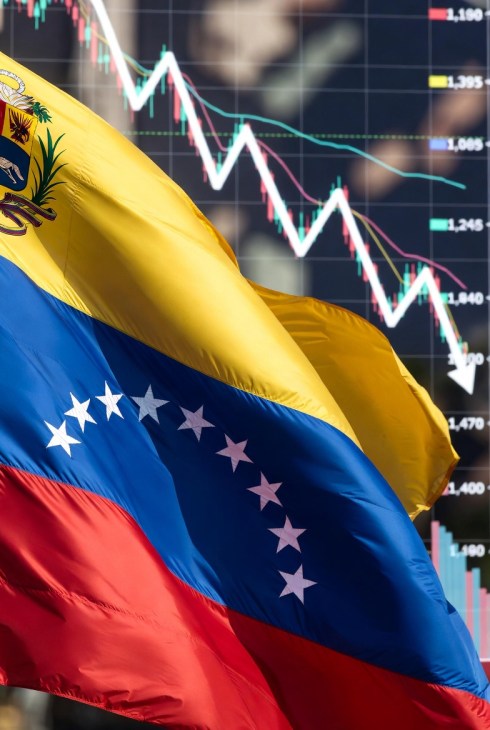
The reality is that Venezuela’s tragic decline serves as a cautionary tale. It shows that simply promising “free stuff” and wealth redistribution doesn’t automatically lead to prosperity. Instead, it can lead to economic dysfunction and suffering.
In this post, we’ve unpacked how the once-celebrated Venezuelan model has become an uncomfortable silence among its former admirers. We’ve seen how the economic realities and human suffering in Venezuela stand in stark contrast to the optimistic promises of socialism. And as we look at these lessons, it’s clear that Western societies need to reevaluate the ideologies we champion. Ultimately, if we want to build fairer and more prosperous societies, we need to be honest about what works and what doesn’t, and not shy away from these tough conversations.
First, from the Manhattan Institute, there’s an analysis by Daniel Di Martino arguing that Venezuela’s crisis was primarily caused by socialist policies like nationalizations and price controls.
Second, the Fraser Institute provides a historical perspective from Fred McMahon, who notes that Venezuela’s decline started with economic mismanagement even before the full rise of socialist policies.











 bleatmop
 Mystro


 Dead Wild Roses
4 comments
January 12, 2026 at 1:53 pm
Paul S. Graham
This a disappointingly one-sided analysis of the problems faced by Venezuela. Left out are the impacts of US funded coup attemps and right-wing violence that have been perpetrated over the last quarter-cenbtury and the US (and Canada) economic sanctions that have crippled the Venezuelan economy and imposed misery on thousands. Any attempt to analyse the “failure” of socialism in Venezuela that does not include the economic and militarty sabotage of the United States cannot be taken seriously.
LikeLike
January 12, 2026 at 9:57 pm
The Arbourist
I’m not denying U.S. meddling or that sanctions hurt civilians. They did, and any honest analysis has to price that in.
But your comment tries to make sanctions and “sabotage” do all the explanatory work, and the timeline won’t carry it.
Venezuela’s crash is visibly underway before the sectoral U.S. sanctions you’re pointing to. Inflation accelerates from 2013; shortages spike by 2014; the oil-price collapse in 2014–2016 blows a hole in a state that had made itself almost totally oil-dependent. Meanwhile the core policy machinery was already in place: price and currency controls, politicization of PDVSA, expropriations that reduced domestic production, and monetary financing of deficits. Those choices generate predictable outcomes even in a world with zero CIA fan-fiction.
Now the sanctions point, steelmanned: U.S. financial restrictions begin in 2017, and oil sanctions tighten hard in 2019. That absolutely made the crisis deeper and harder to unwind, and even humanitarian “exemptions” don’t prevent overcompliance and choke points in practice. If your claim is “sanctions worsened suffering,” I agree.
But if your claim is “without U.S. sanctions, Venezuela is fine,” that’s not analysis. That’s a loyalty pledge.
Here’s the offramp if you want a serious conversation: pick one measurable claim and we can test it. For example:
What % of GDP collapse occurs before 2017?
Which shortages and mortality indicators shift most sharply after 2017 and after 2019?
Which domestic policies, specifically, did not contribute?
If we can agree on dates and mechanisms, we can disagree like adults. If we can’t, we’re just trading slogans. 🙂
LikeLike
January 13, 2026 at 2:55 pm
Paul S. Graham
Nowhere do I suggest that sanctions and sabotage are the only causes of Venezuela’s economic problems. You appear to be making assumptions that are not supported by anything I wrote in my brief commentary. Hence you have no way of knowing what we might disagree on or if we are “trading slogans.” In fact, I offered no slogans. My assessment of your article remains unchanged.
LikeLike
January 13, 2026 at 5:35 pm
The Arbourist
Paul, thank you for clarifying your position—I appreciate you pointing out that I may have read more into your initial comment than was intended.
You’re right: your original note highlighted the role of U.S.-funded attempts at regime change, right-wing violence, and sanctions as significant factors contributing to the misery in Venezuela, without claiming they were the sole causes.I agree that any complete analysis of Venezuela’s crisis must include external pressures, including sanctions (which began with targeted measures in 2015–2017 and intensified with financial restrictions in 2017 and oil sector sanctions in 2019).
These have undeniably worsened economic conditions, restricted access to financing and markets, and amplified suffering for ordinary people, even with humanitarian exemptions often undermined by overcompliance.
At the same time, the timeline shows that core elements of the crisis—such as accelerating inflation (reaching double- or triple-digit levels by 2013–2014), widespread shortages starting around 2013–2014, sharp GDP contraction beginning in 2014 (with estimates of 4–6% drops in early years), and declining oil production due to domestic factors like underinvestment and politicization of PDVSA—were already well underway before the major sectoral sanctions kicked in.
The 2014 oil price collapse hit an economy heavily reliant on oil revenues, exacerbating preexisting vulnerabilities from price controls, expropriations, and deficit monetization.My aim wasn’t to dismiss external factors but to note that domestic policy choices played a central and early role in setting the stage. Sanctions deepened and prolonged the pain, but the decline was in motion prior to them.If you’re open to it,
I’d genuinely welcome your thoughts on specific aspects—like which domestic policies you see as having the least impact, or how you weigh the pre-2017 vs. post-2017 phases. I’m happy to look at data together if there’s a particular metric or period you’d like to discuss.
Open conversation on this is valuable, and I respect your perspective.
Thanks again for engaging thoughtfully.
LikeLike