
 One of the most exasperating comments I hear on a fairly regular basis is that the Media has a left wing bias. If you look even a centimeter inside and below official received opinion you can see there is no left wing bias in the mainstream media. If anything, a right wing bias exists. The news we get generally reflects elite opinion on the topic at hand. That is why it is so important to get your news from as many different outlets as possible hopefully with a few of the ‘alternative’ media outlets thrown into the mix. Medialens is an orginization that watches the British press for the veracity of their stories and accuracy of their reporting. As it is with most things, it is better to show than to tell. I have a short blurb to look at illustrating exactly how filtered our ‘independent MSM’ actually is.
On August 26, the Guardian newspaper published an article titled, ‘US takes on Israeli-Palestinian conflict and Iran’s nuclear programme in one massive gamble.’ Julian Borger and Ewen MacAskill told readers:
“The Obama administration’s approach to two of the world’s most intractable and dangerous problems, the Israeli-Palestinian conflict and Iran’s nuclear programme, is to link them together in the search for a solution to both.
“The new US strategy aims to use its Iran policy to gain leverage on Binyamin Netanyahu’s government.”
The “Iran policy” is based on US Secretary of State Hillary Clinton’s threat of “crippling sanctions” against Iran. (BBC online, ‘Israel-US settlement deal “close”’, Analysis by Jeremy Bowen, August 26, 2009; http://news.bbc.co.uk/1/hi/world/middle_east/8221559.stm)
The sanctions threat is to ensure that Iran does “not compromise on uranium enrichment by the end of next month.” The Guardian told its readers that not only are sanctions supposed to pre-empt any Israeli military action against Iran, “they are also a bargaining chip offered in part exchange for a substantial freeze on Jewish settlements in the West Bank.” The paper quoted one official “close to the negotiations”:
“The message is: Iran is an existential threat to Israel; settlements are not.”
So much for Obama’s much-hailed Cairo speech in June 2009 in which he promised a “new beginning between the United States and Muslims around the world.” (‘Obama speech in Cairo’, Huffington Post, June 4, 2009; http://www.huffingtonpost.com/2009/06/04/obama-speech-in-cairo-vid_n_211215.html)
Okay, so we have the original from the Guardian. Now lets look at the objection from David Cromwell at MediaLens which bases its critique of the article on reality instead of received opinion.
The Guardian article presented the US as a valiant peace-seeker:
“The Obama administration is setting out to juggle two potentially explosive global crises, while walking the tightrope of a shaky and nervous global economy. It is not going to be easy, but Washington appears to have decided it has no option but to try.” (Borger and MacAskill, op. cit.)
This is a deeply misleading picture of the US in the Middle East and the wider world, as we have often explained in our books and in media alerts. We are to believe that the world’s number one rogue state is searching for benign solutions to the world’s most “intractable problems”. This fiction is standard in corporate media coverage.
As the independent journalist Jonathan Cook commented to us:
“This analysis in yesterday’s Guardian is almost a masterclass in how the liberal media unthinkingly reflect elite priorities.” (Jonathan Cook, email, August 27, 2009)
Huh. A little different that what you read in the newspapers all the time. It gets better, Cromwell writes a email to the editor of the Guardian for failing to address the issues in the middle east.
A Challenge To Face-Value Guardian “Journalism
We wrote to the Guardian’s diplomatic editor, Julian Borger, on August 28:
Hello Julian,
Hope all’s well there. I’m sorry to say your article on Tuesday was poor journalism. [1]
Your analysis took Washington’s stated policies and motivations at face value. Why did you stick to the Israeli and Washington view of Iran’s nuclear programme – a legal, civilian nuclear programme – as one of “the world’s most intractable and dangerous problems”?
On the issue of Middle East peace, you give two “expert” opinions, both from people closely associated with the pro-Israel lobby in Washington. Superficially, your article might look balanced; but it is not.
The article asserts that:
“Washington’s plan to link two intractable problems raises international hopes of deal to restart the Middle East peace process.”
But an honest analysis (emphasis mine) would note that for the past 30 years “the Middle East peace process” has largely been a sham. Throughout that period, the US has consistently opposed the international consensus on a peaceful solution. Instead, the US has consistently provided valuable cover for Israel – militarily, diplomatically, economically – in evading its obligations under international law. Genuine peace in the region is actually a threat to an Israeli programme of illegal occupation and expansion that can be achieved only through violence under cover of war, conflict and the crushing of Palestinian human rights. [For more details and background references, see Chapter 9 of ‘NEWSPEAK in the 21st Century’, David Edwards and David Cromwell, Pluto Press, 2009.]
And you twice mention Iraqi “sanction-busting”. But you are silent about the sanctions themselves which directly contributed to the deaths of over one million Iraqis between 1990-2003; half a million of them were children under the age of five. Hans von Sponeck, the former UN humanitarian coordinator in Baghdad, documented the effect of the UN sanctions regime, maintained with cruelty by Washington and London, in ‘A Different Kind of War’: a book which the Guardian appears to have totally ignored.
Why did you quote nobody with the above widely-held rational views?
Why, instead, was your analysis so one-sided? Why so skewed towards the propaganda framework favoured by the US and Israel?
Regards,
David Cromwell
Reference
[1] Julian Borger and Ewen MacAskill, ‘US takes on Israeli-Palestinian conflict and Iran’s nuclear programme in one massive gamble’, Guardian online, August 25 [August 26 in print version], 2009; http://www.guardian.co.uk/world/2009/aug/25/us-obama-israel-palestine-iran
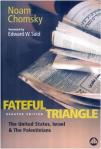
The sad fact is that if you do not read deeply into current events, and more importantly history, you will take the first article at face value despite its erroneous take on the facts of the situation. Noam Chomsky as written extensively on the middle east situation in his book called The Fateful Triangle if you want an detailed analysis of the situation there. Consider Howard Zinn and the late Edward Said’s writings as well on the middle east as additional critical voices on the middle east situation.











 bleatmop
 Mystro
 The Arbourist


 Dead Wild Roses
7 comments
September 3, 2009 at 9:52 am
Rob F
The hostile media effect is a psychological phenomenon where the more of a partisan you are, the more you see the media as biased against your position. (This of course excludes editorials and op-eds, which everyone agrees are biased by definition.) This applies to both the left and the right, even when they consider the same news story. In short, if you are an extremist, the whole media is biased against you.
LikeLike
September 5, 2009 at 10:34 am
The Arbourist
This comment made me stop and think for awhile. I’ve come to several conclusions about the intent.
The comment is worded in such a way to not personally identify the author of the post as suffering from the hostile media effect. This would imply that:
a) You believe that this is an interesting corollary that might merit discussion
b) You believe that the author of the post is suffering from the hostile media effect and the thrust of the article is irrecoverably biased.
c) You believe that by bringing forth this idea of the hostile media effect you can further marginalize an already dissident point of view.
d) You are being diplomatic and not chiding the author directly for his real/perceived skewed take on the world.
e) All or some of the above…
This list is by no means comprehensive, but I think it covers much of the probable reasons for leaving a post thusly worded. If “a” was the reason then yes, I do think that the hostile media effect is an interesting phenomena, coupled with a persecution-complex (especially when one is in a majority cohort) is a prescription for a inherently biased, echo chamber skewing of how one perceives the world.
Looking a “b” I would have to say that your assumption would be wrong as much of my view of the media is based on quantitative facts that have been gathered and published that substantiate my claim that there is an inherent right wing bias in the media. Noam Chomsky’s Manufacturing Content provides a insightful analysis of the phenomena observed.
“c” would earn you a well deserved ‘go frack yourself’ as who are you to arbitrate what is considered partisan, objective, or biased when you present nothing in your comment to support your claim about this article.
“d” See above.
And of course, “e” which I guess would be closest to the truth, which leads me to say thanks for the comment, as it was thought provoking and a challenge to reply to.
LikeLike
September 5, 2009 at 4:59 pm
Rob F
It was reason a, pretty much. And after all, knowledge of the HME gives you a weapon to help rebut any wingnut’s claim that the MSM is biased against them. (As a matter of fact, since wingnuts are such extremists, they are an excellent example of the HME).
LikeLike
September 5, 2009 at 5:04 pm
Rob F
To clarify additionally, it provides a reasonable reason to doubt anyone who claims that the media is biased against them simply because they observe more statements they disagree with. As the other side can reasonably claim the same thing, this is a good reason to make sure you have facts and statistics on your side and using them to show that the other side has more favourable statements/fewer unfavourable statements than your side (ie, count both). Pointing out the existence of the HME cannot counter that.
LikeLike
September 5, 2009 at 8:37 pm
The Arbourist
I kinda assumed it was “a” from the content of your blog. But sometimes it is hard to figure out what is what.
I try and steer away from the extremists when possible, arguing with someone who has calcified in their position usually ends up in both parties being frustrated.
I shoot for the moderates, or those who could be steered to finding out for themselves how things work. I think it is better to find these sorts of things (media bias, class struggle, political systems) out on your own. Self-discovery of fact is a superior method of educating oneself rather than having some pedant (like me) laying down a version of ‘the truth’ :)
LikeLike
January 5, 2010 at 6:18 am
AKUS
Two of the most troubling aspects of news reporting is the way news is increasing reported on the Internet by bloggers whose biases and credentials are not always known, and the way the tools browsers provide to navigate the Internet actual reduce rather then increase the reader’s exposure to alternative points of view.
I’ve just published a piece about the ‘walled garden” effect clearly visible on the Guardian’s website ( The Walled Guardian) about the Guardian’s attempt to ensure that only the GWV (Guardian Word View) is presented to readers and how it hides the credentials of its contributors, and an earlier piece ( Leveraging the Internet to Brainwash Britain) where I noted:
LikeLike
January 5, 2010 at 11:07 am
The Arbourist
But an honest analysis (emphasis mine) would note that for the past 30 years “the Middle East peace process” has largely been a sham. Throughout that period, the US has consistently opposed the international consensus on a peaceful solution. Instead, the US has consistently provided valuable cover for Israel – militarily, diplomatically, economically – in evading its obligations under international law. Genuine peace in the region is actually a threat to an Israeli programme of illegal occupation and expansion that can be achieved only through violence under cover of war, conflict and the crushing of Palestinian human rights. [For more details and background references, see Chapter 9 of ‘NEWSPEAK in the 21st Century’, David Edwards and David Cromwell, Pluto Press, 2009.]
I’m wondering what your opinion is of the above paragraph is. I read through your site and the articles linked. When I see one of the links being to a site dedicated to identifying antisemitism it gives me reason to pause.
The Middle East is a very large, very complex program. Understanding it enough to make cogent comments on the situation is a very difficult prospect for anyone. What I worry about is that sometimes antisemitism becomes another flag to wrap oneself in to avoid the uncomfortable truths of what is happening with the Israelite and Palestinians people. International Law and UN resolutions are not being followed and peoples rights are being denuded and trampled on. The segment I quoted points to this.
LikeLike