
We have many interesting ideas floating around about how capitalism works and its benefits. I would like to focus on just one small aspect of capitalism with regards to how it is implemented in the world and how it applies to difference classes.
One economic fact that escapes many proponents of the ‘free market’ is that for an country’s economy to grow strong, high tariffs and decidedly protectionist measures are required to protect sovereign industry from competition. State intervention in the economy is necessary for the economy to prosper an grow. The pattern has been repeated several times in recent history.
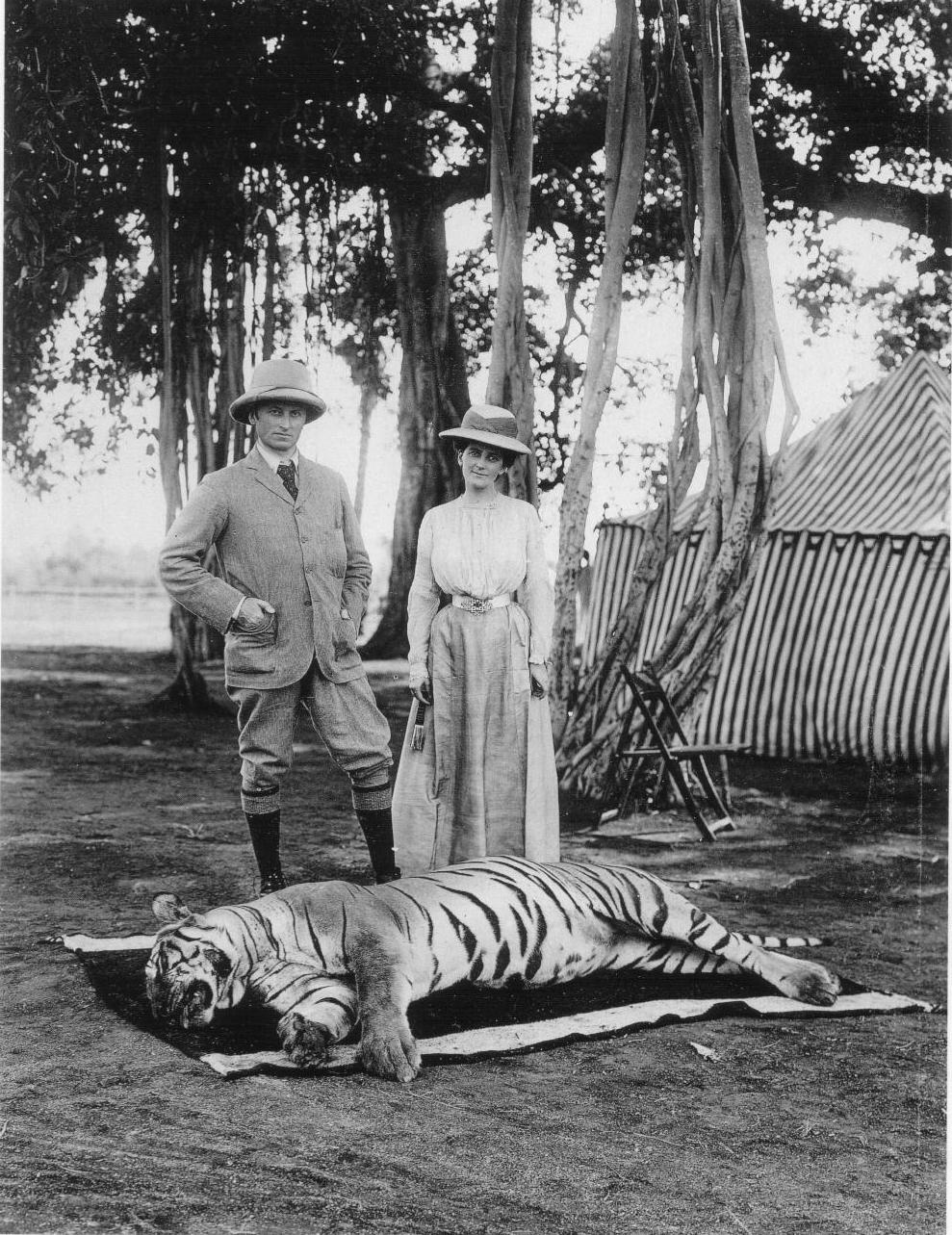 Starting with Britain and her industrialization and capitalization of her economy. To foster the domestic cotton industry, that in the beginning had no hope of competing with a superior product from India, Britain raised tariffs on Indian products and well, brutally conquered India, kicking there textile industry back into the stone age. Imperial solutions for economic problems were easier back then as we could take the role of ‘bringers of civilization’ to the unruly barbaric masses.
Flash forward to today; the economic imperatives remain the same. Protectionism for us and free market discipline for the rest of world. The mailed fist is still omnipresent, but not so blatant as public opinion of the generally benevolent masses must not be stirred from their slumber to protest the injustices being wrought in their name. One of notoriously sublime moves our business classes made in North America was the North American Free Trade Act, which more aptly should be called the North American Free Investing Act giving enormous power to private business and severely curtailing the power of the states involved to intervene in their economies. Mexico, being the weakest signatory to NAFTA, has suffered the most.
Unable to control the flow of goods into the Mexican domestic economy, Mexico’s society has steadily been devolving under the weight of cheap imported products, especially foodstuffs, that have undercut and essentially destroyed the local economy. What has replaced industry in Mexico is the narcotics industry, given the huge market in the US for drugs, narcotics trade and trafficking has become the new Mexican domestic economy.
The Mexican state, not strong to being with, can do little to quell the illegal drug industry, as people have to work and eat. However, the resulting narco-state is not particularly stable or safe as recent headlines have illustrated.
“The bodies of 15 young men, 14 of them headless, were found Saturday outside a shopping centre in the Mexican resort of Acapulco, police said.
 Police believe the victims, all appearing to be in their 20s, were killed and their bodies stuffed into five vehicles by drug cartel members. Investigators say handwritten signs were left with the bodies, a common calling card for the country’s cartels.
This was the largest single group of decapitation victims since Mexican President Felipe Calderon launched an offensive against cartels more than four years ago.”
Not exactly something you want to put in your tourism brochures.
So Mexico is currently embracing the free market and devolving (has devolved?) into a narco-state to feed demand in the US and Canada. Thanks NAFTA.
If we were to apply the same free market prescriptions the IMF and the World Bank do to other countries to ourselves, we might get a small taste of why we and our trumpeted economic system are not welcomed with flowers and open arms.











 bleatmop
 Mystro


 Dead Wild Roses
3 comments
January 11, 2011 at 9:04 am
tildeb
I would much prefer that we move away from such words as ‘protectionism’ and ‘high tarrifs’ and use more responsible words like ‘regulated’ and ‘state reinvestment capital’. By de-fanging the capitalistic lingo into socially responsible language, I think we help tailor the business environment into recognizing the requirements for business and people to be a cohesive whole.
Strict free enterprise (or ‘free market’ these days) is a brutal master; even hard core proponents now fully understand why unregulated business practices in the financial sector is a threat that can be devastating to all economies. Necessary local and state regulations are essential to find that stable balance between creating profitable supply/demand networks which fuel sustainable and responsible economic growth and prosperity. Your example of Mexico shows that brute profit for the few at the expense of the many leads to a hostile environment where business may only be conducted by armed camps.
LikeLike
January 11, 2011 at 6:44 pm
Vern R. Kaine
I agree with Tildeb on the matter of using better words to shape our behaviors. It’s more than just semantics, I believe.
Re: Mexico, a great post, Arb. I would like to add the opinion that there really isn’t any “free” market anymore. Business is far too involved in government, and in turn, government is far too involved in business. True capitalists don’t like this. In the not-so-extreme sense, if government isn’t smothering business on the front end it’s removing (or socializing) all the consequences on the back end for everybody but the honest businessperson. Capitalism should mean that we all get a level playing field and only compete over how best we can meet a customer’s needs.
I say there’s no free market anymore except, however, in third-world countries where governments appear to have hardly any, if any, power against businesses who have their own country’s governments backing them to push their agenda. I recently watched a documentary on how Monsanto has ruined the corn crops and farming industry in Mexico to the point where farmer suicides are common. The people behind these companies at this level aren’t capitalists, they’re profiteers at best, killers at worst. Law-abiding Mexican people can’t plant, they can’t eat, and they can’t work because of what these companies do. The Monsanto-types cut off their hands figuratively, and then their own people cut off their heads literally when they don’t want to join the dark side. How many more reasons do we want to give them to take their chances and cross illegally into America for the mere hope of lawfulness?
On a side note – I find it somewhat funny that when you get down to it, far-left leaning individuals and far-right leaning individuals have a lot in common when it comes to their loathing of big business and the shadow dealings of government. Check out what Jesse Ventura and Alex Jones think.
The World According to Monsanto
http://video.google.com/videoplay?docid=6262083407501596844#http://video.google.com/videoplay?docid=6262083407501596844#
http://www.sourcewatch.org/index.php?title=Monsanto%27s_Mexican_Maize_Mischief
http://www.bizjournals.com/stlouis/stories/2010/01/25/daily11.html
LikeLike
January 11, 2011 at 7:33 pm
Alan Scott
The Arbourist,
A point of order. I contend that what you describe is not capitalism. It is Mercantilism. You may argue that it is a form of capitalism, but it is not a pure form. Mercantilism can also exist under a planned Socialist economy.
LikeLike