
You are currently browsing the monthly archive for April 2011.
Exercise your democratic right and get out and vote. Take the first small step toward becoming politically engaged.
Third movement
The third movement is in a traditional ternary form (ABA). It is composed of the Allegretto and contrasting “trio” section, followed by a reprise of the Allegretto material and coda. A notable aspect of this movement is Brahms’s careful attention to symmetry.
The form could be described as: A B A’ B’ C D C’ D’ A’’–Trio–A’’’ B ’’ A’’’’ Coda
[edit] Allegretto

The A theme as stated by the clarinet.
The Allegretto is in the key of A-flat major and begins with a calm, stepwise melody in the clarinet. The four bar figure is extended to an irregular five bars through a small bridge between the phrases by the strings. The clarinet rounds off the “A” theme in the Allegretto with an inversion of the first five bars heard.

The B theme as stated by the flutes
The B theme enters in m. 11 and features a descending dotted-eighth pattern in the flute, clarinet, and bassoon with the strings echoing the rhythm in rising and falling figures. After eight measures, A’ appears with the violins iterating the first theme and a longer, chromatic bridge section that extends the phrase structure to seven bars. B’ is presented with an extension into C.
The C and D themes differ from the first two in that they are shorter and more angular rhythmically. The A and B themes feature an almost constant eighth note pizzicato in the strings, whereas C and D are more complex with an interlocking sixteenth note pattern accompanying the winds. Movement from the major mode to F minor also marks these sections as apart from preceding material. This obvious contrast in character and mood can lend one to think of the C and D sections as a sort of “trio” within the first Allegretto section in the larger ternary form displayed by the movement as a whole.[1] The symmetry within one section reflects the symmetry of the whole.
A’’ closes off the first major section with the clarinet stating the first theme, much as it did in the beginning, finishing with a transition to the trio.
Trio

The trio theme.
The Trio offers a change of key, as well as a change of time. The key moves to B major, an enharmonic minor third away from A-flat. This key movement balances with the C and D sections in F minor, also a minor third away from the home key but in the opposite direction. The time signature changes from a stately 2/4 to a more pastoral and dance-like 6/8. The flute, oboe, and bassoon introduce a joyful melody in stepwise motion as in the A theme. The strings add a downward three-note arpeggio. These two motives make up the bulk of the trio material. Restatement and development of those themes ensue until the brass and winds join together for a final repeat of the melody. The second ending brings the orchestra back into 2/4 time and to A’’’.
Return of the Allegretto
A major difference between A’’’ and the earlier iterations of A is the lingering effect of the trio upon the movement. The monotone call from the opening of the trio melody appears over the clarinet melody in the flute, oboe, and bassoon. The rhythmic effect of triplets also invades the pure eighth note world of the A theme, producing polyrhythms. Instead of the inversion of the theme we expect in the second phrase of A, the strings take over and offer an entirely different melody, but with essentially the same contour as the inversion. B’’ occupies a significantly larger space of the reprise than it does in the previous Allegretto. It leads through an extended transition to the last, quiet statement of A in unison by the strings. Strings of dotted eighth notes end the movement proper with ideas from the B theme.
Coda
The entry to the coda is marked “poco a poco più tranquillo” and the movement ends with the gentle throbbing of triplets quoted from the trio section. The final few bars end somewhat abruptly with the downward arpeggio of the strings in the trio finishing on the downbeat of a new bar.
Noam Chomsky again pushing debate to the margins where you get a glimpse of how the world works and how we have allowed our debate to be warped by the radical priorities of corporate culture.
I’m curious as to the lack of story around the little issue of our own government not following the rules of Canadian Democracy. I guess Steve was not happy with just shutting parliament down, but he wanted his way with how our democracy is run.
Cute. I recommend not voting for him and his merry band of fascists.
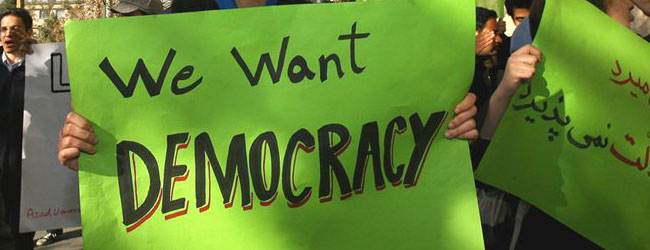 The parallel between the official line for public consumption and the actual realpolitik is quite thin, if you are willing to look. And therein lies the problem, we are not rewarding for looking, for being curious, for wanting to know what our policy actually is in the Middle East. Noam Chomsky discusses our role in the Middle East in a recent article posted at Mother Jones.
“The US and its Western allies are sure to do whatever they can to prevent authentic democracy in the Arab world. To understand why, it is only necessary to look at the studies of Arab opinion conducted by US polling agencies. Though barely reported, they are certainly known to planners. They reveal that by overwhelming majorities, Arabs regard the US and Israel as the major threats they face: the US is so regarded by 90% of Egyptians, in the region generally by over 75%. Some Arabs regard Iran as a threat: 10%. Opposition to US policy is so strong that a majority believes that security would be improved if Iran had nuclear weapons—in Egypt, 80%. Other figures are similar. If public opinion were to influence policy, the US not only would not control the region, but would be expelled from it, along with its allies, undermining fundamental principles of global dominance.”
Whoops, public opinion or what the people want is ignored in our client states, how surprising. The very last thing we want in the Middle East is Democracy.
“Support for democracy is the province of ideologists and propagandists. In the real world, elite dislike of democracy is the norm. The evidence is overwhelming that democracy is supported insofar as it contributes to social and economic objectives, a conclusion reluctantly conceded by the more serious scholarship.
Elite contempt for democracy was revealed dramatically in the reaction to the WikiLeaks exposures. Those that received most attention, with euphoric commentary, were cables reporting that Arabs support the US stand on Iran. The reference was to the ruling dictators. The attitudes of the public were unmentioned. The guiding principle was articulated clearly by Carnegie Endowment Middle East specialist Marwan Muasher, formerly a high official of the Jordanian government: “There is nothing wrong, everything is under control.” In short, if the dictators support us, what else could matter?
The Muasher doctrine is rational and venerable. To mention just one case that is highly relevant today, in internal discussion in 1958, president Eisenhower expressed concern about “the campaign of hatred” against us in the Arab world, not by governments, but by the people. The National Security Council (NSC) explained that there is a perception in the Arab world that the US supports dictatorships and blocks democracy and development so as to ensure control over the resources of the region. Furthermore, the perception is basically accurate, the NSC concluded, and that is what we should be doing, relying on the Muasher doctrine. Pentagon studies conducted after 9/11 confirmed that the same holds today.”
Dig a little deeper, read more about the Middle East and history from a variety of sources. Educate yourself about what you know or think you know about, questioning base assumptions is the all hallmark of the critical thinker and rational citizen.
And I thought the Pope had the market on evil empire Star Wars references. :)
 The verdict has been in for a long time now, but still the message is not getting through. Harsh sentences and a punitive justice system do not work. “The best way to turn a non-violent person”, says prison psychologist James Glligan, “into a violent one is to send him to prison.”
The official reasons for incarceration and imprisonment are described as the following –
“[…] while imprisonment is generally believed to have four ‘official’ purposes – retribution for crimes committed, deterrence, incapacitation of criminals and the rehabilitation of criminals, in fact three other purposes have shaped America’s rates and conditions of imprisonment. These unofficial purposes are class control – the need to protect honest middle-class citizens from the dangerous criminal underclass; scapegoating – diverting attention away from more serious social problems (the growing inequalities in wealth and income [for example].); and using the threat of the dangerous class for political gain.
-Irwin, John. Federal Bureau of Investigation, Crime in the United States 2006.
Washington, DC:Us Government Printing Office, 2006.
So, when do we wake up and begin to make the connection that punishment does not fix people and begin to structure our penal systems to reflect this fact?











 bleatmop
 Mystro


 Dead Wild Roses
Your opinions…