
Reading long threads on X sucks, so I asked Grok to combine a great threat into an “essential read” essay on what is happening in California.

The recent riots in Los Angeles, as depicted in a post by Wokal Distance on X (dated June 9, 2025), reveal a level of organization that challenges the notion of spontaneous public unrest. The accompanying images show protesters strategically using barricades made from traffic cones and benches, suggesting premeditated planning rather than an impromptu reaction to the Immigration and Customs Enforcement (ICE) raids. Wokal Distance argues that these riots are “designed to look chaotic to cover up the fact that they’re well funded, exceptionally organized, and carried out by well-trained activists using intelligent, highly developed tactics.” This perspective is supported by the visible preparation, including the distribution of shields and the use of coordinated tactics, which indicate a structured effort rather than a random outburst of anger.
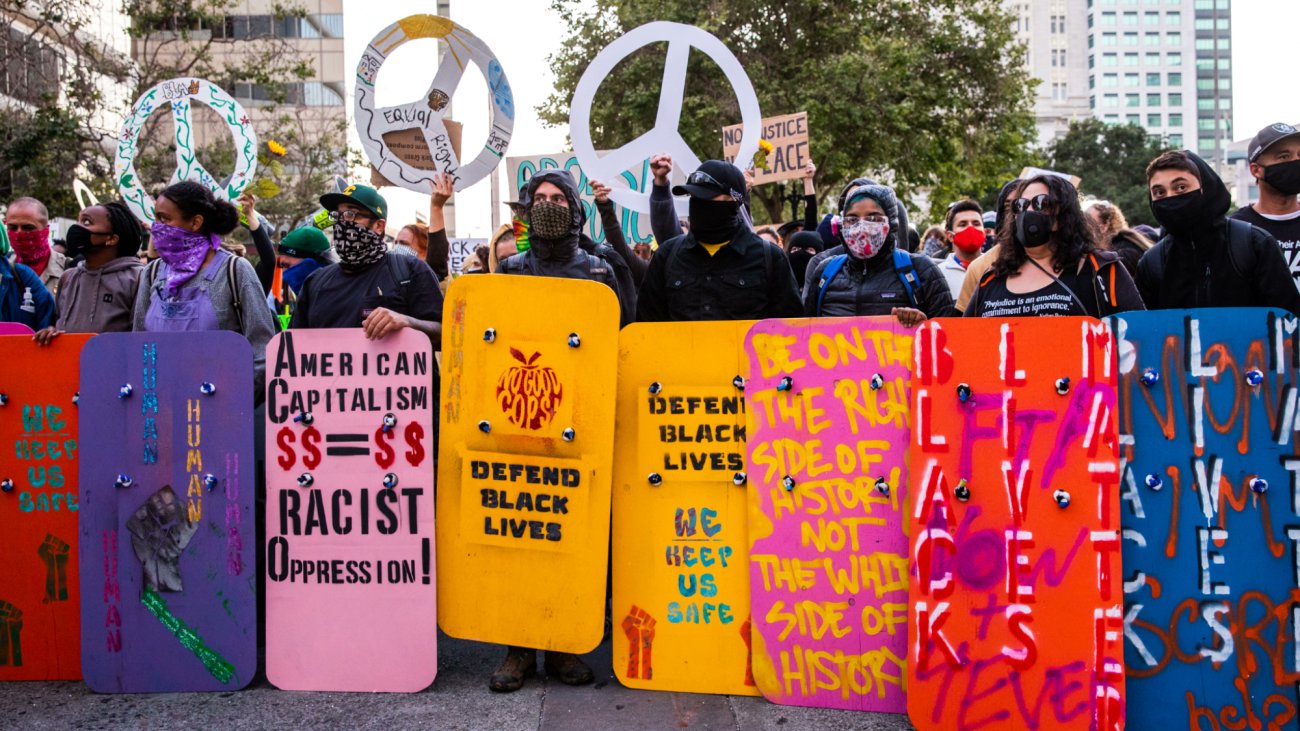
The tactical use of shields, as highlighted in the post, further underscores the organized nature of these protests. The images reveal protesters equipped with plywood shields disguised as cardboard signs, a method previously employed during the 2020 Black Lives Matter protests and the 2024 pro-Hamas riots. Wokal Distance notes that crafting each shield requires approximately three hours, a process that involves activists dedicating entire days to preparation. This level of commitment and resource allocation points to a well-funded operation, possibly linked to broader activist networks. The presence of a Home Depot bucket in the imagery suggests a centralized supply chain, reinforcing the idea that these materials are systematically distributed to participants, a tactic also observed in past organized protests.
Beyond physical preparation, the riots employ sophisticated strategies aimed at manipulating public perception and pressuring authorities. Wokal Distance outlines a “decision dilemma” tactic, where protesters create situations—such as blocking roads with barricades—that force authorities into no-win scenarios, regardless of their response. This is complemented by the “real action is your target’s reaction” approach, where any overreaction by police is leveraged to portray protesters as sympathetic underdogs. The inclusion of a baby in the protest, as mentioned, serves as a calculated move to heighten this sympathy, placing law enforcement in an impossible position where any use of force could be spun as an attack on the vulnerable. These tactics are designed to play to an external audience, shaping the narrative through media coverage and social platforms.
The theoretical foundation for these strategies, as explained by Wokal Distance, draws from radical academic works and activist training manuals, such as “Beautiful Trouble.” This book, co-authored by individuals with whom Wokal Distance has personal experience, provides a blueprint for using violence and disruption to gain political leverage. The post references historical examples, like the 2000 Summit of the Americas protests with their color-coded zones (Green, Yellow, Red) for varying levels of action, illustrating a long-standing tradition of planned escalation. This intellectual backing, combined with the practical execution seen in Los Angeles, suggests a movement informed by decades of activist theory and real-world application.
In conclusion, the Los Angeles riots, as analyzed by Wokal Distance, are far from spontaneous; they are a meticulously orchestrated campaign with roots in both funding and ideology. The involvement of well-trained activists, the use of pre-fabricated tools, and the application of strategic theories highlight a concerted effort to influence political outcomes. While the immediate trigger may be the ICE raids, the deeper structure points to broader networks, potentially involving figures like Neville Singham, as suggested in related threads by @DataRepublican. As the situation unfolds, understanding these dynamics is crucial for crafting an effective response that avoids the traps set by these calculated tactics.
**Reference:** Wokal Distance. (2025, June 9). [Post on X]. https://x.com/wokal_distance/status/1931953269775188449
 il
il











 bleatmop
 Mystro
 The Arbourist


 Dead Wild Roses
7 comments
June 9, 2025 at 12:01 pm
tildeb
More ‘mostly peaceful’ rioting and looting, I see. When will MSM figure out they are being used as the distributors of disinformation?
LikeLiked by 1 person
June 9, 2025 at 1:27 pm
Sumi
The image of the shields at the bottom of your post was taken at BLM protests 5 years ago in Oakland. https://truthout.org/articles/if-we-dont-want-armed-feds-occupying-our-cities-we-must-hit-the-streets/
Posting photographs taken in different places and times and claiming they show what is going on now is a common disinformation tactic. Please don’t fall for this nonsense. A quick reverse image search on Google is all it takes.
LikeLike
June 9, 2025 at 1:58 pm
The Arbourist
The suggestion to conduct a reverse image search is noted; however, the current analysis, based on the provided sources, supports the authenticity of the image as representative of the Los Angeles riots on this date. These riots are not organic or spontaneous, neither in the past nor now, as evidenced by the structured deployment of resources and the application of sophisticated strategies, such as the “decision dilemma” and narrative manipulation tactics outlined by Wokal Distance. The presence of coordinated efforts and pre-fabricated tools underscores a deliberate campaign, countering the notion of disinformation in this instance.
For context of the picture I used, it was the third of a series showing various left activist (2020 BLM rioters) groups with shields or constructing shields. second on the thread.
The point is to illustrate that these riots, like previous riots contain a strong organizational and logistical presence that demonstrate these are not spontaneous events.
LikeLike
June 9, 2025 at 2:00 pm
Carmen
Thanks for posting that comment, Sumi. Conspiracy theories abound. Obviously even intelligent bloggers fall victim. :(
LikeLike
June 9, 2025 at 2:52 pm
The Arbourist
@Carmen
Really?
This is exactly how the activist Left does activism.
URL: https://beautifultrouble.org
The official site for Beautiful Trouble: A Toolbox for Revolution offers access to the online toolbox, including tactics, principles, theories, and case studies. It also provides information on purchasing the book (full and pocket editions) and accessing training resources for activists. The website serves as a comprehensive resource for creative activism strategies.
See also “Rules for Radicals: A Pragmatic Primer for Realistic Radicals” by Saul D. Alinsky. I even have a blog post on it, go figure.
Just because *you* haven’t heard/know about what is going on doesn’t make it a “conspiracy theory”. Go take a peek at how this radical activism works, they make it abundantly clear in their writings.
It’s getting tiresome dealing with the simplistic thought equation of “everything that doesn’t agree with my views” is obviously a right-wing conspiracy theory.
Controlling the narrative is purpose of all these activist actions – narratives (*ahem ELBOWS UP*) – are not truth but rather juiced up stories meant to motivate people to act and more importantly react without thinking.
LikeLike
June 10, 2025 at 5:25 am
Carmen
It’s getting tiresome – for me – to read your posts which deliberately sidetrack from the real issue happening. Please, Arb, realize that you are also trying to present a narrative which is ‘your view’. Surely you must see that your credibility is at issue when you present something as fact which is easily and handily debased.
LikeLike
June 10, 2025 at 9:32 am
The Arbourist
@Carmen
I can see where it would be tiresome to come across issues that are being portrayed from a different point of view. The Overton Window has shifted for me and it means that analyzing events and the media coverage of said events are sometimes going to be different now.
I think that it is important to challenge media narratives – wherever they come from – because they are not being truthful or objective in their reporting. Is this a simple replace MSNBC with FOX news situation? Not necessarily, the course that seems logical to take is not to take the stories put forth by either ‘side’ as the truth. My distrust of the current media situation can lead to conflict, sometimes with people who may have higher trust in our media institutions that I do. Do I wish that the CBC hadn’t drunk all of the koolaid and shredded most of its credibility? Absolutely. I used to defend and support the CBC vociferously online and in meatspace. Every correspondence I’ve sent the the CBC regarding their news stories regarding the ongoing gender medical scandal in Canada have been dismissed out of hand – one can only try for so long to help right a ship that stubbornly refuses to come to even keel. The CBC has made a clear-eyed choice to support the gender-narrative that is anti-science, anti-reality, and is actively harming children in our society – it sinks their credibility and any supposed commitment to objective reporting.
With regards to the LA riot posts – please note that I did post a clarification to Sumi about the picture used. The context, admittedly, was unclear. I chose it because it represented the amount of organization and logistics that is happening in the current 2025 riots.
I have a many commentors on this blog that do their best to keep me honest, I’m glad you’re among them.
LikeLike