
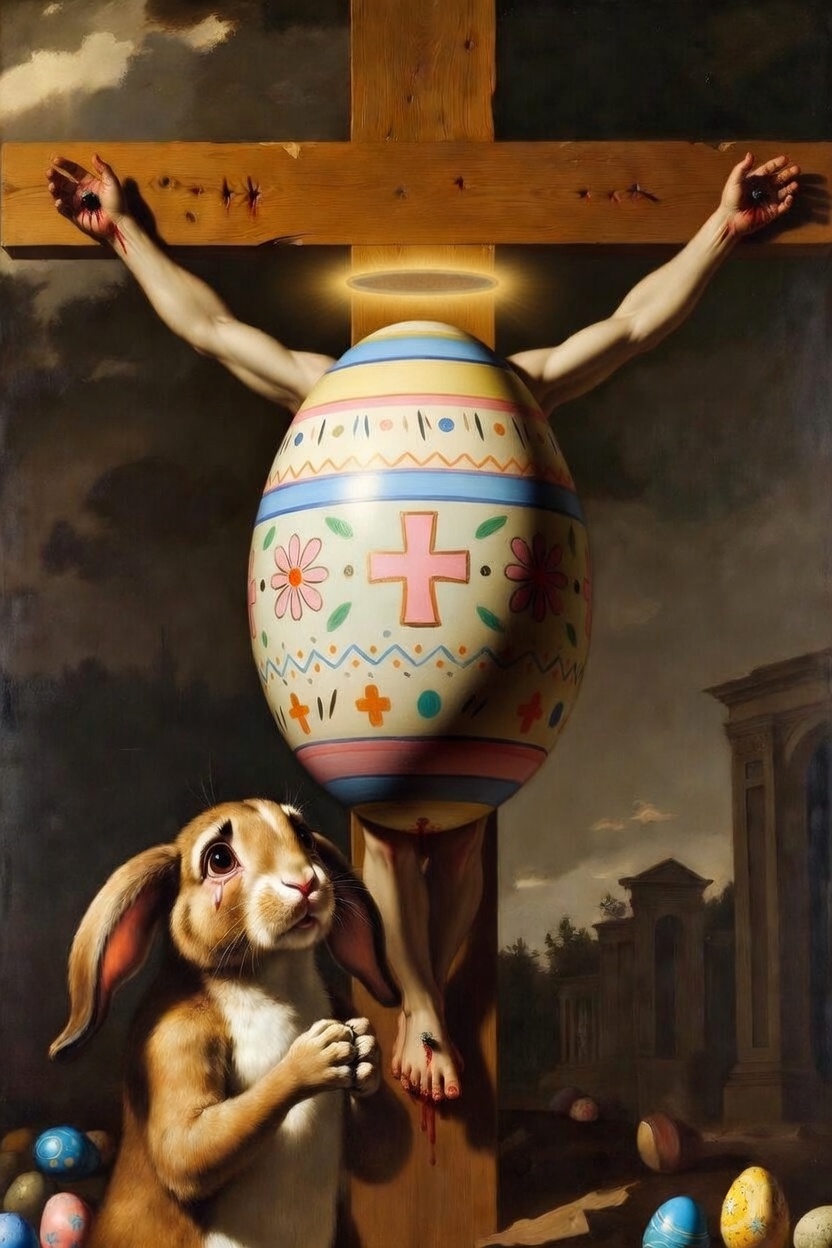
And in those days the people took the Egg and lifted it up.
For they had inherited a story too severe for annual use. It spoke of sin, sacrifice, judgment, and the defeat of death. This was felt to be excessive. So the people, being practical, placed an Egg at the centre instead.
And the Egg was found to be most serviceable. It made no demands. It required no repentance. It offered renewal without cost, festivity without doctrine, and transcendence in colours suitable for children.
So the teachers taught the people, saying: “Behold, life emerges from the shell.”
And the merchants said: “Behold also the premium edition.”
And the people were pleased, for the new symbols were soft, and the old ones had been sharp.
Now there remained, in the background, certain older shapes: a cross, some blood, the memory of an execution, and the rumour that something more serious had once been meant here. But these were judged unhelpful to the season and were retained chiefly as atmosphere.
Thus the Bunny was appointed witness, being harmless and incapable of theology.
And every year thereafter the people gathered in bright garments and proclaimed the feast of renewal. They spoke warmly of spring, family, and hope. They hid eggs for the children. They exchanged sweets. And they congratulated themselves on having preserved the holiday while removing from it all that might interrupt digestion.
So the form remained, and the meaning was transferred.
And this was counted wisdom.
Yet some, looking upon the Egg lifted where once another figure had stood, felt a faint unease, as of men who have kept the ceremony and misplaced the object.
But the people called this nostalgia, and continued the celebration.











 bleatmop
 Mystro


 Dead Wild Roses
Leave a comment
Comments feed for this article