
You are currently browsing The Arbourist’s articles.
In today’s polarized world, the oppressor/oppressed lens shapes how we talk about morality, justice, and power. From social media to workplaces, this framework—dividing society into oppressors (those with power) and oppressed (those without)—is often used to judge right from wrong. It’s a powerful tool, rooted in the struggles of marginalized groups, but is it enough to guide our moral decisions in a complex society? In this blog series, I’ll argue that while the oppressor/oppressed lens has been vital for naming injustice, it falls short as a universal moral compass. Over the next few posts, we’ll explore its origins, its modern applications, its limitations, and what a better framework might look like.
Where It All Began: The Roots of the Lens
The oppressor/oppressed lens emerged from thinkers and activists who sought to understand systemic inequality. One of its earliest articulations came from the Combahee River Collective, a group of Black feminist activists in 1977. In their groundbreaking statement, they argued that Black women faced “interlocking” oppressions—race, gender, class, and sexuality—that couldn’t be separated. Their work inspired the concept of intersectionality, a term coined by Kimberlé Crenshaw in 1989.
What Is Intersectionality?
Intersectionality is the idea that different forms of oppression (like racism, sexism, or classism) don’t exist in isolation—they overlap and compound each other. Crenshaw used the metaphor of a traffic intersection: a Black woman standing at the crossroads of race and gender faces dangers from multiple directions, often ignored by systems that focus on only one form of discrimination. Intersectionality asks us to see how identities interact to shape unique experiences of privilege or marginalization.
A Real-World Example
Consider a Black woman named Maya applying for a tech job. She’s highly qualified but faces rejection. A hiring manager might unconsciously favor candidates who fit a “tech bro” stereotype (often white and male). Maya’s race and gender intersect, creating barriers that neither a white woman nor a Black man might face to the same degree. If she complains, HR might dismiss her concerns, saying the company is “diverse” because it hires women or Black men. This misses how Maya’s specific experience—being both Black and a woman—shapes her reality. Intersectionality helps us understand and address these layered injustices.
Around the same time as the Combahee River Collective, Brazilian educator Paulo Freire was shaping the oppressor/oppressed lens through his 1970 book, Pedagogy of the Oppressed. Freire argued that oppression dehumanizes both the oppressed and the oppressor, and liberation comes through “critical consciousness”—understanding and challenging power structures. His problem-posing education model encouraged dialogue to awaken learners to their class-based oppression, rejecting the “banking model” where students passively absorb facts. However, Freire’s focus on class consciousness has drawn criticism. By prioritizing ideological awakening, his methods often de-emphasize factual knowledge and rigorous, open-ended critical thinking. Critics argue that his approach risks replacing one form of dogma with another, steering learners toward a Marxist view of oppression rather than fostering truly independent analysis. While empowering, Freire’s framework laid the groundwork for a binary lens that can oversimplify complex moral realities.
These thinkers made the oppressor/oppressed lens a revolutionary tool for giving voice to those silenced by racism, sexism, and classism. But even then, its binary framing—amplified by Freire’s ideological focus—had limits, often overlooking the messy realities of human experience.
Intersectionality Today: Misuse and Oversimplification
Intersectionality and the oppressor/oppressed lens are now mainstream, from corporate diversity trainings to online activism. But as they’ve spread, they’ve often been misused in ways that undermine their original purpose. In some settings, intersectionality is reduced to a checklist of identities—race, gender, sexuality—used to rank people as “more oppressed” or “less oppressed.” On social media, this can turn into a kind of moral one-upmanship, where individuals are judged not by their actions but by their demographic categories. For example, a viral X post might call out someone as “privileged” based solely on their race or gender, ignoring their personal struggles or context. This flattens intersectionality’s nuance into a rigid hierarchy of victimhood.
In corporate or academic spaces, the lens is sometimes applied dogmatically. Take a workplace DEI (Diversity, Equity, Inclusion) workshop: employees might be told to “check their privilege” based on broad categories like whiteness or maleness, without considering class, disability, or other factors. This can alienate people who might otherwise support justice efforts, fostering resentment instead of understanding. By treating the oppressor/oppressed lens as a moral absolute, these applications risk shutting down dialogue and oversimplifying complex issues.
The misuse of intersectionality doesn’t negate its value—it’s still a vital tool for understanding layered injustices like Maya’s. But when it’s wielded as a blunt instrument, it can divide rather than unite, turning a framework for empathy into a tool for judgment. This is why we need to question the oppressor/oppressed lens as a universal moral guide.
What’s Next?
The oppressor/oppressed lens, with intersectionality at its core and Freire’s class focus as a foundation, was born from real struggles. But its ideological roots and modern misapplications show it’s not the whole story. In the next post, we’ll explore how the lens is used today, drawing on thinkers like Robin DiAngelo and John McWhorter. Then, we’ll dig into its deeper limitations with insights from bell hooks and Joe L. Kincheloe. Finally, we’ll propose a more nuanced way to navigate morality in a complex world.
Have thoughts or experiences with intersectionality or the oppressor/oppressed lens? Share them in the comments—I’d love to hear your perspective.
Sources: Combahee River Collective Statement (1977), Paulo Freire’s Pedagogy of the Oppressed (1970), Kimberlé Crenshaw’s “Mapping the Margins” (1989), Peter Roberts’ “Paulo Freire and the Politics of Education” (1999).

Whelp…
Postmodernity and the Absence of Objective Truth
Postmodernity is a philosophical and cultural movement that fundamentally challenges the existence of a single, objective truth. Rather than viewing truth as a universal constant that everyone can agree upon, postmodernism argues that reality is constructed through a multitude of competing narratives. These narratives—stories shaped by language, culture, and power dynamics—offer different versions of what is “true,” depending on the perspective of the individual or group telling them. In this worldview, there is no grand, overarching narrative (often called a “metanarrative”) that can explain everything. Instead, truth becomes fragmented, subjective, and contingent on the context in which it is understood, emphasizing the diversity of human experience over a unified reality.
Truth Denominations and Their Lenses
This rejection of a singular truth gives rise to what can be described as “truth denominations”—distinct groups or communities that each operate with their own set of beliefs and methods for determining what is true. Much like religious denominations differ in their doctrines, these truth denominations use unique “lenses” or interpretative frameworks to shape their understanding of the world. For instance, one group might rely heavily on scientific evidence and empirical data as the basis for truth, while another might prioritize personal experiences, cultural traditions, or spiritual insights. These lenses are not just passive filters; they actively construct the reality that each group accepts, meaning that truth varies widely between denominations. In a postmodern context, no single lens is deemed inherently superior—each is simply one of many valid ways to interpret existence.
Implications of a Pluralistic Truth Landscape
The result of this postmodern approach is a decentralized, pluralistic landscape where multiple truths coexist, each valid within its own narrative framework. This can lead to a form of relativism, where what is true for one person or community might not hold for another, depending on their chosen lens. While this perspective fosters diversity of thought and challenges rigid, dogmatic beliefs, it also complicates the idea of a shared reality. Societies must grapple with navigating these competing narratives without a common foundation, raising questions about coherence and cooperation. In a world of truth denominations, understanding and engaging with different perspectives becomes essential, as each group seeks legitimacy for its own version of reality amidst the absence of an absolute, unifying truth.
The Toxicity of Postmodernism to Classically Liberal Societies
The postmodern rejection of objective truth can be toxic to the classically liberal societies of the West, which depend on unifying objective truths to sustain their rational functioning. These societies, rooted in principles of individual liberty, reason, and the rule of law, have historically thrived by anchoring governance and social organization in a shared commitment to verifiable facts—evident in systems like the scientific method and evidence-based legal frameworks. Postmodernism’s elevation of subjective experiences and competing narratives undermines this bedrock, fracturing the common ground essential for rational discourse and democratic decision-making. This erosion fosters a fragmented society where truth claims compete without resolution, fueling polarization, identity politics, and a decline in social cohesion. Far from enriching these societies, postmodern relativism threatens the stability and prosperity enabled by reason and evidence, introducing a corrosive instability that jeopardizes the very foundations of Western liberal order.

Arvo Pärt’s De profundis (1977) is a choral work for male voices (TTBB), percussion, and organ, based on Psalm 130, a penitential psalm from the Latin Vulgate (“Out of the depths I cry to you, O Lord”). Composed in Pärt’s signature tintinnabuli style, it features minimalist textures, stark harmonic clarity, and a meditative atmosphere. The piece unfolds slowly, with layered vocal lines and resonant organ drones, evoking a sense of spiritual longing and introspection. The percussion adds subtle, ritualistic accents. Typically lasting about 5–7 minutes, it’s a profound, contemplative setting of the sacred text, emphasizing humility and hope.
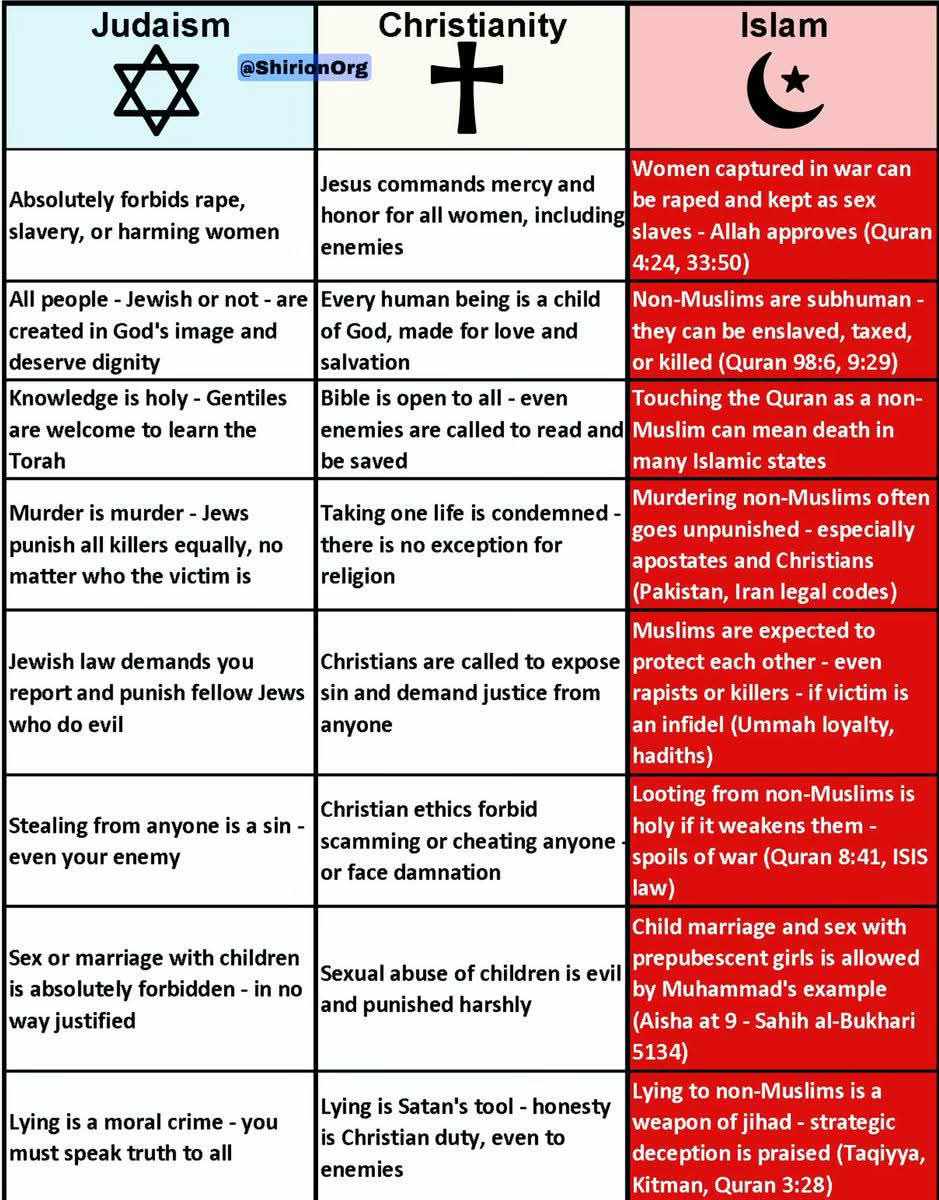
 The foundations of classically liberal societies, characterized by individual freedoms, rule of law, and democratic governance, are significantly influenced by Judeo-Christian values that shaped Western civilization. These values, rooted in the ethical and moral frameworks of Judaism and Christianity, provided a philosophical basis for concepts such as human dignity, personal responsibility, and the inherent worth of the individual. While secular ideologies emphasize empirical reasoning, historical evidence suggests that Judeo-Christian principles played a pivotal role in the development of modern liberties. This essay presents the strongest possible arguments for the influence of Judeo-Christian values on contemporary freedoms, ensuring historical accuracy and addressing potential criticisms from an objective perspective.
Human Dignity and Natural Rights
The Judeo-Christian concept of imago Dei—the belief that humans are created in the image of God—established a foundation for universal human dignity. Found in Genesis 1:26-27, this principle asserts that every individual possesses intrinsic value, regardless of social or economic status. This theological idea significantly influenced Enlightenment thinkers like John Locke, who argued in his Two Treatises of Government (1689) that individuals have inalienable rights to life, liberty, and property, which governments are obligated to protect (Locke, 1689). Scholars such as Jeremy Waldron and John Dunn emphasize that Locke’s political philosophy was deeply rooted in Christian theism, with his concept of human equality derived from the belief that all humans are equal before God (Waldron, 2002; Dunn, 1969). However, Locke’s ideas also drew from broader intellectual traditions, including Greek philosophy and Roman law, indicating that while Judeo-Christian values were a critical influence, they were not the sole driver of natural rights theory.
Rule of Law and Justice
Judeo-Christian teachings on justice and morality, particularly through the Ten Commandments and biblical legal codes in Exodus 20, contributed to the development of the rule of law. These teachings emphasized accountability, fairness, and the principle that laws apply equally to all, influencing key historical documents like the Magna Carta (1215), which curtailed monarchical power, and the U.S. Constitution (Hamburger, 2002). The Christian concept of a higher moral law, accountable to divine authority, reinforced the idea that no one, including rulers, is above the law—a cornerstone of liberal governance. Organizations like the National Center for Constitutional Studies highlight how biblical principles informed concepts such as the consent of the governed (NCCS, 2018). Nevertheless, other civilizations, including ancient Greece and Rome, also developed robust legal systems, suggesting that Judeo-Christian values were one of several influences on the rule of law.
Individual Conscience and Democratic Ideals
The Protestant Reformation, with its emphasis on individual conscience and the priesthood of all believers, challenged the centralized authority of the Catholic Church and fostered democratic principles. Reformers like Martin Luther and John Calvin promoted personal interpretation of scripture, cultivating a culture of questioning authority and valuing individual agency. Historian Brad Gregory argues that this shift influenced protections like the U.S. First Amendment, which safeguards freedom of religion and speech (Gregory, 2012). Sources such as the Free Speech Center and Modern Reformation further note that the Reformation’s focus on individualism contributed to modern democratic thought (First Amendment Encyclopedia, 2023; Modern Reformation, 2022). However, the rise of democracy was also shaped by Enlightenment ideas and nationalism, indicating that the Reformation was a significant but not exclusive factor.
Addressing Counterarguments
Critics, particularly from secular perspectives, may argue that modern freedoms could have emerged solely through rational, secular reasoning, citing philosophers like Voltaire and Montesquieu, who championed individual rights and separation of powers. While secular contributions were substantial, historical evidence suggests that Judeo-Christian values provided a moral and cultural framework that lent legitimacy to these ideas during their formative periods. For instance, the concept of natural rights was grounded in Christian thought before being secularized, and the Reformation’s challenge to ecclesiastical authority paved the way for broader critiques of centralized power. This interplay between religious and secular influences underscores the complexity of the development of modern freedoms.
Conclusion
While modern liberal societies often operate under secular frameworks, their core freedoms—individual rights, rule of law, and democratic principles—owe a significant debt to Judeo-Christian values. The belief in human dignity, the emphasis on justice, and the promotion of individual conscience provided essential ethical and philosophical foundations for these liberties. However, these values were part of a broader historical process that included Greek, Roman, and secular Enlightenment influences. Recognizing this multifaceted heritage enriches our understanding of the roots of contemporary freedoms, offering a balanced perspective that respects both religious and secular contributions.
In our first post, we defined media narratives and propaganda, revealing how stories shape our reality. In the second, we explored how narratives are built, using Saul Alinsky’s tactics and the Yes Men’s BP hoax as examples. Now, we put it all together with a popular, obvious narrative: Climate Change. This story dominates Western media, influencing everything from policy to personal habits. But how was it constructed? And where does it cross into propaganda? Let’s dissect it using the tools we’ve learned—selection, framing, and amplification—and see the process in action.
Selection: Cherry-Picking the Crisis
Media narratives begin with selection: choosing which facts, events, or voices to highlight. In climate coverage, this often means spotlighting alarming studies, extreme weather, or activist pleas while downplaying nuance. For instance, the 2018 IPCC report, “Global Warming of 1.5°C,” warned of catastrophic warming by 2030 if emissions aren’t drastically cut, making headlines globally (full report: https://www.ipcc.ch/sr15/). But less dire studies—like those suggesting adaptation potential or slower warming—rarely get the same attention. Similarly, every heatwave or hurricane is quickly linked to climate change, even when scientists caution against oversimplification.
This isn’t to say the selected facts are false; it’s that they’re curated. By consistently selecting alarming data, media primes us to see climate change as an immediate, existential threat, sidelining debates on solutions or trade-offs.
Framing: Crisis or Opportunity?
Next comes framing: presenting selected facts to suggest a specific interpretation. The dominant climate narrative frames the issue as a “crisis” or “emergency,” using emotive language (“climate catastrophe,” “last chance to save the planet”) and imagery (polar bears on melting ice). This framing casts climate change as a moral battle—good vs. evil, action vs. inaction. A 2019 article from The Guardian illustrates this, explaining the crisis narrative through charts and urgent rhetoric (full article: https://www.theguardian.com/environment/2019/sep/17/the-climate-crisis-explained-in-10-charts).
Alternative frames exist—like viewing climate change as an economic opportunity (green jobs) or a technological challenge (carbon capture)—but they’re less common. The crisis frame dominates because it’s emotionally charged, driving clicks, shares, and political pressure, making it irresistible to media outlets.
Amplification: Echoes Everywhere
Finally, amplification spreads the narrative through repetition and reach. The climate story is inescapable: 24/7 news cycles, celebrity endorsements (e.g., Leonardo DiCaprio), viral protests (Greta Thunberg’s “How dare you?”), and even product ads (“Buy green to save the planet”). Social media algorithms boost emotional content, ensuring the crisis frame goes viral. A New York Times piece explores how this amplification plays out online, with influencers and platforms magnifying the narrative (full article: https://www.nytimes.com/2020/01/27/opinion/climate-change-social-media.html).
Amplification also creates a self-reinforcing loop where the narrative aligns with cultural values (e.g., environmentalism) and institutional goals (e.g., green investments). Even counter-narratives—like climate skepticism or adaptation-focused approaches—struggle to break through, as media gatekeepers and algorithms favor the dominant story.
When Narrative Becomes Propaganda
So, is the climate narrative propaganda? Not inherently—it’s based on real science and concerns. But its construction can cross into propaganda when it becomes one-sided or manipulative. For example:
- Half-Truths: Highlighting worst-case scenarios while ignoring scientific uncertainties or mitigation successes.
- Out-of-Context Facts: Linking every weather event to climate change without noting that extreme weather predates industrialization.
- Decision Dilemmas: Politicians or corporations are trapped—deny climate change and face ridicule, or embrace it and risk economic backlash.
The Columbia Journalism Review has analyzed this tipping point, discussing how climate coverage can blur into advocacy or manipulation (full article: https://www.cjr.org/covering_climate_now/climate-change-media-ethics.php). This doesn’t mean dismissing climate change; it means questioning how the story is told. Media can filter information to serve elite interests—here, perhaps pushing costly policies or green tech investments without full debate.
What We Learn—and How to Spot It
The climate narrative shows how selection, framing, and amplification work in concert to shape perception. But this isn’t unique to climate change. Every major story—from elections to pandemics—follows a similar process. The tools we’ve explored help you see the strings:
- Ask: What’s being highlighted, and what’s left out?
- Notice: How is the story framed—emotionally, morally, or factually?
- Track: Where is the narrative amplified, and who benefits?
By dissecting narratives like this, you reclaim your agency. You’re no longer a passive consumer but an active thinker, chasing the truth behind the stories we’re told.
Thank you for joining this series. Keep questioning, stay curious, and remember: the narrative isn’t the whole story.

In our first post, we defined media narratives as curated stories that shape how we see the world and propaganda as manipulative communication serving hidden agendas. But how are these narratives constructed? Who decides which stories dominate, and why? This second post in our series pulls back the curtain on narrative-building, revealing the deliberate strategies behind the stories we’re told. We’ll explore this through the lens of Saul Alinsky’s Rules for Radicals, Jacques Ellul’s insights on propaganda, and a bold real-world example: the Yes Men’s 2010 BP Bohai media hoax. Buckle up—it’s a masterclass in narrative construction.
The Anatomy of Narrative Construction
A media narrative isn’t an accident; it’s a calculated act of storytelling. At its core, narrative construction involves three steps:
- Selection: Choosing which facts, events, or voices to highlight (and which to ignore).
- Framing: Presenting those elements in a way that suggests a specific interpretation—think “heroic whistleblower” versus “reckless leaker.”
- Amplification: Spreading the narrative through repetition, emotional appeals, or media channels to cement it in the public’s mind.
These steps sound clinical, but they’re wielded with creativity and intent. Philosopher Jean Baudrillard, whom we met last time, might call this the creation of a “simulacrum”—a manufactured reality that feels truer than the truth. Whether it’s a news outlet framing a policy debate or an activist group staging a stunt, narrative-builders know their power lies in controlling the story.
Saul Alinsky’s Playbook for Narrative Control
Saul Alinsky, a legendary community organizer, laid out a blueprint for narrative construction in his 1971 book Rules for Radicals. Written to empower activists, his rules are equally instructive for understanding how media narratives are crafted. Three rules stand out:
- Rule 5: “Ridicule is man’s most potent weapon.” Alinsky argued that humor and mockery can discredit opponents and make a narrative stick. A well-placed jab can shift perceptions faster than a dry policy paper.
- Rule 6: “A good tactic is one your people enjoy.” Narratives thrive when they’re engaging—think viral memes or dramatic protests that capture attention and inspire sharing.
- Rule 9: “The threat is usually more terrifying than the thing itself.” Alinsky emphasized creating a decision dilemma, where the target faces a lose-lose choice: respond to a provocative narrative and risk amplifying it, or stay silent and let it fester. This traps opponents in a strategic bind, ensuring the narrative gains traction.
Alinsky’s rules aren’t just for activists; they’re used by corporations, governments, and media to shape stories. His focus on emotional resonance, engagement, and strategic dilemmas shows how narratives are planned to cut through noise and leave a lasting impression.
Jacques Ellul: Propaganda and Narratives as Inseparable
French philosopher Jacques Ellul, in his 1965 book Propaganda: The Formation of Men’s Attitudes, argued that in modern literate societies, propaganda and narratives are inseparable. Unlike crude posters or slogans, modern propaganda weaves itself into the fabric of media, education, and culture, shaping beliefs through subtle, pervasive stories. Ellul’s concept of “sociological propaganda” describes how narratives—say, the glorification of consumerism or national exceptionalism—emerge organically from societal structures, aligning public attitudes with institutional goals. In Western media, this means the line between a news narrative and propaganda often blurs: a story about economic growth might subtly reinforce corporate interests, even without overt lies. Ellul’s insight reminds us that narrative construction isn’t just tactical; it’s a systemic force we swim in daily.
The Yes Men and the BP Bohai Hoax: A Narrative in Action
Enter the Yes Men, activist-pranksters who weaponize Alinsky’s principles to expose corporate misdeeds. In 2010, amidst the BP Deepwater Horizon oil spill, they staged a media fiasco targeting BP’s lesser-known Bohai Bay spill in China. Posing as BP executives, they issued a fake press release announcing BP’s commitment to a massive cleanup fund—complete with a forged website and staged press conference. The media, hungry for a redemption story, initially took the bait, amplifying the hoax before realizing it was satire.
This stunt is a textbook case of narrative construction:
- Selection: The Yes Men chose the Bohai spill, a real but underreported event, to piggyback on the Deepwater Horizon outrage. This gave their fake story plausibility.
- Framing: They framed BP as suddenly contrite, promising billions for cleanup—a stark contrast to BP’s actual cost-cutting image. The absurdity (aligned with Alinsky’s ridicule rule) made the hoax memorable.
- Amplification: By mimicking BP’s branding and exploiting media trust in “official” sources, they ensured the story spread before being debunked. Even after the reveal, the narrative lingered: BP’s negligence was back in the spotlight.
The Yes Men also applied Alinsky’s decision dilemma (Rule 9). BP faced a trap: debunking the hoax drew more attention to their Bohai failures, while ignoring it let the narrative of corporate irresponsibility spread. Either way, the Yes Men’s story won. Their goal wasn’t just to prank; it was to craft a hyperreal narrative, as Baudrillard might say, that exposed corporate spin and forced a real conversation about accountability. Their success lay in understanding how media operates—outlets crave dramatic stories and rarely dig deep before publishing.
What We Learn—and What’s Next
The BP Bohai hoax shows that narratives are built with intent, whether by activists like the Yes Men or media giants. Alinsky’s rules and Ellul’s insights reveal the tactics and systemic forces at play: pick your moment, frame it with emotion, create dilemmas, and weave it into society’s fabric. But this isn’t just about pranks. Every day, Western media selects what to cover, frames it to fit editorial or commercial goals, and amplifies it through headlines and algorithms.
Next time, we’ll apply these lessons to a recent news story, dissecting how its narrative was constructed and what it reveals about media agendas. You’ll leave with practical tools to spot these tactics yourself. For now, ask: What narratives are grabbing my attention, and who’s behind them?
Curious for more? Stay tuned for the final part of this series as we unpack a real-world news cycle and keep chasing the truth together.











 bleatmop
 Mystro
 The Arbourist


 Dead Wild Roses
Your opinions…