
You are currently browsing the tag archive for the ‘Counterpunch’ tag.
Fascinating article by Thomas Barker- here is the conclusion. Find the rest on Counterpunch.
[…]
Conclusions
As with so much of the racial tension in the United States, the origins of the present situation can be traced back to slavery. In his ground-breaking work on the American slave system, the historian John Blassingame has suggested that black passivity in the antebellum South existed primarily in the minds of whites—on the one hand, to justify white paternalism, and, on the other, to dispel the fear that they felt toward slaves: ‘Like a man whistling in the dark to bolster his courage, the white man had to portray the slave as [passive].’ Although, of course, much has changed since the transatlantic slave trade, there is no reason to suspect this ideology has been altogether vanquished. The underlying cause, it seems, is still fear – a fear which drives liberals to identify black victimhood only with the passive. However, fear does not only manifest itself as whistling in the dark, or in the lies told to maintain high spirits, but also in the clenched fist – poised, ready to defend. The liberal media’s bitter condemnation of black radicals as mindless killers is the expressive form of this anger, of this perceived insurgent threat. And so they should feel threatened – they have no stake in eliminating racial oppression. It is, simply put, not in their class-interest.
Though, of course, the Eric Garners and the Trayvon Martins of history are deserving of immense respect, and their murderers bitter condemnation, we must not be fooled into canonizing only those who the liberal media consider to be true victims. In the fight against racism in the US, it is frequently those who fight the hardest, who in every respect give their lives to the struggle, that are excluded from the liturgy of black victims. Indeed, such individuals are frequently portrayed as the opposite, as perpetrators of unjust violence. The ideology of black victimhood which predominates in the liberal media would have us believe that only the helpless can be victims – on the contrary, I argue that those who use violent methods in the struggle against racist oppression are victims nevertheless, and worthy of remembrance. To be sure, it is only through an appreciation of such individuals that a legitimate strategy for racial equality will emerge.
Remember Garner, yes. But also remember Little Bobby Hutton, Fred Hampton, and Malcolm X.
Fascinating reading about some of the circular nature of events that are playing out in the Middle East as of late. This excerpt from the Counterpunch article titled Once More, Into the Quagmire.
The Middle East Needs Our Military Might
One can hear, in the reverberating noise of mainstream justifications, a series of claims. Among them is the idea that the Middle East is united in opposition to ISIS. Indeed it is, if you confine your poll to the rotten monarchies of the Gulf, including Saudi Arabia, Qatar, the United Arab Emirates, and Bahrain. Adding Jordan to the mix, this fulsome collection of anti-democratic and largely puritanical theocrats is by some stretch of the imagination supposed to provide Arab and Muslim legitimacy to America’s war.
Fancy that, legitimacy conferred by five of the most authoritarian governments in the Middle East. Thus we are ostensibly defending the cause of freedom by assembling a coalition of five treacherous freedom deniers. One human rights violator is leading a coalition of human rights violators against a new human rights violator whose actions deeply offend it. We are appalled at the sight of beheadings and intend to destroy those who practice it, supported by the leading beheader on the Arabian Peninsula. We bomb ISIS oil depots, claiming they have been criminally seized. This barely a decade after we criminally seized major Iraqi oil contracts, while our troops “guarded” the oil ministry (from ‘insurgents’).
Then there’s the dutifully ignored footnote, a poll conducted by the Arab America Institute, which found that:
“Strong majorities in every country favor U.S. policies that support a negotiated solution to the conflict, coupled with more support for Syrian refugees. Majorities in all countries oppose any form of U.S. military engagement (i.e., “no-fly zone,” air strikes, or supplying advanced weapons to the opposition).”
And most Arabs found President Obama most effective in ending the U.S. presence in Iraq. Perhaps the true patriot could efface all of this were it not for the additional fact that our partners in extermination are the leading financial backers of extremists across the Arab world. Saudi Arabia and Qatar are nothing if not open-air markets for arms merchants, money launderers, and angry mullah mosque builders. You could be forgiven for wondering if half our coalition is helping attack ISIS and then immediately re-arming it when it emerges from the rubble, as it invariably will. This is what’s known in arch capitalist circles as “creative destruction.”
“Well, there’s always a class war going on. The United States, to an unusual extent, is a business-run society, more so than others. The business classes are very class-conscious—they’re constantly fighting a bitter class war to improve their power and diminish opposition. Occasionally this is recognized.
We don’t use the term “working class” here because it’s a taboo term. You’re supposed to say “middle class,” because it helps diminish the understanding that there’s a class war going on.
It’s true that there was a one-sided class war, and that’s because the other side hadn’t chosen to participate, so the union leadership had for years pursued a policy of making a compact with the corporations, in which their workers, say the autoworkers—would get certain benefits like fairly decent wages, health benefits and so on. But it wouldn’t engage the general class structure. In fact, that’s one of the reasons why Canada has a national health program and the United States doesn’t. The same unions on the other side of the border were calling for health care for everybody. Here they were calling for health care for themselves and they got it. Of course, it’s a compact with corporations that the corporations can break anytime they want, and by the 1970s they were planning to break it and we’ve seen what has happened since.
This is just one part of a long and continuing class war against working people and the poor. It’s a war that is conducted by a highly class-conscious business leadership, and it’s one of the reasons for the unusual history of the U.S. labor movement. In the U.S., organized labor has been repeatedly and extensively crushed, and has endured a very violent history as compared with other countries.”
I suggest you go to Counterpunch and read the whole article, but here we see the benefit of Marx’s analysis of capitalism.
“In Stack’s “manifesto”, he quotes Karl Marx. Ironically, Marx is useful here. Explaining how human labor-power is objectified in commodities, which then become realized as social relations once they are put to use, Marx demonstrates how through our labor, which is our dominant mode of social relation, we are all connected. Marx was fond of using linen as an example. A weaver’s social value is realized after a person wears a coat made by the tailor. That is, these heretofore unrelated persons now share a common relationship. If we expand upon this and ask how many people today are involved in producing the coat we wear, from the electricity that powers the sewing machines to the petrol used for delivery, the answer is infinite; the answer is all of us. Marx further explains how once the “universal equivalent”, or money, is supplanted as a metric for our labor, that organization of production tends toward profit rather than collective good.
This is a powerful tool in understanding how we share a common relationship with a destitute Greek worker or an Iraq War veteran suffering from PTSD and/or other psychological disorders. With wages earned from our labor we purchase German goods, exacerbating the economic imbalance between Germany and peripheral countries like Greece, thereby adding to the extreme suffering Greek workers are being forced to endure. It can explain how a solider, upon his or her return home, cannot easily reveal that the jingoist notions of freedom, liberty and security we are all imbued with had no role to play in the killing that we as a society, at least through our taxes, tacitly asked of them. It can further explain how police can criminalize the indigent for their own victimization. As Stack described, the loss of jobs from L.A. caused some Los Angelians to lose their already precarious footing in American society, namely Blacks and Latinos. Combined with systemic, inter-generational poverty and racism, it is all too easy to mistake the symptoms of this malaise for its etiology.”
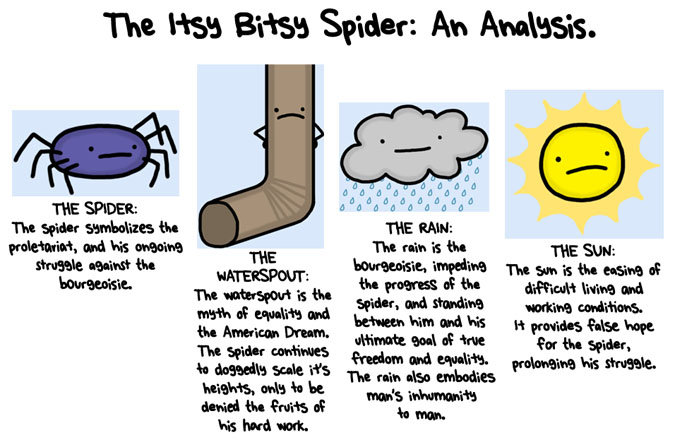
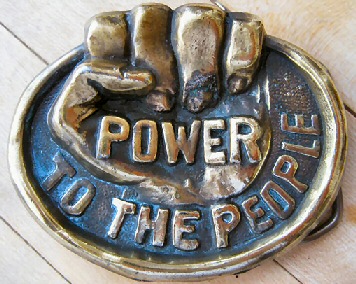 What would you suggest as a metric for determining the quality of governance? Gail Dines has a simple suggestion (taken from a counterpunch article on contrasting styles of governing):
” […] a government that has demonstrated a capacity to work for the people rather than just corporate interests, and a government that works for the people has a compelling interest in protecting citizens from harmful corporate practices.”
The capacity to work for the people. Wouldn’t that be nice?











 bleatmop
 Mystro
 The Arbourist


 Dead Wild Roses
Your opinions…