
You are currently browsing the monthly archive for January 2012.
 Watch, gentle readers, what happens when elite interests are not given priority. The outcry, the wailing and gnashing of teeth, the injustice of it all. The MPAA CEO Chris Dodd called out the irresponsible websites – Wikipedia, Reddit etc on their egregious behaviour:
“A so-called “blackout” is yet another gimmick, albeit a dangerous one, designed to punish elected and administration officials who are working diligently to protect American jobs from foreign criminals.”
Ah, so the authors and money men who sponsored and rammed through the DMCA legislation are back for more, and of course it is all just to protect American Jobs, Apple Pie and All that is What is Right in the World (aka profit). The MPAA and friends screwed up this time because they over estimated their purchase of the American Congress and grossly underestimated the will of the American people. I’m not a huge fan of the American body politic, but this time, for once, the good guys won. The corporate lobby and its billions just got rolled by a ground swell of people calling/emailing/tweeting etc their elected representatives and telling them in no uncertain terms that if this passed, so too would their comfy digs in congress. Huzzah!
It would be me remiss of me not to point out that similar elite interests have been much more successful in herding the American populace in other areas. Perhaps the MPAA and related corporate lobby should have declared a “War on Piracy”, as that seems (going to war on common nouns to be specific) to have a much better track record in press-ganging convincing the people of America to support their government when it does horrible things in their name.

The smiling face of your corporate sponsored disenfranchisement.
One of the instruments of douche that has been doing his very best to whip American into a blind frenzy just happens to be a representative of the Global Intellectual Property Center affiliated with, of course, the US Chamber of Commerce. Enter Steve Tepp. Steve Tepp, along with the US Chamber of Commerce is only interested in saving US jobs and making the world a better, safer place for Business Americans.
Steve was recently interviewed on CBC’s The Current by Mike Finnerty. It is a 20 minute interview, but I highly recommend you listen to the whole thing as Steve gets his ass handed to him by Rob Beschizza the managing editor from Boing Boing.net. I’ve transcribed and will reproduce some of the highlights from the interview. Watch closely how our boy Steve attempts to frame this issue:
“This issue is fundamentally about American Jobs and protecting consumers.”
Wow, the MPAA CEO and Steve are all about JOBS. Like holy-frack they are right there beside the rest of the 99% fighting just to make ends meet. They just want to protect the little guy! They certainly would not want to scaremonger or obfuscate what SOPA is really about.
“Criminals are abusing the internet to steal the most creative and innovative products that are out in the marketplace.”
I’m wondering if Steve said this with a straight face considering the creative output from Hollywood that enhances and enriches our cultural life.
” […] New twists, children’s toys, automobile parts, medicine its all fake, its all made in unsupervised facilities, it can be shoddy, people have died. This stuff can be extremely dangerous.”
This from the same people who regularly decry the EPA, food safety and consumer protection and worker health/safety legislation in general as ‘dirty socialism’ suddenly finds is voice and moral outrage at the very notion of Americans buying shoddy unsafe products. Profits Lives are on the line!
Steve tries very hard to be the good corporate PR flack but ultimately fails when confronted with the facts of the situation. SOPA like the DMCA act before it, exists only for business entities to consolidate and defend their ‘intellectual property’ in perpetuity. In essence they want a bigger stick to punish people who dare to mess with their profits.
Not this time Steve. The democratic spirit of America awoke for a little while and slapped you down. Hard. A small victory for internet freedom and expression, but the repressive forces of the corporatocracy have already fired back, taking down MegaUploads and charging people with copyright infringement and piracy. Anonymous fired back, taking down several government web sites as well as the MPAA’s own website.
This issue is not going away. The siren call of avarice is much to strong to let little things like freedom of speech and freedom from censorship to get in the way. Stay tuned for round 2.
*update* – Need Background on the issue? Check out the TED Talk.
What! Socialism in America? Say it isn’t so.
Better start the protests now.
 All too frequently when the horrible/insane/incoherant practices/beliefes/consequences of religious dogma are pointed out, one hears responses that try to dodge the point rather than address it directly. One of the most common of these dodges takes this approximate shape: “Why do you even bother? It’s not like religious people ever do anything harmful in this day and age. And if they do, those harmful actions are never based on their religious beliefs. You’re obviously just full of hate for people not like you, so I now get to disregard your point.” Typically, believers will also throw in a reference to some other part of their religion’s teachings which sounds nice and lovey dovey. Can’t have a problem with lovey dovey, can you?
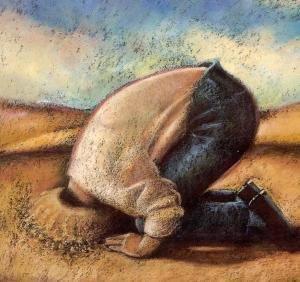 First, I want to stress that this IS a dodge. It doesn’t matter if I happen to be the most hateful person on the planet or if the idea I’m attacking isn’t currently held by anyone alive today. Nor does it matter that Belief Y is a good one, if we are discussing Belief X. In rational discussions, one must challenge the actual points presented. It is meaningless to quibble over the context around them or to focus on something else. Plunging your head into the sand is not a valid reasoning technique.
Alternatively, one could concede the point and admit that said dogma/practice/belief is indeed horrible/insane/incoherent. Then you could start a second discussion to try to argue that the dogma’s despicable nature doesn’t influence the world in any meaningful way. While this would be acceptable, it’s rare that a theist is will allow that any of their core religious ideas are either loathsome or inconsequential, much less both.
Much more likely, the theist will refuse to return to the main topic until this non-sequitor is dealt with. In either event, I would like to share ProportionalResponse’s reaction. The suggestion that religion today is harmless would be laughable, if it wasn’t so spirit-crushingly sad. Here is a link to the full image, should you wish to study it more carefully.
This dodge neither reflects reality nor addresses the topic actually under discussion. It’s a cheap diversionary tactic of the desperate and/or lazy. Users of this dodge may leave, give their heads a shake, and come back when they’re ready to say something meaningful.
And I thought teaching was a tough gig. Poor Gary.
Wading through politics in North America one can get the idea that we have a lot of choice when it comes to running our countries and determining our social policies. It takes the brilliant thoughts of a late comedian to crystallize what our societies have become. Agree or disagree, Carlin’s commentary makes you think.
Any intelligent fool can make things bigger and more complex… It takes a touch of genius – and a lot of courage to move in the opposite direction.
-Albert Einstein
The Orgelbüchlein (“Little Organ Book”) was written by Johann Sebastian Bach during the period of 1708–1714, while he was court organist at the ducal court in Weimar. It was planned as a set of 164 chorale preludes (smaller-scale compositions based on chorale melodies) spanning the liturgical year; however, Bach only completed forty-six chorale preludes and left less than two measures of a forty-seventh. The chorale preludes in this collection constitute BWV 599–644 within Bach’s total compositional output. The Orgelbüchlein is at the same time a collection of organ music for church services, a treatise on composition, a religious statement and a pedagogical manual.
| “ | A further step towards perfecting this form was taken by Bach when he made the contrapuntal elements in his music a means of reflecting certain emotional aspects of the words. Pachelbel had not attempted this; he lacked the fervid feeling which would have enabled him thus to enter into his subject. And it is entering into it, and not a mere depicting of it. For, once more be it said, in every vital movement of the world external to us we behold the image of a movement within us; and every such image must react upon us to produce the corresponding emotion in that inner world of feeling. | ” |
| —Philipp Spitta, 1873, writing about the Orgelbüchlein in Volume I of his biography of Bach | ||
That whole thing where we make women try to meet impossible standards of beauty is totally just feminist jaw-waggling. Oh wait a second…











 bleatmop
 Mystro
 The Arbourist


 Dead Wild Roses


Your opinions…