
This is the good part of an article off the Media Lens website –
the piece gets a bit loopy so if you want to read the rest please follow the link provided. The most important idea is one mentioned by Noam Chomsky, his observations give structure to the question “What is the rationale behind the choices our media makes?”
The Mystery of the Missing Clocks – By: David Edwards
The truth peeks out at us from the most unexpected places. It can be seen, for example, in the empty spaces where one might otherwise hope to find a clock in shops. The average retailer doesn’t approve of customers clock-watching – they might realise they have something more important to do and cut short their shopping trips.
Noam Chomsky crafted a small skeleton key to understanding the world:
‘The basic principle, rarely violated, is that what conflicts with the requirements of power and privilege does not exist.’ (Chomsky, Deterring Democracy, Hill and Wang, New York, 1992, p.79)
Chomsky argues, for example, that George Orwell’s Animal Farm and 1984 were embraced as great novels, and standard school texts, not because they were particularly profound, but because they attacked the Soviet Union:
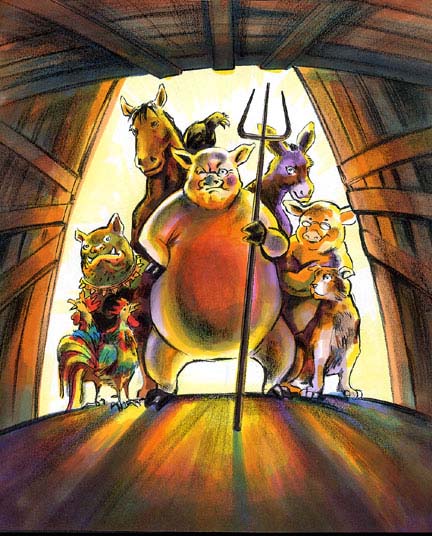 ‘Fame, Fortune and Respect await those who reveal the crimes of official enemies; those who undertake the vastly more important task of raising a mirror to their own societies can expect quite different treatment. George Orwell is famous for Animal Farm and 1984, which focus on the official enemy. Had he addressed the more interesting and significant question of thought control in relatively free and democratic societies, it would not have been appreciated, and instead of wide acclaim, he would have faced silent dismissal or obloquy.’ (Noam Chomsky, Deterring Democracy, Hill And Wang, 1992, p.372)
Hans von Sponeck raised a mirror to our society in his book A Different Kind Of War – The UN Sanctions Regime In Iraq (Bergahn Books, 2006). In meticulous detail, he described how American and British policymakers had knowingly caused mass death through sanctions in Iraq from 1990-2003:
‘At no time during the years of comprehensive economic sanctions were there adequate resources to meet minimum needs for human physical and mental survival either before, or during, the Oil-for-Food Programme.’ (p.144)
The effects were catastrophic:
‘The [US-UK] hard-line approach prevailed, with the result that practically an entire nation was subjected to poverty, death and destruction of its physical and mental foundations.’ (p.161)
This being the key reason why ‘the number of excess deaths of children under five during 1991-8 was between 400,000 and 500,000’. (p.165)
I have interviewed von Sponeck several times. He could hardly be more rational and restrained, hardly better qualified to comment – he ran the UN’s oil-for-food programme in Baghdad from 1998-2000 before resigning in protest at the effects of sanctions. His book, published three years after the 2003 invasion of Iraq, could hardly have been more topical. But it has never been reviewed by any UK newspaper. It has been mentioned once, in a single paragraph, in a single mainstream article in the Independent.
Thus we find empty spaces in the Guardian, the Independent, the Times and the Telegraph where detailed, positive reviews and interviews analysing von Sponeck’s ‘clock’ should have been. We need to know the time – shops are there to help, are they not? And we need to know how and why our government caused the deaths of half a million children in Iraq. But there are no clocks to be found – just empty space!











 bleatmop
 Mystro
 The Arbourist


 Dead Wild Roses
4 comments
November 20, 2012 at 9:38 am
Reneta Scian
While most of the article after the part that you post would be “wonky” in anyone’s book, even in it he makes a good point. Probably not the one he intended to make, and it was a rather “unscientific jaunt through his psyche”. The point of the matter is this… In a consumer driven, capitalist society, a great deal of energy is spent in keeping the user of said economy (the consumer) helplessly dependent on it’s products for survival. This is entirely true. This isn’t some psycho-babbling nonsense either, this is a fact, that a culture like ours and consumerism can lead to a person having more ineffective psychological copping skills and make them thereby depended on the quick fixes, headache medicine and other services provided in such a system.
There are methods for people to be more independent psychologically, and more independent in other sensitively depended ways, but that isn’t the kind of person our culture makes. There is a cultural, human, sociological tendency for ideas which conform to, uphold, or even enhance the current mentality of the status quo to be considered good, and essentially normalized ideologically overtime, and ideas that run counter to that, especially if the run counter to what those in power feel suits then, it will be demonized, ignored, and more or less “out with the trash”. American, and Westernized Society isn’t about independence or freedom at all, but rather about hopeless dependence on a system that intentionally stacks everything, every law, and every system, office, and policy in favor of your dependency to the benefit of the select few who hold the keys to all the doors.
So who is holding the keys? One thing is sure, that the “feature of power” is not a monolithic entity, but rather a philosophical or ideological forefather of the actions of those who make the policies. One look at “homesteading” policy, or any kind of housing code will quickly highlight that these rules are designed in favor of the real estate industry, other entities in power, and directly a challenge to any individual who wants to live “off the grid”. Because living off the grid is both incredibly isolating, as well as excessively expensive. This is all quite intentional. Many modern philosophers have talked at length about the “illusion of choice” that is represented in our society, and as never before the “consumerist lifestyle” is under attack by the few independents with the capital to do so.
Money is literally power in such a system as ours, and the consolidation of money is also the consolidation of power. It’s impossible to ignore the relationship of the two. Why is the consumer economy under attack? Because the consolidation of power has produced noticeable monopoly, and inequality, and because more than ever before in human history information is becoming more freely available to all. “Knowledge is power” the old adage goes. The more average people know, the more power is lost but the old system attempting to hold it in monopoly. It’s why ideas are patented, and why the system is designed to prohibit, and restrict the flow of ideas, inventions, and tools that make people more independent.
It is the reason for the slow to grow EV markets, and why solar power is still relatively unaffordable to the lower, lower-middle, and middle class (or not so without extensive and high interest credit, which allows it for the beneficence of their profit margins). The credit and banking system itself is a manifestation of this power, this system designed to control and keep average people in line, by controlling revenue in a system designed like ours you control peoples lives by controlling their resources. We have the ability with our current technology to have more independence, but that isn’t in favor of the current sociopolitical power base. And as I said, it’s not a certain individual, it’s an entire, complex system built around ideas by people who really believe that is how it should be. The real question, how long will it take till enough people wise up and force the system to change?
LikeLike
November 20, 2012 at 10:31 am
anonymous
When I read Brave New Animal Farm and 1984, I always thought of the ideas in the context of capitalism and democracy. I disagree with Chomsky. I think Orwell (and Huxley) were writing about their own life experiences in their day-to-day lives.
In the 1990s, I read of couple of articles, in the American periodical ‘Harpers’, describing the Iraqi sanctions. They were described and presented as crimes against humanity. That seemed a reasonable assessment to me.
The children died then and they die now. I try to banish the clock from my brain and from my body. The clock that would force this cruelty upon me or them or anyone.
LikeLike
November 20, 2012 at 10:43 am
The Arbourist
@Reneta
Well said. The the idea could be taken both ways – The economy is also dependent on the consumer to keep buying stuff, otherwise its happy little production cycle goes to hell. Planned obsolescence and conspicuous consumption come to mind.
Consider this vis a vis the authoritarian regime that simply tells people their status and what is expected of them. Much is invested in our society in keeping the appropriate carrots out for people to stay in line and foster the system they are in; aka propaganda.
It is still a cheaper system to run then having to incarcerate or kill all the dissenters.
When we see the first investment bank looted and the NYSE pillaged – I think that would be a good sign. :)
LikeLike
November 20, 2012 at 11:01 am
Reneta Scian
@Arbourist – Indeed, I think raids on the bank and NYSE are way overdue, but that is me personally. I’d really just like to be independent, its my one true dream, but the system doesn’t work for that end, and I’d have to be really wealthy to accomplish that. Assuming I can ever overcome that hurtle I will. But this system won’t last forever, it can’t, and with the future of micromanufacturing, homemade goods, and other products that used to be mainstream manufacturing but now in the home the system is going to change sooner or later. You can’t copyright ingenuity, ideas or otherwise when the information is plastered on every website (they will certainly try, and ultimately fail), and given the right tools to make whatever they want people will turn their back on the system. People want security, and if they can do it on their own and easily they’ll do it. I can see the technology coming, some of it’s already hear. As their monopoly on resources shrinks they’ll either adapt or die. That is the way of “capitalistic economics”.
On a side note, (The “try and fail” bit), I wonder how virulent and violent that system will get before all is said and done. I wonder how far they will go to retain this system as people buck it and use ingenuity, creativity, and brand new space age tools to do it. Will they even kill to stop the spread of ideas? I think it’s possible that they will before we get this right. I just hope it’s not in my lifetime, but I doubt with the growth of the tech that I’ll be so lucky.
LikeLike