
You are currently browsing the monthly archive for July 2013.
 Modern Journalism sucks.
The idea that the there are plucky reporters casting a critical eye toward the power structures in society is a process that resides firmly outside what is considered the mainstream media. Consider what Journalism could be like by looking at reporter I.F Stone and his practices and attitudes when reporting on political issues.
From an interview on Democracy Now with Amy Goodman.
AMY GOODMAN: And the issue, what many will call a false dichotomy between advocacy and journalism, his views on this?
D.D. GUTTENPLAN: Well, his views were that you can either be — he said two things that I think are important. He didn’t believe in objective journalism. He said people who talk about objective journalism are basically just trying to make you say the same things that everybody else says to enforce a consensus.
He did say, though, that journalists have a choice to be either consistent or honest, that if you’re worried about what you reported last week and whether what you’re reporting now is consistent with it, you’re going to end up distorting what you say in order to maintain consistency. So he felt you needed to be prepared to be, and allow yourself to be, surprised by facts. And it was Stone’s willingness to be surprised by facts that, in a way, makes him such a good read.
But he certainly believed in and was part of a tradition that is much older than the tradition of objective journalism, and that’s the muckraking tradition, the tradition that if you tell people the truth, then they’ll be able to take action.
 The CBC Signature Series is hosted by Paolo Pietropaolo.
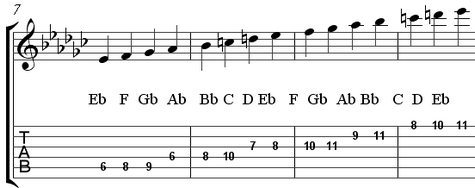
The E♭ (E-flat) minor scale consists of the pitches E♭, F, G♭, A♭, B♭, C♭, and D♭. In the harmonic minor, the D♭ is raised to D♮. Its key signature consists of six flats (see below: Scales and keys).
Its relative major is G-flat major, and its parallel major is E-flat major. Its enharmonic equivalent is D-sharp minor. Changes needed for the melodic and harmonic versions of the scale are written in with accidentals as necessary.
Despite the key rarely being used in orchestral music other than to modulate, it is encountered in a small fraction of keyboard music, and has been most popular in Russian pieces. For orchestration of piano music, some theorists recommend transposing to D minor or E minor.
This key is often popular with jazz or blues influenced keyboard players as, using all the black keys along with the A, it allows for an easily playable blues scale.
 In Book 1 of The Well-Tempered Clavier by Johann Sebastian Bach, Prelude No. 8 is written in E-flat minor while the following Fugue is written in D-sharp minor. In Book 2, both movements are in D-sharp minor.
One of the few symphonies written in this key is Prokofiev’s Symphony No. 6. A few other less well-known Soviet composers also wrote symphonies in this key, such as Andrei Eshpai, Janis Ivanovs (fourth symphony Atlantis, 1941), Ovchinnikov and Nikolai Myaskovsky. Aram Khachaturian wrote his Toccata in E-flat minor while studying under Myaskovsky.
It is also the key in which Dmitri Shostakovich composed his final string quartet.
Alexander Scriabin’s Prelude No. 14 from his 24 Preludes, Op. 11, is in E Flat Minor.
Sergei Rachmaninoff’s Elegie, Op. 3, No. 1, is in E-flat minor, as is his Étude-Tableau, Op. 39, No. 5. These pieces are noted for being dark and mysterious (a characteristic of this key), as shown even in the later jazz compositions “‘Round Midnight” and “Take Five”, which are also in the key.
Oskar Bohme’s Trumpet Sextet, Op. 30 is written in E-flat minor.
The extended orchestral introduction to Part II Gustav Mahler’s Eighth Symphony is in E-flat minor, as is the dark orchestral introduction to Beethoven’s only oratorio, Christ on the Mount of Olives. Jazz composer Thelonious Monk’s most famous composition, ‘Round Midnight is in E-flat minor.
Guitarist Yngwie Malmsteen has composed a number of pieces in E-flat minor, including the Concerto Suite for Electric
“When we see the expansion of the dependency class in America and you add this to the 79 other means tested programs that we have in the United States, each time you add another brick to that wall, it’s a barrier to people that might go out and succeed. ” – Steve King Idaho (R).
The idea that is represented above is exactly what is wrong with the political climate in United States. This bullcookery is debunked handily at 3:15 of the video by Greg Kaufmann who uses empirical fact as opposed to ideological mantras to describe the poverty situation in the US.
If you give people the basics of survival, they will prosper and return more to the society and the economy then simply letting them become destitute.
Shifty little bugger when all is said and done. :)
 This excerpt is from an article on Counterpunch titled “Treason”. It is on the rhetorical side and my eyes did roll when I saw that the author’s upcoming book to be released was called ‘Zen Economics’. But I liked this paragraph enough in his essay to share it with you my faithful readership because it succinctly illustrates the sad state that most of journalism is in.
“Likewise, there appears eternal mystery on the part of the compassionate right—liberals and progressives, why the corporate media are tools of corporate leaders and their servants in government. It is no accident Andrew Ross Sorkin, Jeffrey Toobin and David Gregory use the royal ‘we’ to conflate their interests as rich, connected, white ‘journalists’ with those of Mr. Obama and Ms. Feinstein. The received wisdom is ‘access’ to elite sources is behind the ‘affectation,’ but it is no affectation. The strategy to ‘universalize’ narrow interests through the use of totalizing language (‘we’) is class politics 101. These ‘journalists’ are responding to disclosure of class ‘secrets’ that threaten their privilege, not to acts against the public interest. (‘Access’ is to report what elites say, not what they do (a/k/a journalism) and these brave folk have a greater chance of dying from choking on Jell-O than from terrorist attacks).”
(ed. bolding mine)
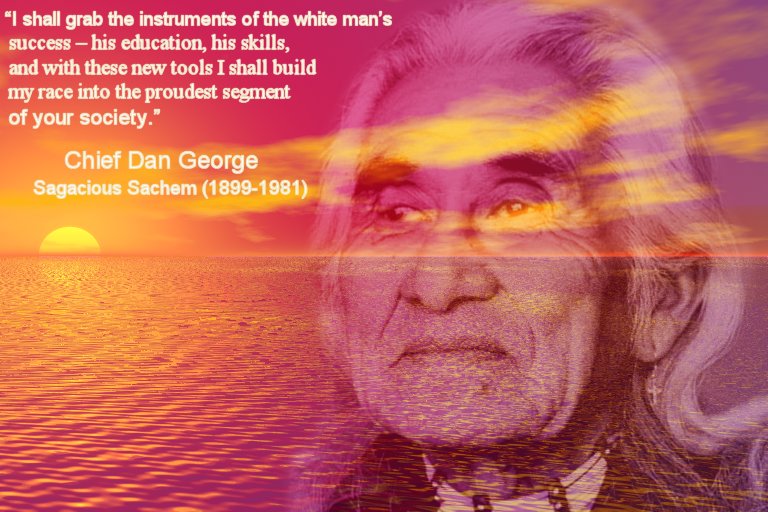
Canada needs to bring all of her peoples into the light. Respect and remember the past and try to fix the wrongs of our brief history since we now have the capacity to do so.











 bleatmop
 Mystro


 Dead Wild Roses
Your opinions…