
You are currently browsing the monthly archive for March 2014.
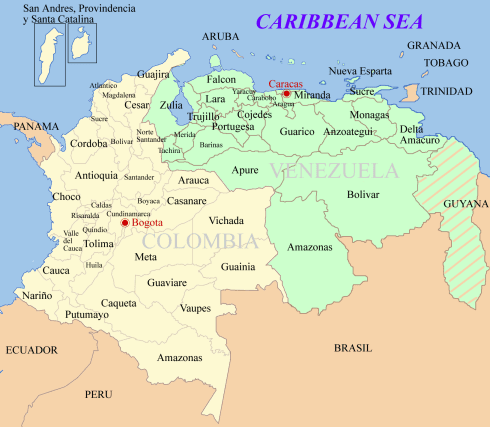
This article from counterpunch nails whats is wrong with how news is reported here in North America and also give a much different picture of what is going on in Venezuela. A big thanks to Mark Weisbrot for getting the down and dirty on events happening in South America.
The Class Conflict in Venezuela
The current protests in Venezuela are reminiscent of another historical moment when street protests were used by right-wing politicians as a tactic to overthrow the elected government. It was December of 2002, and I was struck by the images on U.S. television of what was reported as a “general strike,” with shops closed and streets empty. So I went there to see for myself, and it was one of the most Orwellian experiences of my life.
Only in the richer neighborhoods, in eastern Caracas, was there evidence of a strike, by business owners (not workers). In the western and poorer parts of the city, everything was normal and people were doing their Christmas shopping – images unseen in the U.S. media. I wrote an article about it for the Washington Post, and received hundreds of emails from right-wing Venezuelans horrified that the Post had printed a factual and analytical account that breathed air outside of their bubble. They didn’t have to worry about it happening again.
The spread of cell-phone videos and social media in the past decade has made it more difficult to misrepresent things that can be easily captured on camera. But Venezuela is still grossly distorted in the major media. The New York Times had torun a correction last week for an article that began with a statement about “The only television station that regularly broadcast voices critical of the government …” As it turns out, all of the private TV stations “regularly broadcast voices critical of the government.” And private media has more than 90 percent of the TV-viewing audience in Venezuela. A study by the Carter Center of the presidential election campaign period last April showed a 57 to 34 percent advantage in TV coverage for President Maduro over challenger Henrique Capriles in the April election, but that advantage is greatly reduced or eliminated when audience shares are taken into account. Although there are abuses of power and problems with the rule of law in Venezuela – as there are throughout the hemisphere– it is far from the authoritarian state that most consumers of western media are led to believe. Opposition leaders currently aim to topple the democratically elected government – their stated goal – by portraying it as a repressive dictatorship that is cracking down on peaceful protest. This is a standard “regime change” strategy, which often includes violent demonstrations in order to provoke state violence.
The latest official numbers have eight confirmed deaths of opposition protesters, but no evidence that these were a result of efforts by the government to crush dissent. At least two pro-government people have also been killed, and two people on motorcycles were killed (one beheaded) by wires allegedly set up by protesters. Eleven of the 55 people currently detained for alleged crimes during protests are security officers.
Of course violence from either side is deplorable, and detained protesters – including their leader, Leopoldo López – should be released on bail unless there is legal and justifiable cause for pre-trial detention. But it is difficult to argue from the evidence that the government is trying to suppress peaceful protests.
From 1999-2003, the Venezuelan opposition had a strategy of “military takeover,”according to Teodoro Petkoff (PDF), a leading opposition journalist who edits the daily Tal Cual. This included the military coup of April 2002 and the oil and business owners strike from December 2002 – February 2003, which crippled the economy. Although the opposition eventually opted for an electoral route to power, it was not the kind of process that one sees in most democracies, where opposition parties accept the legitimacy of the elected government and seek to co-operate on at least some common goals.
One of the most important forces that has encouraged this extreme polarization has been the U.S. government. It is true that other left governments that have implemented progressive economic changes have also been politically polarized: Bolivia, Ecuador, and Argentina for example. And there have been violent right-wing destabilization efforts in Bolivia and Ecuador. But Washington has been more committed to “regime change” in Venezuela than anywhere else in South America – not surprisingly, given that it is sitting on the largest oil reserves in the world. And that has always given opposition politicians a strong incentive to not work within the democratic system.
Venezuela is not Ukraine, where opposition leaders could be seen publicly collaborating with U.S. officials in their efforts to topple the government, and pay no obvious price for it. Of course U.S. support has helped Venezuela’s opposition with funding: one can find about $90 million in U.S. funding to Venezuela since 2000, just looking through U.S. government documents available on the web, including $5 million in the current federal budget (PDF). Pressure for opposition unity and tactical and strategic advice also helps: Washington has decades of experience overthrowing governments, and this is a specialized knowledge that you can’t learn in graduate school. Even more important is its enormous influence on international media and therefore public opinion.
When John Kerry reversed his position in April and recognized the Venezuelan election results, that spelled the end of the opposition’s campaign for non-recognition. But the opposition leadership’s closeness to the U.S. government is also a liability in a country that was the first to lead South America’s “second independence” that began with the election of Hugo Chávez in 1998. In a country like Ukraine, political leaders could always point to Russia (and more so now) as a threat to national independence; attempts by Venezuelan opposition leaders to portray Cuba as a threat to Venezuelan sovereignty are laughable. It is only the United States that threatens Venezuela’s independence, as Washington fights to regain control over a region that it has lost.
Eleven years since the oil strike, the political lines that divide Venezuela have not changed all that much. There is the obvious class divide, and there is still a noticeable difference in skin color between opposition (whiter) and pro-government crowds – not surprising in a country and region where income and race are often highly correlated.
In the leadership, one side is part of a regional anti-imperialist alliance; the other has Washington as an ally. And yes, there is a big difference between the two leaderships in their respect for hard-won electoral democracy, as the current struggle illustrates. For Latin America, it is a classic divide between left and right.
Opposition leader Henrique Capriles tried to bridge this divide with a makeover, morphing from his prior right-wing incarnation into “Venezuela’s Lula” in his presidential campaigns, praising Chávez’s social programs and promising to expand them. But he has gone back and forth on respect for elections and democracy, and – outflanked by the extreme right (Leopoldo López and María Corina Machado), last week refused offers of dialogue by the president. At the end of the day, they are all far too rich, elitist, and right wing (think of Mitt Romney and his contempt for the 47 percent) for a country that has repeatedly voted for candidates running on a platform of socialism.
Back in 2003, because it did not control the oil industry, the government had not yet delivered much on its promises. A decade later, poverty and unemployment have been reduced by more than half, extreme poverty by more than 70%, and millions have pensions that they did not have before. Most Venezuelans are not about to throw all this away because they have had a year and a half of high inflation and increasing shortages. In 2012, according to the World Bank, poverty fell by 20 percent– the largest decline in the Americas. The recent problems have not gone on long enough for most people to give up on a government that has raised their living standards more than any other government in decades.
Mark Weisbrot is an economist and co-director of the Center for Economic and Policy Research. He is co-author, with Dean Baker, of Social Security: the Phony Crisis.
This essay originally ran in the Guardian.
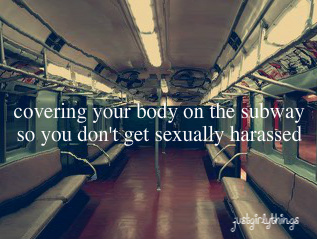
Ever wonder what it’s like being female and living through what women are expected to deal with? A small peek into some of the happenings in the grand adventure of being human and female all at the same time.
“When I was seventeen and preparing to leave for university, my mother’s only brother saw fit to give me some advice.
“Just don’t be an idiot, kid,” he told me, “and don’t ever forget that boys and girls can never just be friends.”
I laughed and answered, “I’m not too worried. And I don’t really think all guys are like that.”When I was eighteen and the third annual advent of the common cold was rolling through residence like a pestilent fog, a friend texted me asking if there was anything he could do to help.
I told him that if he could bring me up some vitamin water that would be great, if it wasn’t too much trouble.
That semester I learned that human skin cells replace themselves every three to five weeks. I hoped that in a month, maybe I’d stop feeling the echoes of his touch; maybe my new skin would feel cleaner.
It didn’t. But I stood by what I said. Not all guys are like that.When I was nineteen and my roommate decided the only way to celebrate the end of midterms was to get wasted at a club, I humoured her.
Four drinks, countless leers and five hands up my skirt later, I informed her I was ready to leave.
“I get why you’re upset,” she told me on the walk home, “but you have to tolerate that sort of thing if you want to have any fun. And really, not all guys are like that.”(Age nineteen also saw me propositioned for casual sex by no fewer than three different male friends, and while I still believe that guys and girls can indeed be just friends, I was beginning to see my uncle’s point.)
When I was twenty and a stranger that started chatting to me in my usual cafe asked if he could walk with me (since we were going the same way and all), I accepted.
Before we’d even made it three blocks he was pulling me into an alleyway and trying to put his hands up my shirt. “You were staring,” he laughed when I asked what the fuck he was doing (I wasn’t), “I’m just taking pity.”
But not all guys are like that.I am twenty one and a few days ago a friend and I were walking down the street. A car drove by with the windows down, and a young man stuck his head out and whistled as they passed. I ignored it, carrying on with the conversation.
My friend did not. “Did you know those people?” He asked.
“Not at all,” I answered.
Later when we sat down to eat he got this thoughtful look on his face. When I asked what was wrong he said, “You know not all guys do that kind of thing, right? We’re not all like that.”
As if he were imparting some great profound truth I’d never realized before. My entire life has been turned around, because now I’ve been enlightened: not all guys are like that.No. Not all guys are. But enough are. Enough that I am uncomfortable when a man sits next to me on the bus. Enough that I will cross to the other side of the street if I see a pack of guys coming my way. Enough that even fleeting eye contact with a male stranger makes my insides crawl with unease. Enough that I cannot feel safe alone in a room with some of my male friends, even ones I’ve known for years. Enough that when I go out past dark for chips or milk or toilet paper, I carry a knife, I wear a coat that obscures my figure, I mimic a man’s gait. Enough that three years later I keep the story of that day to myself, when the only thing that saved me from being raped was a right hook to the jaw and a threat to scream in a crowded dorm, because I know what the response will be.
I live my life with the everburning anxiety that someone is going to put their hands on me regardless of my feelings on the matter, and I’m not going to be able to stop them. I live with the knowledge that statistically one in three women have experienced a sexual assault, but even a number like that can’t be trusted when we are harassed into silence. I live with the learned instinct, the ingrained compulsion to keep my mouth shut to jeers and catcalls, to swallow my anger at lewd suggestions and crude gestures, to put up my walls against insults and threats. I live in an environment that necessitates armouring myself against it just to get through a day peacefully, and I now view that as normal. I have adapted to extreme circumstances and am told to treat it as baseline. I carry this fear close to my heart, rooted into my bones, and I do so to keep myself unharmed.
So you can tell me that not all guys are like that, and you’d even be right, but that isn’t the issue anymore. My problem is not that I’m unaware of the fact that some guys are perfectly civil, decent, kind—my problem is simply this:
In a world where this cynical overcaution is the only thing that ensures my safety, I’m no longer willing to take the risk.”
–Source.
 What is profitable. What is right.
Two categories that, if drawing a Venn Diagram, seem to overlap less and less these days: case in point the manufacture and use of genetically modified seeds produced by the Monsanto corporation. Back in 1990 the so called ’round-up ready’ crops came into being, with a high initial investment but then a wonderful rate of return due to less upkeep, the prevalence of round up ready crops sky-rocketed. Food production and profit for farmers and agribusiness increased, everyone wins right?
For awhile the answer was a qualified “yes”.
Our superweed agricultural situation shares an analog with the problems we are having with antibiotics. Strains of bacteria are becoming resistant to the drugs we routinely use to clear up infections and save lives. The problem? Evolution.
Our Creationist friends will be horrified to learn that, through the process of evolution (which they deny), we are creating new strains of bacteria that are immune to traditional antibiotic treatments. That’s why the doctor always says when prescribing antibiotics, to finish the whole batch and take the whole dose. Not taking the full course or right dose leads to killing *most* of the bacteria and leaving the semi-drug resistant bacteria intact to continue to multiply. Bad for us.
The very same is happening in the agricultural sector as weeds have evolved glyphosate (the active ingredient in Round Up herbicide) resistance and are making comeback in the farm fields of today. Here is where the ‘what is profitable and what is good’ for us cleavage comes to bite us in the ass.
“The growth of [glyphosate] resistance was accelerated by a trio of factors:
-
Monoculture. Growing the same crop on the same land year after year helps weeds to flourish.
-
Overreliance on a single herbicide. When farmers use Roundup exclusively, resistance develops more quickly.
-
Neglect of other weed control measures.The convenience of the Roundup Ready system encouraged farmers to abandon a range of practices that had been part of their weed control strategy.This “perfect storm” of accelerating factors has quickly turned the Roundup resistance problem into a superweed crisis. And because many farmers can no longer rely on glyphosate alone, overall herbicide use in the United States—which Roundup was supposed to help reduce—has instead gone up (see graph at right).”
Whoops. It would seem that despite the fact that we know evolution occurs in all living organisms we adopt practices that run counter-current to our established body of knowledge. The appearance of drug resistant bacteria and herbicide resistant weeds should not be a surprise to anyone given what we know about how evolution works.
Unfortunately, adherence to scientific(ethical, moral, ecological etc). principle goes out the window once profitability, specifically short-term profitability, comes into play. The pundits that say the market leads to a rational allocation and distribution of resources are full of high grade manure because it doesn’t. The market prioritizes short term gain and externalizes the long term deleterious consequences – profitably digging our own grave, so to speak.
There is hope though, here is what we can do:
“There’s a better way. Farmers can control weeds using practices grounded in the science of agroecology, including crop rotation, cover crops, judicious tillage, the use of manure and compost instead of synthetic fertilizers, and taking advantage of the weed-suppressing chemicals that some crops produce.
Such practices have benefits beyond weed control: they increase soil fertility and water-holding capacity, reduce water pollution and global warming emissions, and make the farm and its surroundings more welcoming to pollinators and other beneficial organisms.
In short, agroecological practices make the farm healthier. And recent research shows that they work.”
Happy ending possible? Maybe. Let’s just hope it is profitable…
How far have we fallen? Is there a bottom to the well of stupidity that christianity is? I keep expecting one day that people will grab a clue, catch on to the devious mind-fuck of organized religion and simply say, “Enough.”
That fabled day seems to be moving into the future – outpacing our best attempts ever to reach it. Why? Because we need to believe so desperately in magic that we throw Reason right out fracking window. Critical thinking, rationality, skepticism? Defenestration for the lot of you! Jebus trumps all your asses!
Discern4’s video is light-hearted but the it does not answer the question that is begging to be answered: who responds to this bunk? Who twizzles the the holy tassels of jesus in hopes of having their debt magically cleared?
I know who.
Desperate, ignorant people. The very same ones religion has been ‘praying’ on since the beginning of our history. The practice is immoral and has no place in a civilized society (yes dear reader you get to fill in the blanks for the indeterminate referal in the the sentence – whatever you pick will work, trust me).
 “If a woman has (the right to an abortion), why shouldn’t a man be free to use his superior strength to force himself on a woman? At least the rapist’s pursuit of sexual freedom doesn’t (in most cases) result in anyone’s death.” – Lawrence Lockman, Republican and elected official in the United States of America.
I for one would like to welcome our new lazer-kitteh overlords.












 bleatmop
 Mystro
 The Arbourist


 Dead Wild Roses
Your opinions…