
You are currently browsing the monthly archive for June 2016.
“Suppose, for instance, that men were only represented in literature as the lovers of women, and were never the friends of men, soldiers, thinkers, dreamers; how few parts in the plays of Shakespeare could be allotted to them; how literature would suffer! We might perhaps have most of Othello; and a good deal of Antony; but no Caesar, no Brutus, no Hamlet, no Lear, no Jaques –literature would be incredibly impoverished, as indeed literature is impoverished beyond our counting by the doors that have been shut upon women.”
— Virginia Woolf (A Room of One’s Own)
 Our society is being influenced negatively by the consumerist culture that we, collectively, have taken our hands off the tiller and have let the market decide what is best for us and our cultures.
The idea that we can consume our way to happiness, well-being, or even a more just society would not compute without people being constantly conditioned to believe that individuality is end-goal of life. The power of community and people working together has been the dynamo that has pushed our societies forward for the benefit of everyone (well except for the status-quo) and it is this power that has been waning since corporate capitalism has kicked into high gear under the guise of neo-liberalism. Neo-liberalism undermines community, collective action, and critical thought it is a stupefying tonic – that when served to the masses – creates a calm disquiet that grinds societies away, but in return keeps people isolated, fixated on themselves, and most importantly: manageable.
This piece by Nick Turse is a preface for a America’s disconnect between its citizenry and the army said citizenry supports. The dissonance is palatable as one reads the article. What should concern you is that the disconnect described has been carefully and intentionally cultivated. A feature of our current system, and most certainly not a bug .
“I can’t tell you exactly why I clicked on the article, but it was probably the title: “The Double-Tap Couple.” To me, a “double tap” is the technique of firing two gunshots in quick succession or employing two strikes in a row, as when U.S. drones or Hamas carry out attacks and then follow-up strikes to kill first-responders arriving at the scene. But this piece was about something very different. The headline referred to the popular app Instagram where you double-tap to “like” a photo.
The article turned out to be a profile of two twenty-somethings, a married couple who go by the noms de social media, FuckJerry and Beige Cardigan. They are, says author David Yi, “micro-celebrities” of the modern age. He is “tall, with a chiseled face, handsome”; she “has big doe eyes with cherub-like cheeks.” They dropped out of college and — first he and then she — became Instagram meme curators; that is, they find photos with wry or funny captions elsewhere on the internet and post them for their millions of followers. “Though both are social media sensations, neither is quite content with what they’ve accomplished,” Yi tells us. She “wants to pursue her first love, fashion, but isn’t quite sure what she’d want to do.” He’s currently cashing in with FuckJerry merchandise — hats, t-shirts, even “Vape juice.”
I read the article to the point at which FuckJerry (née Elliot Tebele) told Yi about his long slog up the Instagram follower food-chain: “It took a shit ton of time to get to, and it took a long time with a lot of work.” I stared at my phone in abject confusion. Something wasn’t right, so I scrolled to the beginning of the article and started again. But it was just the same. Justin Bieber is a fan. Followers include the “Kardashian-Jenner family.” He wears “skinny jeans and vintage Nikes.” She sports a “statement coat and a pair of sparkling Chloe boots.” Then I hit that quote: “shit ton of time… a lot of work.” I still couldn’t make sense of it and began studying the article as if it were a riddle. I read it maybe five times and again and again when I hit those phrases about time and work my brain would buckle.
At that moment, I was nearing the end of a month-long reporting stint in South Sudan and waiting to find out if I’d be able to talk to a teenage girl, a late millennial with more than memes on her mind. She had rebuffed the 60-something man her family had arranged for her to marry and her relatives had displayed their displeasure by beating her to the point of unconsciousness. That conversation never happened, but I’d already logged several weeks’ worth of interviews with shooting survivors, rape victims, mothers of murdered sons, wives of dead husbands. All this in a country where, for firewood and water — that is, the means of life — women walk desperately far distances in areas where they know that men with AK-47s may be lurking, where many are assaulted and violated by one, two, or even five men. In other words, a land where few would consider meme curation to be “a lot of work.”
I’d obviously hit that unsettling juncture where voices from home become dulled and distorted, where you feel like you’re hearing them from deep underwater. I’m talking about the vanishing point at which your first-world life collides with your crisis-zone reality — the point of disconnect. Mark Wilkerson knows it well. He found himself in just such a state, serving with the U.S. Army in civil-war-torn Somalia during the 1990s. That’s where he begins his inaugural TomDispatch piece, a rumination on his journey from soldier to veteran to chronicler of the all-too-brief life of another veteran, in his recent and moving book, Tomas Young’s War.
I eventually gave up on Yi’s article, unsure why I couldn’t understand the life and times of FuckJerry. After I got back to the U.S., however, I signed up for Instagram and took a look at his account and Yi’s story began to make more sense to me, if only in a tragi-comic way. Later in the piece, he writes of his subjects being “caught in the maelstrom” when a competitor is criticized for “stealing” memes. It’s a strange society that produces both meme maelstroms and, in distant lands, lethal ones that leave millions dead, maimed, desperate, or displaced. So before you become FuckJerry’s 9,200,001st follower, let Wilkerson guide you through slivers of two American conflicts, their aftermaths, and the points of disconnect along the way.”
–Nick Turse’s Preface to Batman in a Hospital Bed by Mark Wilkerson @Tom’s Dispatch
The disconnection that Turse illustrates resonates with me enough though to make it the focus of my article, however Wilkerson’s article is also very good, so I recommend following the link.
The Fermi paradox or Fermi’s paradox, named after Enrico Fermi, is the apparent contradiction between the lack of evidence and high probability estimates, e.g. those given by the Drake equation, for the existence of extraterrestrial civilizations.[1] The basic points of the argument, made by physicists Enrico Fermi (1901–1954) and Michael H. Hart (born 1932), are:
- There are billions of stars in the galaxy that are similar to the Sun,[2][3] many of which are billions of years older than Earth.[4][5]
- With high probability, some of these stars will have Earth-like planets,[6][7] and if the Earth is typical, some might develop intelligent life.
- Some of these civilizations might develop interstellar travel, a step the Earth is investigating now.
- Even at the slow pace of currently envisioned interstellar travel, the Milky Way galaxy could be completely traversed in about a million years.[8]
According to this line of thinking, the Earth should have already been visited by extraterrestrial aliens. In an informal conversation, Fermi noted no convincing evidence of this, leading him to ask, “Where is everybody?”[9][10] There have been many attempts to explain the Fermi paradox,[11][12] primarily suggesting either that intelligent extraterrestrial life is extremely rare, or proposing reasons that such civilizations have not contacted or visited Earth.
My thoughts are quite simply this: What race would want to contact us? If they read the papers or browsed our interwebs, do you think they’d want any part of humanity? :/
 Due to broken promises and subsequent budget cuts, our previous government forced CBC radio to resort to using advertisements to supplement funding. It was outrageous then and it is outrageous now. The CRTC is now inviting the public to express their opinions on the matter and Friends of Canadian Broadcasting has set up a convenient online form to do just that.
I have submitted my letter and I strongly encourage all of you to do the same. Unlike other online campaigns, this online form does not come with a cookie cutter letter that you can just throw your name at the bottom of. That’s right, you will actually have to write the letter. If that feels a bit daunting, don’t be discouraged. It is not as hard or as time consuming as you might think, I assure you. For the especially reluctant, I am including the letter I wrote. Use some, all, or none of itl to help you write your own letter.
To whom it may concern,
CBC radio is a cornerstone of Canadian culture. It ties this large country together. It is a huge part of who we are individually and, as a result, who we are as a nation. Being such an important part of our identity, CBC radio is an essential service and should be fully funded by the government.
The cuts to CBC’s funding and the subsequent need for them to use advertising to keep afloat felt like a deeply personal betrayal. Our bright shining gem was tainted and dulled with the ugly tar of commercial advertising. This should not be!
Like access to water free of contagions, access to CBC free of advertisements is a fundamental right of Canadians. After all this time, I still feel the sting of each wretched ad I hear on CBC – like a thorn jabbing in and reopening a wound, making healing impossible.
I beseech all who have influence in such matters, all that can be done to get CBC fully funded and ad free, must be done. An ad free CBC is something that made Canada great. We cannot let that greatness slip away.
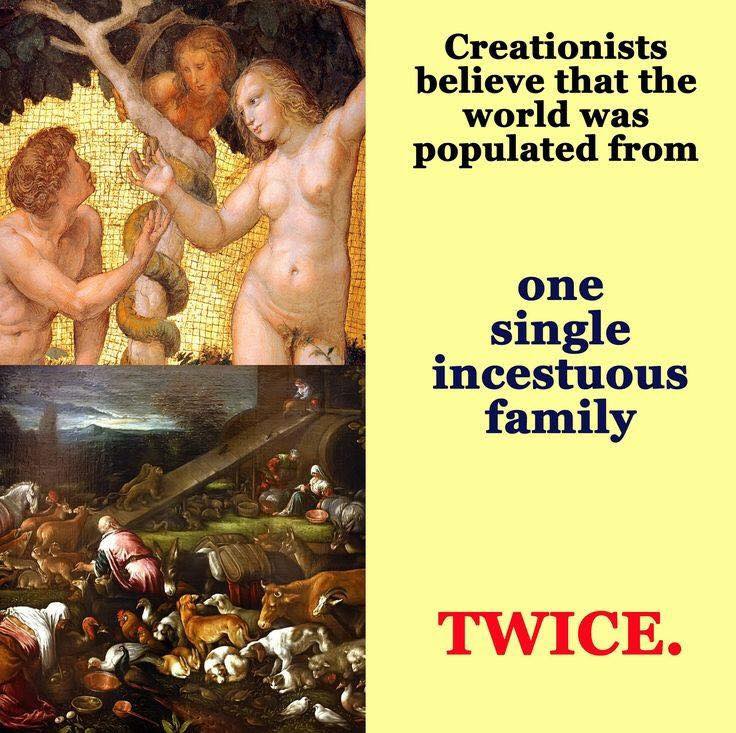
Kinda puts a damper on that whole family values and morals thing… :)
“Women feel more guilt than men, not because of some weird chromosomal issue but because they have a history of being blamed for other people’s behaviour. You get hit, you must have annoyed someone; you get raped, you must have excited someone; your kid is a junkie, you must have brought him up wrong”
— Germaine Greer, Guilt Poisons Women
It’s a still life watercolour
Of a now-late afternoon
As the sun shines through the curtained lace
And shadows wash the room
And we sit and drink our coffee
Couched in our indifference, like shells upon the shore
You can hear the ocean roar
In the dangling conversation
And the superficial sighs
The borders of our lives
And you read your Emily Dickinson
And I my Robert Frost
And we note our place with book markers
That measure what we’ve lost
Like a poem poorly written
We are verses out of rhythm
Couplets out of rhyme
In syncopated time
And the dangled conversation
And the superficial sighs
Are the borders of our lives
Yes, we speak of things that matter
With words that must be said
“Can analysis be worthwhile?”
“Is the theatre really dead?”
And how the room is softly faded
And I only kiss your shadow, I cannot feel your hand
You’re a stranger now unto me
Lost in the dangling conversation
And the superficial sighs
In the borders of our lives











 bleatmop
 Mystro
 The Arbourist


 Dead Wild Roses
Your opinions…