
In Maoist China, the regime employed a rigid system of identity categories to divide and control the population, most notably through the “red” and “black” classifications. The “red” category included those deemed loyal to the Communist Party—workers, peasants, and revolutionary soldiers—while the “black” category encompassed perceived enemies of the state, such as landlords, capitalists, and intellectuals. These labels were not mere descriptors but tools of social engineering, designed to pit groups against one another, justify purges, and dismantle traditional societal bonds. By fostering resentment and mistrust, Mao’s identity politics eroded community cohesion, replacing it with a fractured hierarchy where allegiance to the state superseded all else, ultimately destabilizing Chinese society for decades.
Fast forward to the present, and the “woke” identity categories of today—centered around race, gender, sexuality, and privilege—bear a striking resemblance to Mao’s framework, though cloaked in progressive rhetoric. Instead of “red” and “black,” we have “oppressor” and “oppressed,” with whiteness, maleness, or heterosexuality marking one as inherently guilty, while marginalized identities confer moral superiority. Like their Maoist predecessors, these categories are weaponized to sow division, encouraging individuals to see themselves and others primarily through the lens of grievance or shame. The result is a society obsessed with policing language, canceling dissenters, and dismantling shared cultural norms under the guise of justice, mirroring the Cultural Revolution’s assault on tradition and unity.
The broader point is that identity politics, whether Maoist or woke, are not about liberation but destruction. By reducing individuals to immutable traits or ideological loyalty, they fracture the social fabric, turning neighbors into adversaries and dialogue into denunciation. This corrosion serves those in power—be it a totalitarian regime or a cultural elite—by weakening collective resistance and redirecting energy toward internal conflict. Both systems reveal a timeless truth: when identity becomes the battleground, society itself becomes the casualty, leaving behind a hollowed-out shell ripe for manipulation and control.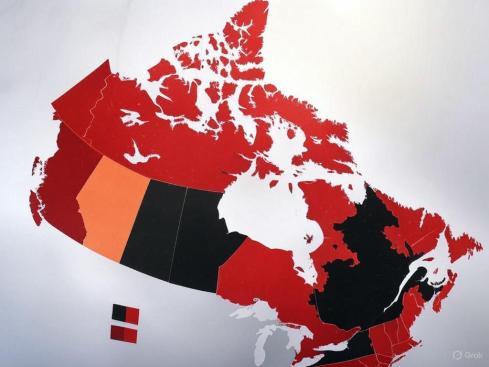











 bleatmop
 Mystro


 Dead Wild Roses
6 comments
March 24, 2025 at 5:58 am
tildeb
You mean those ‘kind’ folk who are pro-censorship Marxists trying to seize the courts and jail their political opponents, the one who believe they are are fighting “authoritarianism” (anyone who might be politically right of this extreme left wing position and think burning Teslas is justified) might be – Gasp! – misguided? Well, clutch my pearls. I’m shocked, I tell you, shocked at the accusation.
LikeLike
March 24, 2025 at 7:33 am
Sumi
I agree that identity politics is all about setting people against each other and destroying collective resistance. Mao may have used it to further communism in China, but it’s not Marxists who benefit from it today. Why do you think every major corporation trains their employees in DEI? Did you think these corporations and the billionaires they serve were paying all that money because… they’re sincerely opposed to racism? Or they’re Marxists? Really?
LikeLike
March 24, 2025 at 10:50 am
The Arbourist
@Sumi
Identity politics does often seem to fracture collective unity, and it’s a fair question to ask why corporations are so invested in DEI training today. It’s not necessarily about Marxism or even a deep commitment to fighting racism—though some might argue that sincerely. A big driver is financial: corporations are increasingly tied to ESG (Environmental, Social, Governance) funds, which control trillions in investment capital. These funds prioritize companies that meet certain social criteria, like diversity and inclusion metrics. Adopting DEI isn’t just PR; it’s a way to unlock access to that money. Billionaires and execs might not care about ideology as much as they care about keeping the cash flowing. Subsidies and incentives from ESG frameworks make it a no-brainer for them, whatever their personal stance.
Text Primer – https://newdiscourses.com/tftw-esg/
Short Podcast 1 – https://newdiscourses.com/2023/07/the-real-threat-of-esg/ -18:37
Short Podcast 2 https://newdiscourses.com/2022/05/the-esg-cartel-new-discourses-bullets-ep-6/ – 12:00
LikeLike
March 24, 2025 at 10:52 am
The Arbourist
@Sumi
It is a lot to take in, and please bring your full critical and skeptical faculties to play – but what is happening down south and of of course here is Maoism with North American characteristics.
ESG (Environmental, Social, Governance) can be seen as an extension of Maoism with American characteristics by adapting Mao’s strategy of ideological control through mass mobilization and economic restructuring to a capitalist framework. Mao used campaigns like the Cultural Revolution to enforce conformity, purge dissent, and reshape society via centralized power; ESG mirrors this by leveraging corporate incentives—tied to trillion-dollar investment funds—and social pressure to enforce progressive orthodoxies like DEI and sustainability. While Mao wielded state authority, ESG operates through market mechanisms and cultural hegemony, aligning American corporations with a unified ideological agenda under the guise of moral progress, effectively blending Maoist tactics with the U.S.’s profit-driven system.
LikeLike
March 24, 2025 at 12:42 pm
Sumi
You’re quite right that corporations are increasingly tied to ESG funds. But to think those funds are managed by Marxists or Maoists is lunacy. ESG funds are a con being run by and for capitalist financiers red in tooth and claw.
Dividing and conquering people on the basis of ethnic, religious or social identity long predates Marx and Mao. Mao just noticed how well it worked when colonists and missionaries applied it to China.
LikeLike
March 24, 2025 at 1:43 pm
The Arbourist
@Sumi
ESG funds aren’t run by card-carrying Marxists or Maoists—that’s a stretch. The managers are indeed profit-driven capitalists, but they’re pressured by activist investors, rating agencies, and government incentives to adopt frameworks that echo Maoist tactics: centralized control, ideological conformity, and social reengineering. Look at BlackRock or Vanguard—hardly communist hotbeds—yet they enforce ESG metrics that mirror Mao’s collectivist playbook, like punishing non-compliant firms or pushing equity over merit. It’s not a conspiracy of ideology; it’s a strategy of coercion.
LikeLike