
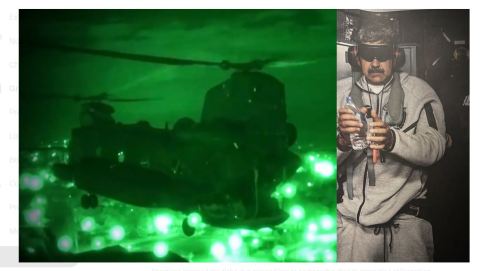
On January 3, 2026, the United States carried out a large-scale operation in Venezuela that resulted in the capture of Nicolás Maduro and his wife, Cilia Flores, and their transfer into U.S. custody. [1] Within hours, the story stopped being only about Maduro. It became a stress test of the West’s default assumptions about how global order actually works.
The reaction split fast and predictably: condemnation framed in the language of sovereignty and the UN Charter; applause framed in the language of liberation and justice; and, underneath both, a quieter argument about whether “international law” is a meaningful constraint—or primarily a vocabulary used to legitimize outcomes power already permits.
Two languages for one event
When a great power uses force to remove a sitting head of state and relocate him for prosecution, states and commentators typically reach for one of two languages.
The first is legal-institutional: Was this lawful? Was it authorized? What does the UN Charter permit? What precedent does it set?
The second is strategic-realist: What will it cost? Who can impose consequences? What does it deter? What does it invite?
These languages often coexist, but Venezuela forced a choice because it exposed the tension between *the claim* of a rules-governed international order and *the mechanism* by which order actually persists.
The enforceability problem
The measured point is not that international law is “fake” in every domain. A great deal of international life runs on rules that are real in practice: treaties, trade arrangements, financial compliance, aviation coordination, maritime norms, and sanctions enforcement. In those domains, rules can be highly consequential because they are tied to access, markets, and institutional membership.
But in the domain that states care about most—hard security and regime survival—international law runs into a structural limitation: there is no global sovereign with a monopoly on force. The question is not whether rules exist, but whether they bind the actors most able to ignore them.
That isn’t a rhetorical flourish. It’s the structural fact everything else sits on.
The UN can convene, condemn, and deliberate. But it cannot consistently coerce major powers into compliance. In the wake of the Maduro operation, the UN Security Council moved to meet and the UN Secretary-General warned the action set a “dangerous precedent.” [2] That may shape legitimacy and alliances. It may raise political costs. But it does not function like law inside a state, because law inside a state ultimately rests on enforceable authority.
This is why the phrase “international law” so often behaves less like binding law and more like legitimacy currency—something states spend, something rivals contest, and something that matters most when it is backed by power.
The reaction spectrum makes more sense as philosophy, not partisanship
The political reactions were not merely partisan reflexes; they were expressions of competing world-models.
Institutionalists treated the precedent as the core danger: once unilateral force becomes normalized, the world becomes easier for worse actors to imitate.
Sovereignty-first critics (especially in regions with long memories of intervention) treated it as a return to imperial patterns—regardless of Maduro’s character.
Results-first supporters treated it as overdue action against an entrenched authoritarian regime and criminal networks.
Realists treated it as a reminder that rules do not restrain actors who cannot be credibly punished.
It is possible to disagree with the operation and still accept the realist diagnosis. “This was reckless” and “this reveals how order works” are not contradictions—they’re often the same conclusion stated in different registers.
A small but telling detail: systems moved, not just speeches
One detail worth noting is that the event had immediate operational spillover beyond diplomacy: temporary Caribbean airspace restrictions and widespread flight cancellations followed, with U.S. authorities later lifting curbs. [3] That’s not a moral argument either way. It’s simply a reminder that great-power action produces real-world system effects instantly—while multilateral processes operate on a different clock.
Meanwhile, Venezuela’s internal institutions scrambled to project continuity. On January 4, 2026, reporting described Venezuela’s Supreme Court ordering Vice President Delcy Rodríguez to assume the interim presidency following Maduro’s detention. [4] Again, one can read this in legal terms or strategic terms. But it underscores the same point: the decisive moves were being made through power, institutional control, and logistics—not through international adjudication.
What Venezuela is really teaching
The strongest measured conclusion is this:
1. International law can matter as coordination and legitimacy.
2. But in hard-security conflicts, it does not function like ordinary law because enforcement is selective, especially against great powers.
3. Therefore, when Western leaders speak as though “international law” itself will constrain outcomes, they are often describing the world they want—or the world they remember—more than the world that exists.
This is the wake-up Venezuela delivers: not that rules are worthless, but that rules don’t become rules until they are paired with credible consequences. If the West wants a world that is safer for liberal societies, it must stop mistaking procedural vocabulary for strategic capacity.
What Western leaders should do differently
If “international law” is often a language of legitimacy rather than a source of enforcement, then the task for Western leaders is not to abandon norms—but to rebuild the conditions under which norms can actually hold. That requires a change in posture that is both external and internal.
First: speak honestly about interests and tradeoffs.
A rules vocabulary can be morally sincere and still strategically evasive. Western publics deserve leaders who can say, without euphemism, what outcomes matter, why they matter, and what costs we are willing to pay to secure them.
Second: re-embody Western values in our institutions, not merely our slogans.
The West is not “a place that sometimes gets things right.” It is the most successful civilizational experiment yet produced: freedom under law, pluralism, scientific dynamism, broad prosperity, and the moral insight that the individual matters. If leaders treat this as an embarrassment rather than an inheritance, they will govern as caretakers of decline.
Third: restore civic confidence by repairing the narrative infrastructure.
A civilization that teaches its own children that it is uniquely evil will not defend itself—or even understand why it should. The “mono-focused West-is-bad” story has become a kind of institutional reflex across parts of education, culture, and bureaucracy. You can reject naïve triumphalism while still insisting on civilizational honesty: that the West has flaws, committed crimes, and still produced the best lived human outcomes at scale to date.
Fourth: build capacity again—material, strategic, and moral.
Norms without capacity do not preserve peace; they invite tests. This means defense industrial readiness, energy resilience, border and migration competence, counterintelligence seriousness, and the willingness to impose costs where deterrence requires it.
Finally: treat multilateralism as a tool, not a substitute for power.
Institutions can amplify strength; they cannot conjure it. A West that wants a stable order must stop acting as though process is the engine. Process is the dashboard.
Afterword: the more polemical take
Western elites keep reaching for “international law” the way a sleepwalker reaches for the bedside table—by habit, not by sight. They speak as if naming the norm substitutes for enforcing it. But there is no authority behind it for the actors that matter most.
So the scandal isn’t disagreement about Venezuela. The scandal is that so many of our leadership classes still talk like we live in a world where legitimacy language can replace power, unity, and competence. That was a comfortable posture in a more unipolar era. It is a dangerous posture now.
In a multipolar environment, moral declarations without strength don’t preserve order. They advertise weakness. And weakness is not neutral: it invites tests.
Footnotes
[1] Reuters (Jan 3–4, 2026): reporting on the U.S. operation capturing Nicolás Maduro and Cilia Flores and transferring them to U.S. custody.
[2] Reuters (Jan 3, 2026): UN Security Council to meet over U.S. action; UN Secretary-General calls it a “dangerous precedent”; meeting requested with backing from Russia/China.
[3] Reuters (Jan 3, 2026): Caribbean airspace restrictions and flight cancellations following the operation; later lifted.
[4] Reuters (Jan 4, 2026): Venezuela’s Supreme Court orders Delcy Rodríguez to assume interim presidency after Maduro’s detention.
Direct Reference Links
[1] Reuters — “Mock house, CIA source and Special Forces: The US operation to capture Maduro”
https://www.reuters.com/business/aerospace-defense/mock-house-cia-source-special-forces-us-operation-capture-maduro-2026-01-03/
[2] Reuters — “UN Security Council to meet Monday over US action in Venezuela”
https://www.reuters.com/world/americas/un-chief-venezuela-us-action-sets-dangerous-precedent-2026-01-03/
[3] Reuters — “US lifts Caribbean airspace curbs after attack on Venezuela”
https://www.reuters.com/world/americas/us-airlines-cancel-flights-after-caribbean-airspace-closure-2026-01-03/
[4] Reuters — “Venezuela’s Supreme Court orders Delcy Rodriguez become interim president”
https://www.reuters.com/world/americas/venezuelas-supreme-court-orders-delcy-rodriguez-become-interim-president-2026-01-04/











 bleatmop
 Mystro


 Dead Wild Roses
8 comments
Comments feed for this article
January 4, 2026 at 8:42 am
Steve Ruis
So, Trump supposedly invaded Venezuela because they had a nasty, evil dictator. So, is Russia next? How about Hungary? So many choices, how is one to decide. So many people are buying the narrative that the invasion was about oil. It was not about oil. When did Trump ever think about an issue for more than 30 seconds? And formulate a complex plan? And execute it? Maybe when he was much, much younger, but now that he has mush for brains, it wasn’t him. I wonder whose idea it was and I assume, consider the caliber of people Trump has surrounding him, I will be appalled when their reasoning is exposed.
LikeLiked by 1 person
January 4, 2026 at 8:51 am
The Arbourist
Thanks for the comment. A few points, because I think you’re mixing three different questions into one:
1) “If Venezuela, why not Russia or Hungary?”
This is a classic slippery-slope argument, but foreign policy doesn’t work like a moral raffle where every “bad leader” gets the same treatment. States act based on interests, constraints, proximity, escalation risk, alliances, and cost.
Russia is a nuclear great power. Hungary is a NATO/EU member. The risks and consequences are categorically different from Venezuela. “There are other dictators” doesn’t mean every dictator is equally actionable or equally relevant.
2) The “oil” narrative
I agree with you that “it’s only about oil” is usually lazy. Venezuela is a bundle of issues: regional instability, migration pressure, criminal networks, and great-power signaling. Oil can be a factor in any Venezuela calculation, but treating it as the single master key is simplistic. Real-world decisions typically have multiple drivers.
3) “Trump didn’t do this—he can’t think for 30 seconds.”
This is where your comment stops being analysis and becomes psychology-by-insult. Whatever you think of Trump personally, a major operation like this is not “a guy having a thought.” It’s planned and executed by the state: military, intelligence, logistics, diplomacy. Presidents authorize. Institutions implement.
You can oppose the operation on strategic or moral grounds without needing to assume dementia, puppeteers, or cartoon-villain motivations.
4) My actual claim (and what you’re really arguing against)
My point isn’t “Venezuela was justified because Maduro is evil.” It’s that the world is increasingly shaped by enforcement and power, not by appeals to “international law” as if it’s a global police code. If you think that’s wrong, the strongest rebuttal isn’t “Trump is stupid,” it’s:
What enforced consequence would constrain a great power here?
What mechanism reliably stops this behavior?
If the mechanism is absent, what replaces it?
If you want to argue the operation was reckless, destabilizing, illegal, or contrary to Western interests—fine. Those are serious arguments. But “mush for brains” doesn’t get us any closer to what actually happened or why.
Happy to engage on the strategy and the incentives.
LikeLike
January 4, 2026 at 8:58 am
Steve Ruis
Obviously I wasn’t being as serious as you were. As to what would constrain a “greater power” from oppressing lesser powers is an interesting question, for which there is no answer. I had a colleague who claimed that if you didn’t use power, you didn’t have it. Right now, with Putin in Ukraine, Trump in Venezuela, China contemplating Taiwan, etc. the constraints are few and far between if they exist at all.
As to a response, how about all of Venezuela’s neighbors band together and freeze all US assets in their countries, including tax havens, resource extraction sites, etc. This is a way for the “few” to become the “many.” (As NATO was designed to be.)
LikeLike
January 4, 2026 at 9:14 am
The Arbourist
Thanks, and no worries, I get the tone you were going for. 👍 I appreciate you coming back with a more serious angle because this is actually the interesting part of the discussion.
I agree with you on the broad diagnosis: constraints on great powers are thinner than most people like to admit, and when they exist they’re usually political, economic, or reputational, not “legal” in the domestic sense.
On your proposal neighbors band together and freeze U.S. assets I think you’re pointing at something real: collective action is one of the only ways smaller states can generate leverage. In principle, “the many” can raise the cost for “the one.”
A few cautions though, just to stress-test it:
Coordination is hard.
It’s difficult to get a region to act as one unit unless there’s already a strong institutional framework and shared risk tolerance. Even then, some countries will peel off under pressure or incentives. That’s basically why collective-security systems are rare and hard-won.
Exposure cuts both ways.
Freezing U.S. assets or targeting extraction sites sounds powerful, but it also invites retaliation: sanctions, banking restrictions, aid cutoffs, trade barriers, security pressure. Many neighbors are more economically dependent on U.S.-linked systems than the U.S. is on them.
Credibility matters.
The threat only works if it’s believable and sustained. If it’s a one-off gesture, it becomes symbolic rather than constraining. And if it’s sustained, it can turn into a long economic standoff that smaller states may find harder to bear.
It’s a good illustration of the deeper point.
What you’re describing is exactly what I mean by “constraints” in practice: not an impartial global court, but countervailing power; alliances, coordinated sanctions, collective economic pressure, etc. NATO works (when it works) because it’s a durable institutional form of that countervailing power.
So I’m basically with you: if there’s an “answer,” it’s not “international law” floating above states: it’s coalitions + capacity + willingness to impose costs. Where those exist, great powers behave differently. Where they don’t, they don’t.
If you have a specific regional bloc in mind (OAS? a South American coalition? Caribbean states + Latin America?), I’m curious which you think could realistically sustain that kind of coordinated pressure, because that’s the make-or-break variable.
LikeLike
January 4, 2026 at 9:15 am
The Arbourist
Fresh brewed coffee available today – apologies for the excess verbiage. :)
LikeLike
January 4, 2026 at 9:19 am
Steve Ruis
Re “Freezing U.S. assets or targeting extraction sites sounds powerful, but it also invites retaliation: sanctions, banking restrictions, aid cutoffs, trade barriers, security pressure.” Is not Trump already doing these things? I am thinking of a falsely accused teenager thinking, “Well if I am going to suffer the punishment, I should at least be able to enjoy the sinning.” If, for example, those countries stop paying interest on all of the loans forced upon them, gosh, they might be cut off from future loans! :o( They do not need future loans and the interest payments not being made will fund a lot of things they might actually need.
LikeLike
January 5, 2026 at 3:15 am
Laura G
Should be compulsory reading! An excellent and actually relatable read. I was raised on the ‘West is uniquely bad’ narrative and only shook it off in my 30s.
LikeLiked by 2 people
January 11, 2026 at 8:20 pm
The Arbourist
Thank you for stopping by, appreciate the comment. Come back soon 😀
LikeLike