
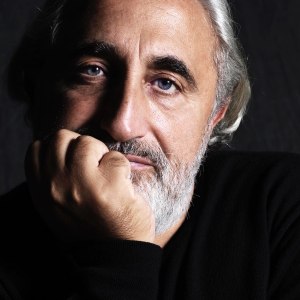
Suicidal empathy is a term Dr. Gad Saad uses to describe a specific failure mode of compassion: empathy that gets detached from boundaries, reciprocity, and cost-accounting—until it starts producing outcomes that harm the very people and institutions doing the empathizing.
Read it less as a diagnosis and more as a warning label. Empathy is normally a pro-social tool. It helps humans cooperate, care for dependents, and build trust. But like any tool, it can be misapplied. When empathy becomes an unconditional rule (“the compassionate option must always win”), it stops asking the questions that keep compassion functional: Who pays? Who benefits? What incentives are we creating? What happens if this scales?
That’s the central mechanism. Unbounded empathy deactivates trade-offs. It treats limits as moral failure, and it treats enforcement as cruelty. In public life, that often looks like policies designed around the needs of the claimant while steadily eroding the duties owed to the steward—the taxpayer, the law-abiding neighbor, the already-vulnerable person living downstream of disorder. It isn’t that compassion is wrong; it’s that compassion without accounting becomes a transfer of risk onto the conscientious.
If you want this concept to be useful—rather than partisan—you need a clean heuristic. Here’s one:
The Suicidal Empathy Test (a quick diagnostic)
When you see a “compassion-first” policy, norm, or movement, ask:
-
Where does the cost land?
Is the cost paid by decision-makers, or exported onto people with less voice? -
What happens at scale?
Would this still work if adopted widely, or is it only viable as a boutique exception? -
What incentives does it create?
Does it reward responsibility and reciprocity—or does it reward manipulation, noncompliance, or repeat harm? -
Are boundaries being treated as immoral by definition?
If the only “good” option is the one that refuses limits, you’re not doing ethics—you’re doing sentiment. -
Does it erode the conditions that make generosity possible?
High-trust societies can afford softness because they still enforce norms. If the proposal weakens trust, safety, or shared obligation, it may be burning the fuel empathy runs on.
You don’t need cynicism to apply this test. You just need the willingness to treat compassion as something that must be paired with responsibility. The point isn’t to feel less—it’s to see more: the second-order effects, the incentives, the people who silently pay. If empathy can’t survive contact with those questions, it isn’t moral courage. It’s moral vanity with a body count.
References
Suicidal Empathy (publisher page – HarperCollins / Broadside Books)
https://www.harpercollins.com/products/suicidal-empathy-gad-saad
Gad Saad – Concordia University faculty profile
https://www.concordia.ca/faculty/gad-saad.html
The Parasitic Mind (publisher page – Simon & Schuster)
https://www.simonandschuster.com/books/The-Parasitic-Mind/Gad-Saad/9781621579939
Gad Saad – Psychology Today contributor page
https://www.psychologytoday.com/ca/contributors/gad-saad-phd
Suicidal Empathy (Audible Canada listing – includes release date/details)
https://www.audible.ca/pd/Suicidal-Empathy-Audiobook/B0FZ6JMVFQ











 bleatmop
 Mystro


 Dead Wild Roses
3 comments
January 13, 2026 at 12:13 pm
Little Mouse
Another amazing post!
I would take it a step further though.
It is more accurate to say its ‘narcissistic empathy’ – the point is to virtue signal how moral and superior they are to the rest of oppressors. To strengthen in-group solidarity by defaming and punishing the non-believers.
These people are larping at being revolutionaries, which ties in with your other post about what is happening in Iran. The events in Iran are inconvenient, bc the people, who are actually oppressed, are inconvenient to the narrative of ‘poor oppressed muslims’. And ultimatel, its inconvenient to the goal of the woke in this case which is to show the world how morally superior they are.
Narcissistic empathy. Sacrificing others so they can look good on social media and impress their woke friends.
LikeLike
January 13, 2026 at 5:37 pm
The Arbourist
@Little Mouse
Thank you. :)
Its hard when you run into this sort of thing in real life. Coming to the political centre, it seems has put me in the class of untouchable with many of my older friends. It’s weird – we’re still civil, but now, not sharing the same opinion is a big deal because said opinion is inherently correct(?).
Oh well. Live and learn. :)
LikeLike
January 13, 2026 at 6:21 pm
Little Mouse
‘Identity’ trumps justice and fairness. ‘Tis a sad state of affairs. Idpol is cancer!
If the woke were legit revolutionaries, they would actually have skin in the game. But they expect others to make sacrifices, while they gloat in the warm light of moral superiority.
LikeLiked by 1 person