
You are currently browsing the daily archive for January 19, 2026.
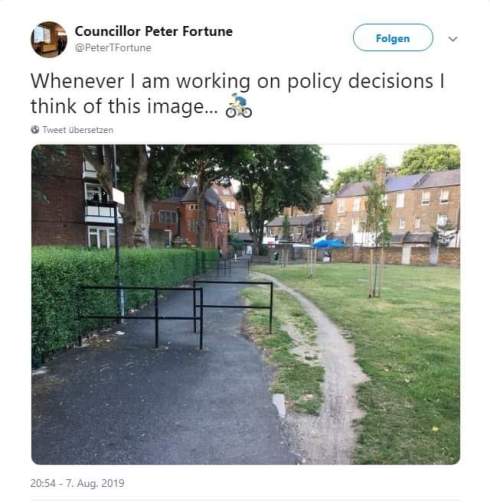
When designers try to overrule human incentives with a barricade, they don’t get obedience. They get a workaround. The meme Councillor Peter Fortune shared shows it in one frame: a paved bike path blocked by metal barriers, and a dirt trail worn smooth beside it where people simply go around. The joke lands because it’s familiar. The system “wins” on paper; the public wins in practice.
The lesson isn’t that people are bad. It’s that people optimize for time, effort, and friction. Put an obstacle in the shortest route and you don’t remove the desire to move—you relocate it. The new path brings second-order costs the designer pretended didn’t exist: erosion, muddier edges, conflicts between walkers and riders, and a steady drift from the “safe” route to the “usable” one. The dirt trail isn’t misbehavior. It’s feedback.
This is why public planning fails in a predictable way. Government systems are often built to defend the plan rather than learn from the result. Once concrete is poured, changing course becomes politically costly, procurement-heavy, and reputation-sensitive. So the incentive is to explain the barrier, not remove it, even when the public has already voted with their feet. You get infrastructure that looks orderly in a report and behaves disorderly in the world.
A competent planner doesn’t start by asking, “How do we force compliance?” They start by asking, “What will people do instead?” Then they design for that answer: align the official route with the desire line, reduce friction where it matters, and treat workarounds as data. Ignore that, and the meme becomes policy. The public routes around you, and you pay twice: once for the plan, and again for the consequences.











 bleatmop
 Mystro


 Dead Wild Roses
Your opinions…