
You are currently browsing the category archive for the ‘Education’ category.
The rule of law, a cornerstone of Western civilization, ensures justice and stability through impartiality, accountability, and restraint on power. Marxism, by contrast, subordinates legality to revolutionary goals and class-based conflict, undermining the very structures that support social cohesion. To preserve civilization, we must uphold the rule of law.
1. The Rule of Law: Civilization’s Bedrock
In 1215, the barons at Runnymede compelled King John to sign the Magna Carta, declaring that even monarchs must be subject to law. This revolutionary idea—the rule of law—would become a cornerstone of Western civilization, evolving through England’s Glorious Revolution (1688) and culminating in modern constitutionalism.
The U.S. Constitution (1789) and France’s Declaration of the Rights of Man and of the Citizen (1789) enshrined this principle globally. By 2020, 90% of democracies had incorporated judicial independence into their constitutional systems.¹ The rule of law, as theorized by thinkers like A.V. Dicey and later F.A. Hayek, restrains power through legal predictability and universality.²
The practical results are clear. Nations scoring above 0.8 on the World Bank’s Rule of Law Index—such as Denmark, Finland, and Canada—also consistently rank high on human development, prosperity, and civic trust.³ The rule of law provides a common legal language for diverse societies, replacing tribal favoritism with equality before the law. Even where the system has historically failed—colonial abuses, slavery, or gender inequality—it has proven self-correcting through reform.⁴
Some critics claim that the rule of law merely entrenches elite power structures. But this critique misrepresents its essence. Far from preserving privilege, impartial law constrains it. It creates a standard by which even the powerful may be held to account. The abolition of slavery, universal suffrage, civil rights protections—all emerged not in spite of legal order, but through it. Civilization thrives when justice prevails.
2. The Shadow Rises: Marxism’s Assault on Legal Order
The rule of law’s strength lies in its impartiality—its power to unify pluralistic societies under shared norms. Yet Marxism offers a fundamentally different vision: one that subordinates legal stability to revolutionary transformation and class struggle.
In The Communist Manifesto (1848), Karl Marx and Friedrich Engels dismissed law as a mere instrument of the bourgeoisie.⁵ Their goal was not reform but abolition—of private property, class, and the legal structures that supported both. This revolutionary posture bore grim fruit: under Stalin’s Great Terror, over 1 million people were executed in the 1930s as law was repurposed into a tool of terror.⁶ Mao Zedong’s Cultural Revolution (1966–76) abandoned legal process entirely, leading to the persecution and death of millions in the name of ideological purification.⁷
Contemporary neo-Marxist frameworks, like Critical Legal Theory, question whether law can ever be neutral. While these critiques raise valid concerns about systemic bias, they often collapse into legal nihilism. “Equity” is increasingly invoked not as a means of fair access to justice but as a demand for redistributive outcomes that override due process.⁸
Seattle’s 2020 “defund the police” policy experiment, influenced by such theories, reduced legal enforcement capacity. According to FBI Uniform Crime Reporting, homicides in the city rose 61% that year.⁹ While correlation does not imply causation, many observers linked the spike to policing reductions and the erosion of legal authority. A Rasmussen survey in 2023 found that 68% of Americans believed defunding policies increased crime.¹⁰
Even more moderate Marxist thinkers, like Antonio Gramsci, viewed legal neutrality as a fiction. His theory of “cultural hegemony” suggested that dominant ideologies—including legal norms—function to maintain ruling class power.¹¹ While Gramsci promoted gradual reform over violent revolution, his intellectual legacy has often been absorbed into radical critiques that pit “justice” against legality.
When the law is treated not as a safeguard of liberty but as an obstacle to progress, impartiality is lost. The result is not liberation but fragmentation. Societies governed by fluctuating ideological mandates rather than stable legal norms revert to “might makes right.” History provides ample warning.
3. The Stakes and a Call to Action
When law bends to ideology, chaos follows. The Soviet gulags and Seattle’s crime spikes are not identical in scale, but they both reflect what happens when legal norms are abandoned in the pursuit of revolutionary or moral goals.
Data again reinforces the case for the rule of law. Nations with Rule of Law Index scores above 0.8 also top global rankings in democracy, trust in institutions, and social resilience.³ Law is not merely procedural; it is a moral and civilizational foundation.
That does not mean we defend unjust systems blindly. We must remain vigilant, pushing for principled reforms: transparent policing (such as California’s 2018 body-camera law, AB 748¹²), judicial independence, and accountability for misconduct. But we must reject efforts to replace law with ideological fiat.
Support for organizations promoting constitutional order—like the Federalist Society—can help anchor legal education in foundational principles. Likewise, defending due process in public discourse reaffirms our shared commitment to equal justice.
Marxism’s critiques of inequality are not without merit. But where they abandon legal impartiality in favor of ideological justice, they endanger the very fabric of civilization. To preserve liberty, we must defend the law—not as an artifact of oppression, but as a guarantor of peace.

References
-
Constitute Project. World Constitutions Database (2020). https://www.constituteproject.org
-
Hayek, F. A. (1960). The Constitution of Liberty. Chicago: University of Chicago Press.
-
World Bank. Rule of Law Index (2022). https://info.worldbank.org/governance/wgi
-
UK Parliament. Slavery Abolition Act (1833); U.S. Congress. 19th Amendment (1920). https://www.parliament.uk | https://www.archives.gov/founding-docs/amendments-11-27
-
Marx, K., & Engels, F. (1848). The Communist Manifesto. https://www.marxists.org/archive/marx/works/1848/communist-manifesto/
-
Conquest, R. (1990). The Great Terror. Oxford: Oxford University Press.
-
Chang, J., & Halliday, J. (2005). Mao: The Unknown Story. New York: Knopf.
-
Delgado, R., & Stefancic, J. (2017). Critical Race Theory: An Introduction (3rd ed.). New York: NYU Press.
-
FBI. Uniform Crime Reporting Program (2021). https://ucr.fbi.gov/crime-in-the-u.s/2021
-
Rasmussen Reports. Crime Concerns and Defund Police (2023). https://www.rasmussenreports.com
-
Gramsci, A. (1971). Selections from the Prison Notebooks. New York: International Publishers.
-
California State Legislature. AB 748: Body-Worn Camera Footage Disclosure (2018). https://leginfo.legislature.ca.gov/faces/billTextClient.xhtml?bill_id=201720180AB748
Enlightenment-era ideals of objective truth, universal rights, and reason-based governance forged modern democratic civilization. In contrast, postmodernism’s relativism and identity-based narrative critique threaten these foundations. We must reaffirm Enlightenment principles to preserve unity, justice, and discourse.
1. Reason’s Dawn: How the Enlightenment Forged Civilization
In the 17th and 18th centuries, philosophers like John Locke, Montesquieu, and Rousseau articulated frameworks for reason-based governance. Locke’s Two Treatises of Government (1689) posited natural rights to life, liberty, and property. Montesquieu’s Spirit of the Laws (1748) introduced separation of powers; Rousseau’s Social Contract (1762) argued that legitimate authority rests on citizen consent.
These ideas mattered practically—they informed the U.S. Constitution (1789) and France’s Declaration of the Rights of Man (1789), embedding Enlightenment principles in the DNA of modern democracies. As of 2020, scholars estimate that around 80% of democracies worldwide trace their philosophical roots to the Enlightenment.¹
Enlightenment values also translated into measurable successes: by 2020, approximately 167 constitutions enshrined freedom of expression; and countries scoring above 0.9 on the UNDP Human Development Index—predominantly Western democracies—demonstrated the tangible benefits of rational inquiry and institutional rule.² These metrics underscore the Enlightenment’s role as civilization’s intellectual crucible.
2. A Shadow Looms: Postmodernism and the Corrosion of Truth
Despite this legacy, postmodern thought rose to challenge Enlightenment truths. Thinkers like Michel Foucault and Jacques Derrida argued that “truth” is a social construct shaped by power dynamics—rather than anything objective or universal.³,⁴
This relativistic posture manifested starkly in 2017 when Evergreen State College’s Professor Bret Weinstein was targeted for resisting identity-based orthodoxy, demonstrating how narrative power can supplant reasoned discourse.⁵
Survey data reinforces this cultural shift. In September 2020, Pew Research found that 44% of Americans had heard a fair amount about “cancel culture,” and 49% defined it as punitive rather than corrective.⁶ By 2022, awareness had climbed to 61%.⁷ FIRE’s Campus Deplatforming Database logged a steep increase in speaker cancellations, documenting over 1,000 incidents between 2020 and 2024 and a success rate above 50% in recent years.⁸
Public trust in academia has also plummeted. Gallup reports that confidence in higher education fell from 57% in 2015 to 36% in 2023, with modest recovery to around 42% in 2025. Republicans showed especially low confidence at 26%, while Democrats expressed around 61%.⁹
Postmodernism’s rise thus correlates with an erosion of institutional trust, suppression of debate, and fragmentation of public discourse—an intellectual shift that seems to undermine the very Enlightenment principles upon which open society relies.
3. Not All Postmodernism Is the Enemy: Nuance and Constructive Critique
It is crucial to acknowledge that not all postmodern critique invalidates reason wholesale. Some theorists alert us to valid Enlightenment blind spots—colonialism, technocracy, scientism, and persistent inequality. Foucault, for instance, provided nuanced analyses of institutional power without advocating epistemic nihilism.
Acknowledging these critiques enriches the conversation—but when relativism becomes ideological absolutism, it dissolves trust in evidence-based policy and shared truth. History shows that societies fragment when reason yields to narrative absolutism.
4. Unity vs. Fragmentation: The Stakes Today
The divide between Enlightenment rationalism and postmodern relativism is not merely theoretical—it plays out in civic polarization, distrust of institutions, and ideological silos. When everyone has their own truth, civic cohesion unravels.
Conversely, Enlightenment-era constitutional liberalism undergirds pluralistic societies capable of managing conflict without collapse. Wherever constitutionalism, an independent judiciary, and open inquiry flourish, democracies exhibit resilience—whether in Western Europe, North America, or Oceania. These structures remain civilization’s compass—pointing toward shared reality rather than tribal narrative.
5. A Call to Action: Reaffirming Enlightenment Principles
We must recommit to rational discourse and institutional integrity. Universities, media, and civic organizations should uphold robust free speech policies—not ideological conformity disguised as accountability.
Educational institutions should offer curricula grounded in logic, debate, and classical liberal values, resisting pressure for ideological self-censorship. Meanwhile, public institutions should incentivize transparency and evidence-based decision-making.
We can also advocate for public reunification around shared civic values: tolerance, rationality, discourse. Platforms and forums that encourage civil disagreement—not echo chambers—can be part of the solution.
By elevating Enlightenment values—without ignoring valid critiques of past excesses—we can craft an enlightened path forward that embraces reason, inclusion, and unity.
Conclusion
The Enlightenment transformed civilization through reason, universal rights, and institutional design. Postmodernism, in its most radical form, threatens to tear down that structure by denying objective truth and fragmenting discourse. While constructive critique has its place, nihilistic relativism endangers the very foundations of democratic society. To preserve justice, cohesion, and open debate, we must hold fast to Enlightenment principles—reason as civilization’s compass, truth as our shared ground.
References
-
Freedom House. Freedom in the World Report (2020). https://freedomhouse.org/report/freedom-world FIRE+1Wikipedia+1Gallup.comWikipedia+8Freedom House+8Freedom House+8
-
UNDP. Human Development Report (2022); Constitute Project. World Constitutions Database (2020). https://www.constituteproject.org edtechbooks.orgOur World in Data
-
Foucault, M. (1975). Discipline and Punish; Derrida, J. (1967). Of Grammatology.
-
EdTech Books. “Enlightenment Thinkers and Democratic Government.” https://edtechbooks.org/democracy/enlightenment edtechbooks.org
-
Weinstein, B. “The Evergreen State College Implosion.” Wall Street Journal, 2017.
-
Pew Research Center. “Americans and ‘Cancel Culture’,” Sept. 2020 survey. papers.ssrn.com+4FIRE+4Gallup.com+4dokumen.pub+5pewresearch.org+5pewresearch.org+5
-
Pew Research Center. “A growing share of Americans are familiar with ‘cancel culture’,” June 2022. pewresearch.org
-
FIRE. Campus Deplatforming Database (2020–2024). https://www.thefire.org/research-learn/campus-deplatforming-database FIRE+1FIRE+1
-
Gallup. “U.S. Confidence in Higher Education Now Closely Divided,” June 2024 survey. https://news.gallup.com/poll/646880/confidence-higher-education-closely-divided.aspx Gallup.com
Maintaining a liberal democratic society is a challenging but essential endeavor. Yet, many Western institutions of higher learning seem to have lost sight of what makes liberal democracy one of the most effective ways to organize a society. Academic discourse often emphasizes relentless criticism of Western culture, frequently drawing on Marxist or Marcusean frameworks that prioritize deconstructing its flaws.
Criticism is a vital component of any open society, but it cannot be the sole lens through which we view our cultural system. Moreover, this critique often targets only the West, while other cultures and societal systems are overlooked or excused, often due to perceived historical grievances like colonialism. Over time, academia and other cultural institutions—such as universities, media, and public policy circles—have developed an almost boundless capacity for self-criticism. What’s often missing is a balanced perspective: an acknowledgment of the West’s strengths, such as its unparalleled commitment to individual autonomy and freedom of thought.To address this imbalance, we need tools to evaluate whether societal critiques strengthen or undermine liberal democracy. Two principles from Jonathan Rauch’s Kindly Inquisitors offer a powerful framework for this evaluation:
- No one has the last say on anything (the principle of open-ended inquiry, where no authority can definitively settle a matter, and all claims are subject to challenge and revision).
- No one gets to say who gets to speak (the principle of equal access to the marketplace of ideas, where everyone has the right to express their views without being silenced by authority).
When assessing an argument or movement, ask: Does it uphold these principles? For example, does a critique seek to shut down debate by declaring certain ideas off-limits, or does it invite open challenge? Does it exclude voices based on ideology, or does it allow all perspectives to compete in the marketplace of ideas? If the answer is no to either question, the argument may be more about unraveling the fabric of liberal society than improving it.
By applying Rauch’s principles, we can discern whether a critique is constructive or destructive. This approach not only protects the open inquiry that defines liberal democracy but also ensures that we celebrate its strengths while addressing its flaws.
—–
The book Kindly Inquisitors: The New Attacks on Free Thought by Jonathan Rauch is available in various formats. You can find it through the following sources:
- Publisher’s Website: The University of Chicago Press, which publishes the expanded edition (2013), provides details and purchasing options: University of Chicago Press – Kindly Inquisitors.
- Amazon: Available in paperback, Kindle, and audiobook formats: Amazon – Kindly Inquisitors.
Abstract.
This essay extends Richard Hanania’s “longhouse” metaphor to critique how progressive ideological praxis transforms U.S. workplaces into emotionally homogenized spaces that prioritize conformity over competence. While ostensibly promoting inclusivity and emotional safety, these environments insidiously suppress dissent and erode meritocratic principles, risking innovation. Drawing on empirical examples and social science, it proposes actionable reforms to balance equity with truth-seeking rigor.
1. From Iroquois Communal Living to Corporate Surveillance
Richard Hanania’s “longhouse” metaphor likens modern workplaces to Iroquois communal dwellings, where constant group surveillance enforced social cohesion (Hanania, 2021; Soucek, 2022). Historically, longhouses lacked privacy, prioritizing collective norms over individual autonomy (Soucek, 2022). Today’s progressive workplaces mirror this dynamic, embedding rituals—diversity trainings, inclusivity pledges, and psychological cues—that enforce emotional alignment. This shift, cloaked in equity, supplants hierarchical, performance-driven models with collectivist frameworks, subordinating measurable outcomes to group harmony. This cultural pivot sets the stage for redefining performance itself.
2. Emotional Metrics Eclipse Measurable Outcomes
Progressive workplaces increasingly incorporate subjective metrics like “inclusivity” or “belonging” into performance evaluations, often overshadowing traditional key performance indicators (KPIs). For instance, Salesforce employs monthly diversity scorecards, compelling leaders to prioritize equity metrics alongside revenue goals (Salesforce, 2018). Similarly, Google, despite abandoning explicit diversity hiring targets in 2025, maintains internal programs that pressure employees to signal emotional compliance (Wakabayashi, 2025). Excellence, once tied to output, now hinges on performing group-approved values, eroding meritocracy’s foundation. Such practices risk diluting accountability, as emotional signaling supersedes tangible results.
3. Pathologizing Dissent as “Unsafe”
In longhouse-like workplaces, dissent—even constructive critique—is often branded “unsafe” or “disruptive,” stifling innovation. Social psychology research highlights that environments obsessed with emotional safety may suppress the creative friction essential for breakthroughs (Vedres & Vasarhelyi, 2022; Hofstra et al., 2019). Rather than explicit bans, dissent is insidiously chilled through peer pressure and social marginalization, replacing direct authority with diffuse, insidious control. Employees self-censor, fearing ostracism more than formal reprimand. This suppression paves the way for new hierarchies rooted in moral posturing.
4. Moral Hierarchies and Performative Capital
Masculine-coded traits—bluntness, decisive hierarchy, risk-taking—are recast as oppressive, while emotional labor and linguistic signaling become status markers. Individuals from “marginalized” identities are often elevated as moral authorities, their endorsement of symbolic rituals outweighing technical expertise (Salesforce, 2018; Pluckrose & Lindsay, 2020). For instance, employees at tech firms report promotions tied to leading DEI initiatives, even absent technical contributions (Stovall, 2025). This inverts traditional authority, creating a moral ladder where fluency in approved language—diversity jargon, empathy displays—secures favor. Competence, once paramount, becomes secondary to performative harmony.
5. The Innovation-Meritocracy Trade-Off
While diversity can enhance creativity, empirical studies show benefits only emerge with inclusion and openness to dissent (Vedres & Vasarhelyi, 2022; Hofstra et al., 2019). Longhouse cultures, however, prioritize emotional self-monitoring over evaluative transparency, undermining these gains. For example, a 2022 study found teams with high psychological safety but low dissent produced fewer novel patents (Vedres & Vasarhelyi, 2022). Employees, wary of disrupting harmony, self-censor provocative ideas, stagnating innovation. The result is a workplace where consensus trumps truth, and performative rituals eclipse measurable impact, corroding the meritocratic ethos essential for progress.
Conclusion and Path Forward
The longhouse metaphor incisively reveals how progressive praxis, though well-intentioned, transforms workplaces into emotionally regulated arenas where dissent and competence are subordinated to conformity. This does not negate the value of equity but warns against its dominance over truth-seeking. To restore balance, workplaces must:
- Distinguish ideological rituals from practical metrics, prioritizing transparent performance standards.
- Track contributions from idea originators and dissenters, not just inclusivity scores, to ensure accountability.
- Normalize respectful disagreement, ensuring dissent is not pathologized as unsafe.
By integrating emotional safety with rigorous meritocracy, workplaces can transcend the longhouse’s façade, fostering both unity and innovation. Failure to act risks perpetuating a culture where harmony is performed, but progress is sacrificed.

References
Hanania, R. (2021, November 15). The longhouse. Richard Hanania’s Newsletter. https://richardhanania.substack.com/p/the-longhouse
Hofstra, B., Kulkarni, V. V., Munoz-Najar Galvez, S., He, B., Jurafsky, D., & McFarland, D. A. (2019). The diversity-innovation paradox in science. arXiv. https://arxiv.org/abs/1909.02063
Pluckrose, H., & Lindsay, J. (2020). Cynical theories: How activist scholarship made everything about race, gender, and identity—and why this harms everybody. Pitchstone Publishing.
Salesforce Office of Equality. (2018, October 23). How a diversity scorecard helps Salesforce keep equality top of mind. LinkedIn. https://www.linkedin.com/pulse/how-diversity-scorecard-helps-salesforce-keep-equality-salesforce
Soucek, B. (2022). Diversity statements. UC Davis Law Review, 55(4), 1989–2058. https://lawreview.law.ucdavis.edu/sites/g/files/dgvnsk15026/files/media/documents/55-4_Soucek.pdf
Stovall, J. M. (2025). Tech’s DEI illusion. NeuroLeadership Institute. https://neuroleadership.com/your-brain-at-work/techs-dei-illusion
Vedres, B., & Vasarhelyi, O. (2022). Inclusion unlocks the creative potential of gender diversity in teams. arXiv. https://arxiv.org/abs/2204.08505
Wakabayashi, D. (2025, February 10). Google kills diversity hiring targets. The Wall Street Journal. https://www.wsj.com/tech/google-kills-diversity-hiring-targets-04433d7c
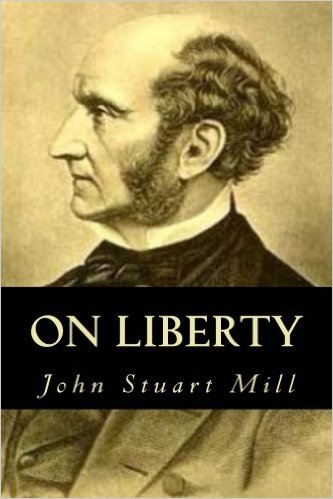
Arendt exposed ideological conformity, Gramsci revealed cultural capture, and Orwell diagnosed linguistic decay. Now, John Stuart Mill’s On Liberty (1859) offers a moral and philosophical counter to critical social constructivism’s (CSC) hostility toward open inquiry and individual conscience. Mill’s insistence that liberty of thought, speech, and character fuels social and moral progress stands as a principled rebuke to CSC’s attempts to bind individuality to collective dogma. Together, these thinkers—Arendt, Gramsci, Orwell, and Mill—equip us to resist CSC’s illiberal advance.
Mill argues that silencing expression harms not only the speaker but society as a whole, which is deprived of truth’s refinement through open contest (Mill, 1859, Ch. II). Even false opinions, he writes, may contain a kernel of truth; and true ones grow weak without opposition. CSC, meanwhile, appeals by promising equity through collective identity. Yet it treats dissent as a moral failure. Disagreement with DEI orthodoxy or critical race theory is labeled “harmful” or dismissed as “white fragility,” producing what Mill called “the tyranny of the prevailing opinion.” In 2024, University of Washington faculty guidelines equated merely questioning anti-racism initiatives with creating a “hostile environment,” thereby chilling discussion.
CSC’s moral coercion inverts Mill’s epistemic humility—his belief that all ideas deserve scrutiny, no matter how widely accepted. Mandatory DEI trainings, such as a 2024 policy at a major tech firm requiring employees to affirm “lived experience” as a primary form of knowledge, preclude rational dissent. In K–12 education, 2024 California curriculum guidance redefined “authenticity” as alignment with racial or gender identity groups, effectively suppressing individual thought. These tactics substitute ritual affirmation for genuine intellectual contest—exactly what Mill warned against.
Mill’s defense of individuality as a moral ideal—his celebration of “originality” and “nonconformity” (Ch. III)—clashes with CSC’s group-based scripts. By prioritizing identity categories over self-authorship, CSC undermines human flourishing. Mill does not reject social justice, but insists that no ideal justifies silencing dissent. His Enlightenment liberalism calls us to restore a culture of contestation and protect the individual as a source of moral insight.
Where Orwell showed how language is manipulated to close debate, Mill reveals why debate must remain open—because liberty depends on it. This series—Arendt’s pluralism, Gramsci’s cultural strategy, Orwell’s linguistic clarity, and Mill’s defense of liberty—forms a unified resistance to CSC’s totalizing ambitions.
Read Mill. Restore the contest of ideas. Reclaim individuality in classrooms, workplaces, and public life as the cornerstone of a free society.
Three Salient Points for Arguments Against Critical Social Constructivism
- Silencing Dissent Erodes Truth: CSC’s labeling of CRT critiques as “hostile,” as in 2024 campus policies, violates Mill’s warning that suppressing dissent impoverishes collective understanding.
- Moral Coercion Replaces Rational Persuasion: CSC’s mandates—like 2024 DEI affirmations in workplaces—replace Mill’s marketplace of ideas with conformity. Challenging these in policy debates restores reasoned inquiry.
- Individuality Is Suppressed by Group Identity: CSC’s identity scripts, seen in 2024 K–12 curricula, undermine Mill’s ideal of self-authorship. Promoting merit-based and pluralistic policies can counter this trend.
Reference
Mill, J. S. (1859). On Liberty. London: John W. Parker and Son.
Arendt exposed ideological conformity, Gramsci revealed cultural capture, and now George Orwell’s Politics and the English Language (1946) unveils critical social constructivism’s (CSC) subtlest weapon: the corruption of language. Orwell warned that vague, euphemistic language obscures reality, trapping thought in a labyrinth of abstraction. CSC wields this tactic to redefine terms, enforce orthodoxy, and render dissent unthinkable. As we turn next to Mill’s defense of liberty, Orwell’s insights equip us to resist CSC’s assault on meaning.
Orwell argued that sloppy language fosters sloppy thought, and vice versa, creating a cycle in which “language becomes ugly and inaccurate because our thoughts are foolish” (Orwell, 1946). CSC exploits this feedback loop by emptying words like harm, justice, and truth of any stable, shared meaning. Disagreement becomes “harm,” objectivity becomes “whiteness,” merit becomes “systemic bias.” The appeal lies in the promise of inclusivity, yet clarity is sacrificed for ideological control. In 2024, university style guides—such as Stanford’s—discouraged terms like “mother” and “father” in favor of “birthing parent” and “non-birthing parent,” narrowing language to conform with CSC imperatives. That same year, journalism guidelines at outlets like NPR labeled objective reporting as a manifestation of “whiteness,” stifling evidence-based discourse.
Like Orwell’s Newspeak, CSC’s linguistic shifts shrink vocabulary and moral nuance, making dissent socially radioactive. To question CSC isn’t to be wrong—it’s to enact “violence.” This mirrors Orwell’s warning that vague language can “make lies sound truthful” (1946), a tactic used to protect ideological dogma. Unlike Gramsci’s cultural trenches, Orwell targets the battlefield of meaning, where CSC renders opposition not just incorrect but unintelligible within its moral grammar.
Orwell’s antidote—short words, active verbs, and concrete images—is a blueprint for resistance. Language must be a window, not a smokescreen. When language no longer corresponds to shared experience, political manipulation becomes inevitable. Restoring clarity means demanding precise, evidence-based definitions in institutions captured by CSC. This series—Arendt on totalitarianism, Gramsci on hegemony, Orwell on language, and Mill on liberty—reveals CSC as a coordinated project to redefine reality.
Read Orwell. Restore language through precise debate. Reclaim meaning in schools, workplaces, and public forums as the first act of resistance.

Three Salient Points for Arguments Against Critical Social Constructivism
- Language Obscures, Then Controls: CSC’s redefinition of “violence” to include speech, as in 2024 campus policies, severs language from reality and undermines open discourse—just as Orwell warned.
- Vagueness Is a Weapon, Not a Flaw: CSC’s reliance on unverifiable concepts like “lived experience,” seen in 2024 DEI reports, avoids falsifiability and shields ideological claims from challenge.
- Clarity Is Resistance: Demanding evidence-based definitions in DEI training and policy debates—guided by Orwell’s principles—undermines CSC’s ideological capture and restores intellectual integrity.
References
Orwell, G. (1946). Politics and the English Language. London: Horizon.
(Additional references: Orwell, G. (1949). 1984; Orwell, G. (1946). The Prevention of Literature.)
Our series began with Hannah Arendt’s The Origins of Totalitarianism, exposing how ideological systems crush complexity and silence dissent. Now, Antonio Gramsci’s Selections from the Prison Notebooks (1971) reveals how such systems entrench themselves not through violence, but through culture. His concept of cultural hegemony—the ruling class’s ability to weave its worldview into society’s “common sense”—underpins the activist-theoretical complex of critical social constructivism (CSC). Gramsci’s insights—soon to be joined by Orwell’s warnings on language and Mill’s defense of liberty—illuminate the strategic depth of CSC and arm us to resist its totalizing spread.
A Marxist imprisoned by Mussolini’s regime, Gramsci argued that dominance endures not just through state coercion, but by shaping the cultural narratives expressed in schools, media, and civil institutions (Gramsci, 1971). CSC wields this strategy skillfully, capturing universities, HR departments, and K–12 curricula to redefine concepts like justice, harm, and truth. Its appeal lies in promising equity through structural change, yet it betrays this promise by erecting a new orthodoxy in which dissent becomes unintelligible. In 2024, university DEI training at institutions like UCLA required faculty to affirm “anti-racism” principles, silencing questions about ideological framing—a Gramscian maneuver designed to remake “common sense” itself.
CSC’s genius—and its danger—lies in rewiring the cultural fabric, thread by thread, until dissent appears as an unthinkable pattern. In contrast to Gramsci’s vision of empowering the marginalized from below, CSC’s elites impose orthodoxy from above. DEI mandates, such as 2024 corporate policies that require employees to affirm contested ideologies, mirror what Gramsci called the “trenches” of cultural warfare. Speech codes that label disagreement as “harmful” render opposition not merely wrong but morally deviant, echoing the totalitarian logic Arendt identified. These tactics reshape the public square, narrowing moral and linguistic boundaries until alternative worldviews are excluded by default.
Gramsci reveals why CSC resists debate: it redefines the very terms of discourse. Understanding this strategy is essential to resisting it. By recognizing how CSC transforms institutions into ideological instruments, we can begin to reclaim pluralism and open inquiry. This series, bridging Gramsci to Orwell and Mill, equips us to understand CSC not just as a collection of radical ideas, but as a cultural project aimed at monopolizing moral and linguistic legitimacy. CSC’s spread—like a tapestry quietly rewoven to exclude dissent—demands a unified stand for liberal principles: free inquiry, reasoned debate, and intellectual freedom. Read Gramsci critically. Decode the cultural strategy.
Reclaim our institutions through open forums, Socratic seminars, and a revival of pluralistic values.

Three Salient Points for Arguments Against Critical Social Constructivism
Cultural Hegemony Is Real—and Reversible
Gramsci showed how norms are shaped through education and language. Reversing CSC’s dominance starts with advocating parental choice in curricula and open academic forums like Socratic seminars.
Institutional Capture, Not State Revolution, Is the Threat
CSC’s infiltration of institutions—such as 2024 UCLA DEI mandates enforcing ideological affirmations—mirrors Gramsci’s cultural revolution, reshaping society without needing to seize state power.
Ideas Become Unquestioned as ‘Common Sense’
By normalizing its ideology, CSC renders dissent immoral, as seen in 2024 speech codes. Supporting pluralism and open debate in schools and workplaces restores the possibility of reasoned disagreement.
Reference
Gramsci, A. (1971). Selections from the Prison Notebooks. New York: International Publishers.











 bleatmop
 Mystro


 Dead Wild Roses
Your opinions…