
You are currently browsing the category archive for the ‘History’ category.
Take a look at what’s going on, look at the article. Should we be worried? You tell me.
“Resisting the monopolies on left theory by Marxism and on democratic theory by liberalism, Wolin developed a distinctive—even distinctively American—analysis of the political present and of radical democratic possibilities. He was especially prescient in theorizing the heavy statism forging what we now call neoliberalism, and in revealing the novel fusions of economic with political power that he took to be poisoning democracy at its root.”
Wolin throughout his scholarship charted the devolution of American democracy and in his last book, “Democracy Incorporated,” details our peculiar form of corporate totalitarianism. “One cannot point to any national institution[s] that can accurately be described as democratic,” he writes in that book, “surely not in the highly managed, money-saturated elections, the lobby-infested Congress, the imperial presidency, the class-biased judicial and penal system, or, least of all, the media.”
Inverted totalitarianism is different from classical forms of totalitarianism. It does not find its expression in a demagogue or charismatic leader but in the faceless anonymity of the corporate state. Our inverted totalitarianism pays outward fealty to the facade of electoral politics, the Constitution, civil liberties, freedom of the press, the independence of the judiciary, and the iconography, traditions and language of American patriotism, but it has effectively seized all of the mechanisms of power to render the citizen impotent.
“Unlike the Nazis, who made life uncertain for the wealthy and privileged while providing social programs for the working class and poor, inverted totalitarianism exploits the poor, reducing or weakening health programs and social services, regimenting mass education for an insecure workforce threatened by the importation of low-wage workers,” Wolin writes. “Employment in a high-tech, volatile, and globalized economy is normally as precarious as during an old-fashioned depression. The result is that citizenship, or what remains of it, is practiced amidst a continuing state of worry. Hobbes had it right: when citizens are insecure and at the same time driven by competitive aspirations, they yearn for political stability rather than civic engagement, protection rather than political involvement.”
Inverted totalitarianism, Wolin said when we met at his home in Salem, Ore., in 2014 to film a nearly three-hour interview, constantly “projects power upwards.” It is “the antithesis of constitutional power.” It is designed to create instability to keep a citizenry off balance and passive.
He writes, “Downsizing, reorganization, bubbles bursting, unions busted, quickly outdated skills, and transfer of jobs abroad create not just fear but an economy of fear, a system of control whose power feeds on uncertainty, yet a system that, according to its analysts, is eminently rational.”
Inverted totalitarianism also “perpetuates politics all the time,” Wolin said when we spoke, “but a politics that is not political.” The endless and extravagant election cycles, he said, are an example of politics without politics.
“Instead of participating in power,” he writes, “the virtual citizen is invited to have ‘opinions’: measurable responses to questions predesigned to elicit them.”
Political campaigns rarely discuss substantive issues. They center on manufactured political personalities, empty rhetoric, sophisticated public relations, slick advertising, propaganda and the constant use of focus groups and opinion polls to loop back to voters what they want to hear. Money has effectively replaced the vote. Every current presidential candidate—including Bernie Sanders—understands, to use Wolin’s words, that “the subject of empire is taboo in electoral debates.” The citizen is irrelevant. He or she is nothing more than a spectator, allowed to vote and then forgotten once the carnival of elections ends and corporations and their lobbyists get back to the business of ruling.
“If the main purpose of elections is to serve up pliant legislators for lobbyists to shape, such a system deserves to be called ‘misrepresentative or clientry government,’ ” Wolin writes. “It is, at one and the same time, a powerful contributing factor to the depoliticization of the citizenry, as well as reason for characterizing the system as one of antidemocracy.”
The result, he writes, is that the public is “denied the use of state power.” Wolin deplores the trivialization of political discourse, a tactic used to leave the public fragmented, antagonistic and emotionally charged while leaving corporate power and empire unchallenged.
“Cultural wars might seem an indication of strong political involvements,” he writes. “Actually they are a substitute. The notoriety they receive from the media and from politicians eager to take firm stands on nonsubstantive issues serves to distract attention and contribute to a cant politics of the inconsequential.”
“The ruling groups can now operate on the assumption that they don’t need the traditional notion of something called a public in the broad sense of a coherent whole,” he said in our meeting. “They now have the tools to deal with the very disparities and differences that they have themselves helped to create. It’s a game in which you manage to undermine the cohesiveness that the public requires if they [the public] are to be politically effective. And at the same time, you create these different, distinct groups that inevitably find themselves in tension or at odds or in competition with other groups, so that it becomes more of a melee than it does become a way of fashioning majorities.”

Can we draw parallels between the political experience of Du Bois and our present time? The situation the Du Bois describes can easily be translated into a commentary of what is happening in 2016 – the message is clear – reputable people cannot abandon the political realm despite what the chattering classes say, as it each citizen’s duty to take part in the political process and attempt to make things better not only for themselves, but for the following generations.
Our democracy has been moving further and further away from the participatory citizen model that we like to claim we have. Interests that do not represent the common people strive to gerrymander our democracy to suit their narrow band of self-aggrandizing goals.
“Meantime, new thoughts came to the nation:the inevitable period of moral retrogression and political trickery that ever follows in the wake of war overtook us. So flagrant became the political scandals that reputable men began to leave politics alone, and politics consequently became disreputable. Men began to pride themselves on having nothing to do with their own government, and to agree tacitly with those who regarded public office as a private perquisite. In this state of mind it became easy to wink at the suppression of the Negro vote in the South, and to advise self-respecting Negroes to leave politics entirely alone. The decent and reputable citizens of the North who neglected their own civic duties grew hilarious over the exaggerated importance with which the Negro regarded the franchise.
Thus it easily happened that more and more the better class of Negroes followed the advice from abroad and the pressure from home, and took no further interest in politics, leaving to the careless and the venal of their race the exercise of their rights as voters. The black vote that still remained was not trained and educated, but further debauched by open and unblushing bribery, or force and fraud; until the Negro voter was thoroughly inoculated with the idea that politics was a method of private gain by disreputable means.
And finally, now, to-day, when we are awakening to the fact that the perpetuity of republican institutions on the continent depends on the purification of the ballot, the civic training of voters, and the raising of voting to the plane of solemn duty which a patriotic citizen neglects to his peril and to the peril of his children’s children, – in this day, when we are striving for a renaissance of civic virtue, what are we going to say to the black voter of the South? Are we gong to tell him still that politics is a disreputable and useless form of human activity? Are we going to induce the best class of Negroes to take less and less interest in government, and give up their right to take such an interest, without a protest? I am not saying a word against all legitimate efforts to purge the ballot of ignorance, pauperism, and crime. But few have pretended that the present movement for disfranchisement in the South is for such a purpose; it has been plainly and frankly declared in nearly every case that the object of the disfranchising laws is the elimination of the black man from politics.”
-W.E.B. Du Bois. The Souls of Black Folk p.105 – 106.
Americans are no wiser than the Europeans who saw democracy yield to fascism, Nazism or communism. Our one advantage is that we might learn from their experience. Now is a good time to do so.
Here are 20 lessons from across the fearful 20th century, adapted to the circumstances of today.
1. Do not obey in advance. Much of the power of authoritarianism is freely given. In times like these, individuals think ahead about what a more repressive government will want, and then start to do it without being asked. You’ve already done this, haven’t you? Stop. Anticipatory obedience teaches authorities what is possible and accelerates unfreedom.
2. Defend an institution. Follow the courts or the media, or a court or a newspaper. Do not speak of “our institutions” unless you are making them yours by acting on their behalf. Institutions don’t protect themselves. They go down like dominoes unless each is defended from the beginning.
3. Recall professional ethics. When the leaders of state set a negative example, professional commitments to just practice become much more important. It is hard to break a rule-of-law state without lawyers, and it is hard to have show trials without judges.
4. When listening to politicians, distinguish certain words. Look out for the expansive use of “terrorism” and “extremism.” Be alive to the fatal notions of “exception” and “emergency.” Be angry about the treacherous use of patriotic vocabulary.
5. Be calm when the unthinkable arrives. When the terrorist attack comes, remember that all authoritarians at all times either await or plan such events in order to consolidate power. Think of the Reichstag fire. The sudden disaster that requires the end of the balance of power, the end of opposition parties, and so on, is the oldest trick in the Hitlerian book. Don’t fall for it.
6. Be kind to our language. Avoid pronouncing the phrases everyone else does. Think up your own way of speaking, even if only to convey that thing you think everyone is saying. (Don’t use the internet before bed. Charge your gadgets away from your bedroom, and read.) What to read? Perhaps “The Power of the Powerless” by Václav Havel, 1984 by George Orwell, The Captive Mind by Czeslaw Milosz, The Rebel by Albert Camus, The Origins of Totalitarianism by Hannah Arendt, or Nothing is True and Everything is Possible by Peter Pomerantsev.
7. Stand out. Someone has to. It is easy, in words and deeds, to follow along. It can feel strange to do or say something different. But without that unease, there is no freedom. And the moment you set an example, the spell of the status quo is broken, and others will follow.
8. Believe in truth. To abandon facts is to abandon freedom. If nothing is true, then no one can criticize power, because there is no basis upon which to do so. If nothing is true, then all is spectacle. The biggest wallet pays for the most blinding lights.
9. Investigate. Figure things out for yourself. Spend more time with long articles. Subsidize investigative journalism by subscribing to print media. Realize that some of what is on your screen is there to harm you. Bookmark PropOrNot or other sites that investigate foreign propaganda pushes.
10. Practice corporeal politics. Power wants your body softening in your chair and your emotions dissipating on the screen. Get outside. Put your body in unfamiliar places with unfamiliar people. Make new friends and march with them.
11. Make eye contact and small talk. This is not just polite. It is a way to stay in touch with your surroundings, break down unnecessary social barriers, and come to understand whom you should and should not trust. If we enter a culture of denunciation, you will want to know the psychological landscape of your daily life.
12. Take responsibility for the face of the world. Notice the swastikas and the other signs of hate. Do not look away and do not get used to them. Remove them yourself and set an example for others to do so.
13. Hinder the one-party state. The parties that took over states were once something else. They exploited a historical moment to make political life impossible for their rivals. Vote in local and state elections while you can.
14. Give regularly to good causes, if you can. Pick a charity and set up autopay. Then you will know that you have made a free choice that is supporting civil society helping others doing something good.
15. Establish a private life. Nastier rulers will use what they know about you to push you around. Scrub your computer of malware. Remember that email is skywriting. Consider using alternative forms of the internet, or simply using it less. Have personal exchanges in person. For the same reason, resolve any legal trouble. Authoritarianism works as a blackmail state, looking for the hook on which to hang you. Try not to have too many hooks.
16. Learn from others in other countries. Keep up your friendships abroad, or make new friends abroad. The present difficulties here are an element of a general trend. And no country is going to find a solution by itself. Make sure you and your family have passports.
17. Watch out for the paramilitaries. When the men with guns who have always claimed to be against the system start wearing uniforms and marching around with torches and pictures of a Leader, the end is nigh. When the pro-Leader paramilitary and the official police and military intermingle, the game is over.
18. Be reflective if you must be armed. If you carry a weapon in public service, God bless you and keep you. But know that evils of the past involved policemen and soldiers finding themselves, one day, doing irregular things. Be ready to say no. (If you do not know what this means, contact the United States Holocaust Memorial Museum and ask about training in professional ethics.)
19. Be as courageous as you can. If none of us is prepared to die for freedom, then all of us will die in unfreedom.
20. Be a patriot. The incoming president is not. Set a good example of what America means for the generations to come. They will need it.
[Source]
Timothy Snyder, a Yale history professor and historian of Eastern Europe, originally published this on Facebook. He is the author of “Black Earth: The Holocaust as History and Warning.” Twitter: @TimothyDSnyder
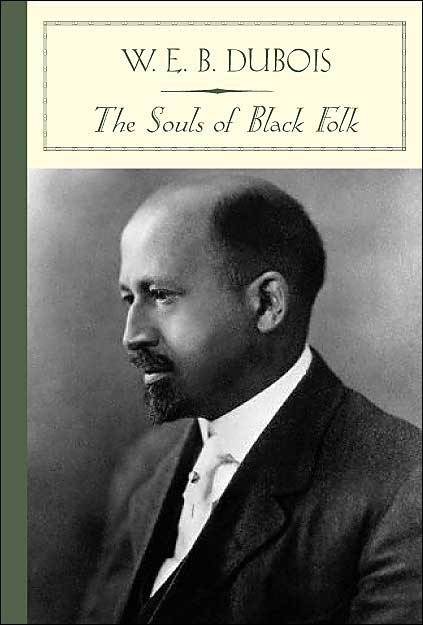 Du Bois has a talent for using his prose to sift directly to the root of the problem, and then offer an equally elegant solution. The problem of race in America continues to this day, but Du Bois has already blazed the trail toward a possible just solution – in one paragraph.
“Again we must decry the colour prejudice of the South, yet it remains a heavy fact. Such curious kinks of the human mind exist and must be reckoned with soberly. They cannot be laughed away, nor always successfully stormed at, nor easily abolished by act of legislature And yet they must not be encouraged by being let alone. They must be recognized as facts, but unpleasant facts; things that stand in the way of civilization and religion and common decency. They can be met in but one way, – by the breadth and broadening of human reason, by catholicity of taste and culture. And so, too, the native ambition and aspiration of men, even thought they be black, backward, and ungraceful, must not be lightly dealt with. To stimulate wildly weak and untrained minds is to play with mighty fires; to flout their striving idly is to welcome a harvest of brutish crime and shameless lethargy in our very laps. The guiding of thought and the deft coordination of deed is at once the path of honour and humanity. “
-W.E.B. Du Bois. The Souls of Black Folk. pp.56-57
John Pilger does what a journalist is supposed to do. He questions decisions made by those who are in charge and hold them to account for their decisions. As witnessed during the lead up to the Iraq war in 2003 most of the easily accessible media in the West is, for the most part uncritical and (appallingly) accepting of what those in power want us to believe.
This isn’t new information – let’s go back to 1946.
“In 1946, the Nuremberg Tribunal prosecutor said of the German media: “Before every major aggression, they initiated a press campaign calculated to weaken their victims and to prepare the German people psychologically for the attack. In the propaganda system, it was the daily press and the radio that were the most important weapons.”
Stirring up fear and blind patriotism is the first ingredient in the propagandist’s recipe book. For people who are afraid, are all to willing to forget their common humanity when they perceive a “threat” to their future.
The real reasons we fight ‘terrorism’ and ‘defend our freedoms’.
“The attack on Iraq, the attack on Libya, the attack on Syria happened because the leader in each of these countries was not a puppet of the West. The human rights record of a Saddam or a Gaddafi was irrelevant. They did not obey orders and surrender control of their country.
The same fate awaited Slobodan Milosevic once he had refused to sign an “agreement” that demanded the occupation of Serbia and its conversion to a market economy. His people were bombed, and he was prosecuted in The Hague. Independence of this kind is intolerable.
As WikLeaks has revealed, it was only when the Syrian leader Bashar al-Assad in 2009 rejected an oil pipeline, running through his country from Qatar to Europe, that he was attacked.
From that moment, the CIA planned to destroy the government of Syria with jihadist fanatics – the same fanatics currently holding the people of Mosul and eastern Aleppo hostage.”
Actual freedom and actual independence are the official enemies. There is no international glorious commitment to human rights and freedoms, but rather, the economic and political machinations of state that are the true driver of the various ‘humanitarian interventions’ across the globe.
Did you need to see this in action on a smaller scale. Well, there just happens to be a captioned poster for that.

This is why words like ‘power’ and ‘justice’ must be so carefully defined and put into the proper context – because people experience these concepts in vastly different ways depending on their place in the social hierarchy. It is particularly fair? Not even close, but it is how power, and by extension, how our society works.
State terrorism and religious terrorism are directly correlated.
“According to its own records, Nato launched 9,700 “strike sorties” against Libya, of which more than a third were aimed at civilian targets. They included missiles with uranium warheads. Look at the photographs of the rubble of Misurata and Sirte, and the mass graves identified by the Red Cross. The Unicef report on the children killed says, “most [of them] under the age of ten”.
As a direct consequence, Sirte became the capital of ISIS.”
Within most of major media, the results of our violence is almost never mentioned. The silence is deafening with regards to our culpability in committing these atrocities.
“When the truth is replaced by silence,” said the Soviet dissident Yevtushenko, “the silence is a lie.”
The complicity of most of our media means that state power, and the ‘national interest’ remains potently in the background, unchallenged, unexamined, and uncritically accepted.
“The same year, soon after the invasion, I filmed an interview in Washington with Charles Lewis, the renowned American investigative journalist. I asked him, “What would have happened if the freest media in the world had seriously challenged what turned out to be crude propaganda?”
He replied that if journalists had done their job, “there is a very, very good chance we would not have gone to war in Iraq”.
It was a shocking statement, and one supported by other famous journalists to whom I put the same question — Dan Rather of CBS, David Rose of the Observer and journalists and producers in the BBC, who wished to remain anonymous.
In other words, had journalists done their job, had they challenged and investigated the propaganda instead of amplifying it, hundreds of thousands of men, women and children would be alive today, and there would be no ISIS and no siege of Aleppo or Mosul.”
Demand better of your media outlets. Spend time perusing alternate sources of media, be cognizant of the ‘official’ narrative. Ask questions.
Some places to start: Tom’s Dispatch, Counterpunch, Al Jazeera, Media Lens.
The story from the other side, to feel what others feel and appreciate and understand what their experience is like is the first step in resolving the injustices that mar our history and continue to sicken our experiences as we move forward.
“I remember well when the shadow crept across me.
I was a little thing, away up in the hills of New England, where the dark Housatonic winds between Hoosac and Taghkanic to the sea. In a wee wooden schoolhouse, something put it into the boys’ and girls’ heads to buy gorgeous visiting-cards – ten cents a package – and exchange. The exchange was merry, till one girl, a tall newcomer, refused my card, – refused it peremptorily, with a glance.
Then it dawned upon me with a certain suddenness that I was different from the others; or like, mayhap, in heart and life and longing, but shut out from their world by a vast veil. I had thereafter no desire to tear down that veil, to creep through; I held all beyond it in common contempt, and live above it in a region of blue sky and great wandering shadows.
That sky was bluest when I could beat my mates at examination time, or beat them at a foot-race, or even beat their stingy heads. Alas, with years all this fine contempt began to fade; for the worlds I longed for, and all their dazzling opportunities, were theirs, not mine. But they should not keep these prizes, I said; some, all, I would wrest from them.
Just how I would do it I could never decide: by reading law, by healing the sick, by telling the wonderful tales that swam in my head, – someway. With other black boys the strife was not so fiercely sunny: their youth shrunk into tasteless sycophancy, or into silent hatred of the pale world about them and mocking distrust of everything white; or wasted itself in a bitter cry, Why did God make me an outcast and a stranger in mine own house? The shades of the prison-house closed round about us all: walls strait and stubborn to the whitest, but relentlessly narrow, tall, and unscalable to sons of night who must plod darkly on in resignation, or beat unavailing palms against the stone, or steadily, half hopelessly watch the streak of blue above.
After the Egyptian and Indian, the Greek and Roman, the Teuton and Mongolian, the Negro is a sort of seventh son, born with a veil, and gifted with a second-sight in this American world, – a world which yields him no true self consciousness, but only lets him see himself through the revelation of the other world. It is a peculiar sensation, this double-consciousness, this send of always looking at one’s self through the eyes of others, of measuring one’s soul by the tape of the world that looks on in contempt and pity.
One ever feels his two-ness, – an American, a Negro; two souls, two thoughts, two unreconciled strivings; to warring ideals in one dark body, who dogged strength alone keeps it from being torn asunder.”
– The Souls of Black Folk. W.E.B. Du Bois p.2
Women share this double-consciousness, with different actors, but the results are the same.
Insightful essays not your bag? A window looking into current events as they happen, and not how the handlers say they happen a bit too much? Then don’t subscribe to Tom’s Dispatch.
This excerpt from ‘Bombs Away’ by Tom Engelhardt
“1. Success and Failure: Without a hint of exaggeration, you could say that, at the cost of $400,000 to $500,000, al-Qaeda’s 9/11 air assault created Washington’s multi-trillion-dollar Global War on Terror. With a microscopic hijacked air force and a single morning’s air campaign, that group provoked an administration already dreaming of global domination into launching a worldwide air war (with a significant ground component) that would turn the
Greater Middle East — then a relatively calm (if largely autocratic) region — into a morass of conflicts, failed or collapsed states, ruined cities, and refugees by the millions, in which extreme Islamic terror outfits now seem to sprout like so many mushrooms. This, you might say, was the brilliance of Osama bin Laden. Seldom has so little air power (or perhaps power of any sort) been leveraged quite so purposefully into such sweeping consequences. It may represent the most successful use of strategic bombing — that is, air power aimed at the civilian population of, and morale in, an enemy country — in history.
On the other hand, with only a slight hint of exaggeration, you might also conclude that seldom has an air campaign without end (almost 15 years and still expanding at the cost of untold billions of dollars) proven quite so unsuccessful. Put another way, you could perhaps conclude that, in these years, Washington has bombed and missiled a world of Islamist terror outfits into existence.
On September 11, 2001, al-Qaeda was the most modest of forces with militant followers in perhaps the low thousands in Afghanistan and tiny numbers of scattered supporters elsewhere on the planet. Now, there are al-Qaeda spin-offs and wannabe outfits, often thriving, from Pakistan to Yemen, Syria to North Africa, and of course the Islamic State (ISIS), that self-proclaimed “caliphate” of Abu Bakr al-Baghdadi, still holds a sizeable chunk of territory in Iraq and Syria while its “brand” has spread to groups from Afghanistan to Libya.
Minimally, the U.S. air campaign, which has certainly killed enough terror leaders, “lieutenants,” “militants,” and others over these years, has shown no ability to halt the process and arguably has ploughed remarkably fertile ground for it. Yet in response to the next terror outrage (as in Libya recently), the bombs continue to fall. It’s a curious record in the generally disappointing annals of air power and well worth considering in more detail.”











 bleatmop
 Mystro
 The Arbourist


 Dead Wild Roses
Your opinions…