
You are currently browsing the category archive for the ‘International Affairs’ category.
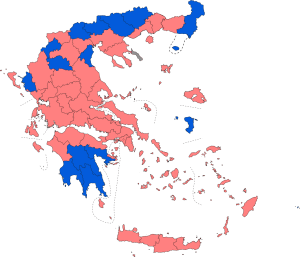 *Update – The election results are in.
There might be hope for the people of Greece in their upcoming elections. Excerpts of an interview of Tariq Ali hosted by Kostas Vlahopoulos and Thomas Giourgas.
“3. What is your view of the current sociopolitical situation in Greece?
Tariq Ali: The situation is polarised. The fascists of Golden Dawn and the Conservative descendants of the wrong side in the Greek Civil war have the support of a sizeable section of the Greek population. This cannot be ignored and we do so at our peril. The emergence and growing support for SYRIZA (and PODEMOS in Spain) is the post positive development in Europe, but in order for it to move another step forward without moving backwards it will have to challenge the Greek oligarchs, confront the ship-owners mafia that owns the media, that pays few taxes, if any, and also to remove the tax free status of the Orthodox Church. Its not that the Church is poor. Its ownership of property makes the institution an oligarch in its own right. In the case of the ship-owners they must be compelled to pay taxes in retrospect so that the country can move forward economically again and start functioning properly. Such a move will annoy the more backward sections of the EU elite but will be popular in Europe as a whole and will lay the basis for a political battle with the Troika by splitting their supporters.
1. For the first time in Greek political history, a radical left party, SYRIZA, is the strong favorite to win the general elections taking place in January the 25th. What kind of reaction do you expect from the neo-liberal Europe and in particular from Germany?
Tariq Ali: If SYRIZA wins it will mark the beginnings of a fightback against austerity and neo-liberalism in Europe. Two concurrent processes will be in motion from the beginning of the victory. There will be a strong attempt by the EU elite led by Germany to try and tame SYRIZA via a combination of threats and concessions. The aim of this operation is simple. To try and split SYRIZA at a very early stage.
Secondly there will be a high level of expectation from SYRIZA’s electorate and beyond. Mass mobilizations will be extremely important to sustain the new government and push it to carry through the first necessary measures. The debt and the readjustment measures must be repudiated immediately before moving on to implement a plan that restores the social gains that have been achieved and are being dismantled by the Troika-led governments. The first three months will be decisive in terms of revealing the contours of the political and economic landscape envisaged by SYRIZA. Neo-liberalism can not be dismantled overnight but the will to do so must be paramount. Bandwagon careerists must not be allowed to sabotage what can and should be done
6. Financial markets are considered to be the omnipotent regulators of politics and democracy itself in some cases. Could it be possible for a left government to clash with market system within the capitalist framework?
Tariq Ali: Yes, that is what is on the agenda today and what the Bolivarian governments in South America have been doing for the last fifteen years with relative success. Market-fundamentalism has led to a sharp decline in democracy (Wolfgang Streek, the German sociologist has explained the process of decline very well in his books and essays) and the Wall Street crash of 2008. What is needed is a combination of regulation, state intervention to take back the public utilities and create and own industries that can help fund the former andsenhanced democracy on every level to ensure popular participation.
This can be our only minimum programme at the present moment.”
One can only hope that the push back against the neo-liberal tide will take root in Greece, blazing the trail for the rest of the EU to follow.
A brief note. I think that this essay should be required reading for all those who consider joining the armed forces and participating in the cycle of terrorism and destruction that currently dominates our foreign policy and geo-political goals here in the West. Many thanks to Tom’s Dispatch for hosting the essay.
“Why The War on Terror Shouldn’t Be Your Battle.”
[…]
Let’s start that unpacking process with racism: That was the first and one of the last times I heard the word “enemy” in battalion. The usual word in my unit was “Hajji.” Now, Hajji is a word of honor among Muslims, referring to someone who has successfully completed a pilgrimage to the Holy Site of Mecca in Saudi Arabia. In the U.S. military, however, it was a slur that implied something so much bigger.
The soldiers in my unit just assumed that the mission of the small band of people who took down the Twin Towers and put a hole in the Pentagon could be applied to any religious person among the more than 1.6 billion Muslims on this planet. The platoon sergeant would soon help usher me into group-blame mode with that “enemy.” I was to be taught instrumental aggression. The pain caused by 9/11 was to be tied to the everyday group dynamics of our unit. This is how they would get me to fight effectively. I was about to be cut off from my previous life and psychological manipulation of a radical sort would be involved. This is something you should prepare yourself for.
When you start hearing the same type of language from your chain-of-command in its attempt to dehumanize the people you are off to fight, remember that 93% of all Muslims condemned the attacks on 9/11. And those who sympathized claimed they feared a U.S. occupation and cited political not religious reasons for their support.
But, to be blunt, as George W. Bush said early on (and then never repeated), the war on terror was indeed imagined in the highest of places as a “crusade.” When I was in the Rangers, that was a given. The formula was simple enough: al-Qaeda and the Taliban represented all of Islam, which was our enemy. Now, in that group-blame game, ISIS, with its mini-terror state in Iraq and Syria, has taken over the role. Be clear again that nearly all Muslims reject its tactics. Even Sunnis in the region where ISIS is operating are increasingly rejecting the group. And it is those Sunnis who may indeed take down ISIS when the time is right.
“If you want to be true to yourself, don’t be swept up in the racism of the moment. Your job should be to end war, not perpetuate it. Never forget that.
The second stop in that unpacking process should be poverty: After a few months, I was finally shipped off to Afghanistan. We landed in the middle of the night. As the doors on our C-5 opened, the smell of dust, clay, and old fruit rolled into the belly of that transport plane. I was expecting the bullets to start whizzing by me as I left it, but we were at Bagram Air Base, a largely secure place in 2002.
Jump ahead two weeks and a three-hour helicopter ride and we were at our forward operating base. The morning after we arrived I noticed an Afghan woman pounding at the hard yellow dirt with a shovel, trying to dig up a gaunt little shrub just outside the stone walls of the base. Through the eye-slit of her burqa I could just catch a hint of her aged face. My unit took off from that base, marching along a road, hoping (I suspect) to stir up a little trouble. We were presenting ourselves as bait, but there were no bites.
When we returned a few hours later, that woman was still digging and gathering firewood, undoubtedly to cook her family’s dinner that night. We had our grenade launchers, our M242 machine guns that fired 200 rounds a minute, our night-vision goggles, and plenty of food — all vacuum-sealed and all of it tasting the same. We were so much better equipped to deal with the mountains of Afghanistan than that woman — or so it seemed to us then. But it was, of course, her country, not ours, and its poverty, like that of so many places you may find yourself in, will, I assure you, be unlike anything you have ever seen. You will be part of the most technologically advanced military on Earth and you will be greeted by the poorest of the poor. Your weaponry in such an impoverished society will feel obscene on many levels. Personally, I felt like a bully much of my time in Afghanistan.
Now, it’s the moment to unpack “the enemy”: Most of my time in Afghanistan was quiet and calm. Yes, rockets occasionally landed in our bases, but most of the Taliban had surrendered by the time I entered the country. I didn’t know it then, but as Anand Gopal has reported in his groundbreaking book, No Good Men Among the Living, our war on terror warriors weren’t satisfied with reports of the unconditional surrender of the Taliban. So units like mine were sent out looking for “the enemy.” Our job was to draw the Taliban — or anyone really — back into the fight.
Believe me, it was ugly. We were often enough targeting innocent people based on bad intelligence and in some cases even seizing Afghans who had actually pledged allegiance to the U.S. mission. For many former Taliban members, it became an obvious choice: fight or starve, take up arms again or be randomly seized and possibly killed anyway. Eventually the Taliban did regroup and today they are resurgent. I know now that if our country’s leadership had truly had peace on its mind, it could have all been over in Afghanistan in early 2002.
If you are shipped off to Iraq for our latest war there, remember that the Sunni population you will be targeting is reacting to a U.S.-backed Shia regime in Baghdad that’s done them dirty for years. ISIS exists to a significant degree because the largely secular members of Saddam Hussein’s Ba’ath party were labeled the enemy as they tried to surrender after the U.S. invasion of 2003. Many of them had the urge to be reincorporated into a functioning society, but no such luck; and then, of course, the key official the Bush administration sent to Baghdad simply disbanded Saddam Hussein’s army and tossed its 400,000 troops out onto the streets at a time of mass unemployment.
It was a remarkable formula for creating resistance in another country where surrender wasn’t good enough. The Americans of that moment wanted to control Iraq (and its oil reserves). To this end, in 2006, they backed the Shia autocrat Nouri al-Maliki for prime minister in a situation where Shia militias were increasingly intent on ethnically cleansing the Sunni population of the Iraqi capital.
Given the reign of terror that followed, it’s hardly surprising to find former Baathist army officers in key positions in ISIS and the Sunnis choosing that grim outfit as the lesser of the two evils in its world. Again, the enemy you are being shipped off to fight is, at least in part, a product of your chain-of-command’s meddling in a sovereign country. And remember that, whatever its grim acts, this enemy presents no existential threat to American security, at least so says Vice President Joe Biden. Let that sink in for a while and then ask yourself whether you really can take your marching orders seriously.
Next, in that unpacking process, consider noncombatants: When unidentified Afghans would shoot at our tents with old Russian rocket launchers, we would guesstimate where the rockets had come from and then call in air strikes. You’re talking 500-pound bombs. And so civilians would die. Believe me, that’s really what’s at the heart of our ongoing war. Any American like you heading into a war zone in any of these years was likely to witness what we call “collateral damage.” That’s dead civilians.
The number of non-combatants killed since 9/11 across the Greater Middle East in our ongoing war has been breathtaking and horrifying. Be prepared, when you fight, to take out more civilians than actual gun-toting or bomb-wielding “militants.” At the least, an estimated 174,000 civilians died violent deaths as a result of U.S. wars in Iraq, Afghanistan, and Pakistan between 2001 and April 2014. In Iraq, over 70% of those who died are estimated to have been civilians. So get ready to contend with needless deaths and think about all those who have lost friends and family members in these wars, and themselves are now scarred for life. A lot of people who once would never have thought about fighting any type of war or attacking Americans now entertain the idea. In other words, you will be perpetuating war, handing it off to the future.”
Ah, the joy of the free press down in the US. Let’s catch up with Noam as takes us through some possible solutions to the Palestine/Israel conflict.
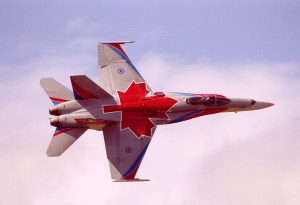 Canada has sent CF-18’s to participate in the bombing of ISIS. I think this is a very bad idea and I need to tell you a story from my childhood to illustrate why.
This whole sending planes overseas to bomb people reminds me of one Christmas I had the pleasure of spending in Hawaii. Oh let me assure you gentle readers, it was a very merry Mele Kalikimaka for my Mom and I. We saw many wonderful sights, swam on many beaches, drove around for the first couple of days in a standard car that my dear Mum couldn’t reliably drive (which I nearly fell out of on the highway), turned my back on the ocean and was promptly slammed by a monster-wave that sent me cartwheeling underwater up a thirty-foot sandy incline losing my glasses and nearly my life in the process. Like I said, good times. But there was a side story that went along with our little Hawaii get-away and it involves attempting to acquire a certain toy that I reeeeeeeealy wanted.
You see, back at the time I happened to be young and had a certain proclivity toward the latest and greatest toys available at the time – Transformers. Specifically for some reason lost to me now I wanted to get Soundwave – an evil Decepticon robot that could transform into a tape deck. Witness (If you’re really curious, you can see Soundwave in action on youtube):

Whoa! So tricky, hiding as a radio/cassette player. My 10 year old mind didn’t do physics at the time, but how does a 12 foot multiple tonne robot “transform” into a human sized, human portable – boom box?

Daaaamn, Soundwave was cool. In the cartoon he spoke in a heavily vocoded monotone voice.
As I recall, our dynamic mother and son team spent a good deal of time on our vacation looking for the authentic Soundwave toy. Now being that Tranformers were all shiny and new back then, they had not made it to the Big Island yet; and if they did the branded toys were snapped up by savvy Hawaiian shoppers before the likes of our pasty Canadian tourists had even thought about buying them.
What was available were many imitation toys that mimicked the brand name toy precisely. The knock-offs where everywhere in the Hawaiian toy stores. And yes, in retrospect, I’m completely embarrassed at how spoiled I was for dragging my mother to so many malls in Hawaii looking for Mr.Soundwave – only child – I had no choice in the matter :)
Anyhow, we eventually had to settle on getting the very good Soundwave knock-off. It was under the Christmas lamp and promptly opened and played with on that sunny tropical Christmas morning. I remember though, that as much fun as I had with said toy it just wasn’t quite right. It was almost everything I wanted, yet there was a keen edge of disappointment because we had to settle for something wasn’t exactly what I wanted. It was a gift that involved a settlement – the best we could do at the time.
I’m sure we’ve all been in that situation in one form or another. We’ve all wanted “X” soooo bad for so long but then “Y” comes along and we jump at the opportunity to get what we almost wanted because we figure it will do and make us just as happy.
Hint: Settling doesn’t make us as happy.
So why is Canada going in with the Royal Canadian Air Force, when we know that bombing is not the solution to the ISIS problem?
“Air strikes alone are really not enough to defeat Isis in Kobani,” said Idris Nassan, a senior spokesman for the Kurdish fighters desperately trying to defend the important strategic redoubt from the advancing militants. “They are besieging the city on three sides, and fighter jets simply cannot hit each and every Isis fighter on the ground.”
He said Isis had adapted its tactics to military strikes from the air. “Each time a jet approaches, they leave their open positions, they scatter and hide. What we really need is ground support. We need heavy weapons and ammunition in order to fend them off and defeat them.”
Hmm…consider the words of US Army officer who sees a slightly different picture.
“For example, what would happen if the President took Mr. Kristol’s advice and bombed targets “for a few weeks” and then waited just to “see what happens”? The first few iterations of air sorties would have a good chance of taking out numerous ISIS vehicles and personnel. But in short order ISIS would adjust its methods of operation to disguise vehicle movements, reposition troops and embed command and control centers more deeply into civilian areas, becoming indistinguishable from the civil population.
Now, despite having successfully destroyed a few targets, we would have pushed the enemy deeper underground, hardened his resolve, and seen his troops burrow in like ticks among the innocent residents of the cities he occupies. Further targeting from the air becomes next to impossible without killing noncombatants or sending in ground troops to flush the fighters out. Unless the President will entertain deepening American engagement by deploying ground combat units to root ISIS members out of their dug-in positions, house-by-house – decidedly not recommended – those successful bombing runs will have led to dismal failure.”
So our goal is stop the massacre of innocents and the spread of radical islamic notions. It would seem that given our tactics, neither of those goals would be accomplished. So here we are at that fateful time do we get the knock off toy – we have to do something to stop ISIS – and get not quite the result we’re looking for or do we wait for what we authentically want and commit to to bring that ideal to fruition?
Here is a strategy I think that Canada could actually play a role in; specifically point 3,4, and especially 5. Canada’s role in the world used to be synonymous with Peacekeeping as opposed to the murderous imperialistic role that our current PM thinks is a-fucking-okay.
“To protect American and allied interests in and around ISIS, the United States would design and lead an aggressive regional diplomatic campaign to first isolate, and over time defeat this group of thugs; the military would play a supporting role. To accomplish this objective, the United States would isolate ISIS economically, financially, and geographically, while eroding its support from within.
To accomplish this strategic objective, the U.S. should:
1) Work with the states around and near ISIS territory for the purpose of closing the borders leading into and out of ISIS areas including those in Syria as well as Iraq, thus depriving the jihadists of materiel that could support military operations;
2) use aggressive border control to pin ISIS to its current positions;
3) at the same time, separate ISIS from its external financial and material support;
4) conduct a social media campaign that truthfully exposes the grotesque nature of ISIS ideology in ++terms that would-be jihadists can understand;
5) conduct a sustained humanitarian aid effort to ensure the people currently under ISIS bondage will survive; and
6) institute a coalition-supported “no-go zone” between ISIS territory and that of friendly nations. If ISIS vehicles or ground personnel venture into this zone, they will be destroyed.
In short, we would make it clear to the world and the potential recruits that ISIS has fatally overstepped its capabilities. Faced with the stark reality that they have isolated themselves physically, diplomatically, and morally from the rest of their own region, unable to repair broken equipment, provide fuel for their vehicles, unable to replace expended ammunition, and incapable of performing even the basic functions of a state, it will be clear to all both inside and outside the blockade: ISIS is a regime of losers whose singular accomplishment has been butchering the defenseless, and the impoverishment of the civil populations under its domination.”
Jesus-fuck! Isn’t it nice when someone with a whit of sense speaks clearly to the issue at hand. Full marks go out to this individual and his thoughtful take on what needs to be with ISIS. For a handy compare and contrast lets hear our twit of a PM on why Canada should go bomb people…
“If Canada wants to keep its voice in the world…and we should since so many of our challenges are global…being a free rider means you are not taken seriously. Left unchecked, this terrorist threat can only grow and grow quickly.”
Ah, so not participating in breeding more terror and terrorists in Iraq mean that you are “free rider” and are not going to be taken seriously. All I can say is:
Seriously?
Is France not being taken seriously for not contributing to the airstrikes that will serve only to push our goal further way? But wait, there is more apparently bombing people in Iraq is all about saving Canadian Families…
“As a Government, we know our ultimate responsibility… Is to protect Canadians, and to defend our citizens from those who would do harm to us and to our families.”
*sigh* Ratchet up fear and we’ll our darnedest overseas to protect the homeland. You’d think by now we would understand this most basic of propaganda principles. Baa..sorry for the tangent folks, but Steven Harper and the rest of his merry conservative crew of the RCN Clueless forced me to scribe about their relentless vapidity.
So, back on message – Let’s not be disappointed Christmas morning with a knockoff toy, but rather let us have Canada act in the way she knows best – humanitarian aid and assistance – and get the real toy and the real results that will bring us the ending we are anxiously hoping and expecting.
Who could ask for anything more. A great beach, a good discotheque and an opportunity for martyrdom for the win!
Over a million tourists from around the world visit Sousse, Tunisia every year. And, while the coastal city boasts pristine beaches and world class hotels, recently, hordes of local young men have been leaving fun and sun behind them in favor of joining ISIS in Syria.
 In the crazy fun house world of imperial politics nationalist regimes are less preferable than radical religious ones. Noam Chomsky and Andre Vltchek discuss the motivations of empire in the Middle East in this selection from the book: On Western Terrorism – From Hiroshima to Drone Warfare.
“Noam Chomsky:
“Anyhow, going back to the Middle East after World War II. The British role in Iran was reduced and the US began to take over. IN Iraq in 1958, there was a so-called independent government, but it was basically British-run, and it was overthrown in a military coup. A couple of years later the US was able to engineer a coup that overthrew the Nasser-type nationalist government, and that’s where Saddam Hussein comes in. The CIA handed the new Ba’athist government a long list of Communists, radicals, and teachers, and then they all got assassinated. Then you come to the present; the US expects to run Iraq. In Saudi Arabia, the British were the junior partner, Finally the British pulled out, and left it to the United States.”
Andre Vltchek:
Of course Saudi Arabia is a tremendously destabilizing force in the world and its influence spreads from Bahrain to Indonesia. In Bahrain there is the fear that the country may be annexed by Saudi Arabia, The Saudi Army is and out of Bahrain.
Noam Chomsky:
The Saudis are pouring money all over the place to sponsor the most extreme forms of radical Islam – Wahabbism – in Madrasas, in Pakistan, pouring money into Egypt to support the Salafis, all extreme Islamic elements. The United States is happy with that; it doesn’t try to prevent them.
The idea that the US is opposed to radical Islam is ludicrous. The most extreme fundamentalist Islamic state in the world is Saudi Arabia, which is the US’s favourite. Britain also has consistently supported radical Islam. The reason was to oppose secular nationalism. US relations with Israel reached their current close state in 1967 because Israel performed the huge service of smashing secular nationalism and defending radical Islam.
A British diplomatic historian, Mark Curtis, wrote a very good book a few years ago called Secret Affairs: British Collusion with Radical Islam (review here). Curtis went through the British records on Islam. It turns out the British had consistently supported radical Islamist elements, pretty much was the US has been doing. They may not have liked it, but they prefer them to the secular nationalists.
Secular nationalists threatened them – they threatened to take over the resources and use them for domestic development and that’s the worst sin; so we support radical Islamists.”
-Excerpt from “On Western Terrorism from Hiroshima to Drone Warfare p.115 – 116
It would seem that Geo-political decisions are quietly being adjudicated by the imperial powers of the world. It would also seem that they are quite separate from the political fodder being offered to their respective populations.











 bleatmop
 Mystro
 The Arbourist


 Dead Wild Roses
Your opinions…