
You are currently browsing the category archive for the ‘Media’ category.
The Swiss, being sensible, have denied the US and France’s requests to shut down WikiLeaks.
“The site’s new Swiss registrar, Switch, today said there was “no reason” why it should be forced offline, despite demands from France and the US. Switch is a non-profit registrar set up by the Swiss government for all 1.5 million Swiss .ch domain names.”
Pretty embarrassing, but hardly surprising, when the “land of the free and home of the brave” do their utmost to destroy the very lifeblood democracies thrive on, namely information. Hey of course, it is ‘sensitive state information’. You can find it on google now, perhaps like other state apparatus google should be censored as well. Back in the ‘home of the brave’ the censorship is not so obvious:
“The reassurances [from the Swiss] come just hours after eBay-owned PayPal, the primary donation channel to WikiLeaks, terminated its links with the site, citing “illegal activity”. France yesterday added to US calls for all companies and organisations to terminate their relationship with WikiLeaks following the release of 250,000 secret US diplomatic cables.”
Of course, you target the infrastructure that keeps WikiLeaks afloat. The Americans, let their poor die in natural disasters (Katrina anyone?), but watch the organization and money being spent when an attack on the elite happens. The response to Wikileaks is a case study in who has the power in the US and who is really driving that national agenda.
It makes one wonder, with all the furor, what is still classified and quietly festering in the background on a hard drive somewhere of actions that our governments take in our name.
The George Orwell quotations are being dusted off again and rightfully so – consider…
“Political language is designed to make lies sound truthful and murder respectable, and to give the appearance of solidity to pure wind.”
This quote prefaces the video, also released on WikiLeaks, of the American Army gunning down men and children while in Iraq. Does anyone, anymore have the gall anymore to say “why do they hate us?”
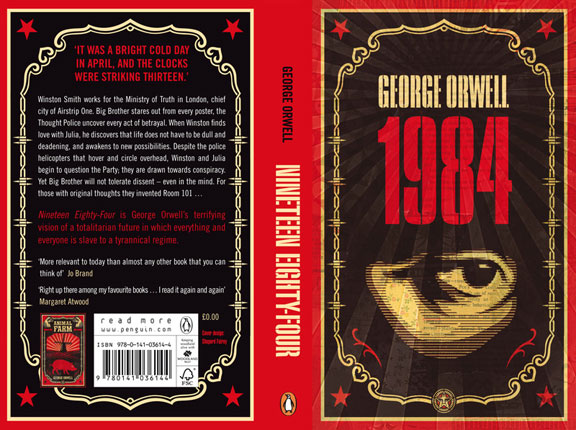 Ever wonder why you need to read at least three papers to even get a basic grasp of an issue? More papers if the issue is contentious and imperial interests are at stake. Media Lens does a wonderful job of showing media self-censorship in action. I reproduce the email alert sent to me in full:
TOO TOXIC TO HANDLE?
FOLLOW-UP ALERT ON ISRAEL’S POLICY OF NEAR-STARVATION FOR GAZA
On November 17, we sent out a media alert that highlighted the corporate media’s lack of interest in official documents revealing Israel’s deliberate policy of near-starvation for Gaza.
The documents had been obtained by Gisha, an Israeli human rights group, which won a legal battle in October to compel the Israeli government to release the information. The state policy relates to the transfer of goods into Gaza prior to the May 31, 2010 attack on the peace flotilla in which nine people were killed by Israeli forces. Israel still refuses to release documents on the current blockade policy, now supposedly “eased” following worldwide condemnation of the flotilla attack.
We, and many of our readers, emailed broadcasters and newspapers asking why the release of these documents was not reported in October. Were journalists simply unaware of the documents and their significance? For the BBC in particular, with all its huge resources for monitoring developments in the Middle East, this is surely implausible.
Two readers pointed out to us that the BBC had published one online story about the legal battle over the release of the documents back in May. However, BBC journalist Tim Franks accepted the Israeli assertion that the then secret documents “were not used for policy-making.”
The BBC obviously thought the story was newsworthy at the time, just as it should have last month. Indeed, the news is all the more compelling now that the documents have been released, despite the efforts of the Israeli government to block their publication. It is of major significance that explicit Israeli calculations for the amount of food, animal feed and poultry to be allowed into Gaza can be seen, starkly laid out in black and white. One of the calculated quantities is “breathing space”: the number of days that supplies will last in Gaza. The concept of “breathing space” for Gaza, dictated by the Israelis, is chilling; yet, the media appear happy to look the other way.
Finally, almost two weeks after our alert went out, an article about the Gaza blockade appeared on the BBC website in response to a new report by Amnesty, Oxfam, Save the Children and eighteen other groups. The main spin of the BBC article was that the NGOs had found “little improvement” for the people of Gaza since Israel’s claimed “easing” of the blockade which, said the groups, was “crippling” the Gaza economy. But the web article failed to emphasise the call by the NGOs for “an immediate, unconditional and complete lifting” of the illegal blockade. Tucked away at the bottom of the piece, fleeting reference was finally made to the previously secret Israeli documents:
“Last month, the Israeli government was forced to reveal that the blockade was not only imposed for security reasons.
“After a freedom of information request by the Israeli human rights organisation Gisha, the Israeli government released documents saying the blockade was originally tightened as part of a policy of ‘deliberately reducing’ basic goods for people in Gaza in order to put pressure on Hamas.”
There was no reference to the explicit Israeli calculations on supplies of food, poultry and animal feed, or the uncomfortable truth that the Israelis had previously denied the existence of the documents; or, putting the grisly facts in context, that the documents confirmed the infamous Israeli threat that: “The idea is to put the Palestinians on a diet, but not to make them die of hunger.” (‘Hamas readies for government, Israel prepares sanctions’, Agence France Presse, February 16, 2006)
However, even a tiny mention is something, and it may well have been the result of public pressure. The fact that nobody from the BBC responded directly to the many people submitting articulate and polite challenges, and in some cases emailing follow-up queries about the corporation’s failure to reply, may in itself be significant. Perhaps BBC editors and managers realised they had been caught red-handed neglecting to report awkward facts about the Middle East.
C4 News And The Guardian: The Best Of The Rest?
The public also challenged the Guardian, the Telegraph, The Times, the Independent, ITV, Channel 4 News and Sky. Again, an amazing near-uniform silence persists (we present the two sole exceptions below).
First, Jon Snow of Channel 4 News had told one of our readers (who had emailed Snow in response to our alert) that he would be interviewing Professor Richard Falk on Monday, November 22. Falk is an expert in international affairs at Princeton University and is the UN Special Rapporteur on Palestinian human rights. The interview was confirmed in advance that day in Jon Snow’s ‘Snowmail’ bulletin which is emailed to subscribers. After Falk did not, in fact, appear on C4 News that evening, we emailed Snow and asked what had happened. In a friendly exchange, he admitted that he had “cocked up”: the interview was due to take place the following Monday, i.e. November 29. We thanked Snow and encouraged him to discuss the Israeli documents with Falk and, at some stage, to confront an Israeli government spokesperson about the policy revelations:
“… if you’re able to do anything to shed light on these documents, and to ask the Israeli spokesman some tough questions whenever you get the chance, you could be doing the public audience a huge service – and maybe, just maybe, making a real difference to reduce human suffering.” (Email from Media Lens to Jon Snow, November 23, 2010)
As it happened, C4 News of Monday, November 29 again had no interview with Richard Falk. Jon Snow did not respond to our email asking about it.
As well as the BBC contacts mentioned in our earlier alert, we also emailed Harriet Sherwood, the Guardian’s Jerusalem correspondent; Jonathan Freedland, a prominent Guardian commentator; Donald Macintyre, the Independent’s Jerusalem correspondent; and Matthew Bayley, the Daily Telegraph’s news editor.
Only the Guardian’s Harriet Sherwood responded to our email:
“I’m planning to go to Gaza in early December so I may have a look at this then. I have to say that from previous trips there is no evidence of a shortage of food in Gaza although there is clearly an issue about affordability for some sections of the population.” (Email, November 18, 2010)
We invited the independent journalist Jonathan Cook to comment on Sherwood’s response. Cook is a former Guardian and Observer journalist, now based in Nazareth, and he writes regularly on Israel-Palestine. He kindly sent us the following astute observations:
“I can no longer access Gaza myself because I have Israeli residency through marriage. But I do rely on what colleagues living in, rather than briefly visiting, Gaza tell me, and then try to use some common sense. My colleagues too say there is not an obvious shortage of food. But the problem is more complicated than simply assessing the ‘weight’ of visible food in Gaza.
“First, it is important to remember that Gaza’s most pressing problems are to be found in other areas: in freedom of movement, particularly for students and the ill, in and out of Gaza; in the ability of businesses to export goods and revive the economy; in severe fuel and electricity shortages; and in shortages of raw materials needed for construction, especially given the rampant destruction caused by Operation Cast Lead in December 2008 – January 2009.
“Regarding food, much of the population, given their status as refugees, are entitled to subsistence foods from UNRWA [the United Nations Relief and Works Agency for Palestine Refugees in the Near East]. But they can only receive proper nutrition by buying in extra foods and diversifying their diet. Israel’s control of the flow of food means that the restrictions have pushed up prices, making most food on the open market very expensive for families living on $2 a day. This long-term, poor diet is the reason for the high levels of malnutrition diseases among children being recorded. This is a man-made slow starvation, the very thing the Gisha documents highlight.
“Also, I think there’s a dangerous journalistic practice exemplified in Harriet’s comments that we are all guilty of. As reporters, we regard it as our job to walk along local streets, soaking up the atmosphere. We assume that in this way we witness and understand the problems. When we see grocery shops stuffed with tomatoes and apples, we assume things aren’t too bad. But there are flaws to this approach:
“First, we may only be seeing the few shops that sell now-luxury items but not noticing that there were once many more shops. If there are shortages, many shops close either because of the lack of goods entering Gaza or because the demand has fallen as these goods have become too expensive for most Gazans. Remember that in Palestinian areas, people turn their front rooms into shops or sell from stands in the street – so there’s no obvious evidence when they close their business.
“Second, the very fact, for example, that there are lots of fruit and veg in the shops that remain may in itself be evidence of the shortages. Shortages create price rises, which means fewer people can afford the goods, which in turn means they sell more slowly and ‘stay on the shelf’ longer.
“So rather than relying on our ‘sense’ as journalists of what is happening, we should rely on the best scientific evidence we have available:
“a) We know from Israel’s own figures that imports into Gaza during the period to which these documents relate was about a quarter of what they were in 2007 (although this includes all goods, not just food). We also know that, after the changes, imports currently stand at only 40% of the earlier figure. This means that Gazans have been and are living off much less than they were at a time when there were already restrictions.
“b) We know from medical studies that there has been a gradual and steady rise in malnutrition rates.
“c) We also know from these documents that the Israeli government had a policy during this period to impose a minimum diet on Gazans, and is now refusing to divulge its new policy.
“Taken together, that is very good evidence that Israel wanted to slowly starve Gaza and in fact did so. In those circumstances, the impressions of Harriet and other journalists are largely irrelevant.” (Email from Jonathan Cook, November 18, 2010)
We put these points to Harriet Sherwood of the Guardian. We also referred back to her email in which she said:
“I’m planning to go to Gaza in early December so I may have a look at this then.”
We suggested to Sherwood that her casual wording implies that she does not find the release of these important Israeli state documents newsworthy. We reminded her that the existence of these documents had been previously denied by Israel; not surprising, given that they document a deliberate and systematic policy of collective punishment of the entire population of Gaza. (Email to Harriet Sherwood, November 18, 2010)
We have not heard back from the Guardian’s Jerusalem correspondent.
Note again Sherwood’s sanguine observation:
“I have to say that from previous trips there is no evidence of a shortage of food in Gaza although there is clearly an issue about affordability for some sections of the population.”
Jonathan Cook pointed out to us in a second email:
“Actually her response simply sets out the conundrum rather than answers it.
“If there is no shortage of food, why has it become unaffordable for some sections of the population? True, some Gazans are probably poorer, but, even taking this factor into account, we also know prices have risen substantially. How do we explain these rises when the population is actually poorer? How do we make sense of it?
“It worries me that as journalists we make these kinds of statements without thinking through the logic of our own assumptions.” (Email from Jonathan Cook, November 18, 2010)
Concluding Remarks
In almost ten years of observing the media and writing alerts for Media Lens, we still sometimes find ourselves amazed by the efficiency of the corporate blanking of uncomfortable truths. There is no need for organised obstructionism here; no requirement for orders from above, or ruthless spiking of news stories.
As George Orwell noted in an unpublished preface to Animal Farm:
“The sinister fact about literary censorship […] is that it is largely voluntary. Unpopular ideas can be silenced, and inconvenient facts kept dark, without any need for any official ban”.
In drawing our attention to Orwell’s remarks, Noam Chomsky describes the mechanism of achieving this dark silence as “the internalisation of the values of subordination and conformity” (Noam Chomsky, ‘Powers and Prospects’, Pluto Press, 1996, p. 68).
“A good education and immersion in the dominant intellectual culture”, adds Chomsky, instils in policy-makers, commentators and academics a “general tacit agreement that ‘it wouldn’t do’ to mention that particular fact.”
But the public has the power to ensure that “particular facts” do get mentioned. And, crucially, we have the power to make Western governments end the oppression of people in Gaza, and around the world.
Sometimes it is better not to know, but the headline just draws one in.
“US man accused of shooting TV in rage over Bristol Palin’s ‘Dancing with the Stars’ routine”
How can one not continue reading?
MADISON, Wis. – A man apparently enraged by Bristol Palin’s “Dancing with the Stars” routine blasted his television with a shotgun, leading to an all-night standoff with police commandos, investigators said.
When I see commercial TV this is also my internal reaction, but I do not think I could act it out. Others, well, they go the extra mile.
“Steven Cowan, 67, was arrested Tuesday morning after officers coaxed him out of his house in Vermont, a rural farming community near Madison. Cowan, who is accused of threatening his wife with the gun after destroying the television, appeared in a Madison courtroom Wednesday on a charge of second-degree reckless endangerment. His bail was set at $1,500.
Cowan’s attorney at the hearing, Jonas Bednarek, declined to comment.
Cowan’s wife, Janice Cowan, told investigators that her husband suffers from bipolar disorder and had threatened her life in the past.
According to court documents, Janice Cowan said her husband came home Monday from the bar and had a beer with dinner before they settled down to watch “Dancing with the Stars.”
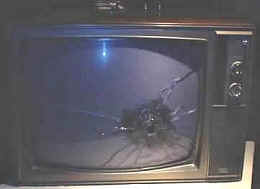 When Palin, the 20-year-old daughter of tea party favourite and former Republican vice-presidential candidate Sarah Palin, began her routine, Cowan jumped up and began swearing, saying something like “The (expletive) politics.” His wife said he was upset that a political figure’s daughter was dancing on TV even though he felt she didn’t have talent.
Janice Cowan told investigators her husband left the living room and reappeared 20 minutes later with his shotgun, “raging” with his face bright red, and blasted the TV. She said he then pointed the gun at her and told her to go fetch his pistols, and threatened to kill himself if she brought anyone back”
Obviously, the brain-chemistry has something to do with entire situation, but is it not sad to note on what has incensed this individual? A mere entertainment show. I can remember times in my early TV watching days when people would become incensed about issues more solidly based in reality – healthcare, armed conflicts, politics etc. Would this story be filed under the “oddities” section of the CBC website if this individual was incensed by the lack of universal public health care? It seems that the media we have is divorcing us from the issues that really matter in society, atomizing us and fostering consumption and competition on the most basest of levels. Considering the amazing potential that TV media has to foster debate and community, it is depressing to see how low it has sunk with regards to serving the needs of citizens in society.
 It is a “meh” week, and I’m still not feeling the blogging love. I repost what Harper’s sends me every week for your viewing pleasure.
Weekly Review:
Republicans took control of the House after picking up
60 seats in midterm elections, the largest gain in the
House since 1948. Democrats maintained control of the
Senate (though they lost six seats), and Senate Majority
Leader Harry Reid did not lose to Tea Party candidate
Sharron Angle. “Harry Reid isn’t just Dracula. He isn’t
just Lazarus; he’s our leader,” said Senator John
Kerry. “Our whole caucus is thrilled that he’s
unbreakable and unbeatable.” Three Iowa Supreme Court
judges who ruled in favor of same-sex marriage were
voted out of office, and exit polls suggested that 31
percent of self-identified homosexuals and bisexuals
voted Republican. MSNBC suspended Keith Olbermann
without pay for contributing $2,400 to the campaigns of
three Democrats; the Republican National Committee
showed its support for Nancy Pelosi’s bid to become the
Minority Leader by hanging above their entrance a “Hire
Pelosi” banner; and on election night in Long Island, a
retired New York policeman and his sons beat a
38-year-old Turkish immigrant with American flags,
telling the recently naturalized man to “get out of my
country.” “It would be hard to argue that we’re going
backwards,” said President Barack Obama after the
elections. “I think what you can argue is we’re stuck in
neutral.”
U.S. unemployment remained at 9.6 percent, despite the
addition of 151,000 jobs in October. Obama and First
Lady Michelle began a 10-day tour of Asia (with stops in
India, Indonesia, South Korea, and Japan), touted as an
“economic mission” to convince foreign markets to import
American goods. In India, the couple checked into the
Taj Mahal Palace and Tower Hotel, the primary site of
terrorist attacks two years ago, and staff at Bombay’s
Ghandi museum took precautions to keep Obama safe on his
visit. “We told the authorities to remove the dry
coconuts from trees near the building,” said the
museum’s executive director Meghsyam Ajgaonkar. “Why
take a chance?” The Eighth Sex Culture Festival, in
Guangzhou, China, featured a blow-up doll screen-printed
with Obama’s face. Mount Merapi, a volcano on the border
between Java and Indonesia, erupted, killing at least 64
people, forcing airlines to ground their planes,
requiring some 75,000 to relocate, and inspiring
Indonesian President Susilo Bambang Yudhoyono to
announce that if farmers from affected villages promised
not to go home, the government would buy all of their
cattle. Irish citizens, faced with high unemployment,
were upset by the announcement that their government
would give away chunks of cheese to the poor. “It’s
about how they’re going to tell their children or
grandchildren that Santa has very little money,” said
one Irish man in response to the plan. “What are they
going to tell their children and grandchildren: that
Santa has cheese instead?” A McDonald’s Happy Meal
photographed every day for six months showed no signs of
decomposing.
Glenn Little, better known as Frosty the Clown, one of
only four Ringling Brothers clowns to be deemed a
“master clown,” died at the age of 84. A teenage belly
dancer who was given a diamond bracelet and more than
$19,000 by Silvio Berlusconi revealed that the Italian
prime minister has a marble statue of himself as
Superman, and two years after hiring a waste-disposal
company to search through 12,000 gallons of sewage, a
British woman was reunited with the diamond ring she had
flushed down the toilet. “Two of the smaller diamonds
had fallen out,” said company employee Jule French, “but
apart from that, it was just in need of a good clean.”
Polish coffin makers Lindner released a 2011 calendar
featuring caskets alongside sexy models dressed in
lingerie, and a West Virginia woman was charged with
assault for brandishing a knife at her former husband
and his friend after they refused to perform oral sex on
her. The friend told police that he had originally
agreed but declined after being “overwhelmed” by her
“horrible vaginal odor.” A Zimbabwean man on safari was
eaten by a pride of lions while showering, a caged bear
in Azerbaijan died after being forced to sit in its own
excrement, drink cola, and eat leftover sandwiches, and
a female boa constrictor had multiple virgin births,
producing 22 baby snakes with no father. Artist Jiri
Boudnik, who was born in the Czech Republic but lived
for decades in the United States, returned to his birth
country to perform his art show: painting Czech flags on
women’s crotches while listening to a string quartet
perform patriotic music. “This, I hope, will answer many
questions for people about where they come from,” said
Boudnik. “They come from that space between the legs
that was home to us all.”
— Claire Gutierrez
Busy weekend folks, blogging was low on the list of priorities. Therefore I steal the Media Lens Email alert and repost it for your viewing pleasure. It is a meaty one, many links and a nice take down of the corporate media.
 MEDIA ALERT: WIKILEAKS – THE SMEAR AND THE DENIAL
PART 1 – THE SMEAR
“Journalists don’t like WikiLeaks”, Hugo Rifkind notes in The Times, but “the people who comment online under articles do… Maybe you’ve noticed, and been wondering why. I certainly have.” (Hugo Rifkind Notebook, ‘Remind me. It’s the red one I mustn’t press, right?,’ The Times, October 26, 2010)
Rifkind is right. The internet has revealed a chasm separating the corporate media from readers and viewers. Previously, the divide was hidden by the simple fact that Rifkind’s journalists – described accurately by Peter Wilby as the “unskilled middle class” (http://www.guardian.co.uk/media/2007/dec/10/comment.pressandpublishing) – monopolised the means of mass communication. Dissent was restricted to a few lonely lines on the letter’s page, if that. Readers were free to vote with their notes and coins, of course. But in reality, when it comes to the mainstream media, the public has always been free to choose any colour it likes, so long as it’s corporate ‘black’. The internet is beginning to offer some brighter colours.
If Rifkind is confused, answers can be found between the lines of his own analysis:
“With WikiLeaks, with the internet at large, power is democratised, but responsibility remains the preserve of professionals.”
This echoes Lord Castlereagh’s insistence that “persons exercising the power of the press” should be “men of some respectability and property”. (Quoted, James Curran and Jean Seaton, Power Without Responsibility – The Press And Broadcasting in Britain, Routledge, 1991, p.13)
And it is with exactly this version of “responsibility” that non-corporate commentators are utterly fed up. We are, for example, tired of the way even the most courageous individuals challenging even the most appalling crimes of state are smeared as “irresponsible”.
Thus, Rifkind describes WikiLeaks founder Julian Assange as “a frighteningly amoral figure”. In truth, journalists find Assange a frighteningly +moral+ figure. Someone willing to make an enemy of the world’s leading rogue state in order to expose the truth about the horrors it has inflicted on Afghanistan and Iraq is frightening to the compromised, semi-autonomous employees of corporate power. Assange’s courage is the antidote to their poison.
A separate Times editorial comments:
“Nowhere in WikiLeaks’s self-serving self publicity is there a judgment of what the organisation is achieving for the Iraqi nation, and what it hopes to achieve… Its personnel are partisans intervening in the security affairs of Western democracies and their allies, with a culpable heedlessness of human life.” (Leader, ‘Exercise in Sanctimony; The release of military files by WikiLeaks is partisan and irresponsible,’ The Times, October 25, 2010)
Again, the truth is reversed – it is The Times, together with virtually the entire mass media, that is notable for its “heedlessness of human life”, for its endorsement of the West’s perennial policy: attack, bomb, invade, torture, kill based on any crass pretext that can be got past the public. As WikiLeaks spokesperson Kristinn Hrafnsson politely told the WSWS website this week:
“The media is getting much too close to the military industry. They are not following the changing moods of the general public who are increasingly opposed to the wars.” (http://www.wsws.org/articles/2010/nov2010/wiki-n02.shtml)
In the Daily Mail, Edward Heathcoat-Amory’s article raised the important question:
“Paranoid, anarchic. Is WikiLeaks boss a force for good or chaos?”
After all, “The Wikileaks supremo lives a bizarre peripatetic life, with no house and few belongings…” He also has “disciples” whom “he ruthlessly manipulates”. (http://www.dailymail.co.uk/news/article-1297917/Is-Wikileaks-boss-Julian-Assange-force-good-chaos.html)
As for Assange’s motivation: “His critics says he’s motivated by a desire for personal publicity.”
Like Rifkind, Heathcoat-Amory is appalled by Assange’s lack of “ethical judgments”, his “cult of secrecy, with no accountability to anyone”. Lack of accountability can indeed be a problem. Heathcoat-Amory, it should be mentioned, is of the Heathcoat-Amory Baronetcy, whose humble “family seat” was at Knightshayes Court in Tiverton, Devon: http://en.wikipedia.org/wiki/Knightshayes_Court
In The Times, passionately pro-Iraq war commentator David Aaronovitch recalls the main theme of his questions to Assange: “from where did WikiLeaks derive its authority and to whom was it accountable”. And from where exactly does The Times derive its authority? To whom is +it+ responsible? Its advertisers? Rupert Murdoch? Aaronovitch continued:
“And this is where something strange happened. Questioners wanted to know from Assange just how he and his team decided which documents to publish, which to redact, which to leave unpublished… Not only would Assange not answer these questions, it was almost as though he regarded them as illegitimate… I could tell that the overwhelming reaction was surprise at Assange’s refusal to engage in any discussion about himself as anything other than an uncaped crusader.” (Aaronovitch, ‘Enigmatic WikiLeaks chief keeps his guard up,’ The Times, October 2, 2010)
Strange indeed, because in fact Assange has addressed these questions numerous times (See here for a recent example: http://www.democracynow.org/2010/10/26/wikileaks_founder_julian_assange_on_iraq). Aaronovitch focused on Assange’s jacket, his shirt, his shoes – “incredibly long and pointy black winkle pickers”. The very fact of the focus suggested something was not quite right. The unsubtle implication: Assange was unsavoury, strange, sinister.
A Daily Mail reporter described Assange as “somewhat bizarre-looking”.
An Independent news report referred to the “sometimes erratic behaviour of Wikileaks’ founder”. (http://www.independent.co.uk/news/media/online/secret-war-at-the-heart-of-wikileaks-2115637.html)
In an interview with ABC News (Australia), the Independent’s Robert Fisk derided Assange as “some strange code-breaker from Australia”. (http://is.gd/gzdKc)
Dan Jones wrote in the Evening Standard: “Assange is slippery. He is a master of the moral non sequitur… Do we really want the definition of what constitutes the public interest resting in the hands of a highly politicised neo-anarchist like Assange?” (Jones, ’There are limits to the freedom of the internet,’ Evening Standard, August 2, 2010)
Again, the level of self-awareness hovered around zero.
The Daily Telegraph observed: “the publication of classified documents risks endangering the lives of both soldiers and those who collaborate with them.” (http://www.telegraph.co.uk/news/worldnews/middleeast/iraq/8084891/Wikileaks-A-very-leaky-argument.html)
+Failure+ to publish the documents risks the lives of the inevitable next target of the US-UK killing machine in Iran, or Yemen, or Syria, or Venezuela. At this point, the only people capable of stopping the “coalition” is the public they are supposed to represent.
The New York Times’ Hit Piece Read the rest of this entry »
NASA revs up the coverage as buckyballs are discovered in significant quantities in space.

Newsworthy science has catchy names!
PASADENA, Calif. – “A soccer ball-shaped carbon molecule that some scientists think may have helped seed life on Earth is more common in the universe than initially believed.”
Fantastic! Amazing! err….wth is a buckyball? Wikipedia helps a little:
A fullerene is any molecule composed entirely of carbon, in the form of a hollow sphere, ellipsoid, or tube. Spherical fullerenes are also called buckyballs, and cylindrical ones are called carbon nanotubes or buckytubes. Fullerenes are similar in structure to graphite, which is composed of stacked graphene sheets of linked hexagonal rings; but they may also contain pentagonal (or sometimes heptagonal) rings.[1]
Where in space?
“Using NASA’s Spitzer Space Telescope, researchers spotted the carbon spheres known as buckyballs around three dying sun-like stars in the Milky Way and in the space between stars. The telescope also detected the cosmic balls floating around a dying star in a nearby galaxy.”
We are set, at least as Sciency type news is concerned, especially if it has a cool name.
We’ll add this story to the heading ‘corporations that miss the point‘.
“Electronic Arts has given in to protests and pulled the ability to play as Taliban fighters from its upcoming Medal of Honor video game.
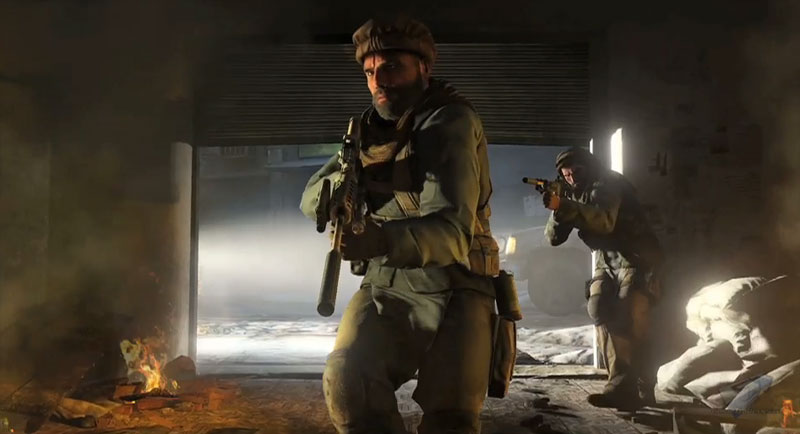
These are the ones you shoot.
It was to allow gamers to fight as Taliban against U.S. and allied troops in its online multiplayer mode, a feature that sparked criticism from some military officials and families of soldiers who have died in Afghanistan. Critics said allowing people to play as the enemies in a current conflict would be insensitive to the families of soldiers who have died.
The cultural assumptions enfolded into this statement bely the skewed view of the world we are fed and has ironic crunchy bits mashed in as well considering that the families of fallen Taliban fighters probably have similar feelings and have more of them considering the technological advantage we possess. But of course, being Official Enemies they do not have feelings or families, or heck, even human status when it comes to our point of view.
“Because the heartbeat of Medal of Honor has always resided in the reverence for American and allied soldiers, we have decided to rename the opposing team in Medal of Honor multiplayer from Taliban to Opposing Force,” executive producer Greg Goodrich said in a statement on the game’s website.”
Exactly, so you can get your righteous fill of filling people ragheads full of holes and terminating them with prejudice. This is okay. We show our reverence for families torn asunder by war by making products that glorify war and the destruction which results from it.
“While this change should not directly affect gamers, as it does not fundamentally alter the gameplay, we are making this change for the men and women serving in the military and for the families of those who have paid the ultimate sacrifice — this franchise will never wilfully disrespect, intentionally or otherwise, your memory and service.”
I’m not sure EA could go any deeper as they are using quantum bore tunnelling technology to dig the hole are in. All this PR spin is about their bottom line. They could care less about the men and women making the ultimate sacrifice during times of war. This wrinkle about changing the human targets from Taliban to OpFor is a callous move to protect their profit margins, nothing more.











 bleatmop
 Mystro


 Dead Wild Roses
Your opinions…