
You are currently browsing the category archive for the ‘Science’ category.
 One of the top hits for my blog is people looking for information about Evolution. Evolution when examined in depth is an amazing process with many levels of complexity and nuance. I’m thinking though that people are not looking for all the details, perhaps just an overview of what it is all about. In that vein, I found a short little post from Brain Dunning, and the next excerpt is from his site.
Myth #1: Men evolved from modern apes.
This is the oldest and wrongest misconception about evolution. Nobody has ever suggested that one living species changes into a different living species. Some criticisms of evolution show illustrations that fraudulently purport to show what evolutionists claim: that a salmon changed into a turtle, which changed into an alligator, which changed into a hippo, which changed into a lion, and then into a monkey, and then into a human being. Of course such a theory would seem ludicrous. But it’s pure fantasy and has nothing in common with real evolution.
The diversification of species is like a forest of trees, sprouting from the proverbial primordial soup. Many trees die out. Some don’t grow very tall. Some have grown a lot over the eons and are still growing today. Trees branch out, and branches branch out themselves, but branches never come back together or combine from two different trees. The path of a species’ evolution is shaped like the branch of a tree, not a donut, not a figure 8, not a ladder. To embrace evolution, you need not — must not — think that a salmon turns into a zebra, or that an ape turns into a man. It’s simply not genetically possible.
We’ve all seen the other famous illustration, where a monkey morphs into an ape, that morphs into a caveman, that morphs into homo sapiens. If you climb back down the tree branch, you will indeed find earlier versions of man where he was smaller, hairier, and dumber, but it won’t be a modern ape. To find a modern ape, you’d need to go even further down the tree, millions and millions of years, find an entirely different branch, and then follow that branch through different genetic variants, past numerous other dead-end branches, past other branches leading to other modern species, and then you’ll find the modern ape. Never the twain shall meet.
Myth #2: Evolution is like a tornado in a junkyard forming a perfect 747.
Large Hadron Collider to restart in fall after 1-year hiatus
 The magnet core of the world’s largest superconducting solenoid magnet, seen in 2007, is part of the Large Hadron Collider particle accelerator. Abnormally high resistances were found in the accelerator’s high-current superconducting electrical connections and have since been repaired. (Martial Trezzini/Keystone/Associated Press)
The world’s largest particle accelerator is scheduled to gradually start up again in November after being shut down for more than a year.
The $9-billion project was shut down on Sept. 19, 2008, after just nine days of operation. The meltdown of a small electrical connection had caused the release of a large amount of liquid helium into the 27-kilometre long tunnel, near the Franco-Swiss border. Its restart date has been delayed several times since then.
Heuer said the machine is now “a much better understood machine than it was a year ago.” CERN expects to run the collider at 3.5 TeV for several weeks until a “significant data sample” has been collected, then gradually increase the energy to 5 TeV per beam. It expects to run a test with lead ions at the end of 2010 before shutting the machine down again in an effort to get it ready to move towards its maximum power.”
—–
I have always had an interest in physics. It is a shame that numbers and equations cause my brain to 404 faster than you can say ‘system error’. I hope that that once they fire up the LHC they can start earnestly looking for the elusive higgs-boson that so far has eluded them. It would be one of those fantastic cornerstone discoveries that has the potential to change the face of physics. Grab the original article from the CBC here.
 Well, it is good to see that oversimplification and deliberate obfuscation of fact is still alive and well. The misuse of scientific fact to support the don’t kiiillll baaaabeeee trope is wonderfully (mis)stated at the abortionfacts.com website. The disingenuous ‘Milestones of Early Life’ article provides a bountiful harvest of misinformation ready for dissemination by the anti-choice horde. This particular pro-life site is a testament to the duplicity of our opponents, enter at your own risk.
Milestones of Early Life
At no time in your life does more growth and change occur than in the first nine months before birth. Here are the amazing milestones of that time in your life:
Day 1: Conception: Of the 200,000,000 sperm that try to penetrate the mother’s egg cell, only one succeeds.2 At that very moment, a new and unique individual is formed. All of the inherited features of this new person are already set – whether it’s a boy or girl, the color of the eyes, the color of the hair, the dimples of the cheeks and the cleft of the chin. He or she is smaller than a grain of sugar, but the instructions are present for all that this person will ever become.
The first cell soon divides in two. Each of these new cells divides again and again as they travel toward the womb in search of a protected place to grow.3
“At that very moment, a new and unique individual is formed.”
Conception is a process, not a distinct point in time
“The process of conception, also known as fertilisation, involves many chemical reactions and processes. It is not an instantaneous occurrence. Look at the diagram I made:
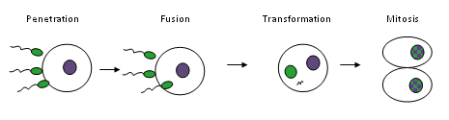
So somewhere along that set of chemical reactions, which finally result in two cells with a unique human genetic combination (the zygote immediately after the fusion of sperm has two pronuclei – one from the sperm and one from the ovum), are we to say that a single human life has started? If so, at what point does that happen?
The fact of the matter is that conception is no less of an arbitrary ‘line in the sand’ than any other point that one picks, such as the development of the brain, birth or development of self-awareness. But there is nothing wrong per se with something being arbitrary (after all, the time when people are old enough to vote is arbitrary), so we should now look at whether there is a good reason for not using conception as the start of a human being’s life.”
“He or she is smaller than a grain of sugar, but the instructions are present for all that this person will ever become.”
Oversimplifying and anthropomorphizing a complex process to further a political agenda. Wonderful. The pro-life movement relies on clear cut definitions that are patently false and misleading. I assume their gambit is that if they repeat the misinformation long and hard enough it will imprint on the body politic as “fact”.
 Pro life advocates claim that conception is the beginning of human life, making it the point at which human’s become morally relevant. Birth is just some event that happens later and has no bearing on things like rights. Thus, blastocysts deserve full legal protection that adult humans get and the death of a zygote ought to be weighed equally as the death of people outside the womb. It’s been repeatedly pointed out why this is either incorrect or irrelevant but this has failed to sway most pro lifers. So today I shall explore the implications of pro life reasoning were it actually sound.
What happens if we up the accuracy a bit and apply pro life reasoning? And by ‘up the accuracy’ I mean that we look at the actual beginning of a human’s life cycle. Pro lifers claim that its conception. But any high school biology student could tell you that there is a lot that has to happen before that. An egg has to be released by the female, which must then float down a long tube. During the brief period when this is happening, a sperm cell must travel from the male, through the birth canal, and meet up with the ovum. Only then can conception begin to take place. Thus, human life has an earlier chapter that pro lifers currently ignore.
Now you could point out that each of the gametes only have half the required chromosomes that ‘actual’ people have, but the response is the same as when its pointed out that blastocysts have no brain. According to Pro lifers such things are purely developmental issues, that have no bearing on person-hood. Physiology is nothing to base moral worth on, after all.
In fact any argument you could possibly come up with to say that the gamete is NOT a person, but a zygote is, there is a synonymous argument saying that the zygote is not a person, but a birthed human is. And since, for the purposes of this thought experiment, I’m granting the pro life position that the latter wouldn’t work, then I must also grant that the former wouldn’t work either.
Gametes fulfill the pro life criterion for human life and therefore moral worth. They are 100% human cells and their sole purpose is to develop into a separate human being, they are merely people one step back from zygotes. Conception is just some event that happens later and has no bearing on things like rights.
Can we go a step further? Well, I suppose we could look at oogonia in females and spermatagonia in males (the gametogonium that develop into their respective gametes) , but my grasp of biology starts getting hazy about that point, and so gametes are as far back as I can go right now. No matter, it is sufficient to reveal the absurdity of pro-life arguments.
Re-posted from http://hplusbiopolitics.wordpress.com
Inconsistancy in the “life begins at conception” argument
Wednesday, 25 June, 2008
The view that human life begins at conception is a favoured view of most of the pro-life camp. By it, they do not mean that the sperm and ova were not alive and only became so at conception, but rather that ‘human life’ – in the special sense of a person who deserves protection under the law – begins at conception. Unfortunately for them, this view is logically inconsistent with that pesky thing called reality. There is absolutely no sense in which life, whatever is meant by the term, could be said to commence during the process of conception.
Conception is a process, not a distinct point in time
The process of conception, also known as fertilisation, involves many chemical reactions and processes. It is not an instantaneous occurrence. Look at the diagram I made:
So somewhere along that set of chemical reactions, which finally result in two cells with a unique human genetic combination (the zygote immediately after the fusion of sperm has two pronuclei – one from the sperm and one from the ovum), are we to say that a single human life has started? If so, at what point does that happen?
The fact of the matter is that conception is no less of an arbitrary ‘line in the sand’ than any other point that one picks, such as the development of the brain, birth or development of self-awareness. But there is nothing wrong per se with something being arbitrary (after all, the time when people are old enough to vote is arbitrary), so we should now look at whether there is a good reason for not using conception as the start of a human being’s life.
Twins, chimeras and clones
The idea that a “human life begins at conception” also has problems with the existence of identical twins and tetrazygotic chimeras and the possibility human clones. Again, I have diagrams to explain these.

Consider the case of monozygotic twins, as explained by the above diagram. Here we have one fertilisation event, but two individuals result. Do those twins have to share the ‘human life’ they had from conception? Surely not, for we treat twins as separate persons. So, when did both lives start, if not at conception? During the twinning process? Or sometime after? And if lives start during the process of twinning, perhaps it is morally wrong not to twin an embryo, as it prevents the cells from realising their potential as multiple human beings.

Also consider the above diagram of the formation of a tetragametic (four gametes, two sperm + two eggs) chimera. Such an individual results when fraternal twins, derived from separate conceptions, merge very early in development to form a single individual with some cells with one genome and some cells with another (if the two zygotes were different, such as one female and one male or one dark-skinned and the other pale-skinned, this can be noticeable on the person). So, do chimeric people get twice as much human life, seeing as they resulted from two conceptions? Or was a life destroyed when the two embryos merged, despite not a single cell being destroyed? If the intentional formation of chimera is morally wrong, why isn’t the failure to twin an embryo?

Consider finally the case of a human clone (see diagram above), which hasn’t yet occurred but is surely possible. In this case, there is no conception event to be found (unless you go back to the one that created the somatic cell), but yet an individual results. Do clones not have any human life? Surely not, for they would be persons like you or I. So if life begins at conception, how can there be life without conception? Does life begin at conception OR nuclear transfer?
As can be seen, the idea of human life beginning at conception has some serious issues with the processes that can, and sometimes do, occur in human reproduction.
Potentiality
It is often claimed that conception should be the marker for a human life because it marks the formation of something that can grow into a thinking, feeling, reasoning human being. Apart from the fact that conception is not a distinct point, but a process, this potentiality argument has two key problems.
First, if a zygote should be protected because it can from a human being, why not also protect the sperm and eggs, for they can form a zygote which in turn can form a human being. And seeing as males can form billions of sperm but females only form thousands of ova, it follows that males are a million times more worthy of protection than females. But seeing as this conclusion is ludicrous, there must be something wrong with the potentiality argument.

The second, a major flaw, is that being potentially something isn’t the same as being something already. To see this, consider extrapolating the potential argument in the other direction: all human beings will die. And, seeing as a zygote will form a human being who will later form a corpse, it follows that we should treat both people and zygotes as if they were corpses. If we can give the right to life for an unborn baby, maybe we should give the right to a decent burial for a pre-dead corpse (i.e. a live baby). Not to mention that skin cells can replace sperm in forming a human being (see the cloning diagram above), so it follows that each skin cell destroyed is akin to destroying a human being. Unless, of course, having the potential to do something or be something isn’t equal to actually doing or being it.
Member of the human species
Perhaps it could be argued that an embryo should be protected because it is human. We don’t morally protect our own skin cells, despite the fact they are living human skin cells. So, what does the embryo have that skin cells don’t? If the answer is potential to develop into a human being, then this is just the potentiality argument again (and by cloning, perhaps a skin cell does have the potential to develop into a human being).
However, if the answer is that an embryo is a human being (and we accept that as truth, even though it is arguably false) then we need to then ask whether being a human being is enough to give the moral weight – the intrinsic value – conveyed by the term ‘human life’. Perhaps being a human being is only special because it usually correlates with having some other property, such as consciousness or self-awareness, that is special. In that case, then we should be using that other property to value the embryo instead of whether or not the embryo is a human being.
Consider whether it would be acceptable to kill a member of a non-human species that was capable of thinking human-like thoughts, was conscious and felt their lives were valuable, such as the intelligent aliens (think E.T. or Jar Jar Binks) or robots of science-fiction. If such a species (biological or not) is also worthy of protection, due to the fact they have certain psychological characteristics, then isn’t it safe to say that is those characteristics that are truly being valued here?
In addition, applying rights based on what group you belong to, rather than what you are able to do, seems a lot like bigotry or prejudice. History shows us many applications of rights based on being of a certain economic class, race, gender or religious group. Why should doing the same for being part of a species be any different?
Unique genetic combination
It is often said that because the zygote is a new human being because it has a unique human genome. This is a relatively weak argument, because a unique genome is not required to form a human being (e.g. identical twins, or clones, or human parthenotes) and unique genomes often do not form human beings (e.g. mutated genomes of cancers or the modified genome of induced pluripotent stem cells). Unless we are willing to admit that melanomas are actually human beings because they have a different genome, and that a woman who is pregnant with her clone (or identical twin) is not actually pregnant with a human being, then this argument should be abandoned.
Failure of an embryo to implant
The fact that only a fraction of zygotes go on to form a human being also hits hard the “life begins at conception” dogma. Firstly, the results of most conceptions are not viable embryos, and these abnormal embryos are usually passed out during a menstrual cycle. If such embryos are human beings, should we hold a funeral? Should we feel bad for not even realising they existed in the first place? Also, assisted reproductive technologies are much like natural reproduction in that far more embryos are conceived than result in pregnancy, and therefore shouldn’t IVF and sex be just as much of a problem as abortion? Or is the death of dozens of lives justified if it creates a life in the process (if that is the case, shouldn’t doctors and nurses be making babies instead of saving lives)?
Further, the oral contraceptive pill is known to make the uterine environment more hostile to any embryos that would implant there. The hormone progesterone released during breastfeeding acts in the same was as the oral contraceptive pill (in fact, progesterone analogues are the key ingredient of the pill), which is why breast-feeding is a ‘natural contraceptive’. Therefore, shouldn’t both the contraceptive pill and sex while breast-feeding be complained about just as much as abortion and embryonic stem cell research?
Conclusion
It is evident that the idea that life begins at conception is at odds with reality. Many human beings can result from a single conception, many conceptions can result in just one human being and theoretically human beings could develop without any conception event occurring at all. The idea that conception is a key point in the process of development is unfounded, as the potential to develop into a human being is not only possessed by sperm and eggs, but is completely logically fallacious in the first place. In addition, it doesn’t even appear that being a human being qualifies as having the intrinsic value required to convey moral status, as it is possible that non-human beings should have same intrinsic value attributed to ‘human life’. Neither can genetics rescue this argument, for a unique genetic composition is possessed by some non-human beings, and some human beings don’t have a unique genetic composition. Finally, the way most people act normally, and the way nature is, is very wasteful of zygotes, making the conclusions of this argument very difficult in practice.
It is not a scientific fact that human life begins at conception. The truth is that human life, in the sense of a person like you or I, emerges slowly from the genetic information and molecules that made up the sperm and eggs in your parents body, from the processes of controlled growth of the resulting embryo and foetus, using nutrients that nourished you in the womb. Science informs us that it is a continuous process. Those looking for a nice distinct point in time that can be used as the starting point of each person’s existence will be sorely disappointed if they look at the science. Philosophically, I’d argue that no intrinsic value of human beings exists, except for the value applied by a being to itself. Although this may be criticised for being overly restrictive (not attributing any intrinsic value to neonates), this criticism only works if we have a another significant reason to think neonates should have such value – I do not believe such a reason exists (see also the latter part of this post).
With many thanks from Mr.Bowditch for posting this to his website.
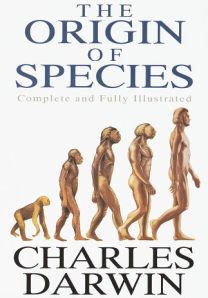 With Charles Darwin’s 200th birthday just past and the 150th anniversary of the publication of On the Origin of Species coming up, this is a big year for Darwin fans. The magazine Nature is celebrating as hard as anyone, and one of their contributions is a pamphlet titled 15 Evolutionary Gems. They are encouraging everybody to distribute it and I am only too happy to comply, so you can see a copy here. Feel free to distribute it as widely as possible. The list of its contents appears below.
- Gems from the fossil record
- Land-living ancestors of whales
- From water to land
- The origin of feathers
- The evolutionary history of teeth
- The origin of the vertebrate skeleton
- Gems from habitats
- Natural selection in speciation
- Natural selection in lizards
- A case of co-evolution
- Differential dispersal in wild birds
- Selective survival in wild guppies
- Evolutionary history matters
- Gems from molecular processes
- Darwin’s Galapagos finches
- Microevolution meets macroevolution
- Toxin resistance in snakes and clams
- Variation versus stability
Check out Richard Dawkins book on basic evolution here.
Once you start down a path, the goodness just keeps on coming. Did you want another argument to use against the anti-woman, anti-choice zealots? Here is one from the American Journal of Bio Ethics. Bust it out and let the squirm. :) Please note I did a rough job of paraphrasing,quoting and using text from the article. I will link to the original here… 
Here is what I have posted once in the comment section already, but I think it is worthy of a post of its own.
The argument begins as such, a common pro-life position, human fetus/zygotes/cells have the moral equivalent to a adult human being…summarized below.
Embryos are human beings.
All human beings have equal moral status.
Therefore, embryos have full moral status.
This has been the pro-life stance pretty much all through the debate in part I , rhetoric and ad hominum attacks aside. This study comes to some interesting conclusions about the above conclusion.
The majority of embryos die within a few weeks of conception. See studies by Hertig (1967) and French and Bierman (1962).
The results of these studies graphically represented below.
Intrauterine life: Graph of survival and weeks since conception. (Click link below for graphs)
https://deadwildroses.wordpress.com/2009/06/17/graphs-for-reference-sake/
During the early stage, 8-10 days only 50% of embryos survive. Those that successfully implant, the risk of death becomes much less significant. These numbers show that spontaneous abortion is an everyday phenomenon. A mother of three children could be expected to have also five spontaneous abortions. The embryo’s survival to term is the exception rather than the norm. This next graph shows the effects of spontaneous abortion on human lifespan.
Graph of mortality in the United States from conception through to death. (Please click link below for graphs)
https://deadwildroses.wordpress.com/2009/06/17/graphs-for-reference-sake/
In the first few months, more than 60% of the entire population dies due to the effects of spontaneous abortion (approximately 220 million per year).
IF you accept the first claim:
Embryos are human beings.
All human beings have equal moral status.
Therefore, embryos have full moral status
THEN: Each of these deaths must have just as much weight as an adult human (which you so frequently harp on about). Spontaneous abortion is by FAR the greatest killer of them all.
Some conclusions drawn from that data: Spontaneous abortion kills more than 200 million each year, it accounts for ¾ of all deaths per year, reduces life expectancy in the developed world to mere 29 years, kills only the very young and innocent: those who are powerless to save themselves.
IF you contend that an embryo has full moral status as a human being, then you must agree that spontaneous abortion is clearly the greatest problem facing humanity.
Cancer in all forms kills 7.6 million people per year, while spontaneous abortion kills 30 times this number. Finding a means to save even 5% of embryos from spontaneous abortion would save more lives that a cure for cancer. To remain consistent in your views you must accept the following:
The embryo has the same moral status as a adult human life.
Medical studies show that more than 60% of all people are killed by spontaneous abortion (a biological fact).
Therefore, spontaneous abortion is one of the most serious problems facing humanity, and we must do our utmost to investigate ways of preventing this death – even if this is to the detriment of other pressing issues. (See the current pro-life loonery)
The only way to avoid this conclusion is to abandon the conclusion that full moral status begins at conception.
So really, if you are so concerned about life, what the heck are you doing trying to fix the relatively minuscule amount of human choice aborted fetuses? I am guessing that really…you (pro-life zealots in general) are just about disenfranchising women in service to your silly notion of a god as you adhere to your inconsistent, incoherent beliefs.
Please note again: The article in full can be found in The Scourge: Moral Implications of Natural Embryo Loss by Toby Ord. The American Journal of Bioethics, 8(7): 12-19, 2008. I have taken excerpts, quotes and text from the article and used them in my post.











 bleatmop
 Mystro


 Dead Wild Roses
Your opinions…