
You are currently browsing the category archive for the ‘Technology and Computers’ category.
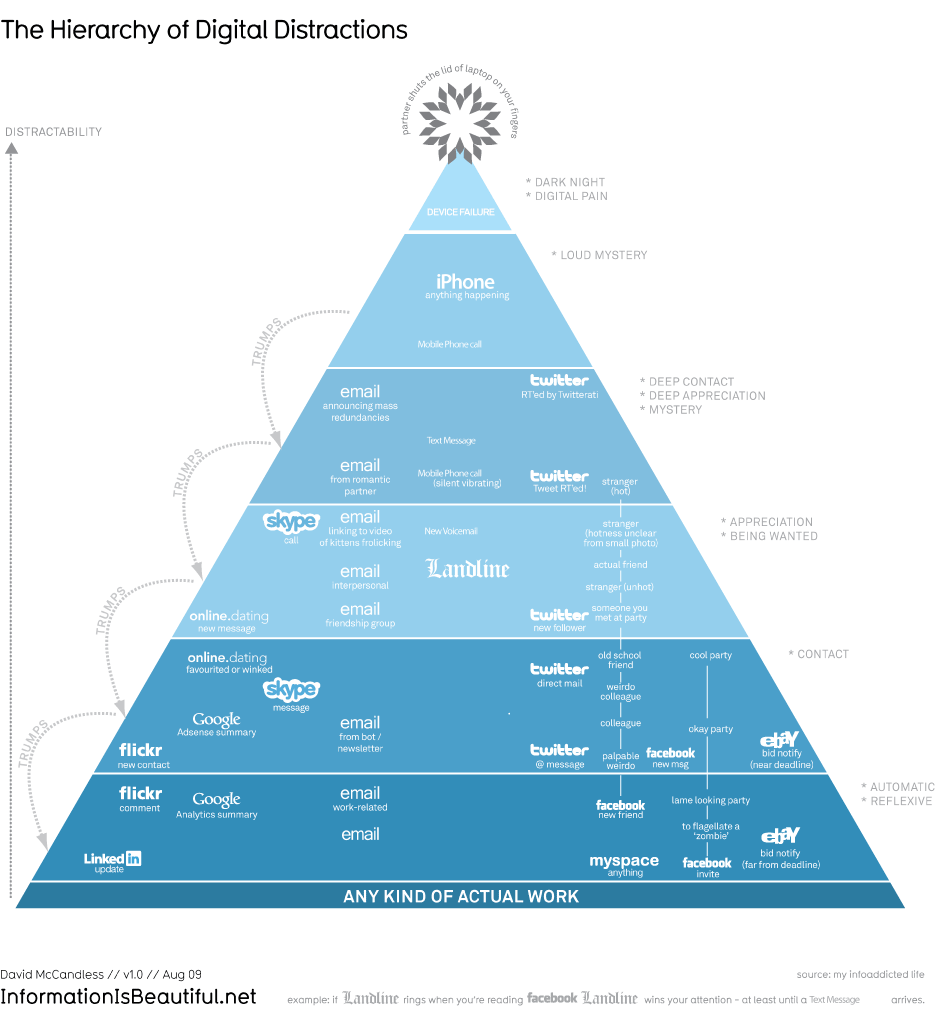
I did not know that their was a ordered hierarchy of things to distract me, this sort of thing makes me wary of social media and being ‘connected’.
We are currently being plagued by the malicious little bloodsuckers. The rainy summer has opened the floodgates for these pests. Sometimes bug spray is just not enough…
I am feverently awaiting the day when this becomes a consumer product.
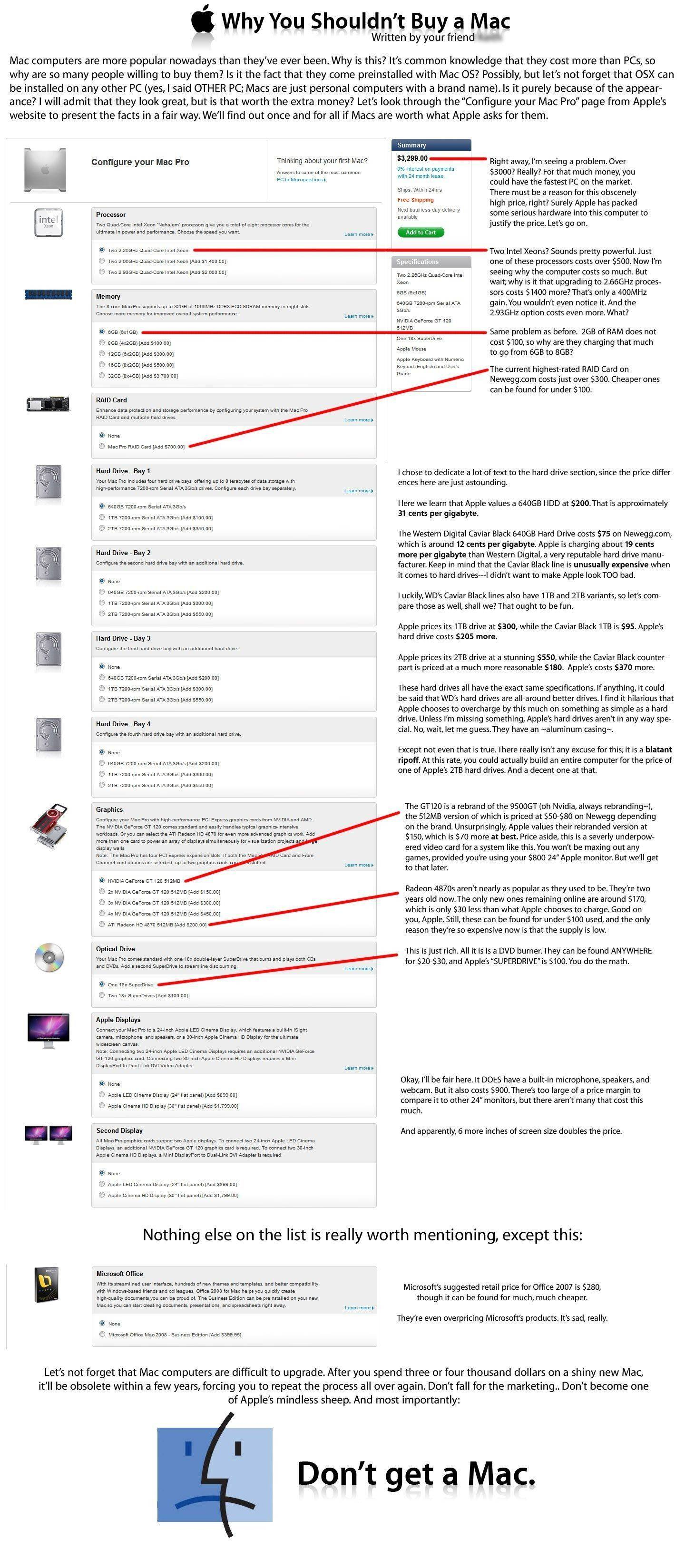
 Apple, expensive, feature limited but very, very, trendy once again has bitter medicine in store for its great herd of sheeple who are thinking differently all together.
“Technology that could block iPhones from recording videos of concerts is generating a mix of opinions within the Canadian music industry.
The U.S. Patent and Trademark Office published a patent earlier in June for technology that would allow an invisible infrared signal to disable the camera on an iPhone. The patent mentions that a transmitter for infrared signals could be “located in areas where capturing pictures and videos is prohibited (e.g., a concert or a classified facility)” and could generate “commands temporarily disabling recording functions.”
Well if it was not storing your location unsecured and unencrypted , now Apple has the possibility of determining when you can use the features on “your” phone.
“Recording is banned at many venues because it may result in copyright infringement and may make it more difficult for bands to control their image. But the convenience of having a small, subtle video recording device constantly close at hand in the form of a smartphone means that many concert-goers ignore such rules.”
So, apple fans, continue to think differently and use your status symbols technology within the acceptable bounds of what apple thinks to be appropriate.
It is not a burning hate of Apple that I possess, merely the facts about the hardware that makes my lip curl and snide comments usher forth. Hence, as always (or at least mostly always) I present the evidence for my point of view. :)
 It is encouraging to see capitalism used to actually do something, as opposed to swish money around a hollow economy and proclaim “Profit!” at the end as what has been the North American trend since the 1980’s.
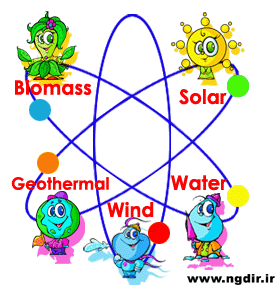
“Researchers in China, the world’s leading provider of wind turbines and solar panels, are working toward making renewable energy cheaper, more efficient and a bigger part of the country’s power grid. But despite China’s rapid leap to being a global leader in the renewable energy field, more government investment is needed for research and development if China is to truly blaze a path toward a clean energy future, researchers say.
Zhao Xingzhong, professor at Wuhan University’s School of Physics and Technology, is researching dye-sensitised solar cells, a low-cost, high-efficiency alternative to more prevalent solid-state semiconductor solar cell technology.”
Go go China. The dependence on fossil fuels will be with us for awhile, but it nice to see some nations actually take the future seriously and begin to plan for it.
“Although Zhao’s team’s research is unique at home and abroad, he says support from the Chinese government is far from enough. He notes that Japan and South Korea have jointly invested about 1.6 billion U.S. dollars on research on third-generation solar technology since 2000. In China, however, Zhao says there have been just five native projects in the solar field in the last decade, with spending of around 4.5 million dollars per project.
“It is difficult to break through the technological bottleneck because of the inadequacy of (financial) input,” Zhao says”
Like most breakthrough products and technologies, renewable power innovation has come through the spending of the state who pays for the R&D of projects and then farms them out to the private sector where they can be made readily available to the public. (Although boo on China for what seems to be, at least in Zhao’s case underfunding his work.) It is one of the great myths of capitalism that private business is the dynamo that runs the economy, it is significant but far from the primary driver. It is the State, through Universities and publicly funded R&D institutes that contribute a great deal to the ‘innovation’ of our economies and societies.
“In recent years, China has become the global leader in renewable energy technology manufacturing, surpassing the United States in terms of both the number of wind turbines and solar panels it makes. The accounting firm Ernst & Young in September named China the best place to invest in renewable energy.
Chinese companies, led by the Jiangsu-based Suntech, have one-quarter of the world’s solar panel production capacity and are rapidly gaining market share by driving down prices using low-cost, large-scale factories. China’s 2009 stimulus package included subsidies for large solar installation projects.
In terms of wind power, home-grown companies have rapidly gained market share in recent years after the government raised local partnership requirements for foreign companies to 70 percent from 40 percent (the government has since removed local partnership requirements) and introduced major new subsidies and other incentives for Chinese wind power companies.”
The day is approaching when solar panels will not be out of range of most people. That will be a good day.
“Critics say China’s interest in renewable energy is essentially a business opportunity – most of what it produces is sold abroad – and that it is less interested in applying the more expensive technology at home. China has not yet caught up to the United States in terms of renewable energy production. The country is the biggest consumer of coal in the world and is expected to burn 4.5 billion tonnes of standard coal by 2020, according to figures from the National Energy Administration.
While coal will still make up two-thirds of China’s energy capacity in 2020, the government has promised to invest billions of dollars into the development of wind, solar and nuclear power. The country’s top legislature, the National People’s Congress, now requires power grid companies buy 100 percent of the electricity produced from renewable energy generators.”
For all the strides China has made in renewable energy, the magnitude of their economy and power needs dictates they well need to rely on coal well into the foreseeable future, as we do in North America. Hopefully, with another major power taking the lead in the development and manufacture of solar panels a renewable energy race might start and really kick things off here in North America where we have both the know how and the consumer base to make renewable energy feasible.
Sparsely populated, cold for half the year and a relatively well off population makes Canada a lively hub of Internet activity.
 “Canadians spend more time online than users in any of the countries tracked by measurement company comScore, which also said Canada had the highest penetration of internet access. About 68 per cent of the Canadian population is online, comScore estimated in April, compared to 62 per cent in France and the United Kingdom, 60 per cent in Germany, 59 per cent in the United States, 57 per cent in Japan, and 36 per cent in Italy.
Canada was the only country in which users logged an average of more than 2,500 minutes online a month, which is almost 42 hours. Israel was second with an average of around 2,300 minutes, while a few other countries were around the 2,000-minute mark.”
Most Internet couch potatoes! Hurrah notoriety! And we like watching youtube videos with reckless abandon!
“In Canada, YouTube per capita consumption of video is No. 1 in the world. It’s just absolutely crazy in terms of how passionate Canadians are about YouTube,” said Chris O’Neill, Canada’s country director for Google. It’s estimated that about 21 million Canadians visit YouTube each month, compared to 147 million Americans. But considering the U.S. has 10 times Canada’s population, Canadians are way ahead on a per capita basis.”
There is some heartening news though, apparently we reference Wikipedia more than anyone else in the world. Hopefully as a starting, not an endpoint, to data gathering.
“The average Canadian web surfer reads 16 Wikipedia pages a month, which is the most in the world — one more than German users, two more than Polish users and four more than Americans. Canadian users generate about 217,000 edits a month, which ranks 8th among the most productive countries.”
We should really keep this story quiet, as with the “economic recovery”, I’m sure Steven Harper will try to take credit for it.











 bleatmop
 Mystro
 The Arbourist


 Dead Wild Roses
Your opinions…