
You are currently browsing the tag archive for the ‘Free Investors Agreement’ tag.
Paul Street writes a foreboding analysis of what the TPP is on Counterpunch.
“Lawyers and lobbyists for giant multinational corporations have been working up the TPP and promoting it for nearly a decade. The measure would join the United States along with 11 other nations along the Pacific Rim (Australia, Brunei, Canada, Chile, Japan, Malaysia, Mexico, New Zealand, Peru, Singapore, and Vietnam) in a “free-trade zone” covering nearly 40 percent of the world’s economy. Obama and his largely Republican “free trade” allies say the TPP will open foreign markets to American goods and “level the playing field by forcing Asian competitors to improve labor and environmental standards.”
But that’s just blatantly deceptive business propaganda. The measure isn’t really about trade and it certainly isn’t about improved standards. Its real thrust is to strengthen corporations’ ability to protect and extend their intellectual property rights (drug patents, movie rights, and the like) and to guarantee that they will be compensated by governments for any profits they might lose from having to meet decent public labor and environmental (and other) standards – something certain to discourage the enactment and enforce of such standards. Key parts of the TPP permit foreign capital to freely and easily enter a country and for profits to be just as easily removed. The TPP would ban capital controls, which let nations block disruptive inflows of ‘hot money’ from speculative investors and then escape before the bubble they create explodes. It would also block the passage of financial transaction taxes, a method for checking speculation and generating public revenue. The measure also legitimizes the extensive privatization of public enterprises.
The TPP is designed to help big multinational businesses attain special deals they would be unable to get through existing political processes, considered excessively democratic by the global deep state of capital. A foreign corporation could sue and receive damages for anticipated profit losses resulting from an increase in the minimum wage (federal, state, or local) in the United States. A U.S. state or Canadian province (or any other member-state jurisdiction) would have to compensate oil and gas companies for anticipated profits lost to bans on the environmentally disastrous practice of hydraulic fracturing (fracking). Big Pharma and the big corporate media firms would be granted stronger and longer-lasting patent and copyright protections across the “free trade” zone. Big multinational banking and investment firms would have to be paid by TPP governments that wanted to keep their nations’ financial systems safe through responsible regulation. Food, chemical, consumer goods, and pesticide industries will be able to able to limit the ability of TPP governments to impose safety and environmental regulations on the things they sell and how they make them. The giant global and U.S.-based consumer packaged goods firm Procter & Gamble could demand compensation from any TPP nation (including the U.S.) that dared to subject its products and workplaces to basic social and environmental standards. (One could go on and on with such examples.)
“Level playing field”? The TPP is about a race to the capitalist bottom, a levelling down of people and government’s capacity to impose limits on business behavior. Like its regressive predecessor the North American Free Trade Agreement (NAFTA), it’s about what the New York Times calls “investor protection.”
Of critical and dark significance, the TPP constructs a new legal structure that transcends the existing, nation-based legal system.
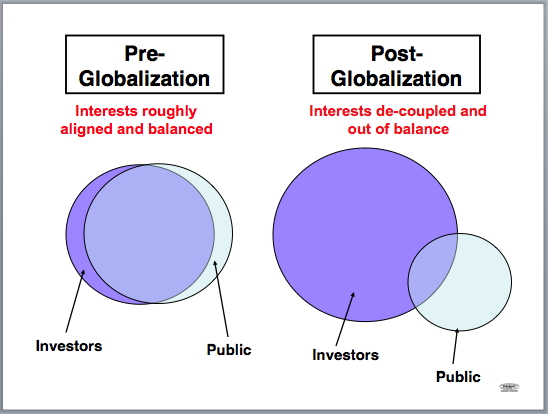
Phone, write, send smoke signals to your MP’s fellow Canadians. We do not want this for our country, NAFTA is bad enough.

Harper turns kitten eating grin to 11.
The European Union/Canadian Free Trade agreement was unexpectedly foisted onto the Canadian public – like driving over a deep pothole at night, the consequences of this agreement require the public to pull over and carefully examine the damage done to our society and economy. Strangely enough, our benevolent leadership has arranged for little to no public consultation and thus no debate as to what the consequences are for Canadian society. We just have to trust our leaders when they say that this is a “good thing” for Canada. In light of such trenchant analysis this Canadian commentator has a few niggling doubts when it comes to the heralded panacea of Free Trade Goodness for ALL!!!11!!
The timing of this “historic accord’ threatens to ruin my suspension of disbelief with regards to the upcoming Canadian federal election cycle. Our Conservative government appears to be busting out the sugar plums and candy-canes early to get a head-start on the official bamboozling of the electorate process.
This list from the CBC is exactly what I mean:
1. Cheaper goods –
When CETA comes into force, Canadians will pay less for items including food, wines and spirits, and even high-end European cars — if retailers and European manufacturers pass on the savings from the elimination of tariffs.
2. More Canadian beef, pork and bison –
CETA will significantly raise the quotas for Canadian beef, pork and bison, giving producers much greater duty-free access to the EU market. The potential increase in annual sales is estimated at $1 billion.
3. More European cheese –
EU cheesemakers will be allowed to sell Canada 29,000 tonnes of cheese, up from the current 13,000 tonnes.
4. Intellectual property rights and drugs –
Intellectual property rights and patent protection was a key area of concern for the Europeans during negotiations, particularly in the area of pharmaceuticals.
5. Provincial and municipal contracts –
Wynne also said she supports the deal because it gives its manufacturers and service providers more access to European markets.
Cheap wine! More Cheese! Consumers will be dancing in the streets, look how amazingly great this deal is… just like NAFTA!!
“Structures of governance have tended to coalesce around economic power. The process continues. In the London Financial Times, James Morgan describes the “de facto world government” that is taking shape in the “new imperial age”: the I.M.F., World Bank, Group of 7 industrialized nations, General Agreement on Tariffs and Trade (GATT) and other institutions designed to serve the interests of transnational corporations, banks and investment firms.
One valuable feature of these institutions is their immunity from popular influence. Elite hostility to democracy is deep-rooted, understandably, but there has been a spectrum of opinion. At the “progressive” end, Walter Lippmann argued that “the public must be put in its place,” so that the “responsible men” may rule without interference from “ignorant and meddlesome outsiders” whose “function” is to be only “interested spectators of action,” periodically selecting members of the leadership class in elections, then returning to their private concerns. The statist reactionaries called “conservatives” typically take a harsher line, rejecting even the spectator role. Hence the appeal to the Reaganites of clandestine operations, censorship and other measures to insure that a powerful and interventionist state will not be troubled by the rabble. The “new imperial age” marks a shift toward the reactionary end of the antidemocratic spectrum.
It is within this framework that the North American Free Trade Agreement (NAFTA) and GATT should be understood.’
But, but… what about the cheap cheese? NAFTA ,described in terms closer to reality, was a Free Investors Agreement. It opened the doors for business to compete helter-skelter everywhere and with everyone on the North American continent. NAFTA green lighted the noble quest for the profit and as Chomsky notes indiscreetly kicks the working class in the teeth:
“Particular cases fill out the picture. G.M. is planning to close almost two dozen plants in the United States and Canada, but it has become the largest private employer in Mexico. It has also opened a $690 million assembly plant in eastern Germany, where employees are willing to “work longer hours than their pampered colleagues in western Germany,” at 40 percent of the wage and with few benefits, as the Financial Times cheerily explains. Capital can readily move; people cannot, or are not permitted to by those who selectively applaud Adam Smith’s doctrines, which crucially include “free circulation of labor.” The return of much of Eastern Europe to its traditional service role offers new opportunities for corporations to reduce costs, thanks to “rising unemployment and pauperisation of large sections of the industrial working class” in the East as capitalist reforms proceed, according to the Financial Times.”
The damage wrought by NAFTA to the manufacturing sector American economy is still being felt today as speculative bubbles deliver hammer blow after hammer blow to the dessicated middle class and ever growing contingent of working poor. The happy-clappy propaganda of NAFTA bringing consumer paradise to the people brings small comfort to the poor and soon to be poor people of the United States.
The run up to the EU/Canada FTA has the same eerie feeling that was present when NAFTA was being touted as good for everyone, lifting all boats and other assorted nonsense. The surprise, the promise of cheese, the timing in the electoral cycle all point toward yet another free investor agreement. Investor agreements, will not benefit the great majority people in Europe and Canada, but rather, will enhance the bottom line of a select few.
Three cheers for the eminent pauperisation of even more people? I think not.
We’re missing yet another capitalist experiment go bad. Chile self-destructed earlier under the watchful eye of the IMF and its neo-liberal reforms. Mexico, geographically, is much closer to us and you would think that its slide into anarchy would garner a little more attention in our news media.
Nah.
The breakdown of Mexican civilized society continues unabashedly while the important powers that be continue to make their money. The unravelling of the social fabric of Mexican society is chilling reminder of lawlessness actually is.
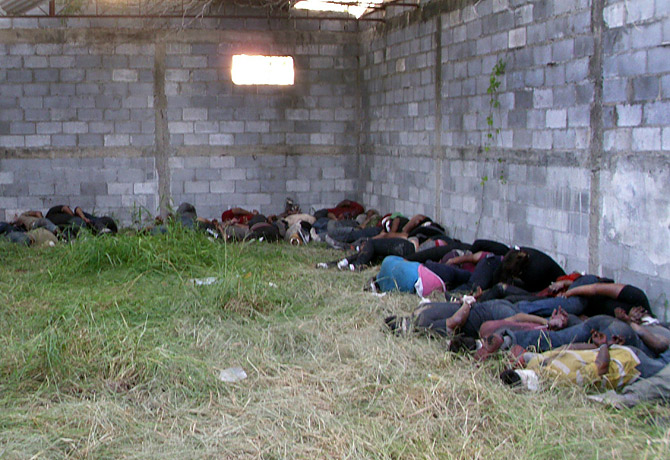
The North American Free Investor Agreement (NAFTA) was the harbinger of the demise of Mexican society. Austerity and cost-cutting denied the government the funds necessary to do what governments are supposed to do, serve and protect their people. Not industry, not finance, not capital – the people of Mexico. The inequality and insecurity are so entrenched, the people so desperate, people will do anything to survive. Morality, ethics all go down the shitter when you struggling just to survive the day. Consider the police situation:
Watch closely and you can see our future written in the blood of the poor of Mexico. We mourn for them, yet fail to see the precursors (neo-liberal reforms, etc.) that are shredding the social fabric of our societies.











 bleatmop
 Mystro
 The Arbourist


 Dead Wild Roses
Your opinions…