
You are currently browsing the tag archive for the ‘Missing Clocks’ tag.
This is the good part of an article off the Media Lens website –
the piece gets a bit loopy so if you want to read the rest please follow the link provided. The most important idea is one mentioned by Noam Chomsky, his observations give structure to the question “What is the rationale behind the choices our media makes?”
The Mystery of the Missing Clocks – By: David Edwards
The truth peeks out at us from the most unexpected places. It can be seen, for example, in the empty spaces where one might otherwise hope to find a clock in shops. The average retailer doesn’t approve of customers clock-watching – they might realise they have something more important to do and cut short their shopping trips.
Noam Chomsky crafted a small skeleton key to understanding the world:
‘The basic principle, rarely violated, is that what conflicts with the requirements of power and privilege does not exist.’ (Chomsky, Deterring Democracy, Hill and Wang, New York, 1992, p.79)
Chomsky argues, for example, that George Orwell’s Animal Farm and 1984 were embraced as great novels, and standard school texts, not because they were particularly profound, but because they attacked the Soviet Union:
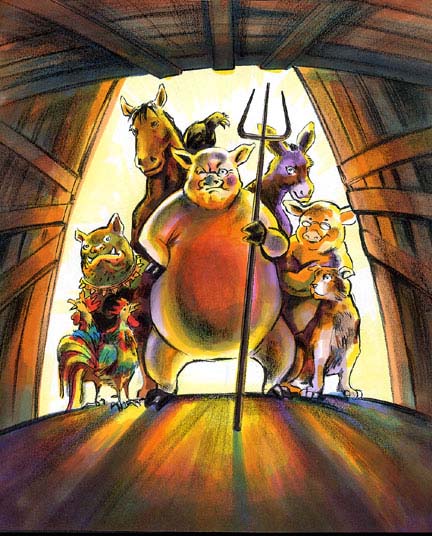 ‘Fame, Fortune and Respect await those who reveal the crimes of official enemies; those who undertake the vastly more important task of raising a mirror to their own societies can expect quite different treatment. George Orwell is famous for Animal Farm and 1984, which focus on the official enemy. Had he addressed the more interesting and significant question of thought control in relatively free and democratic societies, it would not have been appreciated, and instead of wide acclaim, he would have faced silent dismissal or obloquy.’ (Noam Chomsky, Deterring Democracy, Hill And Wang, 1992, p.372)
Hans von Sponeck raised a mirror to our society in his book A Different Kind Of War – The UN Sanctions Regime In Iraq (Bergahn Books, 2006). In meticulous detail, he described how American and British policymakers had knowingly caused mass death through sanctions in Iraq from 1990-2003:
‘At no time during the years of comprehensive economic sanctions were there adequate resources to meet minimum needs for human physical and mental survival either before, or during, the Oil-for-Food Programme.’ (p.144)
The effects were catastrophic:
‘The [US-UK] hard-line approach prevailed, with the result that practically an entire nation was subjected to poverty, death and destruction of its physical and mental foundations.’ (p.161)
This being the key reason why ‘the number of excess deaths of children under five during 1991-8 was between 400,000 and 500,000’. (p.165)
I have interviewed von Sponeck several times. He could hardly be more rational and restrained, hardly better qualified to comment – he ran the UN’s oil-for-food programme in Baghdad from 1998-2000 before resigning in protest at the effects of sanctions. His book, published three years after the 2003 invasion of Iraq, could hardly have been more topical. But it has never been reviewed by any UK newspaper. It has been mentioned once, in a single paragraph, in a single mainstream article in the Independent.
Thus we find empty spaces in the Guardian, the Independent, the Times and the Telegraph where detailed, positive reviews and interviews analysing von Sponeck’s ‘clock’ should have been. We need to know the time – shops are there to help, are they not? And we need to know how and why our government caused the deaths of half a million children in Iraq. But there are no clocks to be found – just empty space!











 bleatmop
 Mystro


 Dead Wild Roses
Your opinions…