
You are currently browsing the tag archive for the ‘The DWR Religious Disservice’ tag.
Just read teh Bible, and seek the answers… What happens when you literally read the Bible.
Man, that herb was good.
 Religion doesn’t just happen in the 21st century in the West. Religion must be instilled into children, magic and fable must be taught to be revered and most darkly, the fear of eternal punishment must be enshrined in young minds.
Hell for children is a very real fear – it torments their thoughts and causes a great deal of unnecessary anxiety. My question to the religious is simply this:
Why make your children fearful?
Isn’t there enough to worry about life with regards to food, shelter, and security to add another imaginary layer of anxiety to the mix? Is that a responsible action to take as a parent?
Of course it isn’t.
Being afraid for yourself is not a great motivator for ethical action, and yet that is the implicit lesson that resonates through so much of religious teaching. Consider also how the fallacy inducing mode of binary thinking is encouraged and reinforced. You are good with Jebus and bad the the Devil… etc. Serious ethical actions and thoughts require moving past that first easy binary of good and evil because almost every encounter we have as individuals in society is a mixed bag of ethical and unethical choices and behaviours.
Stating moral relativism here always leads to the conclusion that somewhere down the line – anything and everything will be permissible. Given that the last 1700 hundred years or so of religious dominance in the field of ethical behaviour I would have to say that absolute morality path isn’t exactly a slam dunk either, as far as worthwhile moral systems are concerned.
I’m always here on Sundays giving both barrels to religion and its antiquated notions of how the world is – seldom do I offer what I would like to see happen instead of the religious tomfoolery so easily demarcated and dispatched.
The vision I have is one that requires a society that understands how ill equipped our species is for rational, logical thought. Bearing that in mind no expense must be spared to raise children in a safe, welcoming, and stimulating environment in which the only worry they will have is what new thing they will learn after lunch.
How far off is this goal?
Too damn far away. Every time I’ve been called to a kindergarten or pre-k class some of the children there have come to school hungry. Nothing defeats curiosity and learning like an empty belly. Too many times I’ve been empty handed at lunch, because I’d already distributed my lunch to other children, yet there was yet another to feed. (Don’t worry we always find something).
I need my society to realize how important it is for all children to have the basics of life taken care before I can start helping them explore and comprehend the world around them.
Bringing this back to religion and the insecurity it supposed to soothe – how about some more focus on doing ‘good works’ rather than all the political nonsense currently dominating the religious sphere. How awesome would it be to have another volunteer (religious or not) in every classroom there to support learning and socialization?
There are so many ways to help children. The problem being that the outlay of time and emotional investment (for both the secular and religious) is prohibitive; and that, sadly, is structural feature of society.
Religiously deluded, bigoted, right-wingnuts say the darndest things. Just the other day, Manitoban PC leader Brian Pallister wished the very best to “all you infidel atheists out there”.
Say again?
“All you infidel atheists”
He didn’t say that.
He really did. On camera. Check the vid.
Pretty amazing, right? But it gets even better. This video spurred an understandably unfavourable response from the secular community. Pallister did have some defenders though. They suggested that it was a joke, albeit in bad taste. Damn liberal media sheep, they whine that the poor conservatives are too uptight, but as soon as one delivers a little joke, they get all offended. Except that it wasn’t a joke – not that it would actually excuse this if it was.
Later, in a response to the fallout of his holiday greeting, Pallister defended his wording by stating that, according to the dictionary, ‘infidel’ means ‘non-believer’. He was just being inclusive. “I’m always disappointed when people misrepresent the meaning of the words. What I was trying to do there is include everyone in my best wishes over the holidays” Riiiiiiiight. Let’s explore why this is total bullshit.
First, no one identifies as an ‘infidel’. Quite a few non-believers don’t even identify as an ‘atheist’. I mean, sure, I’m also a non-stamp-collector, but it has no inherent meaning to me. However, if people were being ostracized, abused, discriminated against, and even killed because they didn’t collect stamps, I’d have to speak up as a non-stamp-collector too. So saying that he was trying to include ‘infidels’ when the only people who think the term means anything are non-infidels, is beyond suspicious. It is a blatant affirmation of the religious ‘us vs. them’ mentality.
Second, whereas ‘atheist’ is purely descriptive – absence of theism, ‘infidel’ is riddled with negative overtones. Sure one of the definitions listed in the dictionary is simply ‘one who doesn’t believe’, but dictionaries aren’t known for deep explorations into connotation or social context. ‘Infidel’ is the name that members of an in-group call members of the out-group. It is a term meant to belittle, demean, and undervalue. An atheist is a non believer, period. An infidel is a non believer, understood as an unworthy subhuman piece of filth. Pallister’s comment is analogous to someone attempting to be “racially inclusive” by using the word ‘nigger’ then defending the slur by saying that it just means ‘people with dark skin’. No, it’s offensive, divisive, and hateful, I don’t care how happy the surrounding message is. And Pallister knows it.
If he really thought ‘atheist’ and ‘infidel’ were as synonymous as he claims, then there would be no reason to use both words. Pallister’s defence is that all he meant to say was ‘non-believing non-believers’. There is no justification for such a redundancy. The negative hateful baggage is jammed right into the word ‘infidel’ and it is the only reason for Pallister to have used it. I am willing to concede that it may not have been a conscious decision, not that it would be a redeeming admission. It would mean that his religious elitism is so ingrained that he automatically demeans the irreligious without thinking about it.
If he was just some guy, Pallister’s words would just make him an asshole in need of good chewing out. But the standards for our elected officials is higher than that. Especially in a country that thankfully separates church and state, such a slur should be met with much harsher repercussions. Manitobans, please see too it he is not re-elected. Manitoban conservatives, get him evicted from your party. If you ever want to be in power in Manitoba again, step 1 would be to distance yourselves from ignorant jackasses like Brian Pallister.
[ed. Trigger Warning for child abuse.]
Christianity doesn’t have a clue what love is. It starts by fucking up the notion beyond all recognition right off the bat. God’s “love” is so great that if you swear eternal obedience and submission, he won’t torture you until the end of time, even though he knows full well you deserve it, you despicable mortal you. This ultimate perversion of love makes it possible for christians to say any atrocious action could be done “out of love”.
At it’s mildest, you have your run-of-the-mill bigots and misogynists, smiling sweetly as vile hatred pours out of their mouths. Middle of the road, we get people like the West Borrow Baptists who don’t bother with the duplicity of smiling or making the vitriol sound nice. They tell people flat out they deserve to burn and suffer endlessly in hell. Out of love, of course. The last step is to go beyond words to express christian “love” and demonstrate it physically, to the point murder if need be.
 ‘To Train Up a Child’ is a horrendously vile book, authored by a loathsome duo of wretches that the world would be better off without. That
 bears demands repeating. Michael and Debi Pearl, the repugnant writers of this appalling book, should not exist; the utter obliteration of their influence on our society would be an immeasurable boon. The teachings in their book, which include such deplorable tidbits like telling parents to starve and beat their children to break them into obedience, has resulted in yet another child’s murder.
In a story that caused a nauseating sense of deja-vu, another set of parents have been convicted of murder. The parents, looking to their faith for guidance on how to raise their children, took to heart the teachings of Michael and Debi Pearl and their ‘No Greater Joy’ ministry. As a result, 13 year old Hana Williams died after three years of abuse.
Malnutrition, hypothermia, severe beatings, all part of the program that has lead to at least three cases of parents killing a child while adhering to the advice from the Pearls. I say ‘at least’ as that’s how many I’ve read about. I can only imagine the actual number of horror stories that have resulted from the malicious filth spread by these “loving” christians.
Is it a fringe element, just a few nutcases following a pair of backyard loons? Nope. The Pearls run a very successful ministry, bringing in an estimated $1.7 million a year. They are also the tip of the iceberg. Evangelicals adopting foreign children in order to ‘save their souls’ are an infestation of child abuse and neglect. The christian ‘spare the rod’ doctrine is as mainstream as it can get and it’s killing kids.
Christianity is vile, its idea of love is deplorable, and its witless followers are a threat to the innocent. Because monstrous brutality for your tyrannical “god” isn’t just old testament stuff, as many apologists would have you believe. It is born-again and murdering children for the glory of jebus!
Fuck.
Source 1
Source 2
Source 3
Source 4

 There is a conversation that happens all the time between theists and non-believers. I have engaged in it many times myself as well as observed others engaging in it more times than I can count. While there are a number of seemingly valid ways atheists could deal with this conversation, I have come to believe that many of these methods merely lead to baited traps.
This conversation starts with the theist coming up with Claim X, asserting that no one could explain Claim X without invoking god, and smugly concluding that god must exist.
There are four categories Claim X might fall into:
1) Claim X is simply false
2) Claim X is easily explained without invoking god
3) Claim X is explained without invoking god, but it’s complex
4) Claim X actually has no current non-god explanations
While there have been millions of examples of ‘Claim X’ used in these conversations, scant few still fall into the fourth category. Because it’s so rare, most atheist responses to such a conversation ignore this category. This, I think, is the major reason such conversations can (and have) gone on for seeming eternities. To illustrate, let’s look at each of the categories.
Claim X is simply false
The bait here is nigh on irresistible. One of the theist’s premises are wrong, thus the argument is invalid and the conclusion does not follow! It’s irrefutable!
What do you mean it isn’t? Oh silly secularist, you fell into a trap of perpetual distortions.
Showing Claim X to be false simply invites the theist to propose ‘Claim X-prime’ that is slightly different or a bit more vague than Claim X. And when you do the same for Claim X-prime, the theists alters it again, and so on ad infinitum. Should you ever get to the point where all versions of Claim X are shown to be false, the theist then just says something to the effect of ‘Look at all that contorting and effort you had to do, just to grasp at straws. Your desperation indicates your flaw. Your story keeps changing, while my answer, “God”, stayed constant.’
Is that rational?
No.
But discourse is not based on rationality. It’s based on persuasion. As such, the theist is right, you have failed to be persuasive. To the theist, that is. Those exercising reason may indeed enjoy your absolute thrashing of whatever B.S. the theist churns up. But then, if we were only trying to persuade people with reason, we wouldn’t be talking to theists, would we?
Claim X is easily explained without invoking god
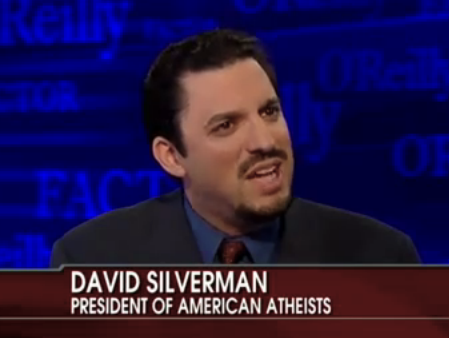 A wonderful example of this is Bill Head-Up-My-Arse O’Reilly’s infamous ‘Tide goes in, tide goes out’ line. Again, the pull here to shove reality based ideas in the theist’s face is often overwhelming. But, like in our previous case, just because the secularist is right, doesn’t mean they win. Once more, the theist backs up a bit and makes Claim X slightly harder to explain, and then slightly harder still and so on until it eventually turns into…
Claim X is explained without invoking god, but it’s complex
Now things can get tricky. We saw this as O’Reilly responded to the initial wave of attacks with his ‘How’d the moon get there?’ bit. Answering the theist’s challenge might now actually require formal education to supply the answer. In some cases, it might require a fair deal of study just to understand the answer. I personally enjoy listening to responses from people who have done the requisite schoolwork, as it can be a fun way to learn about things (I highly recommend TheLivingDinosaur ‘s “Holy Hallucinations” series) but alas, these are also doomed to fail. As the answers are now further away from the layman, the theist is safe to ignore all presented evidence. It’s not as if anyone in their camp is going to actually research this stuff. Thus, the theist vision of what fits into the next and final category is quite bloated.
Claim X actually has no current non-god explanations
This is where the theist wants to go and, as I’ve described above, there is little to be done to stop them from getting here, other than infinite loops of explanations that are ever more easily discarded. And you can’t get anywhere inside of an infinite loop.
A key point to realize is that in these conversations, the theist doesn’t really care to which category their particular ‘Claim X’ belongs. Rather, what matters is that somewhere out there, some ‘Claim X’ does reside in the fourth category.
And, ultimately, the theist is right. There are things that currently cannot be explained. There are things that may never be explained. Further, there may be things that inherently defy human understanding and are impossible to explain. So the theist wins. God exists. Accept it and go home.
Wait a minute…That can’t be right. Let’s back things up and look at the original argument structure.
1) Claim X is true
2) Claim X cannot currently be explained by humans without invoking god
3) Therefore god exists
There are two huge problems with this structure, regardless on the truth of the first two premises. The first problem is a false dichotomy implied by 2): as Claim X cannot be explained without god, it is explained *with* god. “God did it” does not explain anything. If I ask you ‘how does a clock work?’ and you reply ‘a clock-maker makes it work’, have I gained any understanding at all? Not one lick. All the god “answer” does is avoid explaining anything at all.
But a theist could potentially offer an actual explanation that is based on the god hypothesis. This tactic is used less and less, as these explanations are invariably discovered to be wrong (see Thunderf00t’s wonderful ‘Why people laugh at creationists‘ series). But lets say a brilliant theist comes up with an explanation that cannot be disproven by even the most intense scrutiny carried out by our most brilliant minds. If this were to ever happen (don’t hold your breath) we then run into the second problem: 3 does NOT follow from 1 and 2. Just because a hypothesis CAN explain a phenomenon, does not mean it DOES explain it.
 Going back to our clock, consider if, instead of “a clock-maker makes it work / god did it”, you replied “inside there is a team of invisible gremlins with perfect timing. They were captured and placed in this clock and forced to move the hands of the clock in order to relay time to outside viewers,” and there was an elaborate tale explaining all the ins and outs, and further, we had no way of observing the gremlins inside this clock to verify this (or any other) story. According to the theist’s argument model, we’ve just proven the existence of clock gremlins. The god hypothesis is a worthless ad-hoc conjecture as it is dependent on nothing, predicts nothing, and is non-falsifiable. As such, any of an infinite of imagined things could take god’s place in the theist’s argument and it would be equally valid.
The theist wants their argument to come off like this:
1) Claim X
2) Claim X would be impossible unless god exists.
3) Therefore god exists.
But the theist will never say anything close to this, because then the onus is obviously on them to demonstrate 2) and they just can’t do it. It is an impossible premise to validate. So they twist and distort until their argument takes the fallacious form we see so often, to try and shirk the onus of proof onto non-believers.
So how should one react to Claim X?
I would recommend immediately acknowledging that there are things that current science cannot explain, regardless of under which category Claim X falls. Resist the bait. Then, address how a gap in knowledge cannot prove any supernatural entity, as otherwise it could prove any of an infinite possible deities.
Remember, it doesn’t matter to the theist’s argument if Claim X is wrong or currently understood – even though it should – so it shouldn’t matter to yours.
Welcome to the official ZJW kick off post. Today, along with the classical musical interlude we shall celebrate the banal excellence of christianity in all of its delusional grandeur.
Of course, if you are part of the underclass female gender, your pretty lady brain might not be able to handle the video and all of the manly wisdom on display.











 bleatmop
 Mystro
 The Arbourist


 Dead Wild Roses
Your opinions…