
You are currently browsing the monthly archive for August 2013.
*TW Domestic violence*
As per usual with ytube, do not go read the comments as your hate of humanity will be reaffirmed.
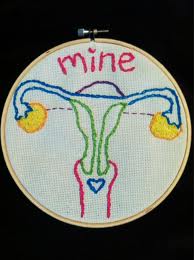 It is amazing the fuck-wittery that metastasizes when you combine religion and anti-choice thinking. I’m so disgusted and anguished over the deceptive practices at these so called Crisis Pregnancy Centers that I’m reproducing the entire article by Caitlin Bancroft written on the Huffington Post Blog. A big hearty frak-you goes out to our anti-choice christian friends. Read on about how the work of good christians in action.
“I wasn’t considering abortion. I wasn’t considering adoption, or parenting, or childcare. I wasn’t even pregnant, and I definitely wasn’t scared — at least not at first.
When I volunteered to visit multiple crisis pregnancy centers in Virginia, I thought I knew what I was getting myself into. Crisis pregnancy centers (CPCs) are the foot soldiers in the war against women. These anti-choice non-profits pose as women’s health clinics then use lies and manipulation to dissuade pregnant women from considering their full range of reproductive options (ie: abortion and birth control).
CPCs use a variety of tactics to lure women into their buildings: they offer free pregnancy testing, are known to list themselves under “abortion” in online directories and search results, and may use misleading names with the hope that women will confuse them for legitimate healthcare providers. Once inside, women are treated to a carefully crafted program of manipulation designed to dissuade them from choosing abortion, birth control, and if they’re not married – sex.
In Virginia, there are over 58 CPCs, more than double the number of comprehensive reproductive healthcare centers in the state. Still, most people are unaware that CPCs exist — let alone understand the harm they cause. But I knew exactly what I was up against when I walked into “AAA Women for Choice” in Manassas, Virginia.
At first glance, the center resembled a doctor’s office. The waiting room looked like it belonged to a pediatrician, complete with magazines and children’s toys. The atmosphere provided a sense of credibility and legitimacy. Under different circumstances, I would have trusted this façade; it would have put me at ease.
After checking in, I was introduced to my “counselor,” a conservatively dressed middle-aged woman who led me to one of the back rooms. She sat across from me with some forms on a clipboard I was not permitted to see. Much like the décor, the set-up reinforced the sense of professionalism and expertise. The consultation began with the standard questions: name, address, age, date of last period?
Right as I began to relax, the Q&A took a turn for the personal and invasive. “What is your relationship with your parents like?” “How is your financial situation?” “Have you told the father?” “What is his religion?” “Are his parents religious?” “How many people have you slept with?” “Would your parents be excited about a grandchild?”
As I sat there having my life probed, the purpose of the questions dawned on me. In case the test was positive, my “counselor” wanted to know which tactic to use to persuade me to continue the pregnancy — exactly where my resolve was the weakest. Was there a loving Christian boyfriend who would make a great dad? Did I have kind supportive parents who would be excited by the idea of a grandchild? I knew I wasn’t pregnant — knew exactly what she was doing — knew she wasn’t a doctor. But my body reacted instinctively to her questions with guilt and shame. It felt like a kick in the gut when she asked if I had told my brother about the baby, and I felt a creeping sense of selfishness as I imagined the door slamming on my shared apartment, my twenties, my life. Would my parents want me to have this child? Would it matter?
The woman stopped between questions to comment on my answers and lie. “Oh, you’ve taken birth control. Let me tell you how that causes cancer and is the same a medication abortion.” I was told abortion would scar me for the rest of my life — would damage all of my future relationships and leave me “haunted.” I was told the pill could cause breast cancer, that condoms are “naturally porous” and don’t protect against STIs, and that IUDs could kill me. She lectured and lied to me for over an hour before I even received the results of my pregnancy test.
Also interspersed in the deception were subtle judgments of my life decisions. “So you do have some scruples about you,” she said at one point, referring to my low number of sexual partners. One of the most disturbing comments came when I was pressed about the sexual experience leading to my visit, the reason I supposedly needed a pregnancy test in the first place. I told her an all too common story of acquaintance rape. I had been at a party, I said, severely intoxicated and unable to consent, “I didn’t remember anything… I just wished it hadn’t happened.” Her response made it clear that the situation was my fault, “Oh so he took advantage of you. Well just don’t do it again sweetie; just don’t do it again.” It made me sick.
It only got worse after a positive pregnancy test. At another CPC (the deceptively named “A Woman’s Choice” in Falls Church, Virginia) I could hear two employees whispering before entering my room, plotting strategies to reveal the test results and best manipulate my reaction. When they did finally clue me in, my concerns were casually brushed aside and used as ammunition for their agenda: I could care for a baby with no job, my parents would certainly help, and I could absolutely handle the stress. They even argued that I could be a law student while pregnant: “It will probably be good for the baby,” the woman said, “because you will be sitting down all of the time.”
At this center and elsewhere, the conversations were always the same. It didn’t matter how many times I said that l didn’t want to be pregnant or be a mother the CPC staffer would continue to bully me. Their tactics were so blatantly manipulative that I should have been able to fight back. I wanted to have a response, some kind of self-defense. But I couldn’t find anything to say. I am pro-choice feminist activist and I often discuss these kinds of difficult and emotionally sensitive topics at work and in school. Yet these women’s so-called concern left me defenseless, struggling to find a response that didn’t play right into their hands.
The way that these women treated me made one thing very clear: they didn’t care about me, my future, my happiness, or my relationships. I was simply a shell that needed to be distracted and kept questioning until it was too late for me to make my own choices, and too late for me to decide if this is what I wanted — or not. I truly can’t imagine the pain that CPCs inflict on women who are actually struggling with an unintended pregnancy. I left each CPC feeling humiliated, terrified, and panicked… and I wasn’t even pregnant.
I think we can all agree that it is wrong to shame someone seeking guidance. It is wrong to lie to someone in order to manipulate her future. It is wrong to treat women like walking wombs. Yet these tactics are core to the mission of Virginia’s crisis pregnancy centers. They advertise to scared women who need help, and they claim to offer unbiased information, guidance, and support to those who need it. But instead CPCs treat women the way they treated me — like disobedient children who need to be schooled in religion and saved from their own decisions. To them a woman is a vessel for a future baby, nothing more.
Ultimately, my undercover CPC investigations allowed me to witness firsthand the cruelty and deception at the heart of the anti-choice movement. As a result, I am even more dedicated to ensuring that every woman has the freedom to make her own deeply personal reproductive health decisions. Surprisingly, I also realized that I agree with Virginia CPCs on one point: when a woman walks through their doors, a life is at stake. But throughout all of my investigations, I was the only one who thought it was mine.”


A billboard pretty much made of awesome.
Hey d00dz, do you realize all the shit that you don’t ever have to put up with. I bet you don’t. Blair has a helpful story for you.
“This is about speaking up, creepers, and what good men don’t always see. Names have been changed.
Some time ago, I was having lunch with a group of friends—four men, one woman, and me. I’ve known most of the group for five or six years. We were talking about shared past experiences when one of the men mentioned that he missed Larry. “Gotta like a man who can make a good cup of coffee,” he said.
“No, I don’t,” I blurted out, and described how that man knew precisely where the lines of “inappropriate” behavior were drawn, and had spent the last couple of years nudging those lines whenever he came across a woman he considered “available.” I mentioned he’d been called out for failing to heed polite turn-downs, that he got offended when the turn-down became less polite. I mentioned how women who weren’t even the focus of his attention breathed a sigh of relief when he left the room.
None of the men discounted my experience or my descriptions. But every one of them said they hadn’t seen or noticed anything like that. I do want to be clear that their responses were not in the spirit, tone, or words of dismissal. Instead, they were genuinely puzzled that their observations had missed something they assumed would be obvious. One said he felt bad he hadn’t realized what was going on.
So I pushed the issue.
Without explaining what I was going to do, I got up and stood behind one of the men. I put my hands on his shoulders, then stretched my fingers as far down his chest as possible while still seeming to give a platonic shoulder rub.* I pulled him back against my chest, digging my fingers in when he resisted. That action alone let him know I acknowledged he didn’t want me to be pulling on and touching him, and I didn’t care.
“You look so tense,” I said in a nice, soft voice. Not sexy, not husky, but more intimate than standard conversation. Not intimate enough to be “inappropriate,” though. “You just let me give you a rub and I’ll make you feel better. I can tell you need that.”
Then, while he sa[t] immobile with surprise, I leaned past him to pick up his coffee cup, keeping my chest close to his face and my other hand firmly on his shoulder. To the others, it likely looked as if I was just resting my hand there. That man, though, could feel the pressure I exerted to keep him pressed close to me. He would have had to make an obvious, rude-looking push to get away. “I’ll get you some more coffee, too. You just let me take care of that.”
I gave the man a sweet smile in answer to his shocked stare, then returned to my seat, put my napkin back on my lap, and said, “That’s what Larry does.”
The man I’d touched totally understood in that moment. He’d experienced how it felt—even at the hands of a friend—to have your personal boundaries violated and your “polite” signals of resistance ignored. The other men had that slack expression that comes when surprising facts suddenly jolt long-held assumptions. “Creepy” was uttered, as was “awful” and “scary.
Their words held a tone of… almost fear? As if they were suddenly running through all sorts of past interactions in search of similar behaviors, and finding some.
Now they are able to see it.
*The “long-fingered” shoulder rub is a common tactic used by creepers who want to look like they’re being so tender and nurturing while actually making the woman fear he’s going to grab a breast at any moment.”

Pro-Tip – Your experience is not everyone’s experience. Repeat until that sinks in.
 Today, let’s look at one of the prime methods of baffling the masses. The power of positive thinking and the credulous ‘Positive Psychology’ that buttresses the fatuous assertions made by the followers of the cult of happiness. While not a exclusively in the domain in religious, the deluded (religious and otherwise) use ‘positive thinking’ to lie to their flocks and ensconce the cancerous idea that somehow if they just work a little harder and be a little happier wealth, fame and fortune will fall into their laps.
This of course, is bullshit.
Your earning potential in life is determined by a host of factors including where you where born, what your parents do, and their socioeconomic status. All of these factors have exactly nothing to do with your attitude or work ethic, but figure prominently on the general trajectory your life will follow. I hypothesize that this is why the cult of Happiness is so pervasive in the US is because it rides shotgun to the other great American Myth that with enough individual hard work you can “make it”.
Both mythologies are meant to distract people from the well worn paradigm of the wealthy plundering society exclusively for their benefit. Real societal change – that brought on by mass social movements – is carefully guarded against. While working at non unionized Wal Mart, being paid less than a living wage and living off of food stamps (that would be the American government subsidizing Walmart btw. Socialism!!1!1!!!), if you just work a little harder and be a little more positive you’ll prosper. Fixing the systematic problems in society is the furthest idea from your mind as you just manage to scrape by, from day to day. If the endemic poverty doesn’t silence you, the self-blame and shame will.
The converse is where the truly toxic shit kicks in, if you are somehow(?) not prosperous the problem must be all in *you*. Not the society around you, not the cultural norms, not the fucking status quo that mandates working poverty for so many Americans – no no no – the problem must be with the individuated, atomized, you.
This is fucking brilliant social engineering, no? Keeping the common people blaming themselves as opposed to organizing and effecting social change, all the while your class continues to ravage the countries wealth and resources.
Barbra Ehrenreich talks about this phenomena in her book Bright Sided and in the talk that follows starts her explanation of the cult of happiness via her own experiences with breast cancer. Further into the talk she describes the effects in the workplace and society as a whole. The book and the talk are well worth your time, faithful readers. I’ve excerpted the review from the book and the talk from a Harvard Book Store .Enjoy.
Ehrenreich’s quarrel is not with feeling upbeat but rather with the “inescapable pseudoscientific flapdoodle” of life coaches and self-improvement products claiming that thinking positively will result in wealth, success and other joyful outcomes. Such magical thinking has become a means of social control in the workplace—where uncheerful employees are ostracized—and prevents action to achieve social change. With life coaches, business motivators and evangelical preachers promoting delusional expectations—“God has a plan” for those who have lost jobs and homes in the current economic crisis, says Christian preacher Joel Osteen—positive thinking can claim partial credit for a major role in such recent disastrous events as the Iraq war and the financial meltdown.
Ehrenreich’s many interviews include meetings with psychologist Martin Seligman, whose “positive psychology,” she finds, offers little credible evidence to make it any different from the wishing-will-make-it-so thinking of writers from Dale Carnegie (How to Win Friends & Influence People) to Rhonda Byrne (The Secret). The author’s tough-minded and convincing broadside raises troubling questions about many aspects of contemporary American life, and she provides an antidote to the pervasive culture of cheerfulness—reality-based critical thinking that will encourage people to alter social arrangements in ways that improve their lives.
Positive thinking summarized:
“[…] the new science of positive psychology is founded on a whole series of fallacious arguments; these involve circular reasoning, tautology, failure to clearly define or properly apply terms, the identification of causal relations where none exist, and unjustified generalisation. Instead of demonstrating that positive attitudes explain achievement, success, well-being and happiness, positive psychology merely associates mental health with a particular personality type: a cheerful, outgoing, goal-driven, status-seeking extravert.”
If we had a liberal media then it would look more like what this article from Alter.net describes. Fact check time. Are you seeing these types of stores in the bright vivid technicolour everyday, endlessly repeated so people know about them? Of course not, they what a liberal media would *actively promote*. What do we see? Sensationalism, sports and weather; the dross that is cheap to produce and perpetuates the status quo.
I’ve copy/pasted the first seven points, go to article itself to read the last eight and the conclusion.
If you know anyone who still believes in a “liberal media,” here’s 15 things everyone would know if there really were a “liberal media” (inspired by Jeff Bezos’ purchase of The Washington Post):
1. Where the jobs went.
Outsourcing (or offshoring) is a bigger contributor to unemployment in the U.S. than laziness.
Since 2000, U.S. multinationals have cut 2.9 million jobs here while increasing employment overseas by 2.4 million. This is likely just the tip of the iceberg as multinational corporations account for only about 20 percent of the labor force.
When was the last time you saw a front-page headline about outsourcing?

Source: Wall Street Journal via Think Progress.
2. Upward wealth redistribution and/or inequality.
In 2010, 20 percent of the people held approximately 88 percent of the net worth in the U.S. The top one percent alone held 35 percent of all net worth.
The bottom 80 percent of people held only 12 percent of net worth in 2010. In 1983, the bottom 80 percent held 18 percent of net worth.
These statistics are not Democrat or Republican. They are widely available to reporters. Why aren’t they discussed in the “liberal” media?

Source: Occupy Posters
3. ALEC.
If there was a corporate organization that drafted laws and then passed them on to legislators to implement, wouldn’t you think the “liberal” media would report on them?
The American Legislative Exchange Council (ALEC) is such an organization. Need legislation drafted? No need to go through a lobbyist to reach state legislatures anymore. Just contact ALEC. Among other things, ALEC is responsible for:
- Stand Your Ground laws
- Voter ID laws
- Right to Work laws
- Privatizing schools
- Health savings account bills which benefit health care companies
- Tobacco industry legislation
Many legislators don’t even change the proposals handed to them by this group of corporations. They simply take the corporate bills and bring them to the legislative floor.
This is the primary reason for so much similar bad legislation in different states.
Hello … “liberal media” … over here!
They’re meeting in Chicago this weekend. Maybe the “liberal media” will send some reporters.
4. The number of people in prison.
Which country in the world has the most people in prison?
You might think it would be China (with more than one billion people and a restrictive government) or former Soviets still imprisoned in Russia.
Wrong. The United States has the most people in prison by far of any country in the world. With 5 percent of the world’s population, we have 25 percent of the world’s prisoners – 2.3 million criminals. China with a population 4 times our size is second with 1.6 million people in prison.
In 1972, 350,000 Americans were in imprisoned. In 2010, this number had grown to 2.3 million. Yet from 1988 – 2008, crime rates have declined by 25 percent.
Isn’t anyone in the liberal media interested in why so many people are in prison when crime has dropped? WTF “liberal media”?

Source: Wikipedia/Justice Policy Institute Report.
5. The number of black people in prison.
In 2009, non-Hispanic blacks, while only 13.6 percent of the population, accounted for 39.4 percent of the total prison and jail population.
In 2011, according to FBI statistics, whites accounted for 69.2 percent of arrests.
Numbers like these suggest a racial bias in our justice system.
To me, this is a much bigger story than any single incident like Travyon Martin. Or, at the very least, why didn’t the “liberal media” ever mention this while covering the Martin story?
6. U.S. health care costs are the highest in the world.
The expenditure per person in the U.S. is $8,233. Norway is second with $5,388.
Total amount of GDP spent on health care is also the highest of any country in the world at 17.6 percent. The next closest country is the Netherlands at 12 percent.
As a liberal, I’d like to ask why the market isn’t bringing down costs. I’d think a “liberal” media might too.
7. Glass-Steagall.
Glass-Steagall separated risky financial investments from government backed deposits for 66 years.
The idea is simple. Banks were prohibited from using your federally insured savings to make risky investments.
Why is this a good idea?
Risky investments should be risky. If banks can use federally insured funds, there is no risk to them. If they win, they win. If they lose, we cover the cost.
Elizabeth Warren did a great job explaining this to the “liberal news” desk at CNBC.
Dealing with positive psychology and its converts can be most irksome at times because, like religion, they don’t smell the bullshit they are peddling. Let’s look at the concise way Chris Hedges sums up this toxic phenomena in his book Empire of Illusion.
“There is a dark, insidious quality to the ideology promoted by the positive psychologists. They condemn all social critics and iconoclasts, the dissidents and the individualists, for failing to surrender and seek fulfillment in the collective lowing of the corporate herd. They strangle creativity an moral autonomy. They seek to mold and shape individual human beings into a compliant collective. The primary teaching of this movement, which reflects the ideology of the corporate state, is that fulfillment is to be found in complete and total social conformity, a conformity that all totalitarian and authoritarian structures seek to impose on those they dominate. Its false promise of harmony and happiness only increases internal anxiety and feelings of inadequacy. The nagging undercurrents of alienation and the constant pressure to exhibit a false enthusiasm and buoyancy destroy real relationships. The loneliness of a work life where self-preservation is valued over authenticity and one must always be upbeat and positive, no matter what one’s actual mood or situation, is disorienting and stressful. The awful feeling that being positive may not, in fact, work if one is laid off or becomes sick must be buried and suppressed. Here, in the land of happy thoughts, there are no gross injustices, no abuses of authority, no economic and political systems to challenge, and no reason to complain.
Here, we are all happy. “
– Chris Hedges, The Empire of Illusion, p. 138 -139.











 bleatmop
 Mystro
 The Arbourist


 Dead Wild Roses

Your opinions…