
You are currently browsing the monthly archive for February 2025.
Here are three effective strategies for countering false media narratives:
“Critical Media Literacy Education:
Strategy: Promote awareness and education about media literacy. This involves teaching individuals how to critically analyze media content, understand the motives behind information dissemination, and recognize common techniques used in propaganda or misinformation.
Implementation: Engage in or support programs that teach people how to verify information, understand source credibility, and recognize bias. Workshops, online courses, or school curriculums can include topics like fact-checking, source analysis, and understanding media economics and politics.
Impact: An educated public is less likely to fall for false narratives because they are equipped with the tools to discern truth from falsehood.
Fact-Checking and Reporting:
Strategy: Utilize and support independent, non-partisan fact-checking organizations. These entities systematically verify the accuracy of claims made in media reports, by politicians, or on social media.Implementation: When encountering a narrative that seems off, individuals or organizations can:
Refer to established fact-checking websites like PolitiFact, Snopes, or FactCheck.org.
Use tools or browser extensions that automatically flag or rate the reliability of news articles.
Engage in community-driven fact-checking through social platforms or forums dedicated to uncovering the truth.
Impact: Fact-checking can debunk myths in real-time, reducing the spread of misinformation and providing a counter-narrative with evidence.
Alternative and Diverse Media Sources:
Strategy: Encourage consumption of news from a variety of sources, especially those that are less mainstream or offer alternative viewpoints. This doesn’t mean promoting unreliable sources but rather diversifying where one gets their information from to avoid echo chambers.
Implementation: Support independent journalism that isn’t tied to large conglomerates, which might have vested interests in certain narratives.
Use news aggregators that compile stories from multiple outlets, giving a broader perspective on events.
Engage with local journalism which often provides more nuanced, ground-level reporting.
Impact: By exposing oneself to a broader spectrum of views and facts, individuals can better see through manipulated narratives. This approach also supports a healthier, more pluralistic media ecosystem where misinformation has less room to thrive.
These strategies work best in combination. While countering false media narratives is crucial, it’s also important to do so in a way that doesn’t contribute to further polarization or cynicism about all media. The goal is to foster a more informed, skeptical, yet open-minded public discourse.”
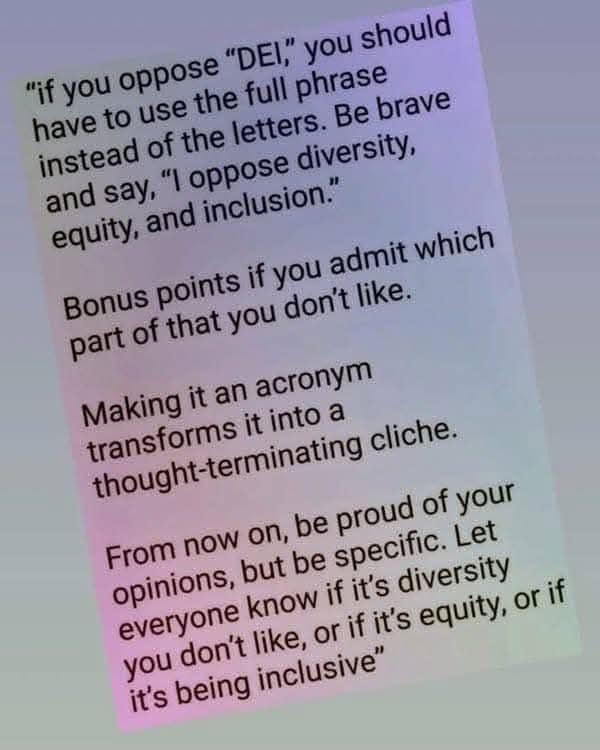
Activists use polysemy to make their corrosive ideas sound palatable to people not versed in their conversational inanity. The play is usually a cloak and dagger affair where they use the commonly accepted definition of a particular word, in this case ‘Diversity’ and use it in a dishonest setup that is really about pushing their specialist meanings into society and society’s institutions.
Here is great example.
Diversity (M1): Generally refers to the presence of variety within an organizational workforce, encompassing differences in identity, such as race, gender, sexual orientation, disability, age, culture, class, religion, or opinion. It’s about having a mix of different people.
Diversity(M2): Some critics argue that in “woke” contexts, diversity might be seen more as a means to an end rather than an end in itself, potentially focusing on increasing representation of certain politically aligned marginalized groups. This view suggests that diversity is less about broad inclusion and more about specific group representation.
The woke will push M1 and be morally outraged if you speak against Diversty(M1). How could you oppose having a different mix of people involved in a situation/task?
How could one indeed? But the pushback isn’t against Diversity(M1) it is pushback against Diversity(M2) which is infused with identity politics and the oppressor/oppressed narrative. It is the Diversity(M2) narrative that calls for a diversity of group identities with the proviso that they share the same ideological beliefs. This idea is illustrated by the fact that, for example, Black Conservatives are not considered to be a ‘diverse choice’ since they often opposed the oppressor/oppressed narrative.
How deep does the polysemic rabbit hole go? Well…
The term “diversity” in the context of social justice advocacy often exhibits polysemy, where the word has multiple related or unrelated meanings. Here are three examples of how the term “diversity” is used:
Diversity as Representation: Meaning: This refers to the inclusion of different racial, ethnic, gender, and sexual orientation groups within organizations, institutions, or media.
Usage: In this context, “diversity” is often used to describe efforts to ensure that various demographic groups are represented in workplaces, schools, and public life. For example, a company might strive for diversity in its hiring practices to reflect the broader community’s composition.
Diversity as Ideological Uniformity:
Meaning: Some critics argue, as seen in posts on X, that “diversity” in certain circles is used to mean a variety of backgrounds but with a uniform set of political or social views, particularly those aligned with progressive or “woke” ideologies.
Usage: This interpretation suggests that while there might be diversity in appearance or demographic markers, there’s an expectation of conformity in thought, especially in terms of social justice issues. This usage is often highlighted in debates over free speech and ideological diversity.
Diversity as a Tool for Inclusion vs. Exclusion:
Meaning: “Diversity” can sometimes be perceived as inclusive when it pertains to groups historically underrepresented or marginalized, but it can also be seen as exclusive if it’s interpreted as excluding certain groups (like straight white males) from consideration for diversity initiatives.
Usage: This dual interpretation can lead to confusion or contention, where diversity initiatives are praised for broadening perspectives but criticized by others for being exclusionary based on identity rather than merit or broader inclusivity.
These examples show how “diversity” can be a multifaceted term within social justice discourse, with its meaning shaped by context, intent, and perspective. The web results and posts on X suggest that while the term is generally used positively to advocate for broader representation, there’s a significant debate around its implications and actual practice.
This is what people have a problem with, don’t let the activist play word games with you.
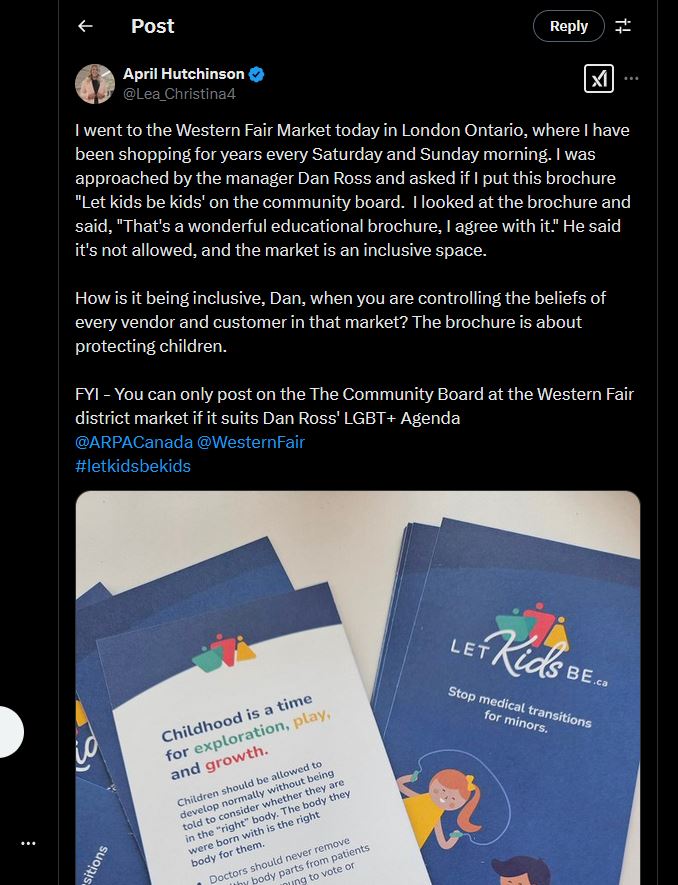
The dynamic at play is this: Inclusivity ONLY comes into play when people and the ideas that they share agree with what the activists say. Messages contrary to woke activist ideology therefore are not included under the umbrella of inclusivity.
Thus, be wary when you see the term “inclusive” because it is often used to perform the polar opposite function.
Arguing with the activists is often tedious and tendentious, why? Because they tend to define their pet concepts in such ways are purposefully inscrutable and hard to respond honestly to. James Lindsay unpacks the activist view of Racism and how to navigate the through their obfuscatory conceptions of it.
“You might find some success with the approaches you’re thinking of, depending on whose ears they land upon, but I don’t think you’ll win much ground with them. They certainly won’t convince anyone well-steeped in the Woke ideology. That’s now how these people think about the issue, and they’ll just point to your arguments as another example of you not really understanding how racism works. You’ll be hoisted by your own petard. The only way for you to get around this is to demonstrate that you do know how racism works, on their terms, and that you reject it for good reasons, which is almost impossible when you’re going up against a large group of people who think the opposite way.
Still, you have to understand “racism” like they do to try to do anything. The Woke use a very particular, very narrow definition of “racism” that has a very expansive application because it is believed to be “systemic” and thus applicable to and a part of everything. This extremely broad and expansive application of the term “racism” belies just how peculiar and restrictive the actual definition is.
The way they see “racism” is that it was something that was invented by early (pre)-scientific discussions of race and (genetic) heritability in the European context in the 15th–17th centuries, which were then amplified in the 18th and 19th centuries to justify the enslavement of black Africans and colonial conquests that Europeans were doing all over the world at the time. They believe, not wholly wrongly, that white Europeans invented the modern idea of “race” as an inheritable status and tied it to social standing so they could use it to conquer and enslave while providing themselves with access to society that they intentionally excluded all others from having. The trouble is, historically, this is mostly true. Some of the details are a bit messed up, like believing that “science” in the 16th century is roughly the same thing as science now and that most people think of race the same way in terms of the social-standing arguments as they did centuries ago, but the origin story they give is largely correct if you neglect the relevance of the evolution of human thought over the last several hundred years. They believe this system to be utterly pervasive throughout every possible aspect of every contemporary society that has been in any way influenced by any Western thought, and this is a huge problem (called “white supremacy” or “colonialism,” depending on the activist making a ruckus about it).
This brings us to a first important point. Because they only think in terms of this particular way of thinking about race, what happened in other contexts in the past, like the Muslim enslavement of the Slavs, or what happens outside of the West, as in India, cannot be understood as “racism” (or even racially-motivated behavior). This is because “race” and “racism” specifically refer to a system of domination tied to white people granting themselves superiority and all others having inferiority as described above. It doesn’t mean anything else, and that’s the heart of “prejudice plus power” definition they make so much noise about. The “power” part is the power white people gave themselves a few centuries ago and, in many—but not all—cases, fought tooth and nail to maintain until relatively recently in our history. Thus, Indians can be prejudiced toward each other and might even have their own systems of power, but they fall outside of the system of power in which “racism” is defined. Same goes for the Muslims enslaving the Slavs. The system of power isn’t the white, Western one and thus is inscrutable from their perspective. (It would be a culturally chauvinistic act to try to analyze other cultures because of the cultural relativism at the heart of the Woke worldview.) It could be theorized somehow, one must suppose, but not as “racism,” which was a white, Western invention (in their eyes). (This seems like a weird semantic game because it is one.)
Now we can make a little headway toward charting a useful reply, though. The confusion itself tells us something: that we don’t think about racism this way anymore. It took centuries of work in liberalism—seeing universal humanity, treating people as individuals, gathering better information through science and ethics, and persuading people to understand these improvements on their own terms through education and public appeal—to break that meaning down and replace it with the one we’re more familiar with today: holding some races up as superior or others down as inferior, or taking intentional actions that are in accordance with such beliefs. The “prejudice + power” reformulation by the Woke is an attempt to try to resurrect the old view, probably because things in society got too equal to continue using the more sensible liberal view and keep making radical gains.
But let’s back up and let something sink in. Their definition of “racism” is only that which white people set up in the 15th century going forward to justify slavery and colonialism by defining a white race that got the privileges of society and all the other races as inferior. That, and its legacy that remains today. Anything else, in the Woke worldview, is not “racism.” It might be bad; it might be prejudice; it might be discrimination; but it’s not “racism.” Yet again, in the Woke way of thinking, then, it’s considered a form of (white, Western) cultural chauvinism to call the racism that Indian people believe and do to each other by the term “racism,” or to believe that “racism” can be reversed and put back against white people, either by other racial groups gaining the effective power or by taking white people out of the white-majority or Western context and rendering them the minority.
So black people in a particular context—like a group of them kidnapping a lone white person—might be using race as a reason to act badly against a white person but, because that one relevant “system of power” is not in play, it wouldn’t be viewed by the Woke as “racism.” It just doesn’t meet their very peculiar and narrow definition of “racism” because that’s not the relevant “power” in the “system of power” that they demand be in operation. (This is the kind of argument that can only be maintained in the deepest confusion or by lying outright, by the way.) Even in India, the relevant power dynamic is held to be the one that white Europeans set up for themselves in the 15th century and since, and its influences by colonialism, and the way it applies to the Indian region now. No other power is the relevant system of power under consideration. (If you notice this is a form of white, Western chauvinism, that’s because it is one.)
Practically speaking, that means anything you do to try to argue against the Woke understanding of “racism” in terms that normal people today actually understand to characterize racism falls into their trap. They’ve set you up to be able to say you don’t understand racism—and then insinuate or state that it’s because you’re white. This last extra accusation follows, for them, because part of the definition of that system of racism is the internalization by white people that white dominance is normal and natural, and thus white people are unable to understand that “the system” even exists at all. More than that, they “don’t know and don’t want to know.” Again, this was probably (mostly) true 100 years ago, but it hasn’t been legally true in at least 50 years and hasn’t had almost any cultural influence in at least 30 years.
This is also why the Woke would tell you that you thinking “it’s racist to say white people can’t understand racism” shows that you don’t understand “racism,” as they mean it. In the Woke worldview, it’s the default state of affairs that white people can’t understand “racism” and that white people are in a dominant social position they created for themselves with regard to race. That means that, for them, thinking there can be “racism” against white people proves you don’t understand “racism” (probably because you’re white). The only understanding they can comprehend is that “racism” is a social and political fiction created by white people specifically for oppressing other races.
The Woke definition of “white” explicitly says this: “white,” in the Woke definition, is a racial category created by Europeans with white skin specifically to grant themselves social privilege and a position of social dominance over people with other skin tones. They named as a privilege of “whiteness” the ability to decide who is and who is not “white,” and thus who is and is not invited to share in the privileges of full membership in society. Then they naturalized this for themselves through many arguments appealing to early and incorrect “scientific” explanations that are now seen as pseudoscience and ethical arguments that have been rejected as unethical for decades, or in some cases, over a century. This, though, is also why they say that “whiteness” intrinsically contains “anti-blackness,” because whereas lighter “brown” skin-tones could be included as “white” (as with Italians and other Mediterraneans), black, by definition, can’t be made “white.” This is a duplicitous way for them to think about the issue because they also say that “whiteness” most relevantly not a feature of one’s birth but a kind of social property that could, in effect, be extended to anyone regardless of their race—and they know they’re playing both sides of the ball on this one.
To wrap up, any strategy you might take up for combating these ideas has to come from a position that shows you understand that “racism,” as they define it, is, and only is, a political creation by white people to advance their own interests and oppress other races in the advancement of their own interests. That’s what they mean by “racism,” and that’s what they believe white people can’t understand.
(You’ll notice I’ve proved them wrong in this right here and now, so the counterargument would be that it’s only truly comprehensible by lived experience—what racism is like to live with—which is, as you indicated, something white people often do experience in discrimination and prejudice, not least now under Woke terms, but also especially when leaving majority-white contexts, just like everyone else would in parallel situations. This then forces them to say that’s not “racism” being experienced, because they mean “racism” on their own definition, which white people can’t experience by their definition. This stance is what it seems as well, a demand that we all just have to take their word for it, which we all recognize as a terrible basis for making any kind of real-world decision with consequences that other people have to live with. And that’s the thing: people can believe whatever they want about racism, but if we’re going to set policy by it that effects everyone, we all have to understand the terms and have access to the basis for understanding them so that we can agree to them. Anything else is a form of gnostic totalitarianism.)
The way you challenge that, once you show you’ve understood it, is to point out that all of the meaningful progress on fighting racism has rejected, not embraced, this antiquated view and moved racism away from being considered a systemic property and toward being a matter of individual conscience, belief, and action. That is, racism was moved away from something that is (as a system) or that people are (as people) to something that people believe or do (and thus could reject or refrain from doing), and this specific change in understanding the concept is what allowed us to reduce its influence and what can allow us to minimize it going further, if not eradicate it entirely. Thus, you can demonstrate you understand and reject their understanding of racism and assert your own because it has more reason and better ethics behind it. You won’t convince the fully Woke, who will just retreat into their own appeals to “lived experience,” but pretty much everyone else will be impressed and see that it’s not you who doesn’t understand what’s going on.”
TL;DR:
The passage discusses the Woke ideology‘s specific definition of “racism,” which is rooted in historical European notions of race to justify colonialism and slavery, emphasizing systemic power dynamics where only white people can be racist due to historical privilege. This definition dismisses racism in non-Western contexts or against white people as not “true racism.” The author argues that to counter this perspective, one must first understand and then challenge this narrow definition by showing that modern anti-racism progress has redefined racism as an individual belief or action, not just a systemic issue, thereby offering a more inclusive and ethical view that could be more effective in reducing racism. However, fully Woke individuals might not be convinced by this argument, sticking to their lived experience narrative.
Peter Boghossian’s conversation with Jesús, a prominent cultural commentator with a significant YouTube presence in Taiwan, delves into the geopolitical dynamics between Taiwan and China, particularly focusing on the strategic importance of Taiwan in global superconductor production. Here’s a summary:
Geopolitical Dynamics: The discussion centers on the critical role Taiwan plays due to its strategic location and its dominance in producing advanced semiconductors. Taiwan is noted for manufacturing around 90% of the world’s advanced semiconductors, making it a linchpin in global technology supply chains.
Taiwan’s Defense and Security: The conversation likely touches on the resilience of Taiwan’s defense against potential Chinese aggression, the implications of a Chinese invasion, and why this scenario should concern not only Taiwan but also the United States and other Western nations. This includes discussions on how Taiwan’s defense mechanisms are vital for maintaining its sovereignty and the stability of the global tech economy.
Cultural and Identity Politics: Beyond just the economic and military aspects, the talk with Jesús might also explore Taiwan’s cultural identity, the impact of Chinese sanctions, and the importance of preserving Taiwanese culture amidst rising immigration and geopolitical tensions. This could involve discussions on how Taiwan’s cultural narrative is intertwined with its political stance against China.
Superconductor Production: The conversation highlights Taiwan’s role in superconductor production, which is central to modern technology, including AI, drones, and other high-tech applications. The control over this technology gives Taiwan significant leverage but also makes it a focal point for international tensions, as any disruption in this supply chain could have global repercussions.
International Implications: There’s an emphasis on how the dynamics between Taiwan and China extend beyond current political leaders, touching on long-term strategic interests, economic sanctions, and the global race in AI and technological advancement. The discussion might explore how these elements affect not just regional but global geopolitics.
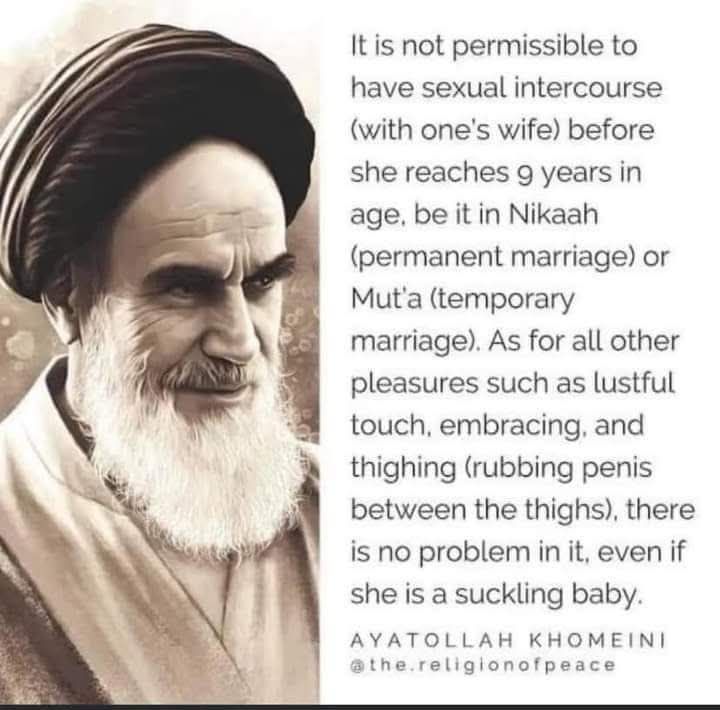
Not ethical, not moral, just evil. No thank you.











 bleatmop
 Mystro


 Dead Wild Roses
Your opinions…