
You are currently browsing the daily archive for March 16, 2025.
The British Columbia College of Nurses and Midwives (BCCNM) Discipline Committee’s ruling against Amy Hamm on March 13, 2025, represents a significant setback for women and their freedom of speech in Canada. By disciplining Hamm—a nurse and vocal advocate for sex-based rights—for her gender-critical statements, the decision effectively punishes women who challenge prevailing transgender ideology, particularly when it encroaches on female-only spaces and identities. This ruling not only silences a woman defending biological reality and women’s rights but also signals to others that expressing such views, even off-duty, risks professional ruin, disproportionately chilling female voices in a debate where they have a unique stake.
The 115 page document is a bit of a read, so here are the main points, and a refutation right after.
5-Point Summary of Evidence Supporting the BCCNM Decision
- Discriminatory Statements Linked to Professional Identity: The panel found that Hamm made “discriminatory and derogatory” statements about transgender people across online platforms (e.g., articles, podcasts) between July 2018 and March 2021, while explicitly identifying herself as a nurse or nurse educator. This nexus to her profession was key, as it was seen to undermine the nursing profession’s reputation.
- Violation of Professional Standards: The BCCNM argued that Hamm’s statements breached the College’s Code of Ethics and Professional Standards, which require nurses to provide care without discrimination and uphold public trust. The panel agreed that her public comments contradicted these obligations.
- Intent to Harm Reputation of Transgender Community: The ruling highlighted that Hamm’s statements were designed to “elicit fear, contempt, and outrage” against transgender individuals, particularly by denying their existence (e.g., rejecting gender identity as a concept). This was deemed unprofessional and harmful.
- Specific Instances of Misconduct: The panel pinpointed four instances (Tabs 4, 24, 28, and S3 from the evidence extract) where Hamm’s comments—tied to her nursing identity—were ruled as crossing the line into professional misconduct. These included writings and a podcast appearance explicitly linked to her role as a nurse.
- Public Role and Accountability: By leveraging her professional credentials in public discourse, Hamm was held to a higher standard. The panel concluded that her actions damaged the integrity of the nursing profession, justifying regulatory intervention despite her off-duty status.
Refutation of the Evidence
- Freedom of Expression Overreach: Hamm and her legal team, supported by the Justice Centre for Constitutional Freedoms (JCCF), argued that her statements were protected under the Canadian Charter of Rights and Freedoms (Section 2(b)). The panel’s ruling infringes on her right to express personal views—especially on a contested public issue like gender ideology—without evidence of direct harm to patients or professional practice.
- No Nexus to Professional Conduct: The defense contended that Hamm’s statements lacked a sufficient connection to her nursing duties. Most of her online activity (e.g., Twitter posts) did not explicitly tie her nurse identity to the comments, and the panel itself declined to find misconduct in those cases. Penalizing her for a handful of instances where she mentioned her profession stretches regulatory authority too far.
- Scientific and Reasonable Basis: Hamm’s rejection of gender identity as a “mystical belief” aligns with biological reality (sex as immutable) and is a defensible stance in scientific debate. The panel’s characterization of this as “discriminatory erasure” imposes an ideological litmus test, punishing her for not conforming to transgender advocacy rather than for any professional failing.
- Lack of Demonstrable Harm: There was no evidence presented that Hamm’s statements caused tangible harm to transgender individuals or compromised her nursing practice. The BCCNM’s case relied on hypothetical reputational damage to the profession, which the defense argued is too vague to justify discipline—especially given the public’s varied views on gender issues.
- Regulatory Overreach and Precedent: The ruling sets a dangerous precedent for all regulated professionals, chilling free speech by suggesting that any controversial opinion expressed publicly, if tied to one’s job title, can trigger discipline. Hamm’s advocacy for women’s sex-based rights (e.g., supporting J.K. Rowling) is a legitimate political stance, not a professional lapse, and the BCCNM’s intervention risks turning regulators into arbiters of acceptable thought.
This ruling underscores a tension between professional regulation and personal expression, with particular implications for women like Hamm who advocate for sex-based rights.
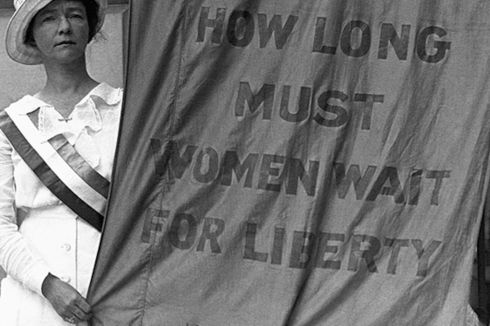
The decision against Amy Hamm, detailed in the Justice Centre for Constitutional Freedoms document from March 13, 2025, casts a shadow over the rights of women to speak freely. As a nurse, Hamm faced professional misconduct charges for sharing gender-critical views, a ruling that suggests her words were too heavy a burden for her profession to bear. This outcome feels like a quiet wound to women who rely on open expression to navigate a world that often overlooks their perspectives. It raises a somber question: if a woman’s honest thoughts can cost her livelihood, what space remains for her to speak without fear?
Women’s rights depend so much on the ability to voice what matters—whether it’s about their bodies, their work, or the policies that shape their lives. The Hamm case hints at a troubling pattern: when women step outside accepted lines, even thoughtfully, they risk being muted by those meant to protect fairness. It’s disheartening to think that a nurse, someone who cares for others daily, could be penalized not for her actions but for her words. This doesn’t just touch Hamm—it brushes against every woman who hesitates to speak up, wondering if her voice might carry too high a price.
Please, let’s hold onto the simple truth that free speech is a lifeline for women. I ask for a gentler approach, one that doesn’t rush to punish but listens instead. Hamm’s story shouldn’t end with her silence; it should remind us to safeguard the right of women to express themselves, even when it’s hard to hear. We need a world where women like her can share their views—raw, real, and human—without losing what they’ve worked so hard to build. That’s not too much to hope for, is it?

The term “Islamophobia” is bunk because it conflates legitimate criticism of ideas with irrational hatred of people, muddling discourse and shielding a religion from scrutiny. Islam, like any ideology, isn’t immune to critique—its texts and practices have inspired both beauty and brutality, from poetry to jihadist violence. Calling out the latter, like the 7th-century conquests or modern extremism, isn’t a phobia; it’s reason. Yet, the label gets weaponized to silence dissent, branding skeptics as bigots instead of engaging their arguments. This isn’t about fear—it’s about clarity. Smearing it as “Islamophobia” cheapens real prejudice, like anti-Muslim hate crimes, which deserve condemnation without dragging ideology into the mix.
It’s cancer for Western societies because it erodes free speech, the bedrock of open debate. The term’s vagueness—covering everything from mosque vandalism to Quran critiques—lets activists and governments police thought, as seen in Europe’s hate speech laws or campus cancel culture. In 2023, a UK teacher was suspended for showing a Muhammad cartoon, not out of malice but context; “Islamophobia” was the cudgel. This stifles honest discussion about integration, values, or security—like the 2015 Paris attacks tied to Islamist ideology—pushing problems underground where they fester. Fear of the label paralyzes policymakers, leaving societies less cohesive and more brittle.
Worse, it fuels division by infantilizing Muslims and alienating everyone else. Painting criticism as phobia assumes Muslims can’t handle tough questions, which is patronizing nonsense—many critique their own faith internally. Meanwhile, it drives a wedge in pluralistic nations, making non-Muslims resentful of a double standard: Christianity gets roasted daily, but Islam’s off-limits? The West thrives on challenging sacred cows, not coddling them. “Islamophobia” isn’t just a flawed concept—it’s a self-inflicted wound, rotting the guts of societies that prize reason over dogma.











 bleatmop
 Mystro


 Dead Wild Roses
Your opinions…