
You are currently browsing the daily archive for March 23, 2025.
The Kamloops grave hoax, sparked by the 2021 announcement from the Tk’emlúps te Secwépemc First Nation claiming the discovery of 215 unmarked graves at the former Kamloops Indian Residential School, ignited a firestorm of outrage across Canada. This claim, based on preliminary ground-penetrating radar findings and later proven to lack physical evidence of human remains, fueled a wave of anti-Christian sentiment that resulted in the burning or vandalism of over 85 churches, predominantly Catholic, between 2021 and 2024. These acts of arson and destruction were not random; they were a direct response to a narrative that falsely accused the Church of mass atrocities, a narrative amplified by political leaders and media without rigorous verification. The churches, many of which were historic and served as community pillars, were reduced to ashes, leaving congregations devastated and their sacred spaces irreparably lost.
The case for reparations for these destroyed churches rests on the principle of justice for the innocent. The Canadian government and media played a significant role in perpetuating the hoax, with Prime Minister Justin Trudeau lowering flags and offering statements that fanned the flames of retribution, while outlets like the CBC reported the claims as fact without evidence. This reckless endorsement led to millions of dollars in damages and the loss of cultural heritage, all based on a falsehood that has yet to yield a single confirmed body despite nearly $8 million spent on investigations. The churches and their parishioners, who were not complicit in the alleged crimes, bore the brunt of this misinformation campaign. Reparations—whether through government funding or community restitution—would acknowledge this wrong, providing resources to rebuild and heal the wounds inflicted on these faith communities.
Moreover, reparations align with the broader call for truth and reconciliation, ironically the very framework used to justify the initial outrage. If reconciliation is to be genuine, it must extend to all victims, including those unjustly targeted in the fallout of the Kamloops narrative. The destruction of churches did not uncover hidden graves or bring closure to Indigenous communities; instead, it deepened division and punished the blameless. By offering reparations, Canada could demonstrate a commitment to correcting the record and supporting the restoration of these sacred spaces, many of which had served both Indigenous and non-Indigenous congregants. This act would not erase the painful history of residential schools but would rectify a modern injustice born of haste and falsehood, ensuring that the pursuit of truth does not leave new victims in its wake.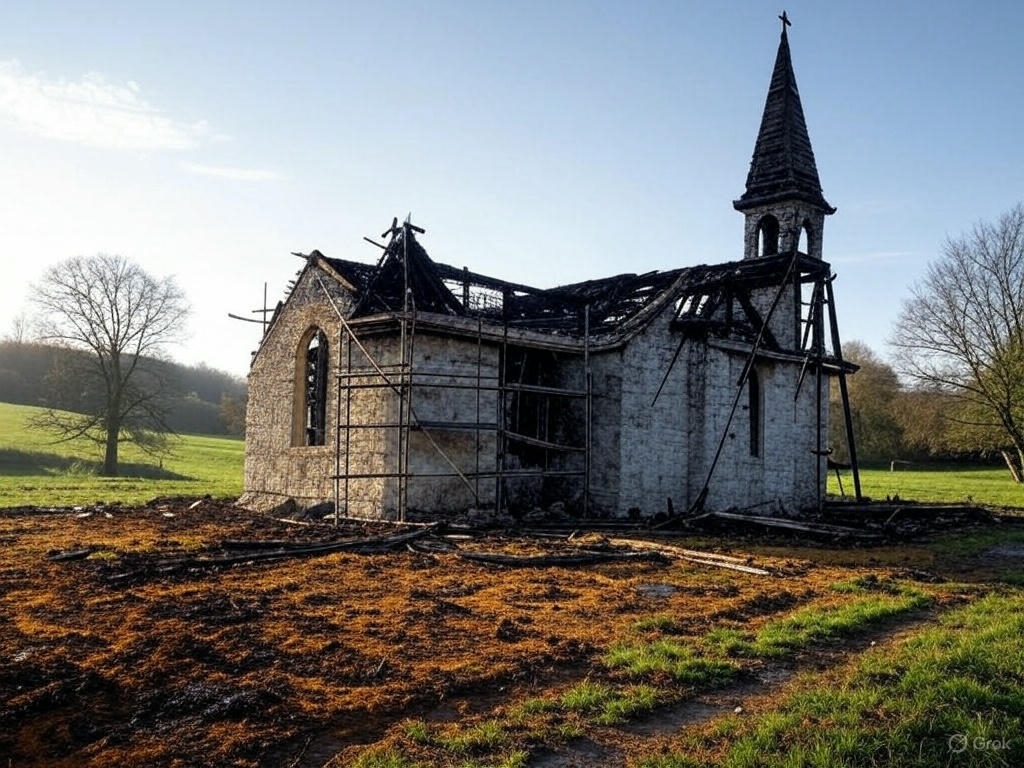











 bleatmop
 Mystro


 Dead Wild Roses
Your opinions…