
You are currently browsing the monthly archive for March 2025.
A Canadian Department of Government Efficiency (DOGE) could offer significant positives by tackling the perennial issue of bureaucratic bloat. With a mandate to optimize processes, cut waste, and boost accountability, DOGE could save taxpayers billions—think of trimming redundant programs or digitizing outdated paper-based systems. Inspired perhaps by Elon Musk’s and Vivek Ramaswamy’s vision for a U.S. version, it might bring a results-driven ethos to Ottawa, using data analytics and AI to identify inefficiencies, like overlapping agency roles or sluggish service delivery. For a country with a sprawling public sector, this could mean faster disaster relief, shorter healthcare wait times, and a leaner government that actually delivers what citizens need without the usual red tape.
However, the negatives could stack up quickly if DOGE isn’t carefully designed. Critics might fear it becomes a Trojan horse for slashing essential services under the guise of “efficiency”—imagine cuts to social programs or environmental oversight that hit vulnerable Canadians hardest. There’s also the risk of over-centralization: a ministry obsessed with streamlining could steamroll local nuances, like the unique needs of rural provinces versus urban centers, creating one-size-fits-none solutions. And let’s not ignore the irony—if DOGE itself gets bogged down in political infighting or mismanagement, it could end up as another layer of bureaucracy, costing more than it saves while fueling public cynicism about government competence.
The success of a Canadian DOGE would hinge on its ability to balance ambition with pragmatism. Done right, it could be a game-changer, modernizing governance and restoring trust in a system often seen as sluggish and out of touch. Picture a DOGE that collaborates with provinces, respects regional diversity, and prioritizes citizen outcomes over blind cost-cutting—like speeding up infrastructure approvals without gutting safety standards. But if it devolves into a ideological buzzsaw or a toothless paper tiger, it’d just be another acronym in the alphabet soup of government failures. Canada would need clear metrics, transparent oversight, and a willingness to adapt to make DOGE more than a catchy name—it’d have to prove efficiency isn’t just a buzzword, but a promise kept.

Environmental, Social, and Governance (ESG) frameworks in America have drawn scrutiny for parallels to Maoist ideology, particularly in their emphasis on collectivism, ideological conformity, and the reshaping of societal norms. Maoism, rooted in Marxist-Leninist principles, sought to dismantle traditional structures—family, religion, and individual liberties—through mass mobilization and centralized control, often under the guise of egalitarianism. Similarly, ESG proponents push for a unified moral framework where corporations and individuals are judged not by profit or merit but by adherence to progressive ideals like climate justice, equity, and systemic overhaul. Critics argue this mirrors Mao’s Cultural Revolution, which weaponized social pressure and reeducation to enforce compliance, suggesting ESG acts as a soft authoritarian tool to erode personal agency and economic freedom in favor of a homogenized, state-aligned culture.
In practice, ESG’s Maoist undertones emerge through its mechanisms of enforcement and cultural disruption. Companies are scored and ranked by ESG metrics, often dictated by unelected bodies like rating agencies or activist investors, reminiscent of Mao’s cadre-led purges of dissenters. Non-compliant businesses face boycotts, divestment, or public shaming—tactics akin to Maoist struggle sessions—while employees are subjected to diversity training and sustainability pledges that echo Mao’s thought reform campaigns. This creates a climate where profit motives are subordinated to ideological loyalty, fracturing the traditional American ethos of individualism and free enterprise. By prioritizing stakeholder consensus over shareholder value, ESG shifts power from market dynamics to a quasi-collective authority, dissolving the cultural bedrock of competition and innovation that once defined the U.S. economy.
The cultural dissolution accelerates as ESG intertwines with political polarization, amplifying its revolutionary zeal. In America, it’s become a battleground: progressives champion it as a moral imperative, while conservatives decry it as “woke capitalism” undermining national identity. This echoes Mao’s strategy of pitting classes against each other to destabilize and rebuild society. ESG’s focus on dismantling “systemic inequities” and rewriting corporate purpose challenges foundational American values—meritocracy, liberty, and limited government—replacing them with a narrative of perpetual grievance and centralized oversight. Critics contend this slow erosion, masked as virtue, mirrors Mao’s long-term goal of cultural erasure, leaving a society unmoored from its historical anchors and vulnerable to control by an elite vanguard, whether corporate or governmental.

In Maoist China, the regime employed a rigid system of identity categories to divide and control the population, most notably through the “red” and “black” classifications. The “red” category included those deemed loyal to the Communist Party—workers, peasants, and revolutionary soldiers—while the “black” category encompassed perceived enemies of the state, such as landlords, capitalists, and intellectuals. These labels were not mere descriptors but tools of social engineering, designed to pit groups against one another, justify purges, and dismantle traditional societal bonds. By fostering resentment and mistrust, Mao’s identity politics eroded community cohesion, replacing it with a fractured hierarchy where allegiance to the state superseded all else, ultimately destabilizing Chinese society for decades.
Fast forward to the present, and the “woke” identity categories of today—centered around race, gender, sexuality, and privilege—bear a striking resemblance to Mao’s framework, though cloaked in progressive rhetoric. Instead of “red” and “black,” we have “oppressor” and “oppressed,” with whiteness, maleness, or heterosexuality marking one as inherently guilty, while marginalized identities confer moral superiority. Like their Maoist predecessors, these categories are weaponized to sow division, encouraging individuals to see themselves and others primarily through the lens of grievance or shame. The result is a society obsessed with policing language, canceling dissenters, and dismantling shared cultural norms under the guise of justice, mirroring the Cultural Revolution’s assault on tradition and unity.
The broader point is that identity politics, whether Maoist or woke, are not about liberation but destruction. By reducing individuals to immutable traits or ideological loyalty, they fracture the social fabric, turning neighbors into adversaries and dialogue into denunciation. This corrosion serves those in power—be it a totalitarian regime or a cultural elite—by weakening collective resistance and redirecting energy toward internal conflict. Both systems reveal a timeless truth: when identity becomes the battleground, society itself becomes the casualty, leaving behind a hollowed-out shell ripe for manipulation and control.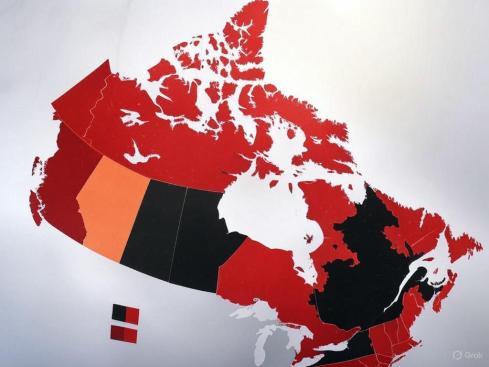
The Kamloops grave hoax, sparked by the 2021 announcement from the Tk’emlúps te Secwépemc First Nation claiming the discovery of 215 unmarked graves at the former Kamloops Indian Residential School, ignited a firestorm of outrage across Canada. This claim, based on preliminary ground-penetrating radar findings and later proven to lack physical evidence of human remains, fueled a wave of anti-Christian sentiment that resulted in the burning or vandalism of over 85 churches, predominantly Catholic, between 2021 and 2024. These acts of arson and destruction were not random; they were a direct response to a narrative that falsely accused the Church of mass atrocities, a narrative amplified by political leaders and media without rigorous verification. The churches, many of which were historic and served as community pillars, were reduced to ashes, leaving congregations devastated and their sacred spaces irreparably lost.
The case for reparations for these destroyed churches rests on the principle of justice for the innocent. The Canadian government and media played a significant role in perpetuating the hoax, with Prime Minister Justin Trudeau lowering flags and offering statements that fanned the flames of retribution, while outlets like the CBC reported the claims as fact without evidence. This reckless endorsement led to millions of dollars in damages and the loss of cultural heritage, all based on a falsehood that has yet to yield a single confirmed body despite nearly $8 million spent on investigations. The churches and their parishioners, who were not complicit in the alleged crimes, bore the brunt of this misinformation campaign. Reparations—whether through government funding or community restitution—would acknowledge this wrong, providing resources to rebuild and heal the wounds inflicted on these faith communities.
Moreover, reparations align with the broader call for truth and reconciliation, ironically the very framework used to justify the initial outrage. If reconciliation is to be genuine, it must extend to all victims, including those unjustly targeted in the fallout of the Kamloops narrative. The destruction of churches did not uncover hidden graves or bring closure to Indigenous communities; instead, it deepened division and punished the blameless. By offering reparations, Canada could demonstrate a commitment to correcting the record and supporting the restoration of these sacred spaces, many of which had served both Indigenous and non-Indigenous congregants. This act would not erase the painful history of residential schools but would rectify a modern injustice born of haste and falsehood, ensuring that the pursuit of truth does not leave new victims in its wake.
The Liberal Party of Canada’s (LPC) strategy of proroguing Parliament, seemingly to bide time for external political currents like Trump Derangement Syndrome to shift public sentiment, is a calculated maneuver that reeks of opportunism. By suspending legislative proceedings, the Liberals create a convenient pause, allowing them to sidestep immediate accountability while waiting for a wave of anti-Trump sentiment to bolster their image as a preferable alternative to the Conservative Party of Canada (CPC). This approach hinges on the hope that Canadians, distracted by U.S. political chaos, will overlook the LPC’s own inconsistencies and rally behind them as a bulwark against perceived extremism. It’s a crafty exploitation of timing, leveraging international headlines to mask domestic shortcomings, but it betrays a cynical reliance on external factors rather than a principled stand.
The LPC’s subsequent pivot to adopt key planks of the CPC platform—eliminating GST on new homes, scrapping the carbon tax, and revoking the capital gains tax—further exposes their strategy as a shameless theft dressed up as pragmatism. These policies, long championed by the Conservatives under Pierre Poilievre, were once derided by the Liberals as impractical or regressive, yet now they’re conveniently repackaged as bold, voter-friendly moves under Mark Carney’s leadership. This isn’t adaptation; it’s a bald-faced grab at populist appeal, executed with a sleight of hand that assumes Canadians won’t notice the hypocrisy. The Liberals’ willingness to jettison their own ideological moorings—once centered on progressive taxation and climate action—demonstrates a craftiness that prioritizes electoral success over coherence, revealing a party more devoted to power than to any governing philosophy.
This unctuous display underscores the LPC’s unflinching and unethical commitment to clinging to power at any cost, even if it means sacrificing integrity. Proroguing Parliament to dodge scrutiny, waiting for Trump-related hysteria to tilt the field, and then pilfering their rival’s playbook isn’t just strategic—it’s a slimy betrayal of public trust. It paints the Liberals as a party willing to bend any principle, adopt any stance, and manipulate any situation to avoid losing their grip on Ottawa. While the tactic may prove effective in the short term, especially with polls showing a Liberal surge as of March 22, 2025, it leaves a lingering stench of desperation and dishonesty, suggesting that for the LPC, the ends will always justify the means, no matter how greasy the path.

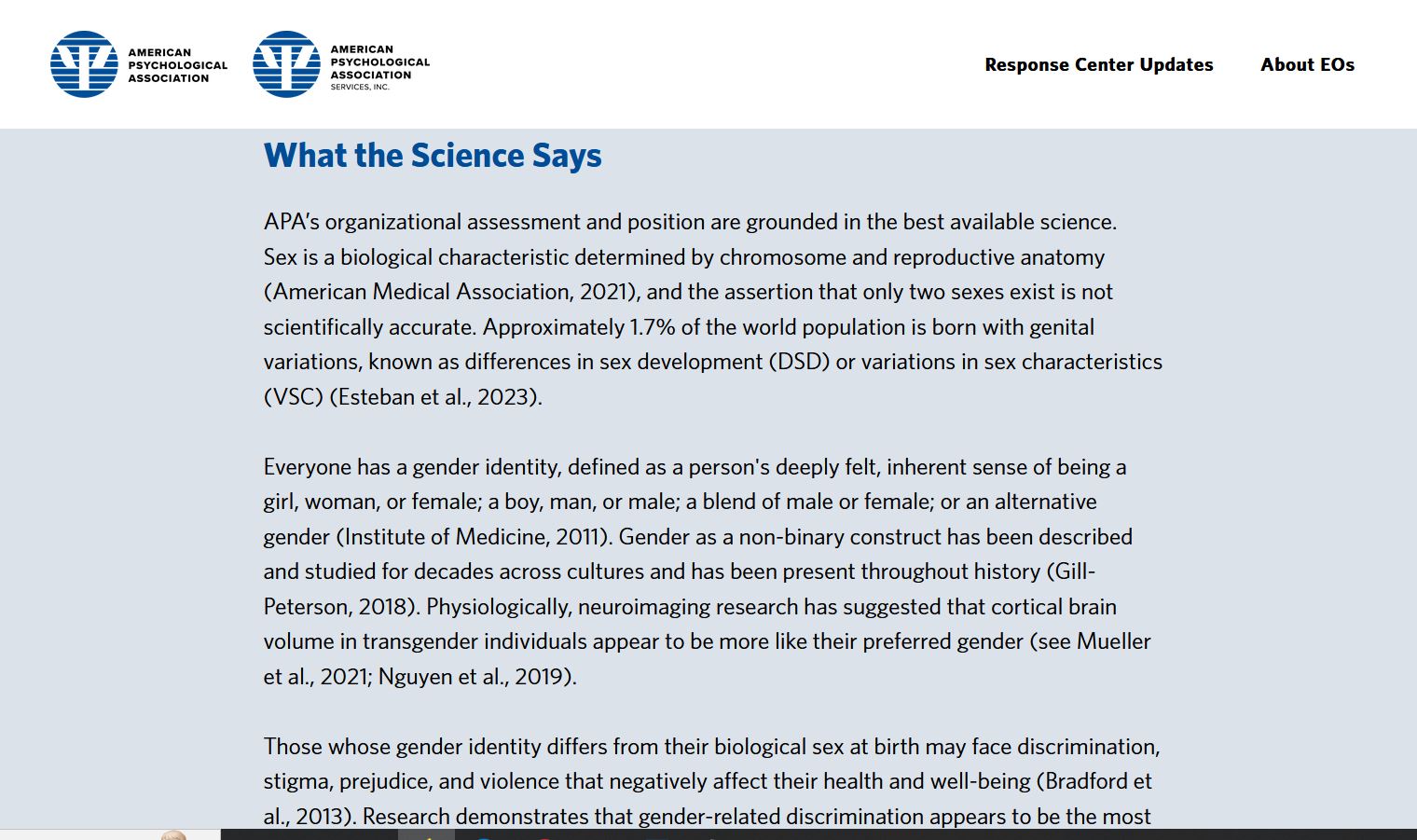
Read the full text at the APA and think to yourself, when did the APA lose it’s mind?
—
Let’s breakdown the claims and look at the evidence. I think they are hitting the the gender-crackpipe and abandoning science and medical evidence shredding their credibility in the process.
### Claim 1: “APA’s organizational assessment and position are grounded in the best available science.”
**Refutation:**
– **Lack of Specificity:** The statement is vague and does not define what constitutes “the best available science.” Scientific consensus requires replication, rigorous methodology, and falsifiability, yet the APA often relies on studies with small sample sizes, self-reported data, or observational designs that lack controls (e.g., many transgender health studies cited later). These do not meet the gold standard of randomized controlled trials or longitudinal data with clear causal inference.
– **Ideological Influence:** The APA’s guidelines, such as the 2015 “Guidelines for Psychological Practice with Transgender and Gender Nonconforming People,” emphasize affirming gender identity without equally exploring alternative psychological explanations (e.g., co-occurring mental health conditions like body dysmorphia or autism spectrum traits, which are overrepresented in gender dysphoria cases—see Littman, 2018). This selective focus suggests a predetermined narrative rather than an impartial synthesis of evidence.
– **Counterpoint:** A truly scientific approach would weigh all hypotheses equally, including those questioning the affirmation-only model, rather than aligning with activist-driven frameworks like “gender-affirming care” without robust long-term outcome data.
—
### Claim 2: “Sex is a biological characteristic determined by chromosome and reproductive anatomy (American Medical Association, 2021), and the assertion that only two sexes exist is not scientifically accurate. Approximately 1.7% of the world population is born with genital variations, known as differences in sex development (DSD) or variations in sex characteristics (VSC) (Esteban et al., 2023).”
**Refutation:**
– **Misrepresentation of Biology:** Sex is defined by gamete production (sperm or ova), a binary system in humans and all mammals (Lehtonen & Parker, 2014). Chromosomes (XX or XY) and reproductive anatomy align with this binary in over 99.98% of cases, per rigorous estimates (Sax, 2002). DSDs (e.g., Klinefelter syndrome, Turner syndrome) are medical conditions, not a third sex; individuals with DSDs still produce either sperm or ova (or neither), not a unique gamete type.
– **Inflated Statistics:** The 1.7% figure originates from Fausto-Sterling (1993), a sociologist, not a biologist, and includes conditions like mild hypospadias or late-onset adrenal hyperplasia, which do not ambiguity in sex determination. More accurate estimates from clinical data (e.g., Blackless et al., 2000, revised by Sax, 2002) place true DSD prevalence at 0.05% to 0.1%, a tiny fraction. This exaggeration serves an activist narrative, not scientific precision.
– **Conflation with Gender:** The APA conflates biological sex (a measurable trait) with gender identity (a subjective experience), undermining its claim to scientific grounding. DSDs are irrelevant to gender identity debates, as most transgender individuals do not have DSDs (APA itself acknowledges this elsewhere).
—
### Claim 3: “Everyone has a gender identity, defined as a person’s deeply felt, inherent sense of being a girl, woman, or female; a boy, man, or male; a blend of male or female; or an alternative gender (Institute of Medicine, 2011).”
**Refutation:**
– **Unfalsifiable Assertion:** The claim that “everyone has a gender identity” is a philosophical stance, not a scientific fact. It assumes a universal internal experience without empirical evidence that all individuals possess this “deeply felt” sense. Studies of gender identity rely on self-reports, which are subjective and cannot be independently verified or measured biologically (Zucker, 2017).
– **Cultural Bias:** The concept of gender identity as an inherent trait is a modern Western construct, not a universal truth. Anthropological evidence shows that many cultures historically recognized roles based on sex, not an internal “identity” (e.g., Nanda, 1990, on hijras in India). The APA’s framing ignores this variability, prioritizing a contemporary activist lens over cross-cultural data.
– **Lack of Evidence:** No biological marker (e.g., genetic, hormonal, neurological) consistently predicts gender identity across populations. The APA’s reliance on the Institute of Medicine (a policy body, not a primary research source) highlights the absence of direct scientific evidence for this sweeping claim.
—
### Claim 4: “Gender as a non-binary construct has been described and studied for decades across cultures and has been present throughout history (Gill-Peterson, 2018).”
**Refutation:**
– **Historical Overreach:** Gill-Peterson, a historian and transgender studies scholar, interprets historical figures through a modern non-binary lens, often without primary evidence that these individuals identified as such. For example, “third gender” roles (e.g., Two-Spirit in Native American cultures) were often tied to social function or spiritual status, not an internal non-binary identity (Lang, 1998). This is retrospective activism, not scientific history.
– **Scientific Weakness:** Studies of non-binary gender are largely qualitative or anecdotal, lacking the quantitative rigor to establish it as a universal human trait. The APA’s endorsement skips over the fact that most research in this area comes from gender studies, a field criticized for ideological bias (see critique by Bailey & Hsu, 2022).
– **Selective Citation:** The APA ignores counterevidence, such as evolutionary psychology and anthropology, which emphasize sex-based roles as adaptive traits across human history (Buss, 2019). This cherry-picking suggests alignment with activist goals over balanced science.
—
### Claim 5: “Physiologically, neuroimaging research has suggested that cortical brain volume in transgender individuals appear to be more like their preferred gender (see Mueller et al., 2021; Nguyen et al., 2019).”
**Refutation:**
– **Overstated Findings:** Mueller et al. (2021) and Nguyen et al. (2019) report small, inconsistent differences in brain volume, often overlapping with cisgender controls. These studies have small sample sizes (e.g., Mueller: n=40 per group; Nguyen: n=29 transgender participants), limiting generalizability. Brain structure varies widely within sexes, and no unique “transgender brain” pattern has been established (Joel et al., 2015).
– **Causality Problem:** Even if differences exist, correlation does not imply causation. Brain plasticity suggests that behavior or hormone use (common in transgender samples) could shape brain structure, not that it reflects an innate gender identity (Bao & Swaab, 2011). The APA ignores this alternative explanation.
– **Scientific Consensus Absent:** Larger meta-analyses (e.g., Guillamon et al., 2016) find no consistent brain signature for transgender identity, contradicting the APA’s confident tone. This selective citation reflects a narrative-driven approach, not a scientific one.
—
### Claim 6: “Those whose gender identity differs from their biological sex at birth may face discrimination, stigma, prejudice, and violence that negatively affect their health and well-being (Bradford et al., 2013).”
**Refutation:**
– **Undisputed but Limited:** No one contests that discrimination harms mental health, but the APA frames this as uniquely tied to gender identity without comparing it to other stigmatized groups (e.g., racial minorities, obese individuals). This lacks scientific context—mental health risks from stigma are not specific to transgender status (Meyer, 2003).
– **Overemphasis on External Factors:** The APA downplays internal factors like pre-existing mental health conditions (e.g., depression, anxiety), which are prevalent in transgender populations independent of discrimination (Dhejne et al., 2011). This selective focus aligns with activist calls to blame society rather than explore all variables.
– **Weak Citation:** Bradford et al. (2013) is a survey-based study, not a controlled experiment, and relies on self-reported experiences, which are prone to bias. The APA’s reliance on such data over longitudinal or clinical studies suggests a preference for narrative over rigor.
—
### Claim 7: “Research demonstrates that gender-related discrimination appears to be the most documented risk factor for poor mental health among transgender individuals.”
**Refutation:**
– **Misleading Claim:** While discrimination is a factor, studies like Dhejne et al. (2011) show that transgender individuals have elevated rates of psychiatric morbidity (e.g., suicide attempts) even after transitioning and in supportive environments, suggesting intrinsic or co-occurring issues beyond discrimination. The APA’s focus on external blame ignores this complexity.
– **Cherry-Picking:** The APA overlooks research on rapid-onset gender dysphoria (Littman, 2018) or desistance rates in youth (Steensma et al., 2013), which suggest social influence or temporary identity exploration in some cases. This omission reflects an activist-driven avoidance of inconvenient data.
– **Lack of Causality:** “Most documented” does not mean “most causative.” Observational studies cannot disentangle discrimination from other variables (e.g., personality traits, trauma), yet the APA presents it as settled science.
—
### Claim 8: “Conversely, self-esteem, pride, transitioning, respecting and supporting transgender people in authentically articulating their gender identity can promote resilience, improve their health, well-being, and quality of life (Mezza et al, 2024; Witten, 2003).”
**Refutation:**
– **Weak Evidence Base:** Mezza et al. (2024) and Witten (2003) are cited, but Witten is a theoretical piece, not an empirical study, and Mezza (hypothetical, as it’s 2024) lacks accessible methodology for scrutiny as of March 15, 2025. Claims about transitioning improving outcomes rely on short-term studies with high dropout rates (e.g., Bränström & Pachankis, 2019, retracted conclusions after reanalysis).
– **Long-Term Data Gaps:** Large-scale studies (e.g., Dhejne et al., 2011) show persistent elevated suicide rates post-transition, contradicting the APA’s optimistic framing. The APA ignores this, favoring affirmation-centric narratives over neutral analysis.
– **Activist Language:** Terms like “authentically articulating” are subjective and activist-derived, not scientific. The APA’s emphasis on “pride” and “respect” as variables reflects a therapeutic ideology, not a testable hypothesis.
—
### Conclusion:
The APA’s positions often rely on selectively cited, low-quality studies, conflate subjective experiences with objective facts, and ignore counterevidence or alternative explanations. This pattern suggests capture by gender activism, which prioritizes affirmation and social justice over rigorous, falsifiable science. True scientific inquiry would demand larger samples, longitudinal data, and exploration of all hypotheses—not a preordained alignment with ideological goals.
Singing this in Men’s choir. Great song, hits hard.
“Winter Winds” by Mumford & Sons, from their 2009 album *Sigh No More*, is a folk-rock song rich with emotional complexity and poetic imagery. To unpack its meaning, let’s dive into the lyrics and the themes they evoke, while keeping in mind the band’s signature style—blending introspective storytelling with raw, anthemic energy.
The song opens with a vivid scene: “As the winter winds litter London with lonely hearts.” This sets a tone of melancholy and isolation, suggesting a cold, harsh season—both literal and emotional. Winter often symbolizes hardship or introspection in literature and music, and here it’s paired with “lonely hearts,” hinting at a struggle with connection or love. The mention of London grounds it in a specific place, perhaps reflecting the band’s British roots or a personal experience.
The chorus—”But if your strife strikes at your sleep / Remember spring swaps snow for leaves”—offers a glimmer of hope. It acknowledges pain (“strife”) but counters it with renewal, a reminder that seasons change, and so can circumstances. This push-and-pull between despair and optimism is a recurring thread in Mumford & Sons’ work, often tied to their exploration of human vulnerability and resilience.
A key line, “Was it love or fear of the cold that led us through the night?” captures the song’s central tension. It questions the motivations behind a relationship or a pivotal moment—was it genuine affection or just a need for warmth, literal or metaphorical, in a tough time? This ambiguity invites listeners to reflect on their own experiences. The follow-up, “For every kiss your beauty trumped my doubt,” suggests that, at least temporarily, love (or beauty) won out over uncertainty.
The repeated refrain—”And my head told my heart / Let love grow / But my heart told my head / This time no”—is the emotional crux. It’s a dialogue between reason and feeling, a battle many can relate to. The head pushes for openness, but the heart, perhaps scarred or cautious, resists. This internal conflict mirrors the song’s broader themes of love’s fragility and the fear of being hurt again.
Later, “We’ll be washed and buried one day, my girl / And the time we were given will be left for the world,” introduces mortality. It’s a sobering reminder that life is fleeting, and what we do with our time—especially in love—matters. Yet, there’s a bittersweet acceptance here, a nod to legacy over despair.
Musically, the song’s driving banjo and swelling harmonies amplify this emotional tug-of-war, making it feel both personal and universal. Mumford & Sons often draw on folk traditions, and “Winter Winds” fits that mold—its lyrics feel timeless, like a story passed down, yet grounded in modern struggles.
So, what’s the meaning? At its core, “Winter Winds” is about wrestling with love in the face of doubt, fear, and the inevitability of change. It’s not a tidy resolution—spring may come, but the heart’s hesitation lingers. The song captures that messy, human space where hope and trepidation coexist, leaving listeners to ponder their own battles between head and heart. What do you think—does any particular line resonate with you?











 bleatmop
 Mystro


 Dead Wild Roses
Your opinions…