
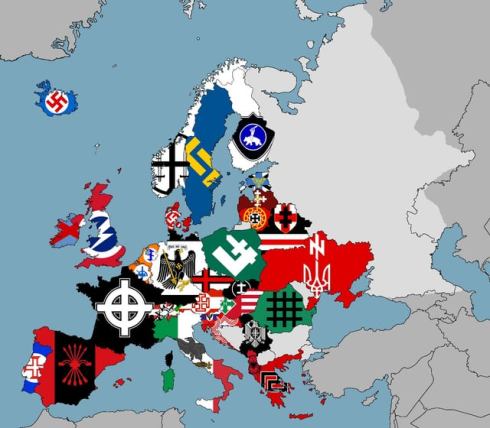
Fascism is a tough term to pin down, but history gives us a clear picture. It’s a far-right ideology that took root in the early 20th century, most famously in Mussolini’s Italy and Hitler’s Germany. At its core, fascism is about extreme control: one leader or party calls the shots, the state trumps individual rights, and nationalism gets dialed up to eleven. Think Mussolini strutting as “Il Duce” or the Nazis’ obsession with racial purity. It’s anti-democratic, often crushing free elections, free press, and anyone who dares disagree. Look at Italy’s march into Ethiopia in 1935 or Germany’s defiance of the Treaty of Versailles with its military buildup—fascism loves a crisis to justify power grabs and feeds on myths of national glory.
Spotting fascism today isn’t about slapping the label on every tough government. It’s about looking for specific signs. First, does a regime gut checks and balances, like attacking courts or silencing journalists? Hungary’s media crackdowns under Orbán raise eyebrows here. Second, is there a toxic “us vs. them” vibe, like far-right parties in Europe demonizing immigrants? Third, are critics jailed or worse, as in Putin’s Russia with its vanishing opposition? Fourth, does a leader act like a king, demanding loyalty above all, like Kim Jong-un in North Korea? Fifth, is the military or police state overblown, like China’s surveillance net? These aren’t just “bad government” traits—they’re a pattern of ideological control that echoes history’s darkest regimes.
Calling everything “fascist” is a trap too many progressives fall into, and it’s a disservice to everyone. Disagree with a tax cut or a border policy? Fine, but throwing around “fascism” like it’s a catch-all insult cheapens the word. It’s not just sloppy thinking—it muddies the water, making it harder to call out real threats. The term should evoke the Gestapo, the Blackshirts, or the death camps, not a policy you’d vote against. This habit shuts down debate, alienates people who might actually listen, and disrespects the millions who suffered under true fascist boots. We need to argue with facts and clarity, not fling around history’s heaviest labels like they’re confetti.











 bleatmop
 Mystro
 The Arbourist


 Dead Wild Roses
3 comments
April 27, 2025 at 6:39 am
Sumi
Saying that fascism is about extreme control and nationalism is quite true, but the same can be said for communism. When I was in the USSR, there was plenty of fervent nationalist sentiment and propaganda. The same is true in North Korea, which is communist, not fascist.
Corporatism is what distinguishes fascism from other forms of authoritarian governance. Communism, on the other hand, bans private corporations, which is why China with its mix of state enterprises and corporations is no longer communist.
Fascism is capitalism on steroids, bending the desire for profits into service of the state. We can see that happening in the US, with corporations and white shoe law firms caving to Trump’s shakedowns, just as the captains of industry did in Germany. As Mussolini said, “The Fascist State lays claim to rule in the economic field no less than in others; it makes its action felt throughout the length and breadth of the country by means of its corporate, social, and educational institutions, and all the political, economic, and spiritual forces of the nation, organised in their respective associations, circulate within the State.“
Because of the association of fascism with nazism, no modern government would ever call itself fascist. That doesn’t mean the rest of us can’t draw obvious parallels and call a spade a spade.
LikeLike
April 27, 2025 at 11:46 am
The Arbourist
@ Sumi – You’re right that nationalism and control appear in both fascism and communism, but conflating them muddies the waters. Fascism’s hallmark is corporatism, where private enterprises are co-opted to serve state goals, as Mussolini described. Communism, conversely, seeks to eliminate private ownership entirely—North Korea and the USSR leaned on state monopolies, not corporate collusion. China’s hybrid model indeed strays from pure communism, blending state and corporate power, but it’s not fascist either; it’s a distinct authoritarian capitalism.
Your point about U.S. corporations bending to political pressure echoes fascist tendencies, but it’s not a full parallel—fascism demands systemic, ideological alignment of state and industry, not just opportunistic capitulation. The term “fascism” gets thrown around too loosely, especially when tied to Trump or modern politics, because it evokes Nazis and shuts down nuance. Calling out similarities is fair, but precision matters to avoid diluting the term’s weight. Parallels exist, but spades aren’t always spades without the whole deck.
LikeLike
April 27, 2025 at 2:00 pm
Sumi
I find it interesting that we accept many forms of democracy – direct, liberal, participatory, representative, etc. – but insist that fascism be exactly like Nazi Germany or it doesn’t qualify. Yet, only one government called itself fascist and that was Mussolini’s. But, I would have no difficulty calling Franco’s Spain fascist, as well as the post-war US-backed authoritarian governments in Greece, Turkey and Iran, Pinochet’s Chile, and many other South and Central American governments. I’d also add Putin’s Russia.
Is fascist misused as an epithet? Of course. And I’m sure back in the day you were called a godless commie. I think we need to distinguish mere name-calling from the concern that the US’s rapid slide into illiberalism will end up in fascism.
LikeLike