
Central planning too limited.
Karl Marx’s vision of socialism relied on central planners to orchestrate production and distribution, assuming they could gather and process the necessary information to meet societal needs. In Marx’s framework, a centralized authority would replace the decentralized market, directing resources to eliminate inefficiencies and inequities inherent in capitalism. This approach presumed that planners could acquire comprehensive knowledge of economic conditions to allocate resources effectively.
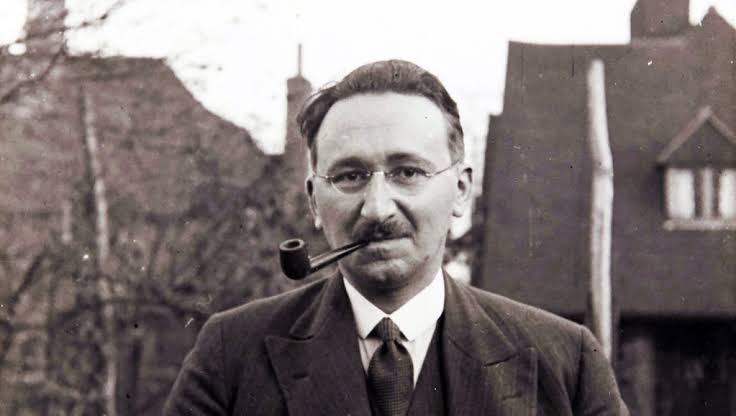
F.A. Hayek, in his seminal works such as The Use of Knowledge in Society (1945), refuted this by arguing that no central planner could possibly possess the dispersed, tacit knowledge held by individuals across society. Hayek emphasized that prices in a market economy are not mere numbers but dynamic signals that aggregate and communicate localized information about needs, preferences, and resource scarcities. For instance, a rising price for lumber signals increased demand or limited supply, prompting producers and consumers to adjust without any single authority needing to understand the full context of every transaction.
Hayek’s insight directly challenges Marx’s centralized model by demonstrating that the spontaneous coordination enabled by market prices surpasses the capabilities of any planner, expert, or algorithm. Prices encapsulate fragmented knowledge—such as a farmer’s awareness of crop yields or a manufacturer’s grasp of production costs—that no central authority could fully replicate. By enabling individuals to act on this dispersed information, markets achieve efficient resource allocation without requiring a comprehensive plan, rendering Marx’s vision of centralized control not only impractical but fundamentally incapable of matching the adaptive complexity of a price-driven economy.











 bleatmop
 Mystro


 Dead Wild Roses
Your opinions…