
You are currently browsing the daily archive for July 29, 2025.
Abstract.
This essay extends Richard Hanania’s “longhouse” metaphor to critique how progressive ideological praxis transforms U.S. workplaces into emotionally homogenized spaces that prioritize conformity over competence. While ostensibly promoting inclusivity and emotional safety, these environments insidiously suppress dissent and erode meritocratic principles, risking innovation. Drawing on empirical examples and social science, it proposes actionable reforms to balance equity with truth-seeking rigor.
1. From Iroquois Communal Living to Corporate Surveillance
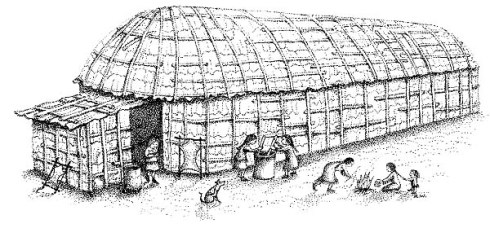
Richard Hanania’s “longhouse” metaphor likens modern workplaces to Iroquois communal dwellings, where constant group surveillance enforced social cohesion (Hanania, 2021; Soucek, 2022). Historically, longhouses lacked privacy, prioritizing collective norms over individual autonomy (Soucek, 2022). Today’s progressive workplaces mirror this dynamic, embedding rituals—diversity trainings, inclusivity pledges, and psychological cues—that enforce emotional alignment. This shift, cloaked in equity, supplants hierarchical, performance-driven models with collectivist frameworks, subordinating measurable outcomes to group harmony. This cultural pivot sets the stage for redefining performance itself.
2. Emotional Metrics Eclipse Measurable Outcomes
Progressive workplaces increasingly incorporate subjective metrics like “inclusivity” or “belonging” into performance evaluations, often overshadowing traditional key performance indicators (KPIs). For instance, Salesforce employs monthly diversity scorecards, compelling leaders to prioritize equity metrics alongside revenue goals (Salesforce, 2018). Similarly, Google, despite abandoning explicit diversity hiring targets in 2025, maintains internal programs that pressure employees to signal emotional compliance (Wakabayashi, 2025). Excellence, once tied to output, now hinges on performing group-approved values, eroding meritocracy’s foundation. Such practices risk diluting accountability, as emotional signaling supersedes tangible results.
3. Pathologizing Dissent as “Unsafe”
In longhouse-like workplaces, dissent—even constructive critique—is often branded “unsafe” or “disruptive,” stifling innovation. Social psychology research highlights that environments obsessed with emotional safety may suppress the creative friction essential for breakthroughs (Vedres & Vasarhelyi, 2022; Hofstra et al., 2019). Rather than explicit bans, dissent is insidiously chilled through peer pressure and social marginalization, replacing direct authority with diffuse, insidious control. Employees self-censor, fearing ostracism more than formal reprimand. This suppression paves the way for new hierarchies rooted in moral posturing.
4. Moral Hierarchies and Performative Capital
Masculine-coded traits—bluntness, decisive hierarchy, risk-taking—are recast as oppressive, while emotional labor and linguistic signaling become status markers. Individuals from “marginalized” identities are often elevated as moral authorities, their endorsement of symbolic rituals outweighing technical expertise (Salesforce, 2018; Pluckrose & Lindsay, 2020). For instance, employees at tech firms report promotions tied to leading DEI initiatives, even absent technical contributions (Stovall, 2025). This inverts traditional authority, creating a moral ladder where fluency in approved language—diversity jargon, empathy displays—secures favor. Competence, once paramount, becomes secondary to performative harmony.
5. The Innovation-Meritocracy Trade-Off
While diversity can enhance creativity, empirical studies show benefits only emerge with inclusion and openness to dissent (Vedres & Vasarhelyi, 2022; Hofstra et al., 2019). Longhouse cultures, however, prioritize emotional self-monitoring over evaluative transparency, undermining these gains. For example, a 2022 study found teams with high psychological safety but low dissent produced fewer novel patents (Vedres & Vasarhelyi, 2022). Employees, wary of disrupting harmony, self-censor provocative ideas, stagnating innovation. The result is a workplace where consensus trumps truth, and performative rituals eclipse measurable impact, corroding the meritocratic ethos essential for progress.
Conclusion and Path Forward
The longhouse metaphor incisively reveals how progressive praxis, though well-intentioned, transforms workplaces into emotionally regulated arenas where dissent and competence are subordinated to conformity. This does not negate the value of equity but warns against its dominance over truth-seeking. To restore balance, workplaces must:
- Distinguish ideological rituals from practical metrics, prioritizing transparent performance standards.
- Track contributions from idea originators and dissenters, not just inclusivity scores, to ensure accountability.
- Normalize respectful disagreement, ensuring dissent is not pathologized as unsafe.
By integrating emotional safety with rigorous meritocracy, workplaces can transcend the longhouse’s façade, fostering both unity and innovation. Failure to act risks perpetuating a culture where harmony is performed, but progress is sacrificed.
References
Hanania, R. (2021, November 15). The longhouse. Richard Hanania’s Newsletter. https://richardhanania.substack.com/p/the-longhouse
Hofstra, B., Kulkarni, V. V., Munoz-Najar Galvez, S., He, B., Jurafsky, D., & McFarland, D. A. (2019). The diversity-innovation paradox in science. arXiv. https://arxiv.org/abs/1909.02063
Pluckrose, H., & Lindsay, J. (2020). Cynical theories: How activist scholarship made everything about race, gender, and identity—and why this harms everybody. Pitchstone Publishing.
Salesforce Office of Equality. (2018, October 23). How a diversity scorecard helps Salesforce keep equality top of mind. LinkedIn. https://www.linkedin.com/pulse/how-diversity-scorecard-helps-salesforce-keep-equality-salesforce
Soucek, B. (2022). Diversity statements. UC Davis Law Review, 55(4), 1989–2058. https://lawreview.law.ucdavis.edu/sites/g/files/dgvnsk15026/files/media/documents/55-4_Soucek.pdf
Stovall, J. M. (2025). Tech’s DEI illusion. NeuroLeadership Institute. https://neuroleadership.com/your-brain-at-work/techs-dei-illusion
Vedres, B., & Vasarhelyi, O. (2022). Inclusion unlocks the creative potential of gender diversity in teams. arXiv. https://arxiv.org/abs/2204.08505
Wakabayashi, D. (2025, February 10). Google kills diversity hiring targets. The Wall Street Journal. https://www.wsj.com/tech/google-kills-diversity-hiring-targets-04433d7c











 bleatmop
 Mystro
 The Arbourist


 Dead Wild Roses
Your opinions…