
You are currently browsing the daily archive for October 14, 2025.
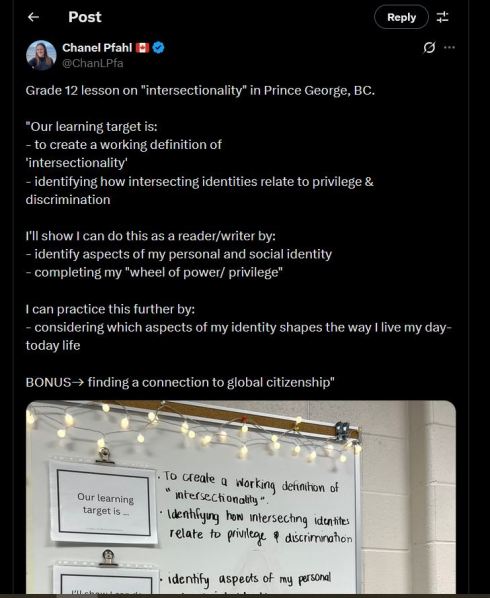
In Prince George, British Columbia, Grade 12 students were recently asked to “map their identities” on a wheel of power and privilege and define how overlapping traits like race, gender, and class shape their lives. The exercise was meant to foster empathy. Instead, it taught students to see themselves—and one another—through a hierarchy of guilt and grievance.
This is intersectionality in action. Coined by legal scholar Kimberlé Crenshaw in 1989, the theory originally sought to highlight how overlapping identities could compound discrimination. But in today’s classrooms, HR seminars, and activist spaces, intersectionality has evolved into something more aggressive: a political sorting tool that assigns moral value based on group identity rather than personal conduct. When used this way, it becomes weaponized intersectionality.
1. Define It Precisely
When arguing against it, start by defining intersectionality clearly. Don’t caricature it. Acknowledge its original intent—understanding overlapping forms of discrimination—but distinguish that from its modern mutation, which treats identity as destiny. This makes your critique credible and inoculates against claims of ignorance or bad faith.
2. Expose the Hidden Premise
Weaponized intersectionality rests on a simple but flawed assumption: that all disparities are the result of oppression and that moral authority flows from victimhood. Challenge that premise. Inequality does not always mean injustice. Lived experience matters, but it does not override evidence or reason.
3. Defend Universalism
Reassert the Enlightenment principle that all individuals possess equal moral worth regardless of group identity. Intersectionality divides by assigning virtue or guilt to immutable traits; universalism unites by judging actions, not ancestry. This is not denial of injustice—it’s the precondition for solving it.
4. Point Out Its Social Effects
Weaponized intersectionality erodes solidarity. It breeds resentment, teaching students and citizens alike to view each other as oppressors or oppressed. Even some leftist thinkers, like Nancy Fraser, have warned that intersectionality replaces economic analysis with “cultural essentialism,” fracturing potential alliances for real reform.
5. Offer a Better Vision
Don’t just oppose—propose. Replace identity grids with human rights frameworks. Discuss shared values such as dignity, equality before the law, and freedom of conscience. These ideas have lifted more people from oppression than any taxonomy of privilege ever could.
The Prince George lesson shows what happens when ideology replaces education: empathy becomes accusation, and learning becomes confession. Weaponized intersectionality promises justice but delivers division. The antidote is not denial of difference but defense of common humanity—an argument every student deserves to hear.











 bleatmop
 Mystro
 The Arbourist


 Dead Wild Roses
Your opinions…