
Unrest in Iran has persisted into 2026, with recent protests triggered by economic challenges such as currency devaluation and inflation, building on longer-term grievances related to human rights and governance. Human rights organizations argue that the Islamic Republic’s policies since the 1979 revolution have contributed to discontent by prioritizing state security and ideological conformity, leading to restrictions on dissent and freedoms. The 2022–2023 “Woman, Life, Freedom” protests, sparked by the death of Mahsa Amini in custody, highlighted these tensions but were suppressed, though underlying issues have continued to fuel sporadic demonstrations and broader dissatisfaction.
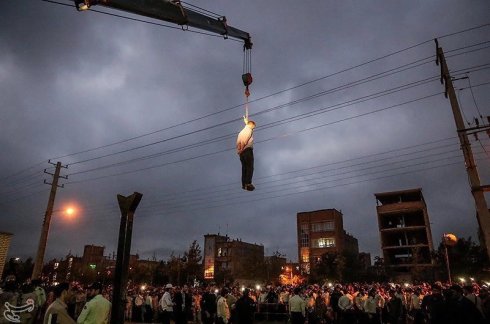
A significant point of criticism is Iran’s high rate of executions. According to monitoring groups such as Iran Human Rights (IHRNGO) and Amnesty International, at least 1,500 executions occurred in 2025, with over 1,000 recorded by September—the highest levels in decades. A substantial portion involved drug-related offenses, which Iranian authorities justify as necessary to combat trafficking given the country’s position on major transit routes. International observers, however, criticize the use of capital punishment for non-violent crimes and raise concerns about trial fairness. Public executions and the disproportionate impact on ethnic minorities, including Baluchis and Kurds, have drawn particular scrutiny.
Women’s rights remain a focal point of contention. Laws mandating compulsory veiling are enforced through measures such as the Noor Plan, involving surveillance and penalties ranging from fines to imprisonment. Human rights reports document cases of violence during enforcement, alongside broader legal discrimination in areas such as marriage and inheritance. Iranian officials frame these policies as protecting cultural and religious values, while critics and protesters describe them as systemic sex-based restrictions contributing to ongoing resistance.
Minorities also face documented challenges. LGBTQ+ individuals are subject to criminal penalties under laws prohibiting same-sex relations, with reports of harsh punishments. The Baha’i community experiences restrictions on education, employment, and worship, described by organizations such as Human Rights Watch as persecution. Journalists, artists, and activists—including minors—have been detained for expression deemed critical of the state. Authorities maintain that such measures address security threats or moral standards.
The lack of avenues for systemic change is frequently cited as prolonging tensions. Human rights monitors note limited accountability for past events, such as the 1988 prison executions or the suppression of the 2019 fuel protests, alongside tightly controlled political processes. While international criticism and sanctions aim to pressure reforms, their effectiveness remains debated, with the government rejecting external interference. Recent economic-driven protests in late 2025 and early 2026 highlight the interaction between socioeconomic pressures and long-standing rights concerns.
Analytical Assessment (Non-Advocacy)
From an analytical perspective, Iran’s persistent unrest can be understood as the outcome of a closed political system absorbing repeated shocks without adaptive mechanisms. Economic stressors act as immediate triggers, but the durability of unrest reflects deeper structural conditions: punitive enforcement practices, limited legal accountability, and the absence of credible pathways for reform. High execution rates and visible enforcement of social controls may temporarily deter dissent, but they also raise the perceived cost of compliance for affected populations, particularly women and minorities. When governance frameworks prioritize ideological enforcement over responsiveness, public pressure tends to reappear cyclically rather than dissipate. In this sense, Iran’s unrest is less a series of isolated crises than a recurring response to unresolved institutional constraints.
Key References & Sources
- Human Rights Watch. World Report 2025: Iran
https://www.hrw.org/world-report/2025/country-chapters/iran - Amnesty International. Iran: Over 1,000 people executed as authorities step up horrifying assault on the right to life (2025)
https://www.amnesty.org/en/latest/news/2025/09/iran-over-1000-people-executed-as-authorities-step-up-horrifying-assault-on-right-to-life/ - Iran Human Rights (IHRNGO). Annual Reports on the Death Penalty in Iran (2025)
https://iranhr.net/en/











 bleatmop
 Mystro
 The Arbourist


 Dead Wild Roses
1 comment
Comments feed for this article
January 8, 2026 at 7:04 am
tildeb
Maybe the population is getting sick and tired of being unwilling members of the world’s worst terrorist state, the most morally bankrupt state and getting worried that the unelected totalitarian Ayatollahs and their persistency trying to build nuclear weapons in this pursuit of being the death cult poster child might be a bridge too far when even the most mild of fallouts (economic sanctions) crashes their currency.
LikeLike