
You are currently browsing the category archive for the ‘Economy’ category.
The illogical nature of a centrally planned economy.
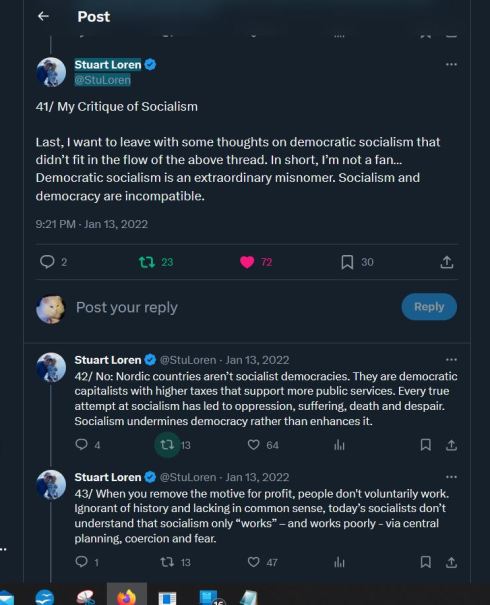
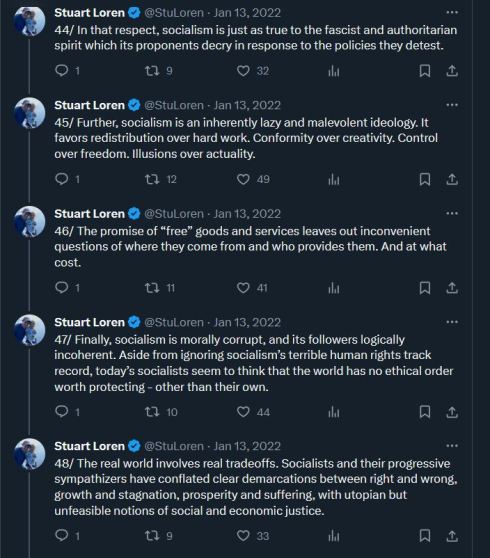
Karl Marx envisioned a socialist system where the state abolishes capitalism, seizing the means of production to allocate resources according to collective needs. In this framework, central planners would determine what goods to produce, theoretically eliminating the profit motive and class disparities. Marx’s theory assumed that a planned economy could efficiently coordinate production and distribution without the market mechanisms inherent in capitalism.
Ludwig von Mises, in his groundbreaking 1920 essay Economic Calculation in the Socialist Commonwealth, challenged this vision by exposing a fundamental flaw: the absence of market prices renders rational economic planning impossible. Mises argued that prices, generated through supply and demand in a free market, convey critical information about scarcity, consumer preferences, and production costs. Without these prices, central planners lack a mechanism to assess the relative value of resources or to make informed decisions about what to produce, in what quantities, or at what cost. For example, without price signals, planners cannot determine whether steel is better allocated to building bridges or manufacturing tools, leading to inefficiency and waste.
Mises’ critique directly refutes Marx’s socialist framework by demonstrating that the absence of market prices dismantles the logic of economic coordination. He did not argue that socialism was immoral but that it was impractical, as it lacked a functional method for economic calculation. Without prices to guide resource allocation, a socialist economy cannot rationally prioritize production or evaluate trade-offs, resulting in chaos rather than a coherent economy. Mises’ insight underscores the indispensability of market mechanisms, positioning capitalism as a logical necessity for economic order.

Central planning too limited.
Karl Marx’s vision of socialism relied on central planners to orchestrate production and distribution, assuming they could gather and process the necessary information to meet societal needs. In Marx’s framework, a centralized authority would replace the decentralized market, directing resources to eliminate inefficiencies and inequities inherent in capitalism. This approach presumed that planners could acquire comprehensive knowledge of economic conditions to allocate resources effectively.
F.A. Hayek, in his seminal works such as The Use of Knowledge in Society (1945), refuted this by arguing that no central planner could possibly possess the dispersed, tacit knowledge held by individuals across society. Hayek emphasized that prices in a market economy are not mere numbers but dynamic signals that aggregate and communicate localized information about needs, preferences, and resource scarcities. For instance, a rising price for lumber signals increased demand or limited supply, prompting producers and consumers to adjust without any single authority needing to understand the full context of every transaction.
Hayek’s insight directly challenges Marx’s centralized model by demonstrating that the spontaneous coordination enabled by market prices surpasses the capabilities of any planner, expert, or algorithm. Prices encapsulate fragmented knowledge—such as a farmer’s awareness of crop yields or a manufacturer’s grasp of production costs—that no central authority could fully replicate. By enabling individuals to act on this dispersed information, markets achieve efficient resource allocation without requiring a comprehensive plan, rendering Marx’s vision of centralized control not only impractical but fundamentally incapable of matching the adaptive complexity of a price-driven economy.

An Alternate Theory Worker Exploitation under Capitalism.
Karl Marx argued that capitalists exploit workers by appropriating the surplus value generated by labor, framing profit as the result of systemic theft within the production process. In Marx’s view, capitalists accumulate wealth by paying workers less than the value their labor produces, perpetuating class conflict and portraying profit as inherently unjust. This perspective casts capitalists as parasitic, extracting wealth without contributing equivalent value to the economic system.
Eugen Böhm-Bawerk, a prominent Austrian economist, countered this narrative with his theory of time preference, articulated in works like Capital and Interest (1884). He posited that individuals naturally prefer present goods over future goods, meaning workers value immediate wages over delayed returns. Capitalists, by contrast, provide those wages upfront, investing capital and bearing the uncertainty of future profits. This exchange is not exploitative but a mutually beneficial arrangement where workers receive immediate income, while capitalists assume the risk and delay gratification, hoping their investments yield returns over time.
Böhm-Bawerk’s framework refutes Marx by redefining profit as compensation for time, risk, and strategic planning, rather than exploitation. Capitalists undertake the burden of forgoing present consumption, managing resources, and navigating market uncertainties. Their profit, when realized, reflects the value of their foresight and willingness to wait, not the theft of labor’s output. This perspective shifts the economic narrative from class struggle to a cooperative process where both workers and capitalists fulfill distinct, voluntary roles based on their preferences and economic realities.

Marx’s Theory of Value Refuted.
Karl Marx posited that the value of a commodity is derived from the labor expended in its production, anchoring value in the objective measure of labor time. This labor theory of value underpinned Marx’s economic framework, tying value to the collective effort of workers and framing economic systems as driven by class dynamics and exploitation. Marx’s perspective suggested that the intrinsic worth of goods is measurable through the labor they embody, irrespective of individual perceptions or desires.
In contrast, Carl Menger, a founder of the Austrian School, argued in his seminal work, Principles of Economics (1871), that value originates from individual subjective preferences, not labor. Menger’s theory of subjective value asserts that the worth of a good is determined by the utility it provides to an individual, which varies based on personal needs, circumstances, and scarcity. For instance, a violin holds immense value to a musician who cherishes its utility, yet it may be worthless to someone indifferent to music. Similarly, food is far more valuable to a starving person than to someone satiated, illustrating that value is not fixed but contingent on human desires and context.
Menger’s emphasis on subjective valuation directly refutes Marx’s labor-centric model by demonstrating that labor alone does not dictate a good’s worth. Instead, value emerges from the interplay of individual needs and the marginal utility of goods—how much additional satisfaction a person gains from consuming one more unit. This insight shifts the focus from collective labor to individual choice, undermining Marx’s framework by highlighting that economic value is a dynamic, human-driven phenomenon, shaped by personal priorities rather than an objective labor metric.
Environmental, Social, and Governance (ESG) frameworks in America have drawn scrutiny for parallels to Maoist ideology, particularly in their emphasis on collectivism, ideological conformity, and the reshaping of societal norms. Maoism, rooted in Marxist-Leninist principles, sought to dismantle traditional structures—family, religion, and individual liberties—through mass mobilization and centralized control, often under the guise of egalitarianism. Similarly, ESG proponents push for a unified moral framework where corporations and individuals are judged not by profit or merit but by adherence to progressive ideals like climate justice, equity, and systemic overhaul. Critics argue this mirrors Mao’s Cultural Revolution, which weaponized social pressure and reeducation to enforce compliance, suggesting ESG acts as a soft authoritarian tool to erode personal agency and economic freedom in favor of a homogenized, state-aligned culture.
In practice, ESG’s Maoist undertones emerge through its mechanisms of enforcement and cultural disruption. Companies are scored and ranked by ESG metrics, often dictated by unelected bodies like rating agencies or activist investors, reminiscent of Mao’s cadre-led purges of dissenters. Non-compliant businesses face boycotts, divestment, or public shaming—tactics akin to Maoist struggle sessions—while employees are subjected to diversity training and sustainability pledges that echo Mao’s thought reform campaigns. This creates a climate where profit motives are subordinated to ideological loyalty, fracturing the traditional American ethos of individualism and free enterprise. By prioritizing stakeholder consensus over shareholder value, ESG shifts power from market dynamics to a quasi-collective authority, dissolving the cultural bedrock of competition and innovation that once defined the U.S. economy.
The cultural dissolution accelerates as ESG intertwines with political polarization, amplifying its revolutionary zeal. In America, it’s become a battleground: progressives champion it as a moral imperative, while conservatives decry it as “woke capitalism” undermining national identity. This echoes Mao’s strategy of pitting classes against each other to destabilize and rebuild society. ESG’s focus on dismantling “systemic inequities” and rewriting corporate purpose challenges foundational American values—meritocracy, liberty, and limited government—replacing them with a narrative of perpetual grievance and centralized oversight. Critics contend this slow erosion, masked as virtue, mirrors Mao’s long-term goal of cultural erasure, leaving a society unmoored from its historical anchors and vulnerable to control by an elite vanguard, whether corporate or governmental.

It is a lose lose situation for both countries. Let’s instead go for negotiations and understand, hopefully, we have shared goals.
Economic Impact:
-
Protection of Domestic Industry: Counter-tariffs could protect Canadian industries from the adverse effects of U.S. tariffs by making American goods more expensive in Canada, potentially boosting demand for Canadian products. However, this could harm businesses that rely on U.S. imports for inputs or components.
-
Reciprocal Damage: Tariffs are essentially taxes on imports, which can lead to higher prices for consumers and businesses in both countries. The highly integrated nature of the Canadian and U.S. economies means that retaliatory tariffs might hurt Canadian sectors like automotive, energy, agriculture, and manufacturing, which are deeply tied to U.S. supply chains.
-
GDP and Employment: Studies and analyses suggest that both countries could see a drop in GDP and job losses if tariffs escalate. For instance, reports indicate that a 25% tariff could shrink Canada’s GDP by significant margins, affecting employment and economic growth.
Political Considerations:
-
Negotiation Leverage: Some see counter-tariffs as a necessary bargaining chip in negotiations to avoid or reduce U.S. tariffs. The threat of retaliatory measures might persuade the U.S. to reconsider its tariff policies to prevent economic harm to itself.
-
Diplomatic Relations: Imposing counter-tariffs could strain already tense Canada-U.S. relations, especially under a U.S. administration that has shown a willingness to use tariffs as a tool for policy enforcement. This could affect broader diplomatic and security cooperation.
Public and Business Sentiment:
-
Public Opinion: There’s significant concern among Canadians about the economic repercussions of a trade war. Public pressure might influence government policy, pushing for either protective measures or diplomatic solutions.
-
Business Response: Many Canadian businesses, particularly those in sectors with high U.S. integration, might prefer negotiations over tariffs due to the potential for supply chain disruptions.
Strategic Considerations:
-
Long-term Strategy: Canada might consider diversifying its trade partners to reduce dependency on the U.S. market, but this is a long-term strategy that doesn’t address immediate threats posed by tariffs.
-
Legal Framework: The Canada-United States-Mexico Agreement (USMCA) provides mechanisms for dispute resolution which could be utilized instead of immediate tariff impositions, although these processes might be slow.
Conclusion:
-
Given the economic interdependence, the potential for mutual economic harm, and the political dynamics, there’s no straightforward answer. Canada’s response might involve a mix of strategies:
-
Negotiation: First, attempt to negotiate with the U.S. to avoid tariffs or secure exemptions.
-
Targeted Retaliation: If necessary, apply counter-tariffs selectively to protect critical industries without escalating into a full-blown trade war.
-
Diplomatic Channels: Use diplomatic channels to resolve disputes, possibly through the mechanisms provided by the USMCA.
-
In summary, while counter-tariffs could be a tool for negotiation and protection, the decision must weigh the potential economic fallout against the strategic benefits. Canada should proceed with caution, considering both immediate and long-term impacts on its economy, businesses, and relationship with the U.S.











 bleatmop
 Mystro
 The Arbourist


 Dead Wild Roses
Your opinions…