
You are currently browsing the category archive for the ‘Education’ category.
Peter Boghossian’s conversation with Jesús, a prominent cultural commentator with a significant YouTube presence in Taiwan, delves into the geopolitical dynamics between Taiwan and China, particularly focusing on the strategic importance of Taiwan in global superconductor production. Here’s a summary:
Geopolitical Dynamics: The discussion centers on the critical role Taiwan plays due to its strategic location and its dominance in producing advanced semiconductors. Taiwan is noted for manufacturing around 90% of the world’s advanced semiconductors, making it a linchpin in global technology supply chains.
Taiwan’s Defense and Security: The conversation likely touches on the resilience of Taiwan’s defense against potential Chinese aggression, the implications of a Chinese invasion, and why this scenario should concern not only Taiwan but also the United States and other Western nations. This includes discussions on how Taiwan’s defense mechanisms are vital for maintaining its sovereignty and the stability of the global tech economy.
Cultural and Identity Politics: Beyond just the economic and military aspects, the talk with Jesús might also explore Taiwan’s cultural identity, the impact of Chinese sanctions, and the importance of preserving Taiwanese culture amidst rising immigration and geopolitical tensions. This could involve discussions on how Taiwan’s cultural narrative is intertwined with its political stance against China.
Superconductor Production: The conversation highlights Taiwan’s role in superconductor production, which is central to modern technology, including AI, drones, and other high-tech applications. The control over this technology gives Taiwan significant leverage but also makes it a focal point for international tensions, as any disruption in this supply chain could have global repercussions.
International Implications: There’s an emphasis on how the dynamics between Taiwan and China extend beyond current political leaders, touching on long-term strategic interests, economic sanctions, and the global race in AI and technological advancement. The discussion might explore how these elements affect not just regional but global geopolitics.
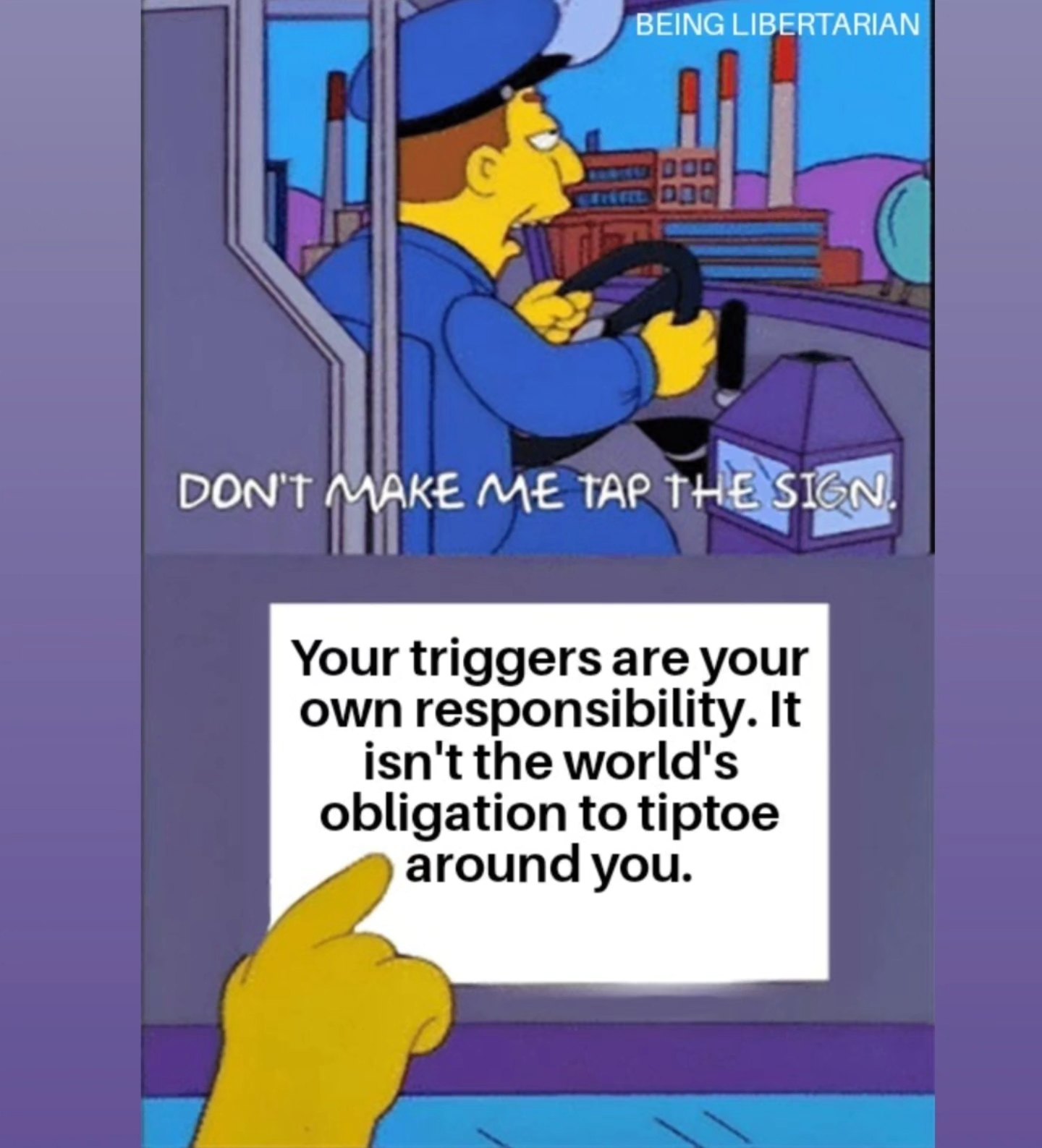
We need to be responsible for ourselves and how we process the world.
When addressing the topic of “woke Marxism” in a public forum, here are three important considerations to keep in mind:
Understand the Terminology and Concepts.
Define Terms Clearly: Terms like “woke” and “Marxism” can have different interpretations. “Woke” generally refers to being alert to racial prejudice and discrimination, while “Marxism” is an economic and sociopolitical worldview based on the theories of Karl Marx, focusing on class struggle and advocating for a classless society. Understanding how these concepts intersect or are used in contemporary discourse is crucial.
Contextual Knowledge: Recognize that these terms might be used in ways that differ from their original meanings, often in political rhetoric to criticize certain social justice movements or policies. Being able to argue or discuss based on a factual understanding rather than sensationalized interpretations can make your points more compelling.
Engage Constructively and Respectfully.
Avoid Ad Hominem Attacks: Debates can quickly devolve into personal attacks rather than substantive discussion. Focus on ideas, policies, or arguments rather than attacking individuals or groups.
Promote Dialogue: Encourage an environment where different perspectives can be shared. This means listening actively to others, acknowledging valid points, and responding with well-reasoned arguments rather than with dismissal or ridicule.
Evidence-Based Argumentation.
Use Credible Sources: When making claims about “woke Marxism,” support your arguments with evidence from reliable sources. This could include academic studies, policy analyses, or well-documented examples. Avoid spreading misinformation or relying on anecdotal evidence alone.
Critique Policies, Not People: If you are critiquing policies or ideas associated with what you term “woke Marxism,” focus on the practical implications, feasibility, or unintended consequences of these policies. This approach helps in maintaining a level of discourse that is about ideas rather than personalities.
When participating in public forums, especially on contentious topics, maintaining a tone that is both respectful and informed can lead to more productive discussions. Remember, the goal should be to engage in a way that might enlighten or persuade, rather than simply to win an argument or to silence opposition.
Dear Youthful Individual,
I want to share with you something that has profoundly influenced my understanding of life: Stoicism. It’s not just an ancient philosophy; it’s a practical guide for navigating the complexities of modern life, particularly during those turbulent teenage years. At its core, Stoicism teaches us about the art of living well by focusing on what we can control and learning to accept what we cannot. It’s about managing our responses to life’s ups and downs with wisdom, courage, and temperance. Imagine if you could master your emotions rather than letting them master you. This philosophy isn’t about suppressing your feelings but understanding them, so you can respond to life’s challenges with clarity and purpose.
One of the key teachings of Stoicism is the concept of “amor fati” or love of fate. This doesn’t mean you should love everything that happens to you, especially the bad stuff, but rather, it’s about loving the journey, embracing all experiences as opportunities for growth. When you face difficulties, whether it’s a bad grade, a falling out with a friend, or just the everyday pressures of teenage life, Stoicism encourages you to see these not as misfortunes but as chances to learn resilience. Marcus Aurelius, one of the prominent Stoics, often reminded himself to accept the nature of events, focusing on his response rather than the event itself. This mindset can transform how you view your life, turning obstacles into stepping stones.
Lastly, Stoicism advocates for living in harmony with nature, which means living according to reason and virtue. It’s about being honest with yourself, practicing self-discipline, and cultivating a sense of justice in your interactions. In the world of social media and peer pressure, this philosophy offers a grounding force, reminding you to seek internal validation over external approval. By embracing Stoicism, you’re not just preparing for a smooth sail through adolescence; you’re equipping yourself with lifelong tools for happiness and success. Remember, you’re the author of your life’s story, and Stoicism helps you write it with wisdom, integrity, and an unshakeable peace of mind.
With encouragement and belief in your journey,
The Arbourist
The notion of LGB/TQ+ ‘community’ is in itself a synthetic proposition. How do people who share mutually exclusive goals reasonably be part of the same “community”? LGB are about acceptance into society based on sexual attraction preferences – that is if you happen to like the same sex you should be able to pursue your life without facing discrimination for doing so. The TQ+ doesn’t believe in sex at at all, and are not about fitting into society – they are there to burn down the old society and reformat society’s rules and norms according to their ideology – aka – the entire transgender campaign that denies the reality of sex in humans and reifies the notion of mystical gender identity. The fetish driven men in dresses need to justify their paraphilia and thus children must also be transed and mutilated/sterilized in the name of gender ideology.
We must keep in mind that “queer” isn’t a identity you are. You can act queer and do queer things but queer is an identity without an essence – queer exists only in opposition to the norm and by definition is a political identity(one that seeks to destroy the current society).
Anyhow, here in the West the scales have been tipped far to long in the queer activists’s favour. People in the US (and hopefully soon in Canada) have rejected the activism and are now rolling back the damage done to society by self righteous activists who have been happily corroding society for years. The pendulum swinging back is causing some consternation in the LGB/TQ+ community.
Here is a notable ‘activist’ now blaming the human shields she used to advance her activism for the backlash she is responsible for.

This is a masterclass level response:

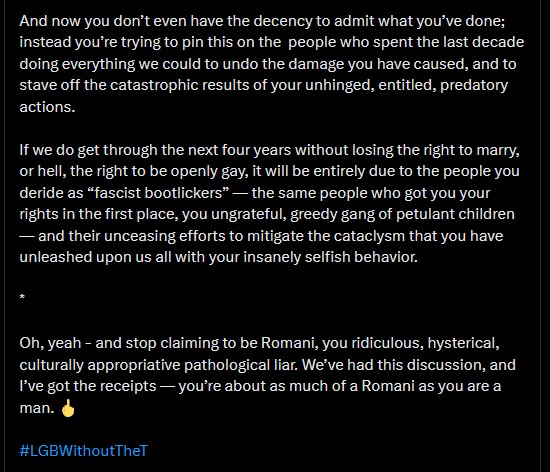
Hard to disagree with any of the points made. We should all be taking notes on how this happened as this is how activists work in the West – they get on the inside and corrupt institutions with their bullshit and then ruin the party for everyone involved.
This is like when you really *really* wanted Santa Claus to be real. You look for information to confirm your beliefs (the exact opposite of you like doing the corresponding to reality thing).

Of course, the non EKOS polls show a rather different story.

The take away for today: The easiest person to fool is yourself.
Let’s take a look at the three arguments and counter-arguments commonly used to when discussing Diversity policies within the framework of Diversity, Equity, and Inclusion (DEI):
Undermining Merit-Based Systems:
Explanation: Critics argue that diversity policies can lead to a focus on demographic representation over merit, potentially resulting in less qualified individuals being selected for positions. This perspective suggests that prioritizing diversity might mean overlooking the most competent candidates, thereby undermining the meritocratic principles that are supposed to drive organizational success and fairness.
Counterpoint: Proponents of DEI might argue that what’s often labeled as “merit” can be influenced by biases, where traditional metrics of merit do not account for systemic disadvantages some groups face. They propose that diversity initiatives aim to expand the pool of candidates, ensuring that merit is assessed within a broader, more equitable context.
Promoting Division and Resentment:
Explanation: There’s an argument that DEI policies can foster division by emphasizing differences rather than commonalities, leading to resentment among those who feel they are discriminated against or unfairly overlooked due to their demographic characteristics. This can create an “us vs. them” mentality, potentially fracturing team cohesion and morale.
Counterpoint: Supporters might counter that acknowledging and addressing differences is essential for true inclusion, promoting understanding rather than division. They argue that well-implemented DEI strategies educate, unite, and enrich workplace culture by celebrating diversity as a strength rather than a source of division.
Inefficiency and Reduced Performance:
Explanation: Some critics claim that diversity for its own sake can introduce inefficiencies. They suggest that integrating diverse perspectives might initially slow down decision-making processes due to the need for more discussion to reconcile differing viewpoints or cultural misunderstandings. This could be seen as a hindrance in fast-paced environments where quick, decisive action is valued.
Counterpoint: Advocates for diversity would argue that while there might be an initial adjustment period, the long-term benefits include more innovative solutions, better problem-solving, and resilience against groupthink. They cite studies showing that diverse teams can outperform homogeneous ones over time by leveraging a wider range of experiences and ideas.
These arguments are part of a broader, ongoing debate about the implementation and impact of DEI policies. Each point of view has its merits and criticisms, and the effectiveness of diversity policies can depend significantly on how they are executed within specific organizational contexts. The goal should be to critically assess both the challenges and benefits in pursuit of a balanced approach that truly enhances equity and inclusion.











 bleatmop
 Mystro


 Dead Wild Roses
Your opinions…