
You are currently browsing the category archive for the ‘History’ category.
I’ve summarized the article here.
In challenging the prevailing narrative of unmitigated harm in Canada’s residential schools, Michelle Stirling scrutinizes Phyllis Webstad’s story, the inspiration behind Orange Shirt Day. Webstad boarded at St. Joseph’s in 1973, a facility under federal oversight where she attended public school alongside local children, not a cloistered religious institution. Stirling points out the absence of Catholic nuns in daily operations by that time, with Indigenous staff predominant, and questions the portrayal of familial abandonment on the Dog Creek Reserve amid documented violence, suggesting her placement served as a safeguard rather than an act of cultural erasure.
Vivian Ketchum’s recollection of being removed at age five to the Presbyterian-run Cecilia Jeffrey school is similarly contextualized as a welfare intervention, particularly against the backdrop of tuberculosis ravaging her community, which left her with lung scars. Stirling dismantles media distortions, such as those in “The Secret Path,” which erroneously inject Catholic elements into a Presbyterian setting, while citing Robert MacBain’s compilation of affirmative student letters that refute widespread abuse claims and highlight the school’s role as a refuge from dire home conditions.
Stirling ultimately cautions against the pitfalls of relying on childhood memories in legal compensation processes, where leading questions can shape recollections, and contrasts dominant tales with positive accounts like Lena Paul’s depiction of the school as a haven from familial turmoil. By exposing fabrications in works like the “Sugarcane” documentary, the article advocates for a balanced historical lens that prioritizes verifiable facts over emotive victimhood, fostering genuine reconciliation free from manipulated animosity.
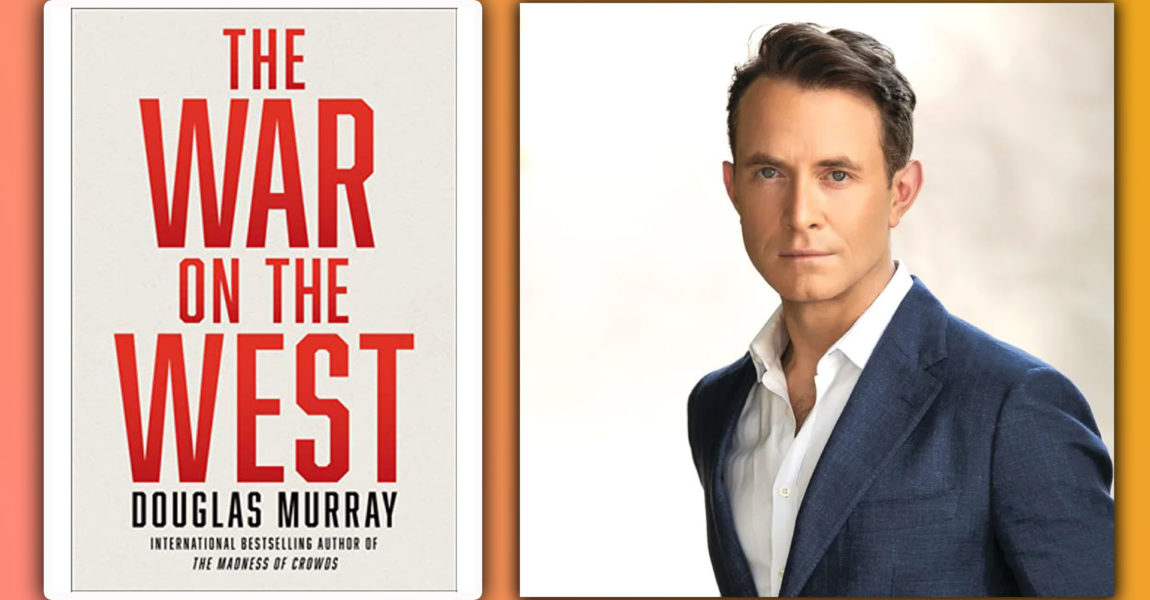
In an age that demands shame from the West, Douglas Murray deploys the ultimate counterstrike:
“I don’t especially think of myself as being white and don’t particularly want to be cornered into thinking in such terms. But if you are going to corner me, then let me give you an answer to the best of my ability.
“The good things about being white include being born into a tradition that has given the world a disproportionate number, if not most, of the things that the world currently benefits from. The list of things that white people have done may include many bad things, as with all peoples. But the good things are not small in number. They include almost every medical advancement that the world now enjoys. They include almost every scientific advancement that the world now benefits from. No meaningful breakthrough in either of these areas has come for many centuries from anywhere in Africa or from any Native American tribe. No First Nation wisdom ever delivered a vaccine or a cure for cancer.
“White people founded most of the world’s oldest and longest-established educational institutions. They led the world in the invention and promotion of the written word. Almost alone among any peoples it was white people who—for good and for ill—took an interest in other cultures beyond their own, and not only learned from these cultures but revived some of them. Indeed, they have taken such an interest in other peoples that they have searched for lost and dead civilizations as well as living ones to understand what these lost peoples did, in an attempt to learn what they knew. This is not the case with most other peoples. No Aboriginal tribe helped make any advance in understanding the lost languages of the Indian subcontinent, Babylon, or ancient Egypt. The curiosity appears to have gone almost entirely one way. In historical terms, it seems to be as unusual as the self-reflection, the self-criticism, and indeed the search for self-improvement that marks out Western culture.
“White Western peoples happen to have also developed all the world’s most successful means of commerce, including the free flow of capital. This system of free market capitalism has lifted more than one billion people out of extreme poverty just in the twenty-first century thus far. It did not originate in Africa or China, although people in those places benefited from it. It originated in the West. So did numerous other things that make the lives of people around the world immeasurably better.
“It is Western people who developed the principle of representative government, of the people, by the people, for the people. It is the Western world that developed the principles and practice of political liberty, of freedom of thought and conscience, of freedom of speech and expression. It evolved the principles of what we now call ‘civil rights,’ rights that do not exist in much of the world, whether their peoples yearn for them or not. They were developed and are sustained in the West, which though it may often fail in its aspirations, nevertheless tends to them.
“All this is before you even get onto the cultural achievements that the West has gifted the world. The Mathura sculptures excavated at Jamalpur Tila are works of exceptional refinement, but no sculptor ever surpassed Bernini or Michelangelo. Baghdad in the eighth century produced scholars of note, but no one ever produced another Leonardo da Vinci. There have been artistic flourishings around the world, but none so intense or productive as that which emerged around just a few square miles of Florence from the fourteenth century onward. Of course, there have been great music and culture produced from many civilizations, but it is the music of the West as well as its philosophy, art, literature, poetry, and drama that have reached such heights that the world wants to participate in them. Outside China, Chinese culture is a matter for scholars and aficionados of Chinese culture. Whereas the culture created by white people in the West belongs to the world, and a disproportionate swath of the world wants to be a part of it.
“When you ask what the West has produced, I am reminded of the groups of professors assigned to agree on what should be sent in a space pod into orbit in outer space to be discovered by another race, if any such there be. When it came to agreeing on what one musical piece might be sent to represent that part of human accomplishment one of the professors said, ‘Well, obviously, it will be Bach’s Mass in B Minor.’ ‘No,’ averred another. ‘To send the B Minor Mass would look like showing off.’ To talk about the history of Western accomplishments is to be put at great risk of showing off. Do we stay just with buildings, or cities, or laws, or great men and women? How do we restrict the list that we put up as a preliminary offer?
“The migrant ships across the Mediterranean go only in one direction—north. The people-smuggling gangs’ boats do not—halfway across the Mediterranean—meet white Europeans heading south, desperate to escape France, Spain, or Italy in order to enjoy the freedoms and opportunities of Africa. No significant number of people wishes to participate in life among the tribes of Africa or the Middle East. There is no mass movement of people wishing to live with the social norms of the Aboriginals or assimilate into the lifestyle of the Inuit, whether those groups would allow them in or not. Despite everything that is said against it, America is still the world’s number one destination for migrants worldwide. And the next most desirable countries for people wanting to move are Canada, Germany, France, Australia, and the United Kingdom. The West must have done something right for this to be the case.
“So if you ask me what is good about being white, what white people have brought to the world, or what white people might be proud of, this might constitute the mere beginnings of a list of accomplishments from which to start. And while we are at it, one final thing. This culture that it is now so fashionable to deprecate, and which people across the West have been encouraged and incentivized to deprecate, remains the only culture in the world that not only tolerates but encourages such a dialogue against itself. It is the only culture that actually rewards its critics. And there is one final oddity here worth noting. For the countries and cultures about which the worst things are now said are also the only countries demonstrably capable of producing the governing class unlike all of the others.
“It is not possible today for a non-Indian to rise to the top of Indian politics. If a white person moved to Bangladesh, they would not be able to become a cabinet minister. If a white Westerner moved to China, neither they nor the next generation of their family nor the one after that would be able to break through the layers of government and become supreme leader in due course. It is America that has twice elected a black president—the son of a father from Kenya. It is America whose current vice president is the daughter of immigrants from India and Jamaica. It is the cabinet of the United Kingdom that includes the children of immigrants from Kenya, Tanzania, Pakistan, Uganda, and Ghana and an immigrant who was born in India. The cabinets of countries across Africa and Asia do not reciprocate this diversity, but it is no matter. The West is happy to accept the benefits this brings, even if others are not.”
-Douglas Murray from the Conclusion of War on the West.

The poster’s quotation from Resmaa Menakem’s My Grandmother’s Hands—a work on “somatic abolitionism”—masquerades as profound insight while peddling a corrosive myth: that white supremacy originated as a deliberate “virus” engineered in 1691 by the Virginia Assembly and now lives in every human body like an inescapable plague. This is not scholarship; it is narrative alchemy, transmuting concrete historical injustices into a metaphysical pathology that demands perpetual atonement from those deemed its carriers.
The verifiable record tells a different story. In 1691, the Virginia General Assembly did indeed enact a statute prohibiting interracial marriage and prescribing banishment for violators, declaring such unions “always to be held and accounted odious.” This and earlier laws—like the 1662 act establishing that a child’s enslaved status followed the condition of the mother—were instruments of economic control designed to stabilize a plantation system dependent on enslaved labor. They reflected cruelty and racial hierarchy, but to describe the Assembly as a “laboratory” that “created a virus” is to abandon historical analysis for political mythmaking.
Menakem’s metaphor extends beyond history into biological moralism. He claims the “virus of white-body supremacy” infects all people—Black, white, and otherwise—but insists that “white bodies” were its original vector. In doing so, his language transforms a moral failing into a physical contamination, pathologizing not actions or institutions but entire human beings. This rhetoric does not enlighten; it indicts an entire lineage for ancestral crimes, regardless of individual conscience or conduct.
The psychological consequence is predictable: self-loathing disguised as virtue. By teaching that “white bodies” are inherently supremacist, this ideology demands that people view their very physiology and heritage as polluted. It secularizes the ancient idea of inherited guilt, substituting ritual “somatic abolition” for redemption. The irony is tragic: the same civilization Menakem condemns also produced the philosophical and political revolutions—the Enlightenment, abolitionism, universal rights—that made slavery morally indefensible in the first place.
Finally, the metaphor corrodes civic trust. The Virginia Assembly, for all its failings, was also one of the earliest elected legislatures in the New World. To recast it as a “mad scientist’s lab” birthing a contagion of supremacy is to delegitimize the democratic experiment at its roots, suggesting that all institutions derived from it remain vectors of infection rather than imperfect vessels of self-correction and progress. Such thinking feeds cynicism, not justice, and erodes the moral foundations of the very equality it claims to seek.
Slavery and racial hierarchy were evils of human design, not biological inevitabilities. We honor truth by condemning those evils as moral and political wrongs—without collapsing into the superstition that guilt resides in the body or that redemption requires permanent contrition. The only real contagion here is the idea that identity determines virtue.
References
- Menakem, Resmaa. My Grandmother’s Hands: Racialized Trauma and the Pathway to Mending Our Hearts and Bodies. Las Vegas: Central Recovery Press, 2017.
— Source of the “virus of white-body supremacy” metaphor and “laboratory of the Virginia Assembly” phrasing. - Hening, William Waller (ed.). The Statutes at Large; Being a Collection of All the Laws of Virginia, from the First Session of the Legislature in the Year 1619. Vol. 3. New York: R. & W. & G. Bartow, 1823.
— Contains the 1662 and 1691 acts (“Act XII” of 1662 and “Act XVI” of 1691) establishing hereditary slavery and banning interracial marriage. - Morgan, Edmund S. American Slavery, American Freedom: The Ordeal of Colonial Virginia. New York: W.W. Norton & Co., 1975.
— Authoritative analysis of how race-based slavery evolved in colonial Virginia as a means of stabilizing class hierarchies. - Davis, David Brion. The Problem of Slavery in Western Culture. Ithaca: Cornell University Press, 1966.
— Foundational work tracing slavery’s intellectual and moral contexts in Western thought. - Berlin, Ira. Many Thousands Gone: The First Two Centuries of Slavery in North America. Cambridge: Harvard University Press, 1998.
— Historical survey of the transformation from indentured servitude to race-based chattel slavery. - Bailyn, Bernard. The Ideological Origins of the American Revolution. Cambridge: Harvard University Press, 1967.
— Explores the moral and political inheritance of the Virginia Assembly and the paradox of liberty coexisting with slavery. - Popper, Karl. The Open Society and Its Enemies. Princeton: Princeton University Press, 1945.
— Classic defense of open inquiry and individual moral responsibility against collectivist and totalizing ideologies.
Hannah Arendt’s portrait of Adolf Eichmann as a thoughtless bureaucrat lingers as a caution against evil’s mundane guise. Christopher Browning’s Ordinary Men extends this indictment, trading Eichmann’s desk for the blood-soaked forests of Poland, where Reserve Police Battalion 101—500 Hamburg ‘everymen’—executed 39,000 Jews and deported 44,000 more to Treblinka in 1942-43. These were no zealots: middle-aged draftees, family men untouched by Nazi fervor, yet they pulled triggers with grim efficiency. Browning’s forensic reconstruction from postwar trials complements Arendt, illuminating how conformity, not conviction, forges complicity. In an age of ideological silos, their story warns that thoughtlessness scales from individual abdication to collective carnage.
Arendt diagnosed Eichmann’s evil as a failure to think—to judge actions against universal humanity—yielding obedience’s autopilot. Browning operationalizes this in RPB 101’s crucible. On July 13, 1942, in Józefów, Major Trapp’s order to slaughter 1,800 innocents included an opt-out: a dozen stepped forward, fathers haunted by their own children’s faces. The rest? They fired, vomited, and fired again, bound not by hatred but by the group’s inexorable pull. Peer pressure proved the deadliest weapon: to demur meant isolation, whispers of cowardice, or worse—standing alone amid the splatter of brains and pleas. As Browning dissects, “binding factors” like deference to authority and aversion to shame radicalized the reluctant. Initial nausea faded into routine; Jews devolved from neighbors to “bandits,” their deaths logged as quotas met. This mirrors Arendt’s “banality”: not demonic intent, but the quiet erosion of moral agency, where thinking cedes to fitting in.
Browning’s men prefigure Arendt’s broader fear—that totalitarianism thrives on unreflective masses. Unlike Eichmann’s abstracted ledgers, these policemen confronted the visceral: a mother’s wail, a child’s gaze. Yet empathy atrophied through diffusion—blame smeared across the chain of command—and progressive desensitization. A few resisted, sabotaging hunts or feigning illness, their conscience a fragile bulwark against the tide. Most drifted, careerism and alcohol dulling the sting. Browning invokes social experiments like Milgram’s obedience studies, positing such dynamics as human universals, not German pathologies—a riposte to claims of cultural exceptionalism.
This convergence sharpens lessons for our fractured present, where critical constructivism and woke Marxism summon conformity’s specter. Critical constructivism, an epistemological framework that treats knowledge as socially mediated and entwined with power—rejecting empirical objectivity for interpretive lenses shaped by culture and positionality—echoes RPB 101’s euphemisms, recasting dissent as dominance while evidence bows to constructed narratives. Proponents propagate without pause, their deference to “lived experience” a peer-enforced gag on Socratic probe. Woke Marxism, a repackaged Marxism applying class struggle to identity oppressions—framing queer theory as “gender Marxism” and intersectionality as “identity Marxism”—amplifies this through performative allegiance. Its rituals—DEI oaths, cancellation tribunals—demand uncritical adherence, sidelining judgment for allegiance, much as Trapp’s men traded qualms for camaraderie. Ordinary adherents comply, not from malice, but inertia: promotions hinge on nods, ostracism on silence.
Arendt and Browning converge on the antidote: reclaim thinking as defiant praxis. In algorithm-curated echo chambers, where ideologies brook no fracture, epistemic humility—questioning, pluralizing, judging—arrests the slide. Thoughtlessness is choice, not fate; conformity’s shadow lifts only through vigilant reflection. Honor the dead of Józefów not with memorials alone, but by fortifying the ordinary against atrocity’s call. Goodness demands depth; evil preys on the shallow. In choosing to think, we dismantle the battalion within.

References
Arendt, H. (1963). Eichmann in Jerusalem: A Report on the Banality of Evil. New York: Viking Press. (Primary source for the concept of the banality of evil and its philosophical underpinnings.)
Browning, C. R. (1992). Ordinary Men: Reserve Police Battalion 101 and the Final Solution in Poland. New York: HarperCollins. (Core historical analysis based on postwar judicial testimonies, detailing the battalion’s actions and psychological dynamics.)
Dead Wild Roses. (2025, August 25). “Unraveling the Roots—How ‘Woke’ Emerges from Social Construction.” https://deadwildroses.com/2025/08/25/unraveling-the-roots-how-woke-emerges-from-social-construction/. (Defines critical constructivism via Kincheloe’s assumptions, linking it to woke epistemology and power-mediated knowledge.)
Dead Wild Roses. (2022, April 6). “Queer Theory is Gender Marxism – James Lindsay.” https://deadwildroses.com/2022/04/06/20651/. (Critiques woke Marxism as repackaged identity-based Marxism, drawing on Lindsay’s analysis of queer theory and intersectionality.)
Goldhagen, D. J. (1996). Hitler’s Willing Executioners: Ordinary Germans and the Holocaust. New York: Alfred A. Knopf. (Contrasting thesis on German antisemitism, referenced by Browning to highlight universal rather than cultural explanations.)
Hilberg, R. (1961). The Destruction of the European Jews. Chicago: Quadrangle Books. (Foundational Holocaust scholarship on the “short, intense wave of mass murder” in 1942, informing Browning’s timeline.)
Milgram, S. (1963). “Behavioral Study of Obedience.” Journal of Abnormal and Social Psychology, 67(4), 371–378. https://doi.org/10.1037/h0040525. (Seminal experiment on authority compliance, invoked by Browning to explain diffusion of responsibility in RPB 101.)
Trunk, I. (1972). Judenrat: The Jewish Councils in Eastern Europe Under Nazi Occupation. New York: Macmillan. (Contextual background on Jewish councils’ coerced roles, paralleling themes of complicity under duress.)
Hannah Arendt’s Eichmann in Jerusalem: A Report on the Banality of Evil remains one of the twentieth century’s most incisive dissections of moral failure. Published in 1963, the book emerged from Arendt’s firsthand reporting on the 1961 trial of Adolf Eichmann in Jerusalem, a mid-level Nazi bureaucrat whose role in orchestrating the deportation of millions of Jews to death camps defined the Holocaust’s logistical horror. Expectations ran high for a portrait of unalloyed monstrosity, yet Arendt delivered something far more unsettling: a portrait of profound ordinariness. Eichmann was no ideological zealot or sadistic fiend, but a careerist adrift in clichés and administrative jargon, driven by ambition and an unswerving commitment to hierarchy. From this unremarkable figure, Arendt forged her enduring concept of the banality of evil, a framework that exposes how systemic atrocities arise not from demonic intent but from the quiet abdication of critical thought.
The Trial That Shattered Expectations
Arendt arrived in Jerusalem as a correspondent for The New Yorker, tasked with chronicling the prosecution of Eichmann, the architect of the Nazis’ “Final Solution” in practice if not in origin. What she witnessed defied the trial’s dramatic staging. Eichmann, perched in his glass booth, projected not menace but mediocrity. He droned on in a flat, bureaucratic patois, insisting his actions stemmed from dutiful obedience rather than personal malice. “I never killed a Jew,” he protested, as if the euphemism absolved the machinery he oiled. This was no Iago or Macbeth, but a joiner par excellence: shallow, conformist, and utterly unable to grasp the human weight of his deeds. Arendt’s revulsion crystallized mid-trial, in her notebooks, where she first sketched the phrase that would redefine her legacy. The banality of evil was born not from Eichmann’s depravity, but from his incapacity for reflection—a thoughtlessness that rendered him complicit in genocide without the depth to comprehend it.
Unpacking the Banality: From Demonic to Mundane
At its core, the banality of evil upends the romanticized view of wickedness as inherently profound or radical. Evil, Arendt contended, often manifests as banal: the work of unimaginative souls who drift through conformity, failing to interrogate their roles in larger systems. Eichmann exemplified this through his linguistic sleight of hand. He evaded the raw truth of extermination, speaking instead of “transportations” and “processing,” terms that sanitized slaughter into spreadsheet entries. Hatred played little part; obedience, careerism, and social inertia sufficed. The terror lay in his normalcy. As Arendt observed, evil flourishes not among isolated monsters but in societies where individuals relinquish moral judgment to rules, authorities, or routines. This banality, she later clarified, arises from an active refusal to exercise judgment, transforming ordinary people into cogs of catastrophe.
Arendt wove this insight into her broader philosophical tapestry, where thinking emerges as the essential moral safeguard. In the Socratic tradition, genuine thought demands we question the rightness of our actions, bridging the gap between knowledge and ethics. Eichmann’s failure was not intellectual deficiency alone, but a willful suspension of this faculty—substituting slogans and protocols for scrutiny. She identified thoughtlessness as totalitarianism’s hallmark, a regime that trains citizens to obey without asking why, eroding the pluralistic dialogue vital to human freedom. Against this, Arendt posited “natality,” the human capacity for birth and renewal, as a counterforce: each new beginning compels us to initiate thought, disrupting entrenched banalities.
The Firestorm of Controversy
Arendt’s conclusions ignited immediate backlash. Critics, including Jewish intellectuals like Gershom Scholem, accused her of exonerating Eichmann and scapegoating victims by critiquing the Jewish councils’ coerced cooperation with Nazi demands. Her dispassionate tone struck many as callous, diluting the Holocaust’s singularity into a lesson in human frailty. Yet Arendt sought neither absolution nor minimization; her aim was diagnostic. Evil in bureaucratic modernity, she argued, stems from collective complicity, not just from fanatics. The ordinary enablers—those who obey without question—sustain the system as surely as the architects. This polemic endures, with debates persisting over whether Arendt undervalued antisemitism’s visceral role, but her thesis has proven resilient, outlasting the initial fury.
Philosophical Stakes: Redefining Moral Agency
Arendt’s innovation lies in relocating moral responsibility from sentiment to cognition. Agency begins not with feeling but with thought: the deliberate act of judging actions against universal principles. This aligns her work with deeper epistemic concerns, where unexamined beliefs pave the way for ethical collapse. Without the courage to probe “Is this true? Is this right?”, reasoning devolves into rote compliance. The banality of evil thus warns of disengagement in any apparatus—state, corporation, or ideology—where “just following orders” masks profound harm. In an age of institutional sprawl, her call to vigilant judgment remains a bulwark against the mindless perpetuation of injustice.
Lessons for Our Fractured Age: Thoughtlessness in Ideological Currents
Arendt’s framework offers stark lessons amid the ascendance of critical social constructivism, woke Marxism, and gender ideology—movements that, in their zealous conformity, risk replicating the very thoughtlessness she decried. Critical social constructivism, with its insistence that reality bends to narrative power, echoes Eichmann’s euphemistic detachment: truths are “constructed” not discovered, fostering a relativism where evidence yields to doctrinal fiat. Proponents, often ensconced in academic silos, propagate this without interrogating its epistemic costs, much as Arendt saw totalitarianism erode pluralistic inquiry. The result? A moral landscape where dissent is pathologized as “harm,” inverting Socratic dialogue into inquisitorial purity tests.
Woke Marxism, blending identity politics with class warfare rhetoric, amplifies this banality through performative allegiance. What begins as equity advocacy devolves into bureaucratic rituals—DEI mandates, cancel campaigns—that demand uncritical adherence, sidelining the reflective judgment Arendt deemed essential. Critics from leftist traditions note how this mirrors the “administrative massacres” she analyzed, where ideological slogans supplant ethical scrutiny, enabling everyday cruelties under the guise of progress. Ordinary adherents, like Eichmann’s clerks, comply not from malice but from careerist inertia, blind to the dehumanization they abet.
Gender ideology presents perhaps the most poignant parallel, transforming biological verities into fluid “affirmations” via sanitized language that obscures irreversible interventions. Global market projections for sex reassignment surgeries, valued at $3.13 billion in 2025, anticipate reaching $5.21 billion by 2030, underscoring this commodified banality: procedures framed as “care” evade the long-term harms to minors, much as Nazi logistics masked extermination. Voices like J.K. Rowling invoke Arendt directly, highlighting how euphemisms prevent equating these acts with “normal” knowledge of human development. Shallow conformity here—fueled by fear of ostracism—propagates misogynistic erosions of women’s spaces and youth safeguards, all without the depth to confront consequences.
Arendt’s antidote is uncompromising: reclaim thinking as moral praxis. In our screen-lit caves, where algorithms curate consensus and ideologies brook no doubt, we must cultivate epistemic humility—the willingness to question, to pluralize, to judge anew. Only thus can we arrest banality’s creep, ensuring that goodness, radical in its depth, prevails over evil’s empty routine. Thoughtlessness is not fate; it is choice. And in choosing reflection, we honor the dead by fortifying the living against their shadows.

References
Arendt, H. (1963). Eichmann in Jerusalem: A Report on the Banality of Evil. New York: Viking Press.
Arendt, H. (1958). The Human Condition. Chicago: University of Chicago Press. (For concepts of natality and action.)
Berkowitz, R. (2013). “The Banality of Hannah Arendt.” The New York Review of Books, June 6. (On ongoing debates of her thesis.)
Mordor Intelligence. (2024). Sex Reassignment Surgery Market Size, Trends, Outlook 2025–2030. Retrieved October 5, 2025, from https://www.mordorintelligence.com/industry-reports/sex-reassignment-surgery-market.
Rowling, J. K. [@jk_rowling]. (2024, December 28). “This astounding paper reminds me of Hannah Arendt’s The Banality of Evil…” [Post]. X. https://x.com/jk_rowling/status/1873048335193653387.
Scholem, G. (1964). “Reflections on Eichmann: The Trial of the Historian.” Encounter, 23(3), 25–31. (Open letter critiquing Arendt’s portrayal.)
Villa, D. (1996). Arendt and Heidegger: The Fate of the Political. Princeton: Princeton University Press. (For connections to Socratic thinking and totalitarianism.)
When political violence erupts, it often looks random — a lone extremist, a protest that gets out of hand, or a clash between two angry groups. But much of what we’re seeing today, in both the United States and Canada, is not random at all. It is part of a deliberate strategy that activists call dialectical warfare — and it is tearing at the heart of our democratic societies.
The assassination of Charlie Kirk and the furious conservative backlash that followed are not isolated events. They are part of a larger spiral of violence and reaction, one that radicals hope will end with the collapse of our current system. To understand how, we need to unpack an old idea: the dialectic.
What is the Dialectic?
The word “dialectic” comes from philosophy, specifically the German thinker Georg Wilhelm Friedrich Hegel in the early 1800s. At its simplest, the dialectic is a way of describing how history moves forward through conflict.
- Thesis: the current system or status quo.
- Antithesis: the force that challenges it.
- Synthesis: a new system that emerges after the clash.
For Hegel, this was a way of understanding history as a story of progress. Marx later took this idea and made it the foundation of his revolutionary theory. For him, history was about class struggle: workers against capitalists. Capitalism, he argued, would eventually collapse under its contradictions and give way to communism.
The key point is this: conflict isn’t a bug in the system — it’s the engine of history.
From Philosophy to Political Activism
Fast forward to today. Many left-wing activists, consciously or not, operate with a dialectical mindset. They believe that society advances through conflict and breakdown, not peaceful debate.
That means chaos, division, and even violence can be seen as useful. If enough conflict is stirred up, the system will be forced to reveal its flaws, overreact, and eventually collapse — clearing the way for something new.
This isn’t conspiracy theory. Activist manuals, writings from radical groups, and historical revolutionary movements all share this logic. The goal is not stability. The goal is destabilization.
Dialectical Warfare Today
Dialectical warfare is what happens when activists deliberately create or amplify conflict to destabilize society. Here’s how it works in practice:
- Provocation: Protests or acts of violence designed to draw a harsh reaction.
- Overreaction: Authorities or opponents respond too aggressively, confirming the activists’ narrative.
- Crisis: The clash erodes faith in institutions and convinces people the system doesn’t work.
- Escalation: Each cycle of conflict moves society further up the spiral toward collapse.
It’s not about winning the argument. It’s about breaking the system so that something “better” (usually some form of socialist utopia) can be built on the ruins.
The Charlie Kirk Case
The recent assassination of Charlie Kirk shows this dynamic clearly. For the radical Left, the act of violence itself was a shock designed to destabilize. But what mattered more was the reaction.
Conservatives in power, outraged and furious, began employing the same tools that had once been used against them: censorship, cancel culture, and efforts to silence left-wing voices. In their anger, they began shredding the same democratic norms — free speech, due process, respect for law — that they had once fought to defend.
From the perspective of dialectical warfare, this is a victory for the radicals. The point was never just to kill one man. The point was to provoke an overreaction that would weaken the credibility of conservative leaders, make democratic institutions look fragile, and drive polarization even deeper.
Why This is Dangerous
Every time conservatives react by copying the authoritarian tactics of the Left, they confirm the radicals’ worldview. They prove that democracy is a sham, that free speech is a lie, and that the system is doomed.
This is exactly what the activist Left wants. They welcome conservative overreach, because it accelerates the collapse of the old order. The tragedy is that in fighting back, the right risks becoming what it hates: reactionary, authoritarian, and destructive of the very freedoms it claims to defend.
Lessons from History
We have seen this before. In the 20th century, totalitarian movements from Communism in Russia to fascism in Germany thrived on dialectical conflict. They used street violence, political assassinations, and manufactured crises to polarize society. Each overreaction by their opponents brought them closer to power.
The idea is seductive: “This system is broken. Only radical action can save us.” But the results are always catastrophic. Millions died under regimes that promised utopia and delivered tyranny.
A Simple Analogy
Think of democracy like a family car. It’s not perfect — sometimes it breaks down, sometimes it needs repairs. Activists practicing dialectical warfare are not trying to fix the car. They are trying to crash it on purpose, believing that after the wreck, they’ll be able to build a perfect new vehicle.
But history shows that after the crash, what you usually get is not a better car — it’s a dictatorship.
The Dialectical Spiral at Work
To make this crystal clear, here’s how activists see the spiral — and what really happens:
| Stage | Activist Left’s View | What Actually Happens |
|---|---|---|
| Provocation | Stir conflict (riots, violence, incendiary rhetoric) to expose “systemic oppression.” | Communities destabilize; trust erodes. |
| Reaction | Force conservatives into authoritarian overreach. | Free speech and rule of law weaken; institutions lose credibility. |
| Crisis | Show that democracy and capitalism can’t solve the conflict. | Cynicism deepens; polarization hardens. |
| Escalation | Push society up the spiral toward “revolution and utopia.” | Cycle repeats, leading not to utopia but greater instability. |
Why We Must Resist
The activists’ dream of a communist utopia is a fantasy that has failed every time it’s been tried. But their strategy of dialectical warfare is very real — and very effective at breaking societies apart.
The assassination of Charlie Kirk and the conservative overreaction it triggered are a warning. If we allow ourselves to be baited into authoritarian responses, we are not saving democracy — we are digging its grave.
The only way forward is to resist the spiral: to defend free speech, uphold the rule of law, and refuse to play into the radicals’ hands. Otherwise, we will all be dragged into the chaos they long for, and the freedoms that make Western society unique will vanish in the wreckage.

References
- Hegel, G.W.F. The Phenomenology of Spirit (1807).
- Marx, K. & Engels, F. The Communist Manifesto (1848).
- Arendt, H. On Violence (1970).
- Popper, K. The Open Society and Its Enemies (1945).
- Contemporary coverage: Reuters, Associated Press, Fox News (Sept. 2025) – reporting on the assassination of Charlie Kirk and ensuing political fallout.
In a recent post, I criticized Orange Shirt Day as a ritualized form of national self-loathing. That critique stands — but I have to admit I fell into a trap myself: I repeated elements of the story of Phyllis Webstad without checking the details.
Her now-famous account is that, as a six-year-old, she was sent to St. Joseph’s Mission, where her brand-new orange shirt was taken away on her first day. That image — the innocent child stripped of her identity by cruel authority — became the symbolic foundation of Orange Shirt Day and, in turn, the National Day for Truth and Reconciliation. It is powerful. It moves people. It creates policy.
But is it literally true in every detail? The answer is murkier than most Canadians are led to believe. Critics such as Rodney Clifton, a former residential school worker and researcher, have pointed out that Webstad attended St. Joseph’s when it was functioning as a student residence — not a traditional residential school — and that she attended public school in Williams Lake. Others note that staff were often Indigenous lay workers rather than the stereotypical “nuns with scissors.” Even Webstad herself has described that year as one of her “fondest memories,” a detail that vanishes from the public retelling.
In other words: the story has been simplified, polished, and repeated until it no longer represents the whole truth. This is how narratives work. They take a fragment of reality and expand it into myth — and then the myth becomes untouchable. Questioning it, or even pointing out inconsistencies, can make one a “denier” or a “deplorable.”
That is the lesson here. I fell for the narrative too, because it was convenient. It had emotional force. It seemed to explain everything at a glance. But truth — especially historical truth — is rarely that neat.
If Canadians want real reconciliation, it has to be based on facts, not fables. We do Indigenous people no favors by sanctifying selective memories while ignoring the messy, complicated realities of reserve life, family breakdown, and the mixed legacy of institutions like St. Joseph’s. Nor do we honor our own country by allowing symbolic stories to become instruments of guilt rather than prompts for genuine understanding.
References
-
Orange Shirt Society: Phyllis’ Story — orangeshirtday.org
-
Rodney Clifton, They Would Call Me a ‘Denier’ — C2C Journal
- UBC Indian Residential School History and Dialogue Centre, About Orange Shirt Day — irshdc.ubc.ca
- Troy Media, Clifton & Rubenstein, The Truth behind Canada’s Indian Residential Schools — troymedia.com











 bleatmop
 Mystro


 Dead Wild Roses
Your opinions…