
You are currently browsing the category archive for the ‘History’ category.
Canada Day, celebrated on July 1st, is more than just a national holiday; it is a profound reminder of the values that bind us as Canadians. This day commemorates the enactment of the Constitution Act of 1867, which united three colonies into the Dominion of Canada, marking the birth of a nation that has since become a beacon of hope, diversity, and progress. As we approach this significant day, it is essential to reflect on why Canada Day should be the most patriotic and important day for Canadians to celebrate. It is a time to embrace national pride, unity, and a renewed commitment to the principles of peace, prosperity, and good government—values deeply embedded in our Constitution and defining our collective identity. Yet, these values face challenges from identity politics and inconsistent law enforcement, as seen in the pro-Palestinian protests in Toronto, which exemplify how divisive actions and selective tolerance can erode the equal application of the law.
National Pride and Unity
National pride and unity are at the heart of Canada Day, a moment when Canadians from all walks of life come together to honor their shared identity and the remarkable achievements of our nation. Our strength lies in our diversity—a rich tapestry of cultures, languages, and backgrounds forming a vibrant mosaic. Yet, it is our unity, our ability to bridge these differences, that truly sets us apart. On July 1st, we reflect on our history, from the struggles of early settlers to the triumphs that have built a prosperous and inclusive society, fostering a deep sense of belonging. This day reminds us that our diversity is not a weakness but a strength, and by celebrating Canada Day, we recommit to building a united country where every voice matters and every citizen thrives. However, this unity is fragile, threatened by forces like identity politics and uneven legal standards that can fracture our shared purpose.
The Challenge of Identity Politics
Identity politics, which emphasizes the unique experiences and grievances of specific groups based on race, religion, gender, or other identities, often undermines this unity. While addressing historical injustices is vital, an overemphasis on group differences can foster division rather than solidarity, creating an “us versus them” mentality. This mindset weakens the shared citizenship that Canada Day celebrates. A concrete example unfolded in Toronto on March 2, 2024, when a pro-Palestinian protest outside the Art Gallery of Ontario led to the cancellation of a reception hosted by Prime Minister Justin Trudeau for Italian Prime Minister Giorgia Meloni. As reported by CBC News on March 3, 2024, in the article “Toronto police reviewing pro-Palestinian protest that prompted Trudeau team to scrap event,” demonstrators blocked entrances, halting the event. Toronto Police are reviewing whether illegal activity occurred, suggesting the protest may have violated regulations, though the permit status remains unclear. This incident highlights how identity-driven protests can disrupt public order and diplomatic engagements, fueling division over unity.
Protests and the Rule of Law
The ongoing pro-Palestinian protests in Toronto further exemplify how identity politics can challenge Canadian values when they cross into contentious territory. In another instance, Toronto police investigated potential illegal activities during these protests, reflecting the fine line between free expression and unlawful conduct. These events underscore the need for vigilance in ensuring that protests do not become vehicles for hate or harassment, which run counter to the principles of peace and good government that Canada Day celebrates. The equal application of the law—a supererogatory ideal that ensures justice and fairness for all—becomes even more critical in such moments. When protests prioritize group identities over shared citizenship, they risk undermining this fundamental principle, threatening the harmony that defines Canada. On July 1st, we must reaffirm our commitment to equality before the law, recognizing that a nation where laws bend for the few cannot stand as free or prosperous.
A Call to Unity
In light of these challenges, Canada Day takes on even greater significance as a call to unite under the principles of Peace, Order, and Good Government—values etched into our Constitution and vital to our future. It embodies the notion that Canada is for all Canadians, regardless of religion, creed, or skin color, offering a vision of inclusivity and equality. As we celebrate, we must renew our dedication to these ideals, ensuring every Canadian has a stake in our nation’s journey. This means rejecting the divisive tendencies of identity politics and instead embracing our shared identity as Canadians. By fostering national pride, unity, and justice—and demanding laws be upheld equally—we can build a Canada that remains a land of hope and opportunity for all who call it home.
Conclusion
Canada Day is not merely a historical milestone; it is an opportunity to reflect on our shared identity and recommit to the values that make Canada great. As we celebrate, let us remember that our strength lies in our unity, not our differences. Let us use this occasion to rise above the forces that divide us—be it identity politics or inconsistent law enforcement—and work towards a more inclusive and harmonious nation. By doing so, we honor the legacy of those who came before us and ensure a brighter future for generations to come. Let us celebrate Canada Day with pride, knowing that together, we can overcome any challenge and continue to build a country that stands as a model for the world.

Sources Consulted:
- “Toronto police reviewing pro-Palestinian protest that prompted Trudeau team to scrap event” – CBC News, March 3, 2024. [https://www.cbc.ca/news/canada/toronto/toronto-protest-trudeau-meloni-1.7132236]
- “Trudeau says some Pro-Palestinian protests cross the line into hate, harassment” – CBC News, March 7, 2024. [https://www.cbc.ca/news/politics/trudeau-pro-palestinian-protests-1.7136789]
- “Comments at pro-Palestinian demonstration lead to hate crime investigation” – CBC News, May 1, 2024. [https://www.cbc.ca/news/canada/toronto/hate-crime-investigation-protest-1.7190123]
The illogical nature of a centrally planned economy.
Karl Marx envisioned a socialist system where the state abolishes capitalism, seizing the means of production to allocate resources according to collective needs. In this framework, central planners would determine what goods to produce, theoretically eliminating the profit motive and class disparities. Marx’s theory assumed that a planned economy could efficiently coordinate production and distribution without the market mechanisms inherent in capitalism.
Ludwig von Mises, in his groundbreaking 1920 essay Economic Calculation in the Socialist Commonwealth, challenged this vision by exposing a fundamental flaw: the absence of market prices renders rational economic planning impossible. Mises argued that prices, generated through supply and demand in a free market, convey critical information about scarcity, consumer preferences, and production costs. Without these prices, central planners lack a mechanism to assess the relative value of resources or to make informed decisions about what to produce, in what quantities, or at what cost. For example, without price signals, planners cannot determine whether steel is better allocated to building bridges or manufacturing tools, leading to inefficiency and waste.
Mises’ critique directly refutes Marx’s socialist framework by demonstrating that the absence of market prices dismantles the logic of economic coordination. He did not argue that socialism was immoral but that it was impractical, as it lacked a functional method for economic calculation. Without prices to guide resource allocation, a socialist economy cannot rationally prioritize production or evaluate trade-offs, resulting in chaos rather than a coherent economy. Mises’ insight underscores the indispensability of market mechanisms, positioning capitalism as a logical necessity for economic order.

Central planning too limited.
Karl Marx’s vision of socialism relied on central planners to orchestrate production and distribution, assuming they could gather and process the necessary information to meet societal needs. In Marx’s framework, a centralized authority would replace the decentralized market, directing resources to eliminate inefficiencies and inequities inherent in capitalism. This approach presumed that planners could acquire comprehensive knowledge of economic conditions to allocate resources effectively.
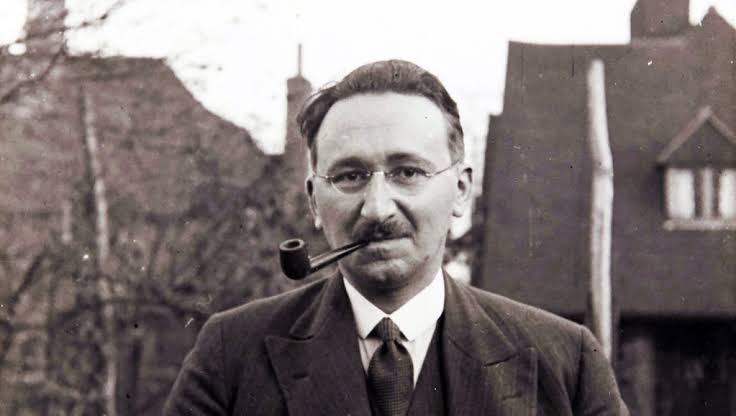
F.A. Hayek, in his seminal works such as The Use of Knowledge in Society (1945), refuted this by arguing that no central planner could possibly possess the dispersed, tacit knowledge held by individuals across society. Hayek emphasized that prices in a market economy are not mere numbers but dynamic signals that aggregate and communicate localized information about needs, preferences, and resource scarcities. For instance, a rising price for lumber signals increased demand or limited supply, prompting producers and consumers to adjust without any single authority needing to understand the full context of every transaction.
Hayek’s insight directly challenges Marx’s centralized model by demonstrating that the spontaneous coordination enabled by market prices surpasses the capabilities of any planner, expert, or algorithm. Prices encapsulate fragmented knowledge—such as a farmer’s awareness of crop yields or a manufacturer’s grasp of production costs—that no central authority could fully replicate. By enabling individuals to act on this dispersed information, markets achieve efficient resource allocation without requiring a comprehensive plan, rendering Marx’s vision of centralized control not only impractical but fundamentally incapable of matching the adaptive complexity of a price-driven economy.
An Alternate Theory Worker Exploitation under Capitalism.
Karl Marx argued that capitalists exploit workers by appropriating the surplus value generated by labor, framing profit as the result of systemic theft within the production process. In Marx’s view, capitalists accumulate wealth by paying workers less than the value their labor produces, perpetuating class conflict and portraying profit as inherently unjust. This perspective casts capitalists as parasitic, extracting wealth without contributing equivalent value to the economic system.
Eugen Böhm-Bawerk, a prominent Austrian economist, countered this narrative with his theory of time preference, articulated in works like Capital and Interest (1884). He posited that individuals naturally prefer present goods over future goods, meaning workers value immediate wages over delayed returns. Capitalists, by contrast, provide those wages upfront, investing capital and bearing the uncertainty of future profits. This exchange is not exploitative but a mutually beneficial arrangement where workers receive immediate income, while capitalists assume the risk and delay gratification, hoping their investments yield returns over time.
Böhm-Bawerk’s framework refutes Marx by redefining profit as compensation for time, risk, and strategic planning, rather than exploitation. Capitalists undertake the burden of forgoing present consumption, managing resources, and navigating market uncertainties. Their profit, when realized, reflects the value of their foresight and willingness to wait, not the theft of labor’s output. This perspective shifts the economic narrative from class struggle to a cooperative process where both workers and capitalists fulfill distinct, voluntary roles based on their preferences and economic realities.

Marx’s Theory of Value Refuted.
Karl Marx posited that the value of a commodity is derived from the labor expended in its production, anchoring value in the objective measure of labor time. This labor theory of value underpinned Marx’s economic framework, tying value to the collective effort of workers and framing economic systems as driven by class dynamics and exploitation. Marx’s perspective suggested that the intrinsic worth of goods is measurable through the labor they embody, irrespective of individual perceptions or desires.
In contrast, Carl Menger, a founder of the Austrian School, argued in his seminal work, Principles of Economics (1871), that value originates from individual subjective preferences, not labor. Menger’s theory of subjective value asserts that the worth of a good is determined by the utility it provides to an individual, which varies based on personal needs, circumstances, and scarcity. For instance, a violin holds immense value to a musician who cherishes its utility, yet it may be worthless to someone indifferent to music. Similarly, food is far more valuable to a starving person than to someone satiated, illustrating that value is not fixed but contingent on human desires and context.
Menger’s emphasis on subjective valuation directly refutes Marx’s labor-centric model by demonstrating that labor alone does not dictate a good’s worth. Instead, value emerges from the interplay of individual needs and the marginal utility of goods—how much additional satisfaction a person gains from consuming one more unit. This insight shifts the focus from collective labor to individual choice, undermining Marx’s framework by highlighting that economic value is a dynamic, human-driven phenomenon, shaped by personal priorities rather than an objective labor metric.
The atheist movement, once a beacon of skepticism and rational inquiry, was significantly disrupted by the emergence of Atheism+ in the early 2010s. Atheism+, an attempt to merge atheism with progressive social justice ideologies, particularly feminism and identity politics, shifted the focus from critiquing religious dogma to enforcing ideological conformity on issues like gender and sexuality. This pivot alienated many atheists who valued the movement’s original emphasis on evidence-based reasoning. As Amarnath Amarasingam notes in The Rise and Fall of the New Atheism, the integration of identity politics created tensions within the movement, with activists like Jen McCreight, who spearheaded campaigns like Boobquake, highlighting the schism by prioritizing feminist concerns over universal skeptical principles. The resulting infighting, as seen in online forums like Reddit’s r/atheism, fractured the community, with many feeling that Atheism+ mirrored the dogmatic rigidity it once opposed.
This ideological shift led some atheists to adopt tactics reminiscent of religious apologetics—name-calling, shaming, and deflections—particularly when defending progressive stances on biological sex. Rather than applying the same skepticism they used to dismantle theistic claims, many “woke” atheists embraced gender ideology without rigorous scrutiny, treating it as an unassailable truth akin to a new deity. Posts on X from 2021 highlight this irony, with users like @SwipeWright observing that a significant portion of the atheist community “fully bought into gender ideology and sex denialism,” abandoning critical thinking for ideological loyalty. This uncritical acceptance echoes the blind faith atheists once criticized, as arguments about biological sex are often dismissed with moralistic fervor rather than engaged with empirically, revealing a departure from the movement’s foundational commitment to reason.
The implosion of the atheist movement, driven by these internal conflicts, underscores a broader lesson: skepticism must be consistently applied, whether to gods or to fashionable ideologies. The New Atheism, once galvanized by figures like Dawkins and Harris, faltered as it became entangled with identity politics, losing its coherence as a unified force. Today, the movement’s legacy is a cautionary tale of how even rationalist communities can succumb to ideological pressures, adopting the same dogmatic tactics they once decried. For atheism to reclaim its intellectual rigor, it must return to its roots, questioning all claims—divine or secular—with unflinching skepticism.












 bleatmop
 Mystro
 The Arbourist


 Dead Wild Roses
Your opinions…