
You are currently browsing the category archive for the ‘International Affairs’ category.
When political violence erupts, it often looks random — a lone extremist, a protest that gets out of hand, or a clash between two angry groups. But much of what we’re seeing today, in both the United States and Canada, is not random at all. It is part of a deliberate strategy that activists call dialectical warfare — and it is tearing at the heart of our democratic societies.
The assassination of Charlie Kirk and the furious conservative backlash that followed are not isolated events. They are part of a larger spiral of violence and reaction, one that radicals hope will end with the collapse of our current system. To understand how, we need to unpack an old idea: the dialectic.
What is the Dialectic?
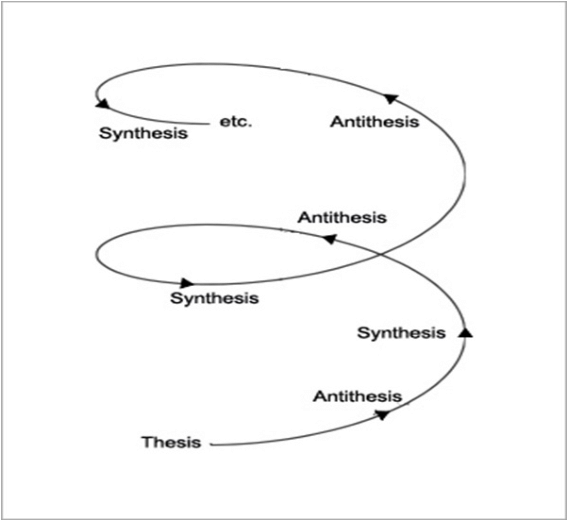
The word “dialectic” comes from philosophy, specifically the German thinker Georg Wilhelm Friedrich Hegel in the early 1800s. At its simplest, the dialectic is a way of describing how history moves forward through conflict.
- Thesis: the current system or status quo.
- Antithesis: the force that challenges it.
- Synthesis: a new system that emerges after the clash.
For Hegel, this was a way of understanding history as a story of progress. Marx later took this idea and made it the foundation of his revolutionary theory. For him, history was about class struggle: workers against capitalists. Capitalism, he argued, would eventually collapse under its contradictions and give way to communism.
The key point is this: conflict isn’t a bug in the system — it’s the engine of history.
From Philosophy to Political Activism
Fast forward to today. Many left-wing activists, consciously or not, operate with a dialectical mindset. They believe that society advances through conflict and breakdown, not peaceful debate.
That means chaos, division, and even violence can be seen as useful. If enough conflict is stirred up, the system will be forced to reveal its flaws, overreact, and eventually collapse — clearing the way for something new.
This isn’t conspiracy theory. Activist manuals, writings from radical groups, and historical revolutionary movements all share this logic. The goal is not stability. The goal is destabilization.
Dialectical Warfare Today
Dialectical warfare is what happens when activists deliberately create or amplify conflict to destabilize society. Here’s how it works in practice:
- Provocation: Protests or acts of violence designed to draw a harsh reaction.
- Overreaction: Authorities or opponents respond too aggressively, confirming the activists’ narrative.
- Crisis: The clash erodes faith in institutions and convinces people the system doesn’t work.
- Escalation: Each cycle of conflict moves society further up the spiral toward collapse.
It’s not about winning the argument. It’s about breaking the system so that something “better” (usually some form of socialist utopia) can be built on the ruins.
The Charlie Kirk Case
The recent assassination of Charlie Kirk shows this dynamic clearly. For the radical Left, the act of violence itself was a shock designed to destabilize. But what mattered more was the reaction.
Conservatives in power, outraged and furious, began employing the same tools that had once been used against them: censorship, cancel culture, and efforts to silence left-wing voices. In their anger, they began shredding the same democratic norms — free speech, due process, respect for law — that they had once fought to defend.
From the perspective of dialectical warfare, this is a victory for the radicals. The point was never just to kill one man. The point was to provoke an overreaction that would weaken the credibility of conservative leaders, make democratic institutions look fragile, and drive polarization even deeper.
Why This is Dangerous
Every time conservatives react by copying the authoritarian tactics of the Left, they confirm the radicals’ worldview. They prove that democracy is a sham, that free speech is a lie, and that the system is doomed.
This is exactly what the activist Left wants. They welcome conservative overreach, because it accelerates the collapse of the old order. The tragedy is that in fighting back, the right risks becoming what it hates: reactionary, authoritarian, and destructive of the very freedoms it claims to defend.
Lessons from History
We have seen this before. In the 20th century, totalitarian movements from Communism in Russia to fascism in Germany thrived on dialectical conflict. They used street violence, political assassinations, and manufactured crises to polarize society. Each overreaction by their opponents brought them closer to power.
The idea is seductive: “This system is broken. Only radical action can save us.” But the results are always catastrophic. Millions died under regimes that promised utopia and delivered tyranny.
A Simple Analogy
Think of democracy like a family car. It’s not perfect — sometimes it breaks down, sometimes it needs repairs. Activists practicing dialectical warfare are not trying to fix the car. They are trying to crash it on purpose, believing that after the wreck, they’ll be able to build a perfect new vehicle.
But history shows that after the crash, what you usually get is not a better car — it’s a dictatorship.
The Dialectical Spiral at Work
To make this crystal clear, here’s how activists see the spiral — and what really happens:
| Stage | Activist Left’s View | What Actually Happens |
|---|---|---|
| Provocation | Stir conflict (riots, violence, incendiary rhetoric) to expose “systemic oppression.” | Communities destabilize; trust erodes. |
| Reaction | Force conservatives into authoritarian overreach. | Free speech and rule of law weaken; institutions lose credibility. |
| Crisis | Show that democracy and capitalism can’t solve the conflict. | Cynicism deepens; polarization hardens. |
| Escalation | Push society up the spiral toward “revolution and utopia.” | Cycle repeats, leading not to utopia but greater instability. |
Why We Must Resist
The activists’ dream of a communist utopia is a fantasy that has failed every time it’s been tried. But their strategy of dialectical warfare is very real — and very effective at breaking societies apart.
The assassination of Charlie Kirk and the conservative overreaction it triggered are a warning. If we allow ourselves to be baited into authoritarian responses, we are not saving democracy — we are digging its grave.
The only way forward is to resist the spiral: to defend free speech, uphold the rule of law, and refuse to play into the radicals’ hands. Otherwise, we will all be dragged into the chaos they long for, and the freedoms that make Western society unique will vanish in the wreckage.
References
- Hegel, G.W.F. The Phenomenology of Spirit (1807).
- Marx, K. & Engels, F. The Communist Manifesto (1848).
- Arendt, H. On Violence (1970).
- Popper, K. The Open Society and Its Enemies (1945).
- Contemporary coverage: Reuters, Associated Press, Fox News (Sept. 2025) – reporting on the assassination of Charlie Kirk and ensuing political fallout.
The UK government under Prime Minister Keir Starmer has introduced the so-called BritCard proposal: a mandatory digital identity (ID) scheme set to roll out by 2029. According to Reuters and other major outlets, the idea is that workers will need this digital ID for right-to-work checks, and over time it may be extended to access public services like tax records, childcare, welfare, etc. (reuters.com) Critics argue it creates centralized databases, raises risks of surveillance, invites overreach, and may pave the way for a social credit framework. (theguardian.com)
A social credit system, like the one China is implementing, is where citizens are monitored, graded or blacklisted for various behaviors (both major and minor), and then rewarded or punished accordingly. In China, examples include: blocking millions of people from buying airplane or train tickets due to “discredited behaviour” (which might include unpaid fines or minor public misbehavior); preventing access to education or luxury purchases; placing people or companies on public blacklists affecting their livelihoods; and using facial recognition and wide surveillance to monitor compliance. (theguardian.com) Such a system curtails freedoms: freedom of movement, career opportunities, public participation, and even speech if one criticizes the state or fails to conform to expected norms.
The UK’s BritCard digital ID proposals, alongside other legislative trends, are troubling signs of creeping authoritarianism—where government tools offer the capacity for control as much as for convenience. Canada shows similar risks: its proposed Combatting Hate Act includes expanding definitions of hate speech, creating new offences for obstruction, intimidation, and streamlining hate-speech and propaganda prosecutions. (canada.ca) While aiming to protect vulnerable communities, such expanded powers risk chilling free speech, targeting dissent, and giving the state too much discretion over what is or isn’t allowable expression. As free societies, the West must resist anything resembling social credit systems dressed up as digital ID or online-hate regulation.

The Panopticon come to life.
What Social Credit Means for Freedom
Here’s what is at stake if systems like China’s are ever adopted in the West:
- Freedom of Movement: Bans on travel by air, train, or road for those with low “scores.”
- Freedom of Speech: Criticism of the government or “unharmonious” views can lower your score.
- Economic Opportunity: Blacklisting can prevent people from starting businesses, holding jobs, or receiving loans.
- Privacy & Autonomy: Facial recognition, mass surveillance, and data collection track daily life in detail.
- Access to Education & Services: Children of “blacklisted” parents have been denied access to private schools.
- Social Participation: Public shaming lists and score rankings reduce citizens to state-monitored reputations.
- Rule of Law: Arbitrary and opaque standards allow punishment without due process.
References
- Reuters – Britain to introduce mandatory digital ID cards
- FT – Digital ID: what is the UK planning, and why now?
- The Guardian – Digital ID plan for UK risks creating an ‘enormous hacking target’
- The Guardian – China bans 23m ‘discredited’ citizens from buying travel tickets
- CNBC – China to stop people traveling who have bad ‘social credit’
- Sohu – Examples of Chinese blacklists and restrictions
- Government of Canada – Combatting Hate Act – proposed legislation
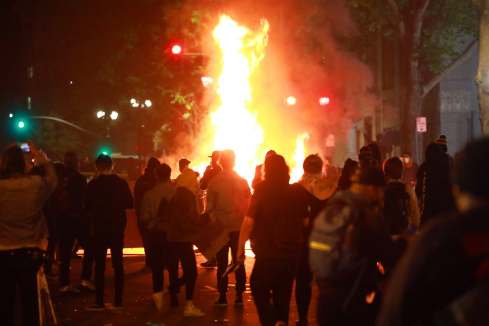
In a significant move, U.S. President Donald Trump announced on September 17, 2025, his intention to designate Antifa as a “major terrorist organization.” This decision follows the recent assassination of conservative activist Charlie Kirk, allegedly by an individual with left-wing affiliations. While Antifa is a decentralized movement without a formal hierarchy, Trump described it as a “sick, dangerous, radical left disaster” and called for investigations into its funding sources (The Guardian).
Following the U.S. announcement, Hungarian Prime Minister Viktor Orbán declared that Hungary would designate Antifa as a terrorist organization, citing a 2023 incident in Budapest where Antifa activists allegedly assaulted attendees of a far-right event. Orbán criticized the European Union for not taking similar action and urged EU officials to align with the U.S. stance (AP News).
These designations have sparked debates about the balance between national security and civil liberties. Critics argue that labeling a loosely affiliated movement as a terrorist organization could infringe upon free speech and assembly rights. Supporters contend that such measures are necessary to address the violent actions of certain factions within the movement. As discussions continue, the implications of these designations on domestic and international policies remain to be seen.
References
- Reuters: Trump designates anti-fascist Antifa movement as a terrorist organization
- AP News: Hungary, following Trump, will designate antifa a terrorist organization, Orbán says
- The Guardian: Trump says he plans to designate antifa as ‘major terrorist organization’
- Al Jazeera: Hungary urges EU to classify antifa as a ‘terrorist’ group
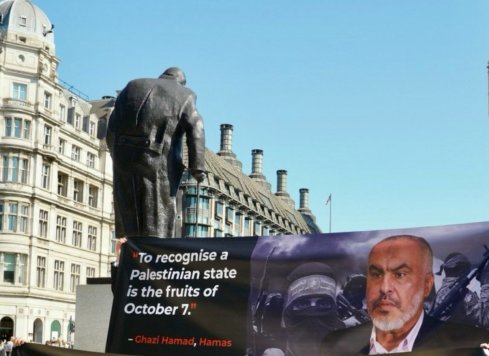
On September 21, 2025, Prime Minister Mark Carney announced that Canada officially recognizes the State of Palestine, aligning with over 140 UN member states. This decision, made ahead of the UN General Assembly, has been met with criticism, particularly from Israel, which views the move as a reward for Hamas and a setback for peace efforts. Carney emphasized that the recognition is contingent upon the Palestinian Authority holding elections in 2026 and excluding Hamas from governance (Reuters).
Critics argue that this recognition overlooks the complexities of the Israeli-Palestinian conflict. They point out that Hamas, which controls the Gaza Strip, has a history of violence and has been designated as a terrorist organization by Canada. The decision to recognize Palestine without addressing Hamas’s role raises questions about the effectiveness of such diplomatic gestures in promoting peace and stability in the region.
Furthermore, some view this move as a political maneuver to distance Canada from its traditional ally, the United States, and to align more closely with European nations that have recognized Palestinian statehood. However, without a comprehensive strategy that includes addressing the influence of Hamas and ensuring the security of all parties involved, this recognition may be seen as a symbolic gesture rather than a step toward a lasting resolution to the conflict.
References
- Reuters: Carney says Canada recognises a Palestinian state
- AP News: Canada joins other countries in recognizing a Palestinian state ahead of UN General Assembly
- New York Post: Canada, UK and Australia all recognize Palestinian state as rebuke to Israel for Gaza war
- Washington Post: U.K., Canada, Australia recognize Palestine as a state, breaking with U.S.
- Al Jazeera: Canada, UK and Australia announce recognition of Palestinian statehood
Reading long threads on X sucks, so I asked Grok to combine a great threat into an “essential read” essay on what is happening in California.

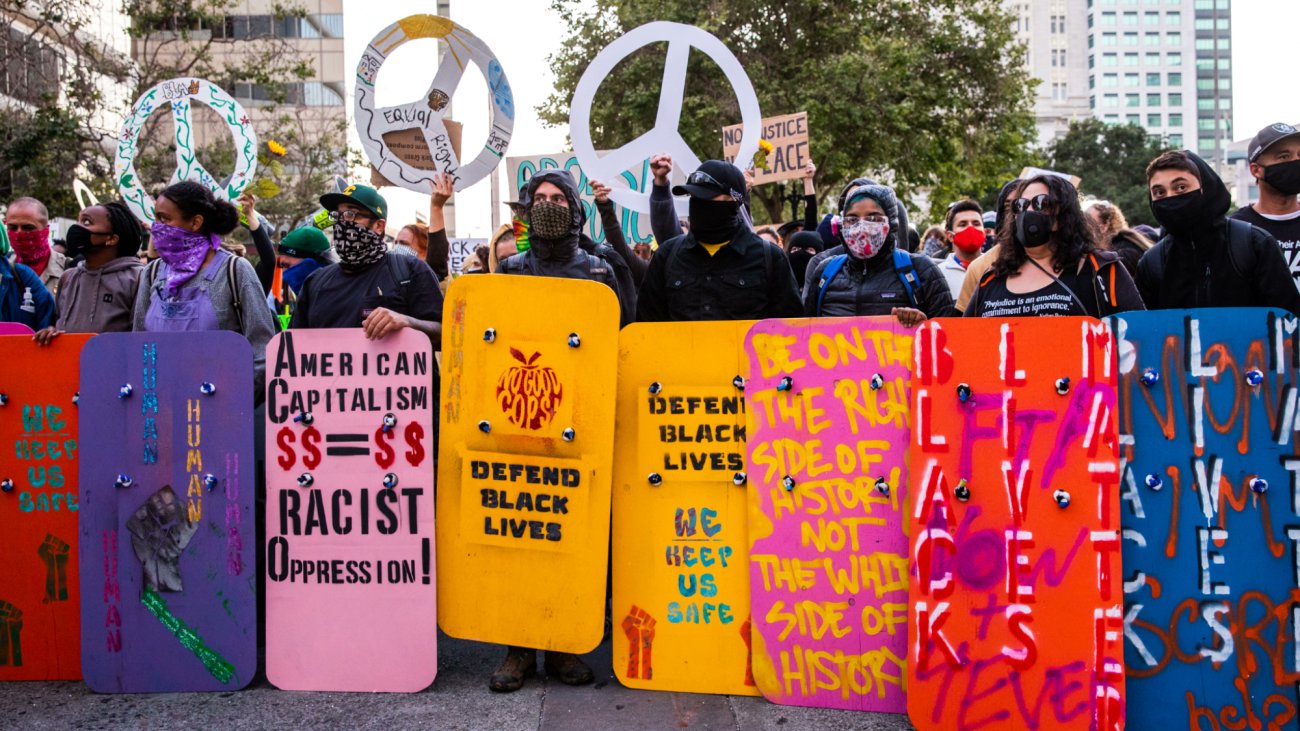
The recent riots in Los Angeles, as depicted in a post by Wokal Distance on X (dated June 9, 2025), reveal a level of organization that challenges the notion of spontaneous public unrest. The accompanying images show protesters strategically using barricades made from traffic cones and benches, suggesting premeditated planning rather than an impromptu reaction to the Immigration and Customs Enforcement (ICE) raids. Wokal Distance argues that these riots are “designed to look chaotic to cover up the fact that they’re well funded, exceptionally organized, and carried out by well-trained activists using intelligent, highly developed tactics.” This perspective is supported by the visible preparation, including the distribution of shields and the use of coordinated tactics, which indicate a structured effort rather than a random outburst of anger.
The tactical use of shields, as highlighted in the post, further underscores the organized nature of these protests. The images reveal protesters equipped with plywood shields disguised as cardboard signs, a method previously employed during the 2020 Black Lives Matter protests and the 2024 pro-Hamas riots. Wokal Distance notes that crafting each shield requires approximately three hours, a process that involves activists dedicating entire days to preparation. This level of commitment and resource allocation points to a well-funded operation, possibly linked to broader activist networks. The presence of a Home Depot bucket in the imagery suggests a centralized supply chain, reinforcing the idea that these materials are systematically distributed to participants, a tactic also observed in past organized protests.
Beyond physical preparation, the riots employ sophisticated strategies aimed at manipulating public perception and pressuring authorities. Wokal Distance outlines a “decision dilemma” tactic, where protesters create situations—such as blocking roads with barricades—that force authorities into no-win scenarios, regardless of their response. This is complemented by the “real action is your target’s reaction” approach, where any overreaction by police is leveraged to portray protesters as sympathetic underdogs. The inclusion of a baby in the protest, as mentioned, serves as a calculated move to heighten this sympathy, placing law enforcement in an impossible position where any use of force could be spun as an attack on the vulnerable. These tactics are designed to play to an external audience, shaping the narrative through media coverage and social platforms.
The theoretical foundation for these strategies, as explained by Wokal Distance, draws from radical academic works and activist training manuals, such as “Beautiful Trouble.” This book, co-authored by individuals with whom Wokal Distance has personal experience, provides a blueprint for using violence and disruption to gain political leverage. The post references historical examples, like the 2000 Summit of the Americas protests with their color-coded zones (Green, Yellow, Red) for varying levels of action, illustrating a long-standing tradition of planned escalation. This intellectual backing, combined with the practical execution seen in Los Angeles, suggests a movement informed by decades of activist theory and real-world application.
In conclusion, the Los Angeles riots, as analyzed by Wokal Distance, are far from spontaneous; they are a meticulously orchestrated campaign with roots in both funding and ideology. The involvement of well-trained activists, the use of pre-fabricated tools, and the application of strategic theories highlight a concerted effort to influence political outcomes. While the immediate trigger may be the ICE raids, the deeper structure points to broader networks, potentially involving figures like Neville Singham, as suggested in related threads by @DataRepublican. As the situation unfolds, understanding these dynamics is crucial for crafting an effective response that avoids the traps set by these calculated tactics.
**Reference:** Wokal Distance. (2025, June 9). [Post on X]. https://x.com/wokal_distance/status/1931953269775188449
 il
il
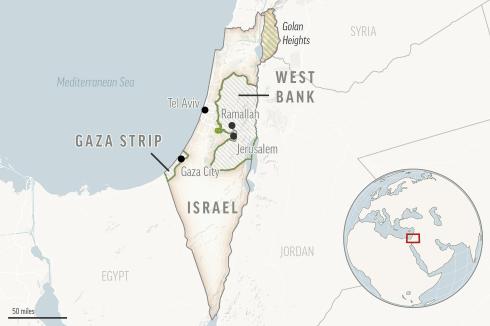
Israel faces a tough reality with enemies on nearly every side who openly call for its destruction, making secure borders an absolute necessity. Countries like Iran and groups such as Hezbollah and Hamas have not only talked about wiping Israel out but have acted on it with rocket attacks, border raids, and coordinated assaults like the one on October 7, 2023, which killed over 1,200 people. Some argue that walls and checkpoints hurt Palestinians by restricting their movement, and that’s a real concern. But these measures have proven effective, cutting down on terrorist attacks since the Second Intifada. Israel has to balance keeping its people safe with minimizing harm to others, and while it’s not perfect, strong borders with high-tech surveillance and intelligence are the best way to protect a nation under constant threat.
Taking out Hamas’s ability to wage war is crucial, not just for Israel’s safety but for any hope of a better future for Palestinians. Hamas has run Gaza since 2007, and its founding documents reject Israel’s existence entirely. They’ve fired thousands of rockets, over 12,000 since 2005, and built tunnels for attacks, often hiding among civilians. Critics say targeting Hamas risks innocent lives and could push more people toward extremism, which is a serious issue. But letting Hamas keep its weapons and control means more violence, less chance for peace, and Gaza staying stuck as a war zone instead of a place where people can build better lives. A focused effort to dismantle their military setup, alongside global help to rebuild Gaza with leaders who prioritize peace, is the tough but necessary path forward.
Keeping a strong security presence in Gaza is vital to stop new terrorist groups from taking root and to protect Israel’s way of life as a free, democratic nation in a region full of authoritarian regimes. Israel stands out with its open elections, independent courts, and free press, unlike many of its neighbors where power is tightly controlled. Some worry that staying involved in Gaza could make Israel look less democratic or anger Palestinians further, and that’s a valid point. But a smart security strategy, focused on gathering intelligence and stopping threats without overstepping, keeps Gaza from becoming a launchpad for attacks again, like it was under Hamas. Pairing this with efforts to support Palestinian self-rule and economic growth shows Israel’s commitment to both its values and stability, even when surrounded by those who want it gone.
The sentencing of Lucy Connolly, a 41-year-old childminder from Northampton, to 31 months in prison for an offensive X post represents a disturbing shift toward authoritarian governance in the United Kingdom. On July 29, 2024, Connolly posted a message urging “mass deportation now” and to “set fire” to hotels housing asylum seekers, in the context of the Southport attacks. As reported by the BBC, “The post was viewed 310,000 times before she deleted it within four hours.” Despite her guilty plea and expressions of remorse, the severe sentence, upheld on appeal in May 2025, prioritizes punishment over proportionality, signaling a state overreach that stifles free speech. This case exemplifies how legal mechanisms can be weaponized to suppress dissent, a hallmark of authoritarian regimes.
The legal basis for Connolly’s conviction, Section 19 of the Public Order Act 1986, allows broad discretion in criminalizing speech deemed to incite racial hatred. The Crown Prosecution Service noted, “Connolly admitted publishing material which was threatening, abusive or insulting and intended to stir up racial hatred.” However, the post’s rapid deletion and Connolly’s lack of prior convictions suggest a lighter penalty, such as a fine, could have sufficed. Instead, the court imposed a near-maximum sentence, with the appeal judges stating, “There is no arguable basis for saying the sentence was disproportionate,” as per The Independent. This rigid application of vague laws to punish speech mirrors authoritarian tactics, where the state uses legal ambiguity to silence controversial voices and deter open discourse.
The societal impact of Connolly’s sentence creates a chilling effect on free expression, a cornerstone of democracy. The Free Speech Union criticized the sentence as “plainly disproportionate,” warning of its broader implications for free speech. Public reaction, including a fundraiser exceeding £50,000, reflects widespread concern that the punishment outweighs the crime. When a single post, however offensive, leads to over two years in prison for a first-time offender, it signals that the state values ideological control over individual liberty. This echoes authoritarian governance, where dissent is swiftly penalized to enforce conformity, pushing citizens toward self-censorship out of fear of legal consequences.
Comparisons to other cases highlight the disproportionate nature of Connolly’s punishment, reinforcing perceptions of authoritarian overreach. For instance, Philip Prescott received 28 months for violent disorder, while Haris Ghaffar got 20 months, despite their actions involving physical harm rather than words. The Independent reported, “Tyler Kay was jailed for 38 months for sharing Ms. Connolly’s post,” showing how the state extends punishment to amplifying speech, widening the net of censorship. This prioritization of controlling narrative over addressing tangible harm is a tactic seen in authoritarian regimes, where speech is deemed a greater threat than physical acts, undermining democratic principles.
In conclusion, Lucy Connolly’s 31-month sentence for an offensive X post marks a dangerous slide toward authoritarian governance in the UK. By leveraging vague legal provisions to impose harsh penalties on rapidly retracted speech, the state demonstrates a preference for control over individual rights. The chilling effect on free expression, disproportionate sentencing compared to violent crimes, and public backlash all point to a system prioritizing ideological conformity. As the Free Speech Union’s critique suggests, such precedents risk normalizing state overreach, eroding democratic freedoms and paving the way for further authoritarian measures under the guise of public order.
References:
1. BBC News. “Lucy Connolly jailed for race hate post on X loses appeal.” https://www.bbc.com/news/articles/c3v5926yeqro
2. The Independent. “Why was Lucy Connolly jailed for a tweet and why was her appeal dismissed?” https://www.the-independent.com/news/uk/crime/lucy-connolly-court-jail-appeal-b2754556.html
3. Crown Prosecution Service. “Updated sentence: Childminder admits inciting racial hatred over social media post.” https://www.cps.gov.uk/cps/news/updated-sentence-childminder-admits-inciting-racial-hatred-over-social-media-post











 bleatmop
 Mystro


 Dead Wild Roses
Your opinions…