
You are currently browsing the category archive for the ‘Music’ category.
Musical Summary of “Omaa Biindig” by Andrew Balfour, performed by musica intimaThis is a contemporary choral work composed by Andrew Balfour, a Canadian Indigenous (Cree/Métis) composer known for blending classical choral traditions with Indigenous musical influences, storytelling, and spiritual elements.
“Omaa Biindig” (performed live by the Vancouver-based chamber choir musica intima in March 2023 at St. John’s College, University of Manitoba) is a short, atmospheric a cappella piece that draws deeply from Indigenous perspectives and languages.Style and Mood: It features ethereal, meditative choral writing with a sense of introspection and reverence. The harmonies are modern and somewhat modal, often evoking a sense of vastness or spiritual connection to land and ancestry.
There’s a gentle, flowing quality—think slow-moving, sustained chords with subtle dynamic shifts that create a contemplative, almost hypnotic atmosphere rather than dramatic tension or high energy.Structure and Key Elements:Primarily a cappella (unaccompanied voices), showcasing the choir’s rich, blended timbre.
It incorporates Indigenous text or syllabic vocables (common in Balfour’s work), giving it a ceremonial or ritualistic feel—evoking invitation or entering a sacred space (the title “Omaa Biindig” roughly translates in Cree/Ojibwe contexts to something like “come inside” or “enter here”).
The texture builds gradually: starting with sparse, layered entries that create overlapping voices, then swelling into fuller, resonant chords before gently receding.
Overall, it’s a poignant example of contemporary Indigenous choral music—quietly powerful, culturally rooted, and emotionally resonant, inviting listeners into a moment of reflection and connection rather than spectacle.
Other than reducing me to mush when I hear/sing it, what is also great about this song is that it fits in the Tenor register juuuuust right.
“A Thousand Years” is a heartfelt pop ballad in the key of B♭ major, with a moderate tempo around 139 BPM (often felt in a flowing 6/8 or 3/4 time). It opens intimately with delicate piano arpeggios and Christina Perri’s soft, emotive vocals, building gradually through verses and choruses with lush string arrangements and subtle percussion for a swelling, cinematic emotional arc. Her vocal range spans F3 to C5, delivering vulnerable yet soaring melodies that emphasize tenderness and longing.
To all of my friends and followers I wish you the most merry of holiday times. May the long nights be filled with warm blankets, hot chocolate, and holiday cheer. Thank you for your time and engagement here at DWR I appreciate your comments and contributions to the blog.
Bach’s Mass in B minor BWV 232 needs no introduction. It is “The Mass” that stands above all sacred works. I present it here in full realized by the Netherlands Bach Society.
May the Mass take you where you need to go to pause and reflect on this time year.
Happy Holidays, Folks! Take care of yourselves.
The Arbourist
Winter Solstice Round by Becky Reardon is a simple, uplifting choral round often performed in women’s choirs or community singing circles. It’s designed to be sung in overlapping harmonies, evoking the turning of the seasonal wheel: embracing the depth of winter darkness while affirming the promise of returning light and renewal on the longest night.
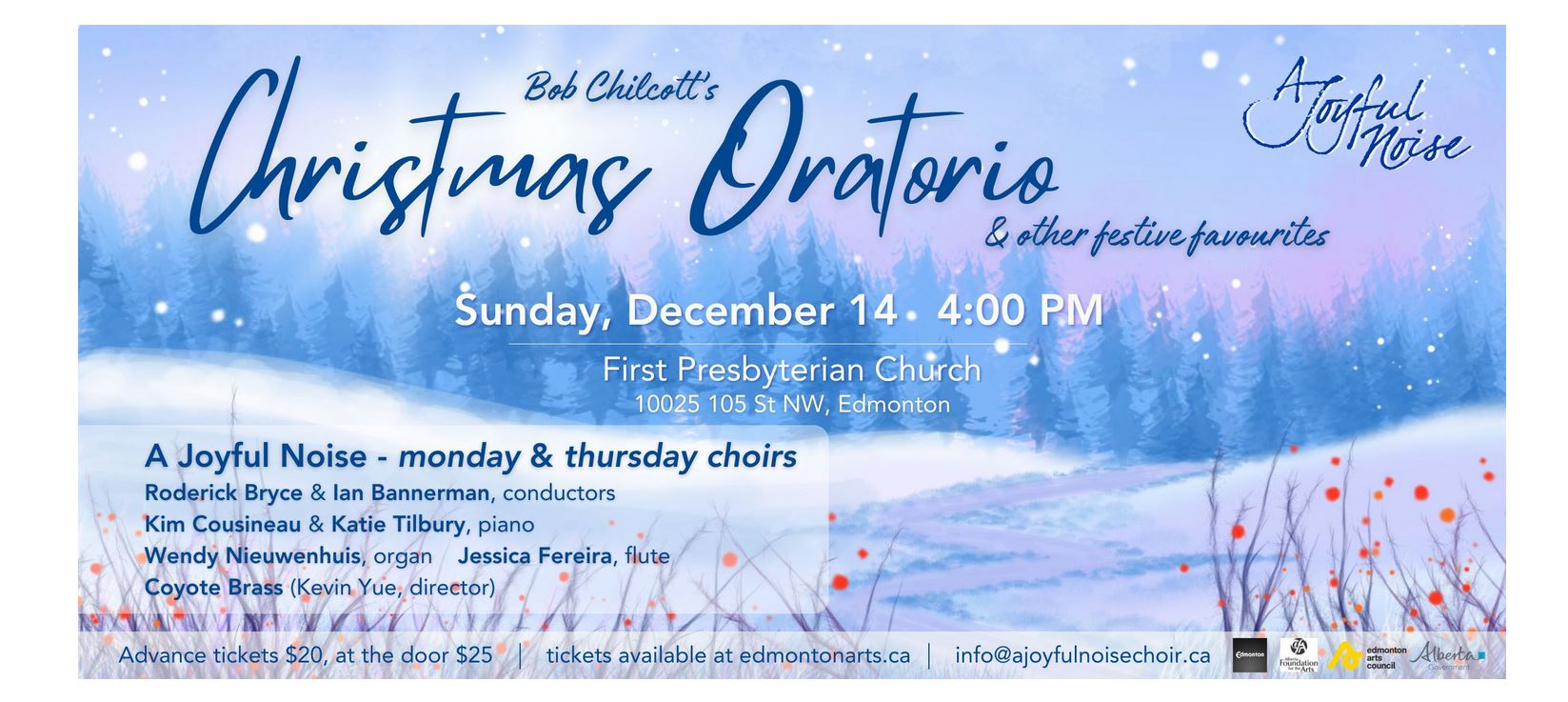
This is a great piece that has not done in Canada until this upcoming weekend! On December 14th at 4:00pm at the First Presbyterian Church, 10025 105 St NW. (Edmonton, Alberta)
If you’re looking for a fresh, heartwarming way to experience the Christmas story, Bob Chilcott’s Christmas Oratorio is an absolute gem that’s quickly becoming a modern classic. Premiered in 2019 at the Three Choirs Festival to rave reviews as “a palpable success… and utterly new,” this majestic work weaves the familiar biblical narrative from St Luke and St Matthew with beautiful 16th- to 19th-century poetry, creating a compelling and deeply moving retelling of the Nativity.
Chilcott, one of the world’s most beloved choral composers (and a former King’s Singer), brings his signature accessibility and lyrical beauty to every movement. From moments of rapt stillness—highlighted by the Evangelist’s intimate storytelling accompanied by harp and flute—to soaring choral sections and brand-new hymn tunes that invite the audience to sing along, the music is warm-hearted, joyful, and perfectly Christmassy. Standouts include the sweet harmonies of “Jesus Christ the Apple Tree,” the tender “Love Came Down at Christmas,” and an energetic finale that leaves you glowing with festive spirit.Critics have called it “irresistible,” “internally warming,” and “as Christmassy as it gets,” praising its blend of tradition and innovation that captures the magic, wonder, and joy of the season.
Whether you’re a lifelong choral fan or just seeking an uplifting holiday experience, this Oratorio is balm for the soul—accessible yet profound, with melodies that linger long after the final note.I’m thrilled to be singing in an upcoming performance, and I’d love for you to join us! Come celebrate the true spirit of Christmas through this exquisite music—it’s the perfect way to fill your heart with peace and joy. Tickets are available now—don’t miss out!











 bleatmop
 Mystro


 Dead Wild Roses
Your opinions…