
You are currently browsing the category archive for the ‘Politics’ category.
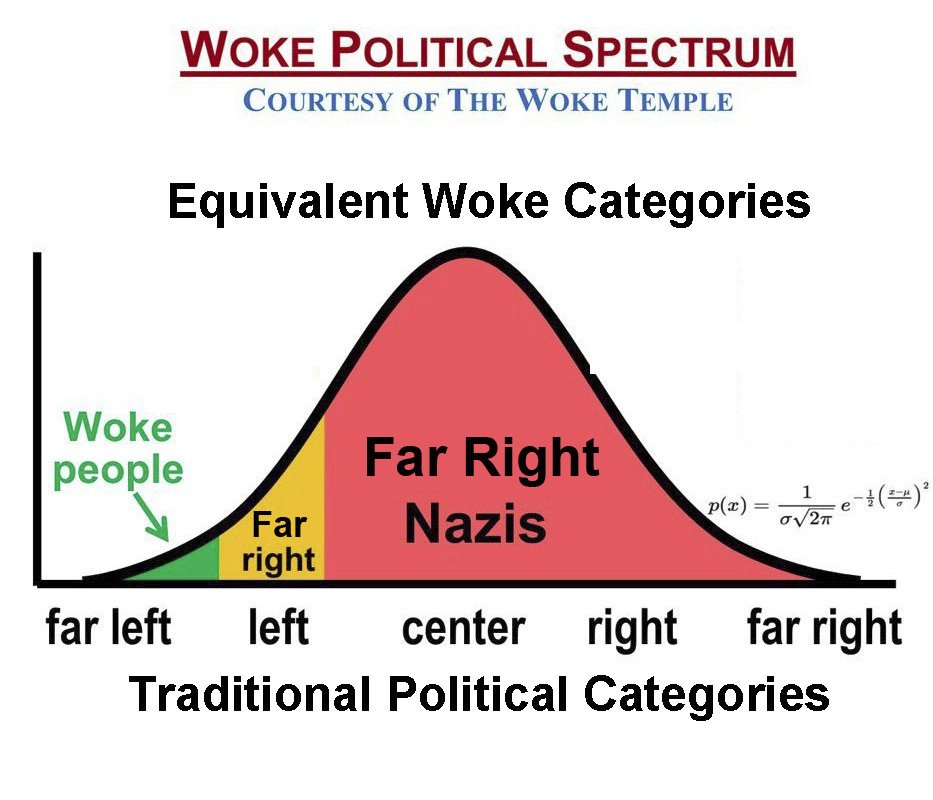
I. Certitude as a Cross-Ideological Poison
In the modern culture war, the most dangerous weapon isn’t censorship or cancellation—it is certainty. Certainty that your worldview is the only legitimate one. Certainty that dissent equals harm. Certainty that debate is violence. This mindset—what I’ve previously called sociognostic certainty—is most visible in the ideological left, but it is increasingly mirrored on the right.
The woke movement often silences critics not through reasoned rebuttal, but through moral accusation: you’re not just wrong—you’re a racist, bigot, or transphobe. But as anti-woke voices grow louder, many fall into the same trap: purity tests, denunciations, and rhetorical gatekeeping in reverse. The danger isn’t just that woke ideology dominates—it’s that we become it while resisting.
We’ve seen this before. The New Atheist movement began as a defense of rationality and open inquiry. But its leading voices soon traded in dialogue for dogma, responding to disagreement with sneers and smug certitude. It became a mirror image of the religious authoritarianism it once critiqued.
So how do we fight the woke juggernaut without turning into zealots ourselves? The answer lies in rediscovering the epistemic foundations of liberal democracy: open-ended inquiry, equal participation, and structured disagreement. These norms are what thinkers like Jonathan Rauch, Karl Popper, John Stuart Mill, Jonathan Haidt, and James Lindsay have defended—often against powerful ideological tides.
II. Liberal Science and the Culture of Disagreement
In Kindly Inquisitors, Jonathan Rauch identifies two rules at the heart of a liberal society’s truth-seeking tradition:
- No one gets the final say.
“Every idea is open to challenge, no matter how sacred or widely accepted.”
- No one gets to say who may speak.
“Everyone has the right to participate in the conversation. There are no gatekeepers of legitimacy.”
Rauch calls this “liberal science”—a decentralized process that evolves through open critique and trial-and-error. “The liberal regime is the only one ever devised that systematically seeks out and corrects its own errors,” he writes. It is a system designed for humility.
This insight builds on Karl Popper’s concept of falsification: that scientific progress happens not by proving ideas right, but by exposing them to the possibility of being wrong. Popper warned that ideologies insulated from criticism drift toward totalitarianism. Liberal societies flourish not by avoiding mistakes, but by remaining willing to correct them.
III. Why These Norms Are Being Abandoned
Woke ideology, rooted in the practice of consciousness-raising, assumes that those who have not been “awakened” are epistemically and morally inferior. This produces what James Lindsay has described as “a knowledge regime based on belief, not inquiry.” It assumes that disagreement is not just misguided, but oppressive.
As Lindsay and Helen Pluckrose write in Cynical Theories, “Woke ideology doesn’t merely assert ideas—it positions itself as the one true way of seeing the world. It replaces knowledge with belief and inquiry with obedience.”
This ideology treats opposition as evidence of guilt. White Fragility teaches that resisting anti-racist training proves one’s racism. Ibram X. Kendi insists neutrality is impossible: “You’re either a racist or an antiracist.” These are not empirical frameworks. They are gnostic in character—immune to criticism and uninterested in falsifiability.
But the anti-woke response is often no better. The populist right, with its own culture-war crusades and purity tests, increasingly mirrors the very forces it claims to fight. Declarations of moral emergency are replacing liberal norms of debate.
In Canada, we’ve seen this from both ends. When the University of British Columbia postponed a speech by philosopher Mark Mercer on academic freedom, critics called it “institutional cowardice,” yet some of those same critics support political interference in other academic expressions. Meanwhile, psychologist Jordan Peterson’s ongoing regulatory battles with the College of Psychologists of Ontario highlight a broader cultural breakdown in tolerating dissent—no matter the direction it flows.
As Jonathan Haidt puts it in The Coddling of the American Mind: “When we teach students that their feelings are always right, and that disagreement equals danger, we do not prepare them for citizenship in a pluralistic society—we prepare them for life in a war zone.”
IV. The Classical Liberal Antidote
To escape the cycle of tribal certainty, we must return to the liberal framework that allows for conflict without coercion.
In On Liberty, John Stuart Mill made a timeless argument: suppressing even false opinions robs humanity of the “collision of ideas” that refines our understanding. “He who knows only his own side of the case,” Mill warned, “knows little of that.”
Rauch extends this into our age of information: “Liberal science does not protect feelings. It protects the process by which we challenge claims and revise beliefs.”
This is not about defending speech merely for its own sake. It is about preserving a culture of mutual correction. That means:
- Tolerating speech we disagree with, not because we approve of it, but because suppressing it corrodes our capacity for self-correction.
- Engaging rather than excommunicating, even when our interlocutors are wrong or offensive.
- Resisting the tribal call to certainty, even when we feel most justified in wielding it.
To do this, we need courage—not the moral grandstanding of cancel culture, but the intellectual humility of listening, debating, and sometimes losing the argument.
V. Conclusion: How to Win Without Destroying What We’re Defending
If we truly want to defeat woke ideology—or any ideology that claims moral and epistemic supremacy—we must do more than oppose it. We must model a better way.
That means rejecting the tools of coercion, purification, and outrage. It means embracing fallibility, tolerating disagreement, and recommitting to open inquiry as a civic virtue.
We won’t always win the argument. But we can keep the argument alive. That is the foundation of liberal society—not that it always gets things right, but that it remains willing to be wrong.
Lose that, and we don’t just lose to the woke. We lose the very civilization we’re trying to save.

References
- Rauch, J. (1993). Kindly Inquisitors: The New Attacks on Free Thought. University of Chicago Press.
- Popper, K. (1963). Conjectures and Refutations: The Growth of Scientific Knowledge. Routledge.
- Mill, J.S. (1859). On Liberty. [Various editions].
- Lindsay, J. & Pluckrose, H. (2020). Cynical Theories: How Activist Scholarship Made Everything about Race, Gender, and Identity—and Why This Harms Everybody. Pitchstone Publishing.
- Haidt, J., & Lukianoff, G. (2018). The Coddling of the American Mind. Penguin Books.
- DiAngelo, R. (2018). White Fragility. Beacon Press.
- Kendi, I.X. (2019). How to Be an Antiracist. One World.
An Impasse in Discourse
We’ve all encountered it: a conversation where the goal isn’t mutual understanding but moral one-upmanship. You offer a reasoned point—say, that judging people by character over skin color fosters unity—and instead of engagement, you’re met with a lecture on your “ignorance.” This isn’t dialogue; it’s a sermon.
Such exchanges, common among adherents of what’s loosely called “woke” ideology, reveal a deeper issue: an unshakable belief in possessing the final truth. Why does this happen? I propose it stems from a process called consciousness raising, which breeds an ideological certainty akin to ancient gnosticism—a conviction that one’s insight is not just superior but unassailable.
Defining “Woke” and Its Roots
By “woke,” I mean specific ideological strands—critical race theory, certain forms of identity politics, and intersectional activism—that frame society as a rigid hierarchy of oppressors and oppressed, with truth grounded in lived experience over empirical evidence. This isn’t a blanket condemnation of social justice; many concerns, such as disparities in criminal justice, are real and urgent. But the approach often corrodes open debate by replacing inquiry with moral accusation.
Consciousness raising, rooted in second-wave feminism and Marxist praxis, promises a “critical reorientation” of reality (MacKinnon, 1983). Brazilian educator Paulo Freire’s concept of conscientização urged the oppressed to awaken to the forces of their subjugation (Freire, 1970). Today, this manifests in Diversity, Equity, and Inclusion (DEI) trainings, where participants are guided to “see” systemic power structures—often without room for dissent, questions, or reciprocal inquiry.
The Sociognostic Mindset
This form of ideological certainty resembles gnosticism, the ancient belief in salvation through secret knowledge. While woke ideology is hardly esoteric—its claims are publicly championed—it shares a similar epistemic posture: what we might call sociognostic certainty. This is the conviction that one’s moral and political views reflect a deeper awareness of systemic oppression, an awareness that cannot be achieved through conventional reasoning alone.
Think of it as moral X-ray vision: the ability to detect the systemic injustices that the unenlightened cannot see. Those who haven’t undergone this awakening—those who do not “get it”—aren’t just wrong; they’re unconscious. As Ibram X. Kendi puts it, “The only remedy to racist discrimination is antiracist discrimination” (Kendi, 2019). To disagree is not to reason differently—it is to expose your ignorance.
This mindset doesn’t just shape what the Woke believe—it shapes how they interact with others who haven’t reached the same “insight.” The consequence is a failure of dialogue.
Why Debate Fails
Consider a fraught topic like racism. An honest interlocutor might argue for a color-blind approach: judge individuals by their actions, not immutable traits. To the sociognostic mind, this is not merely naïve—it is harmful. They insist that racism permeates every facet of society—systemic, structural, inescapable. Even color-blindness, they argue, is a form of complicity—a refusal to acknowledge the depth of the problem (DiAngelo, 2018).
The issue isn’t the argument’s logic; it’s the knowledge differential. The Woke interlocutor, armed with raised consciousness, believes they occupy a higher moral plane. Dissenters, lacking this insight, are not engaged—they are dismissed. And not with counterarguments, but with labels: racist, bigot, transphobe. These are not rebuttals. They are excommunications, designed to enforce a moral hierarchy where only the awakened may speak with authority.
Engaging the Counterargument
Proponents of this mindset argue that systemic issues—like racial disparities in wealth or incarceration—require a radical lens. They would say critiques like this one ignore how power shapes social reality in ways that the privileged cannot see. It’s a fair point: history isn’t neutral. Data show that Black Americans, for instance, are incarcerated at nearly five times the rate of whites (NAACP, 2023).
But I would argue that the sociognostic approach often fuels division rather than solutions. By prioritizing ideological purity over shared reasoning, it alienates potential allies and entrenches resentment. Research from the National Institute of Justice (2021) suggests that economic opportunity, community trust, and procedural fairness reduce disparities more effectively than moral posturing. While the woke framework highlights real problems, it risks replacing deliberation with dogma.
Navigating the Impasse
Empirical arguments won’t suffice when beliefs rest on moral certitude rather than falsifiable evidence. You may find yourself dismissed—your reasoning reduced to “privilege” or “fragility”—not because you’re wrong, but because you’re presumed unawakened. As Pluckrose & Lindsay (2020) explain, applied postmodernism prioritizes subjective identity over objective reasoning. You’re not in a debate—you’re interrupting a sermon.
The key is to remain grounded. Ask questions. Demand evidence. Refuse to be shamed into silence. Clarity and patience—not moral posturing—are your best tools.
Conclusion: Reclaiming Shared Ground
The frustration of arguing with woke ideology isn’t just cultural—it’s epistemological. Its sociognostic posture assumes a monopoly on moral truth, turning discourse into a hierarchy of insight rather than a collaborative pursuit of understanding. That is corrosive to unity, which depends on open exchange, mutual respect, and rational inquiry.
We must resist this tendency—not with venom, but with commitment: to shared reason, to factual evidence, and to the possibility that even the loudest moral certainty can be wrong. The alternative is a world where sermons replace arguments. And that’s a debacle we can’t afford.
References
- DiAngelo, R. (2018). White Fragility: Why It’s So Hard for White People to Talk About Racism. Beacon Press. Link
- Freire, P. (1970). Pedagogy of the Oppressed. Continuum. Archive
- Kendi, I.X. (2019). How to Be an Antiracist. One World. Link
- MacKinnon, C.A. (1983). “Feminism, Marxism, Method, and the State: An Agenda for Theory.” Signs, Vol. 7, No. 3. JSTOR
- NAACP. (2023). “Criminal Justice Fact Sheet.” NAACP.org
- National Institute of Justice. (2021). “Reducing Racial and Ethnic Disparities in the Justice System.” NIJ.gov
- Pluckrose, H., & Lindsay, J. (2020). Cynical Theories: How Activist Scholarship Made Everything About Race, Gender, and Identity. Pitchstone Publishing. Link
The scientific revolution, rooted in empirical rigor, propelled humanity’s progress and democratic values. Yet anti-science ideologies—postmodern skepticism and politicized dogmas—undermine this legacy, threatening truth and unity. We must champion evidence to preserve civilization’s gains.
1. The Scientific Revolution: Engine of Progress
In 1633, Galileo faced the Inquisition for defending heliocentrism, yet his empirical rigor helped ignite the scientific revolution. From the 16th century onward, Western thinkers like Copernicus, Newton, and Bacon formalized the scientific method—hypotheses tested by evidence, not enforced by dogma. This wasn’t mere stargazing; it transformed civilization. Innovations such as the steam engine and penicillin doubled global life expectancy from 31 to 73 years (1800–2020). Today, 95% of the world benefits from medical advancements and technologies rooted in Western science.
The scientific method’s transparency reinforced democratic values: peer review mirrors open debate, uniting societies through shared truth. Nations that embrace science lead in prosperity—Germany, for instance, boasts a 0.95 Human Development Index score (UNDP, 2022). Critics may highlight science’s darker uses (e.g., nuclear weapons), but its self-correcting nature—evident in ethical reforms like the Declaration of Helsinki (1964)—demonstrates resilience and integrity. Science is civilization’s telescope: it reveals, refines, and uplifts.
2. The Shadow Spreads: Anti-Science’s Assault on Truth
The scientific revolution’s empirical clarity once united humanity in the pursuit of truth. Yet anti-science ideologies—ranging from postmodern relativism to politicized technophobia—now cloud this vision, prioritizing narrative over evidence.
Postmodern theorists like Jean-François Lyotard characterized science as merely one “Western narrative,” denying its universality and authority. This cultural relativism undermines scientific consensus and fosters distrust. For instance, Europe’s ban on certain genetically modified crops—such as France’s 2014 maize restriction—contradicts consensus reports from the National Academy of Sciences, ultimately hampering agricultural productivity. Similarly, critical science studies rooted in neo-Marxist frameworks recast science as an oppressive capitalist tool, downplaying its global benefits. In 2023, 40% of Americans reported distrusting scientific institutions, according to Gallup.
To be sure, some critiques of scientific institutions—like those revealing undue pharmaceutical influence—raise valid ethical concerns. But wholesale rejection of empirical methods leads to regression. Anti-nuclear activism, for example, often ignores nuclear energy’s dramatically lower emissions—10g CO₂/kWh compared to coal’s 800g (IPCC, 2022). Evidence must guide reform; rejecting it outright smashes the very lens through which civilization observes and corrects itself.
3. The Stakes and a Call to Action
When ideology eclipses evidence, progress falters. From GMO restrictions to energy disinformation, anti-scientific trends impose tangible costs—reduced agricultural efficiency, stalled environmental innovation, and societal fragmentation. Science, responsible for a 73-year average life expectancy and countless civilizational gains, remains democracy’s silent architect.
To safeguard this legacy, we must renew public trust in science:
- Support institutions like the National Science Foundation that fund transparent, peer-reviewed research;
- Advocate for scientific literacy programs, such as California’s SB 1384 (2024), to build public resilience against misinformation;
- Promote fact-based discourse in schools, media, and policymaking.
While ethical scrutiny of scientific applications is essential, dismissing the scientific method itself endangers civilization’s core. Science is not perfect—but it is our most reliable guide. It democratizes knowledge, transcends borders, and illuminates the path forward. Uphold science—and preserve the light.

References
- Galilei, G. Dialogue Concerning the Two Chief World Systems (1632); Bacon, F. Novum Organum (1620).
- Our World in Data. Life Expectancy. (2020)
- WHO. Global Vaccine Coverage (2022)
- UNDP. Human Development Report (2022)
- World Medical Association. Declaration of Helsinki (1964)
- Lyotard, J.-F. The Postmodern Condition: A Report on Knowledge (1979). University of Minnesota Press.
- National Academy of Sciences. Genetically Engineered Crops (2016); France GMO Ban (2014)
- Gallup. Trust in Institutions (2023)
- Angell, M. The Truth About the Drug Companies (2004). Random House.
- IPCC. Climate Change 2022: Mitigation of Climate Change (2022)
The rule of law, a cornerstone of Western civilization, ensures justice and stability through impartiality, accountability, and restraint on power. Marxism, by contrast, subordinates legality to revolutionary goals and class-based conflict, undermining the very structures that support social cohesion. To preserve civilization, we must uphold the rule of law.
1. The Rule of Law: Civilization’s Bedrock
In 1215, the barons at Runnymede compelled King John to sign the Magna Carta, declaring that even monarchs must be subject to law. This revolutionary idea—the rule of law—would become a cornerstone of Western civilization, evolving through England’s Glorious Revolution (1688) and culminating in modern constitutionalism.
The U.S. Constitution (1789) and France’s Declaration of the Rights of Man and of the Citizen (1789) enshrined this principle globally. By 2020, 90% of democracies had incorporated judicial independence into their constitutional systems.¹ The rule of law, as theorized by thinkers like A.V. Dicey and later F.A. Hayek, restrains power through legal predictability and universality.²
The practical results are clear. Nations scoring above 0.8 on the World Bank’s Rule of Law Index—such as Denmark, Finland, and Canada—also consistently rank high on human development, prosperity, and civic trust.³ The rule of law provides a common legal language for diverse societies, replacing tribal favoritism with equality before the law. Even where the system has historically failed—colonial abuses, slavery, or gender inequality—it has proven self-correcting through reform.⁴
Some critics claim that the rule of law merely entrenches elite power structures. But this critique misrepresents its essence. Far from preserving privilege, impartial law constrains it. It creates a standard by which even the powerful may be held to account. The abolition of slavery, universal suffrage, civil rights protections—all emerged not in spite of legal order, but through it. Civilization thrives when justice prevails.
2. The Shadow Rises: Marxism’s Assault on Legal Order
The rule of law’s strength lies in its impartiality—its power to unify pluralistic societies under shared norms. Yet Marxism offers a fundamentally different vision: one that subordinates legal stability to revolutionary transformation and class struggle.
In The Communist Manifesto (1848), Karl Marx and Friedrich Engels dismissed law as a mere instrument of the bourgeoisie.⁵ Their goal was not reform but abolition—of private property, class, and the legal structures that supported both. This revolutionary posture bore grim fruit: under Stalin’s Great Terror, over 1 million people were executed in the 1930s as law was repurposed into a tool of terror.⁶ Mao Zedong’s Cultural Revolution (1966–76) abandoned legal process entirely, leading to the persecution and death of millions in the name of ideological purification.⁷
Contemporary neo-Marxist frameworks, like Critical Legal Theory, question whether law can ever be neutral. While these critiques raise valid concerns about systemic bias, they often collapse into legal nihilism. “Equity” is increasingly invoked not as a means of fair access to justice but as a demand for redistributive outcomes that override due process.⁸
Seattle’s 2020 “defund the police” policy experiment, influenced by such theories, reduced legal enforcement capacity. According to FBI Uniform Crime Reporting, homicides in the city rose 61% that year.⁹ While correlation does not imply causation, many observers linked the spike to policing reductions and the erosion of legal authority. A Rasmussen survey in 2023 found that 68% of Americans believed defunding policies increased crime.¹⁰
Even more moderate Marxist thinkers, like Antonio Gramsci, viewed legal neutrality as a fiction. His theory of “cultural hegemony” suggested that dominant ideologies—including legal norms—function to maintain ruling class power.¹¹ While Gramsci promoted gradual reform over violent revolution, his intellectual legacy has often been absorbed into radical critiques that pit “justice” against legality.
When the law is treated not as a safeguard of liberty but as an obstacle to progress, impartiality is lost. The result is not liberation but fragmentation. Societies governed by fluctuating ideological mandates rather than stable legal norms revert to “might makes right.” History provides ample warning.
3. The Stakes and a Call to Action
When law bends to ideology, chaos follows. The Soviet gulags and Seattle’s crime spikes are not identical in scale, but they both reflect what happens when legal norms are abandoned in the pursuit of revolutionary or moral goals.
Data again reinforces the case for the rule of law. Nations with Rule of Law Index scores above 0.8 also top global rankings in democracy, trust in institutions, and social resilience.³ Law is not merely procedural; it is a moral and civilizational foundation.
That does not mean we defend unjust systems blindly. We must remain vigilant, pushing for principled reforms: transparent policing (such as California’s 2018 body-camera law, AB 748¹²), judicial independence, and accountability for misconduct. But we must reject efforts to replace law with ideological fiat.
Support for organizations promoting constitutional order—like the Federalist Society—can help anchor legal education in foundational principles. Likewise, defending due process in public discourse reaffirms our shared commitment to equal justice.
Marxism’s critiques of inequality are not without merit. But where they abandon legal impartiality in favor of ideological justice, they endanger the very fabric of civilization. To preserve liberty, we must defend the law—not as an artifact of oppression, but as a guarantor of peace.
References
-
Constitute Project. World Constitutions Database (2020). https://www.constituteproject.org
-
Hayek, F. A. (1960). The Constitution of Liberty. Chicago: University of Chicago Press.
-
World Bank. Rule of Law Index (2022). https://info.worldbank.org/governance/wgi
-
UK Parliament. Slavery Abolition Act (1833); U.S. Congress. 19th Amendment (1920). https://www.parliament.uk | https://www.archives.gov/founding-docs/amendments-11-27
-
Marx, K., & Engels, F. (1848). The Communist Manifesto. https://www.marxists.org/archive/marx/works/1848/communist-manifesto/
-
Conquest, R. (1990). The Great Terror. Oxford: Oxford University Press.
-
Chang, J., & Halliday, J. (2005). Mao: The Unknown Story. New York: Knopf.
-
Delgado, R., & Stefancic, J. (2017). Critical Race Theory: An Introduction (3rd ed.). New York: NYU Press.
-
FBI. Uniform Crime Reporting Program (2021). https://ucr.fbi.gov/crime-in-the-u.s/2021
-
Rasmussen Reports. Crime Concerns and Defund Police (2023). https://www.rasmussenreports.com
-
Gramsci, A. (1971). Selections from the Prison Notebooks. New York: International Publishers.
-
California State Legislature. AB 748: Body-Worn Camera Footage Disclosure (2018). https://leginfo.legislature.ca.gov/faces/billTextClient.xhtml?bill_id=201720180AB748
Enlightenment-era ideals of objective truth, universal rights, and reason-based governance forged modern democratic civilization. In contrast, postmodernism’s relativism and identity-based narrative critique threaten these foundations. We must reaffirm Enlightenment principles to preserve unity, justice, and discourse.
1. Reason’s Dawn: How the Enlightenment Forged Civilization
In the 17th and 18th centuries, philosophers like John Locke, Montesquieu, and Rousseau articulated frameworks for reason-based governance. Locke’s Two Treatises of Government (1689) posited natural rights to life, liberty, and property. Montesquieu’s Spirit of the Laws (1748) introduced separation of powers; Rousseau’s Social Contract (1762) argued that legitimate authority rests on citizen consent.
These ideas mattered practically—they informed the U.S. Constitution (1789) and France’s Declaration of the Rights of Man (1789), embedding Enlightenment principles in the DNA of modern democracies. As of 2020, scholars estimate that around 80% of democracies worldwide trace their philosophical roots to the Enlightenment.¹
Enlightenment values also translated into measurable successes: by 2020, approximately 167 constitutions enshrined freedom of expression; and countries scoring above 0.9 on the UNDP Human Development Index—predominantly Western democracies—demonstrated the tangible benefits of rational inquiry and institutional rule.² These metrics underscore the Enlightenment’s role as civilization’s intellectual crucible.
2. A Shadow Looms: Postmodernism and the Corrosion of Truth
Despite this legacy, postmodern thought rose to challenge Enlightenment truths. Thinkers like Michel Foucault and Jacques Derrida argued that “truth” is a social construct shaped by power dynamics—rather than anything objective or universal.³,⁴
This relativistic posture manifested starkly in 2017 when Evergreen State College’s Professor Bret Weinstein was targeted for resisting identity-based orthodoxy, demonstrating how narrative power can supplant reasoned discourse.⁵
Survey data reinforces this cultural shift. In September 2020, Pew Research found that 44% of Americans had heard a fair amount about “cancel culture,” and 49% defined it as punitive rather than corrective.⁶ By 2022, awareness had climbed to 61%.⁷ FIRE’s Campus Deplatforming Database logged a steep increase in speaker cancellations, documenting over 1,000 incidents between 2020 and 2024 and a success rate above 50% in recent years.⁸
Public trust in academia has also plummeted. Gallup reports that confidence in higher education fell from 57% in 2015 to 36% in 2023, with modest recovery to around 42% in 2025. Republicans showed especially low confidence at 26%, while Democrats expressed around 61%.⁹
Postmodernism’s rise thus correlates with an erosion of institutional trust, suppression of debate, and fragmentation of public discourse—an intellectual shift that seems to undermine the very Enlightenment principles upon which open society relies.
3. Not All Postmodernism Is the Enemy: Nuance and Constructive Critique
It is crucial to acknowledge that not all postmodern critique invalidates reason wholesale. Some theorists alert us to valid Enlightenment blind spots—colonialism, technocracy, scientism, and persistent inequality. Foucault, for instance, provided nuanced analyses of institutional power without advocating epistemic nihilism.
Acknowledging these critiques enriches the conversation—but when relativism becomes ideological absolutism, it dissolves trust in evidence-based policy and shared truth. History shows that societies fragment when reason yields to narrative absolutism.
4. Unity vs. Fragmentation: The Stakes Today
The divide between Enlightenment rationalism and postmodern relativism is not merely theoretical—it plays out in civic polarization, distrust of institutions, and ideological silos. When everyone has their own truth, civic cohesion unravels.
Conversely, Enlightenment-era constitutional liberalism undergirds pluralistic societies capable of managing conflict without collapse. Wherever constitutionalism, an independent judiciary, and open inquiry flourish, democracies exhibit resilience—whether in Western Europe, North America, or Oceania. These structures remain civilization’s compass—pointing toward shared reality rather than tribal narrative.
5. A Call to Action: Reaffirming Enlightenment Principles
We must recommit to rational discourse and institutional integrity. Universities, media, and civic organizations should uphold robust free speech policies—not ideological conformity disguised as accountability.
Educational institutions should offer curricula grounded in logic, debate, and classical liberal values, resisting pressure for ideological self-censorship. Meanwhile, public institutions should incentivize transparency and evidence-based decision-making.
We can also advocate for public reunification around shared civic values: tolerance, rationality, discourse. Platforms and forums that encourage civil disagreement—not echo chambers—can be part of the solution.
By elevating Enlightenment values—without ignoring valid critiques of past excesses—we can craft an enlightened path forward that embraces reason, inclusion, and unity.
Conclusion
The Enlightenment transformed civilization through reason, universal rights, and institutional design. Postmodernism, in its most radical form, threatens to tear down that structure by denying objective truth and fragmenting discourse. While constructive critique has its place, nihilistic relativism endangers the very foundations of democratic society. To preserve justice, cohesion, and open debate, we must hold fast to Enlightenment principles—reason as civilization’s compass, truth as our shared ground.
References
-
Freedom House. Freedom in the World Report (2020). https://freedomhouse.org/report/freedom-world FIRE+1Wikipedia+1Gallup.comWikipedia+8Freedom House+8Freedom House+8
-
UNDP. Human Development Report (2022); Constitute Project. World Constitutions Database (2020). https://www.constituteproject.org edtechbooks.orgOur World in Data
-
Foucault, M. (1975). Discipline and Punish; Derrida, J. (1967). Of Grammatology.
-
EdTech Books. “Enlightenment Thinkers and Democratic Government.” https://edtechbooks.org/democracy/enlightenment edtechbooks.org
-
Weinstein, B. “The Evergreen State College Implosion.” Wall Street Journal, 2017.
-
Pew Research Center. “Americans and ‘Cancel Culture’,” Sept. 2020 survey. papers.ssrn.com+4FIRE+4Gallup.com+4dokumen.pub+5pewresearch.org+5pewresearch.org+5
-
Pew Research Center. “A growing share of Americans are familiar with ‘cancel culture’,” June 2022. pewresearch.org
-
FIRE. Campus Deplatforming Database (2020–2024). https://www.thefire.org/research-learn/campus-deplatforming-database FIRE+1FIRE+1
-
Gallup. “U.S. Confidence in Higher Education Now Closely Divided,” June 2024 survey. https://news.gallup.com/poll/646880/confidence-higher-education-closely-divided.aspx Gallup.com
“A celebration of diversity that silences certain voices… is not inclusive—it is ideologically selective.”
The Montreal Pride Parade’s decision to exclude Jewish organizations like Ga’ava and the Centre for Israel and Jewish Affairs (CIJA) reveals the brittle nature of contemporary inclusion. Organizers explained that the festival’s board had “made the decision to deny participation in the Pride Parade to organizations spreading hateful discourse”—widely interpreted as targeting groups perceived to hold Zionist views amid the Israeli-Palestinian conflict (National Post). Yet this rationale exposes a contradiction: a celebration of diversity that silences certain voices based on political affiliation is not inclusive—it is ideologically selective. True inclusion doesn’t retreat under pressure or disqualify those with unpopular views; it endures in the face of discomfort. By barring these organizations, Montreal Pride signals that its version of inclusion functions not as a principle, but as a privilege granted only to those aligned with a narrow ideological consensus.
Considering the Organizers’ Perspective
It’s worth acknowledging why the organizers might have made this decision. They could argue that pro-Israel groups might provoke protests or distress among participants, given the polarized nature of the Israeli-Palestinian conflict. However, without specific, credible threats, this rationale appears more like a preemptive strike against ideological discomfort than a genuine safety measure. Pride has weathered controversy before—its history is one of defiance in the face of societal pushback. To retreat now suggests a prioritization of ideological purity over inclusivity.
Safety as a Pretext for Exclusion
Invoking “physical and mental safety” may appear commendable, but applying it to justify excluding Ga’ava—a Montreal-based LGBTQ+ Jewish organization—and CIJA appears unfounded in concrete threats. Ga’ava’s president characterized the exclusion as “based on flimsy, politically motivated reasons decided behind closed doors under pressure from groups that hate Jews, deny Israel’s existence, and whose members celebrated the atrocities of October 7, 2023” (i24NEWS). Who gets to determine what’s safe? In this case, the organizers prioritized avoiding discomfort among critics of Zionist expression over the dignity of those excluded. This risks prioritizing ideological comfort over genuine safety concerns.
According to CIJA’s director of strategic communications, Julien Corona, the decision represents “a dark day for the LGBTQ+ movement here in Quebec but also in all of Canada” (National Post).
The Perils of Moral Absolutism
Montreal Pride’s actions illustrate how moral certainty, when unchecked, can corrupt even the most noble ideals. By conflating the participation of Jewish organizations with “hateful discourse,” organizers implicitly deemed dissenting political views as unacceptable, suggesting their perspective is immune from challenge (i24NEWS). But in reducing disagreement to danger, they betray their own professed values of inclusion and pluralism. What remains is not a broad tent of solidarity, but a gated enclave of ideological approval.
This episode fits into a broader pattern: similar exclusions have occurred in other Pride contexts—Toronto, Chicago, Washington DC—involving Jewish symbols or groups linked to Israel/Palestine debates (Wikipedia). By excluding Ga’ava and CIJA, Montreal Pride reinforces a troubling trend: replacing complexity of identity with a simplistic tribal test.
Moreover, this isn’t the first time a social movement has been fractured by ideological litmus tests. The feminist movement, for example, has seen bitter divisions over issues like sex work and transgender rights, with some factions excluding others based on perceived ideological impurity. Similarly, the civil rights movement grappled with tensions between integrationist and separatist ideologies. In each case, moral certainty led to splintering rather than solidarity. Montreal Pride risks a similar fate if it continues down this path.
A Forward-Looking Conclusion
If Pride movements hope to sustain moral legitimacy and relevance, they must resist equating disagreement with harm. Exclusion based on political affiliation not only wounds the excluded but weakens the movement itself. Pride must recommit to its radical roots—embracing all marginalized voices, even those that spark debate—or risk losing its soul. The true test of inclusion isn’t welcoming those who agree with us; it’s extending that welcome to those who challenge us. Only then can Pride fulfill its promise as a beacon of diversity and defiance.

Works Cited
- Amador, Marisela. “Montreal Pride excludes Jewish LGBTQ+ group, citing ‘hateful discourse’.” CTV News, July 31, 2025. Link
- Corona, Julien. Quoted in “‘A dark day for the LGBTQ movement’: Montreal Pride Parade organizers bar Jewish groups from march.” National Post, August 1, 2025. Link
- “Montreal’s Pride Parade bans 2 Jewish groups.” i24NEWS, July 31, 2025. Link
- “Pride parade.” Wikipedia. Link











 bleatmop
 Mystro


 Dead Wild Roses
Your opinions…