
You are currently browsing the category archive for the ‘Politics’ category.
Marx’s Theory of Value Refuted.
Karl Marx posited that the value of a commodity is derived from the labor expended in its production, anchoring value in the objective measure of labor time. This labor theory of value underpinned Marx’s economic framework, tying value to the collective effort of workers and framing economic systems as driven by class dynamics and exploitation. Marx’s perspective suggested that the intrinsic worth of goods is measurable through the labor they embody, irrespective of individual perceptions or desires.
In contrast, Carl Menger, a founder of the Austrian School, argued in his seminal work, Principles of Economics (1871), that value originates from individual subjective preferences, not labor. Menger’s theory of subjective value asserts that the worth of a good is determined by the utility it provides to an individual, which varies based on personal needs, circumstances, and scarcity. For instance, a violin holds immense value to a musician who cherishes its utility, yet it may be worthless to someone indifferent to music. Similarly, food is far more valuable to a starving person than to someone satiated, illustrating that value is not fixed but contingent on human desires and context.
Menger’s emphasis on subjective valuation directly refutes Marx’s labor-centric model by demonstrating that labor alone does not dictate a good’s worth. Instead, value emerges from the interplay of individual needs and the marginal utility of goods—how much additional satisfaction a person gains from consuming one more unit. This insight shifts the focus from collective labor to individual choice, undermining Marx’s framework by highlighting that economic value is a dynamic, human-driven phenomenon, shaped by personal priorities rather than an objective labor metric.
Reading long threads on X sucks, so I asked Grok to combine a great threat into an “essential read” essay on what is happening in California.

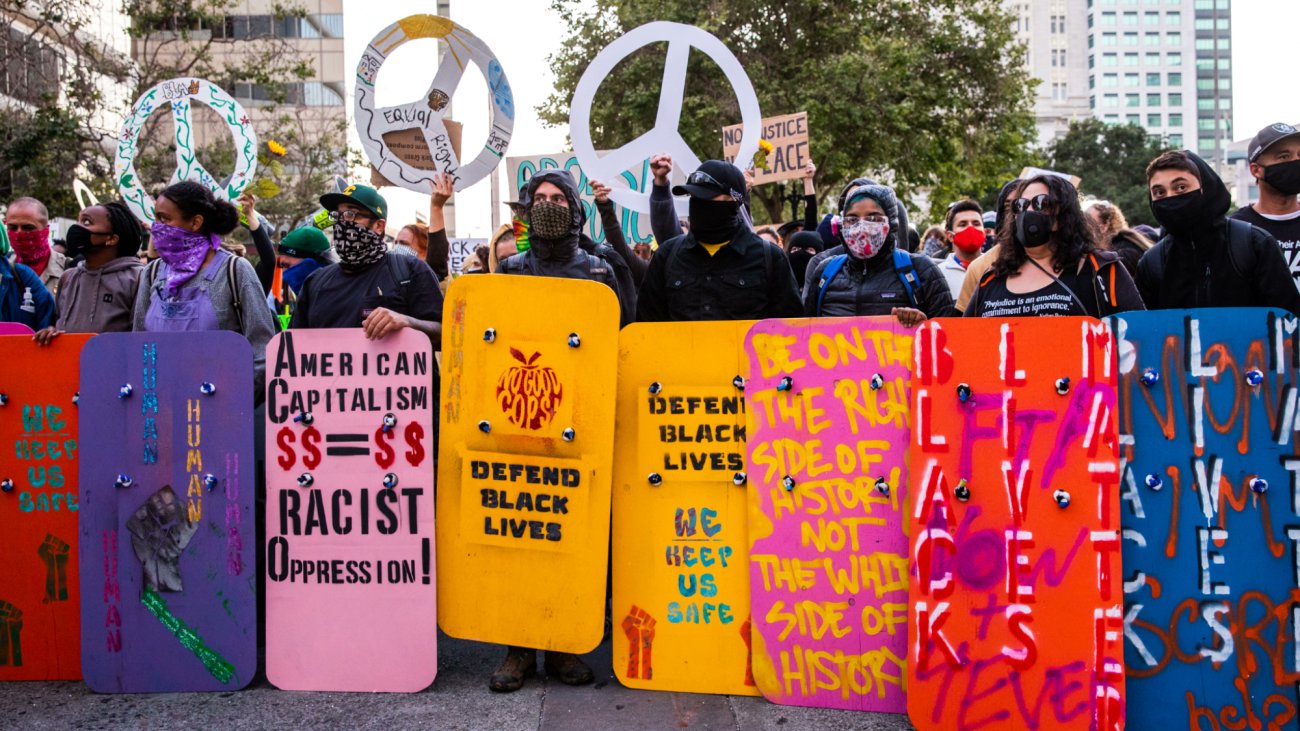
The recent riots in Los Angeles, as depicted in a post by Wokal Distance on X (dated June 9, 2025), reveal a level of organization that challenges the notion of spontaneous public unrest. The accompanying images show protesters strategically using barricades made from traffic cones and benches, suggesting premeditated planning rather than an impromptu reaction to the Immigration and Customs Enforcement (ICE) raids. Wokal Distance argues that these riots are “designed to look chaotic to cover up the fact that they’re well funded, exceptionally organized, and carried out by well-trained activists using intelligent, highly developed tactics.” This perspective is supported by the visible preparation, including the distribution of shields and the use of coordinated tactics, which indicate a structured effort rather than a random outburst of anger.
The tactical use of shields, as highlighted in the post, further underscores the organized nature of these protests. The images reveal protesters equipped with plywood shields disguised as cardboard signs, a method previously employed during the 2020 Black Lives Matter protests and the 2024 pro-Hamas riots. Wokal Distance notes that crafting each shield requires approximately three hours, a process that involves activists dedicating entire days to preparation. This level of commitment and resource allocation points to a well-funded operation, possibly linked to broader activist networks. The presence of a Home Depot bucket in the imagery suggests a centralized supply chain, reinforcing the idea that these materials are systematically distributed to participants, a tactic also observed in past organized protests.
Beyond physical preparation, the riots employ sophisticated strategies aimed at manipulating public perception and pressuring authorities. Wokal Distance outlines a “decision dilemma” tactic, where protesters create situations—such as blocking roads with barricades—that force authorities into no-win scenarios, regardless of their response. This is complemented by the “real action is your target’s reaction” approach, where any overreaction by police is leveraged to portray protesters as sympathetic underdogs. The inclusion of a baby in the protest, as mentioned, serves as a calculated move to heighten this sympathy, placing law enforcement in an impossible position where any use of force could be spun as an attack on the vulnerable. These tactics are designed to play to an external audience, shaping the narrative through media coverage and social platforms.
The theoretical foundation for these strategies, as explained by Wokal Distance, draws from radical academic works and activist training manuals, such as “Beautiful Trouble.” This book, co-authored by individuals with whom Wokal Distance has personal experience, provides a blueprint for using violence and disruption to gain political leverage. The post references historical examples, like the 2000 Summit of the Americas protests with their color-coded zones (Green, Yellow, Red) for varying levels of action, illustrating a long-standing tradition of planned escalation. This intellectual backing, combined with the practical execution seen in Los Angeles, suggests a movement informed by decades of activist theory and real-world application.
In conclusion, the Los Angeles riots, as analyzed by Wokal Distance, are far from spontaneous; they are a meticulously orchestrated campaign with roots in both funding and ideology. The involvement of well-trained activists, the use of pre-fabricated tools, and the application of strategic theories highlight a concerted effort to influence political outcomes. While the immediate trigger may be the ICE raids, the deeper structure points to broader networks, potentially involving figures like Neville Singham, as suggested in related threads by @DataRepublican. As the situation unfolds, understanding these dynamics is crucial for crafting an effective response that avoids the traps set by these calculated tactics.
**Reference:** Wokal Distance. (2025, June 9). [Post on X]. https://x.com/wokal_distance/status/1931953269775188449
 il
il
Israel faces a tough reality with enemies on nearly every side who openly call for its destruction, making secure borders an absolute necessity. Countries like Iran and groups such as Hezbollah and Hamas have not only talked about wiping Israel out but have acted on it with rocket attacks, border raids, and coordinated assaults like the one on October 7, 2023, which killed over 1,200 people. Some argue that walls and checkpoints hurt Palestinians by restricting their movement, and that’s a real concern. But these measures have proven effective, cutting down on terrorist attacks since the Second Intifada. Israel has to balance keeping its people safe with minimizing harm to others, and while it’s not perfect, strong borders with high-tech surveillance and intelligence are the best way to protect a nation under constant threat.
Taking out Hamas’s ability to wage war is crucial, not just for Israel’s safety but for any hope of a better future for Palestinians. Hamas has run Gaza since 2007, and its founding documents reject Israel’s existence entirely. They’ve fired thousands of rockets, over 12,000 since 2005, and built tunnels for attacks, often hiding among civilians. Critics say targeting Hamas risks innocent lives and could push more people toward extremism, which is a serious issue. But letting Hamas keep its weapons and control means more violence, less chance for peace, and Gaza staying stuck as a war zone instead of a place where people can build better lives. A focused effort to dismantle their military setup, alongside global help to rebuild Gaza with leaders who prioritize peace, is the tough but necessary path forward.
Keeping a strong security presence in Gaza is vital to stop new terrorist groups from taking root and to protect Israel’s way of life as a free, democratic nation in a region full of authoritarian regimes. Israel stands out with its open elections, independent courts, and free press, unlike many of its neighbors where power is tightly controlled. Some worry that staying involved in Gaza could make Israel look less democratic or anger Palestinians further, and that’s a valid point. But a smart security strategy, focused on gathering intelligence and stopping threats without overstepping, keeps Gaza from becoming a launchpad for attacks again, like it was under Hamas. Pairing this with efforts to support Palestinian self-rule and economic growth shows Israel’s commitment to both its values and stability, even when surrounded by those who want it gone.

Canada’s strength as a nation has historically rested on its ability to foster unity through shared values and a collective identity that embraces diversity. In recent years, however, identity-based movements, such as Pride celebrations, have increasingly emphasized group-specific grievances, sometimes at the expense of broader societal cohesion. While Pride has roots in advocating for equality, its shift toward queer activism—evident in events like the 2023 Toronto Pride parade, where political messaging dominated festivities—has led some to perceive it as divisive, challenging traditional norms. This essay argues that Canada should prioritize supererogatory values, such as compassion, civic duty, and national pride, to promote unity and counter the fragmenting effects of identity politics, while acknowledging the positive intentions of movements like Pride.
Pride celebrations, originally focused on inclusion for the LGBTQ+ community, have increasingly incorporated activist agendas that can alienate segments of the population. For example, the inclusion of controversial slogans and demands for systemic change during Pride events has sparked debates about whether these celebrations prioritize unity or ideological conformity. While supporters argue that Pride fosters inclusivity by amplifying marginalized voices, critics contend that its focus on specific identities can overshadow shared Canadian values, creating a perception of competing victimhoods. This dynamic risks fragmenting society, as public discourse shifts from collective goals to debates over who faces greater oppression, potentially undermining the moral and social cohesion that Canada has long championed.
In contrast, supererogatory values—those that inspire actions beyond basic moral obligations, such as volunteering, mutual respect, and national pride—offer a framework for uniting Canadians. Initiatives like the 2017 Canada 150 celebrations, which emphasized shared history and community service, demonstrate how focusing on collective identity can bridge divides across cultural and ideological lines. By promoting virtues like selflessness and civic responsibility, Canada can encourage citizens to prioritize the common good. For instance, community-driven programs, such as Calgary’s Neighbour Day, foster local engagement and reinforce a sense of belonging, countering the divisiveness of identity-based narratives with tangible acts of unity.
To address the risks of identity politics, Canada must balance the recognition of individual identities with a renewed emphasis on shared values. Identity politics, when unchecked, can foster resentment by framing societal issues as a zero-sum struggle, as seen in debates over funding for identity-specific programs versus universal public services. Acknowledging the positive contributions of Pride, such as its role in advancing legal protections for the LGBTQ+ community, does not negate the need to refocus on unifying principles. Policies that incentivize collective action—such as national volunteer campaigns or inclusive cultural festivals—can redirect public discourse toward shared goals, reducing the fractiousness of competing identity claims while respecting diverse perspectives.
In conclusion, Canada must navigate the tension between celebrating individual identities and fostering national unity by prioritizing supererogatory values. While Pride and similar movements have played a vital role in promoting inclusivity, their activist turn can inadvertently deepen societal divides. By investing in initiatives that emphasize compassion, civic duty, and a shared Canadian identity, such as community service programs or inclusive national celebrations, Canada can rebuild a cohesive social fabric. This approach does not dismiss the importance of individual identities but integrates them into a broader narrative of unity, ensuring that all Canadians feel connected to a common purpose and a stronger national community.

The sentencing of Lucy Connolly, a 41-year-old childminder from Northampton, to 31 months in prison for an offensive X post represents a disturbing shift toward authoritarian governance in the United Kingdom. On July 29, 2024, Connolly posted a message urging “mass deportation now” and to “set fire” to hotels housing asylum seekers, in the context of the Southport attacks. As reported by the BBC, “The post was viewed 310,000 times before she deleted it within four hours.” Despite her guilty plea and expressions of remorse, the severe sentence, upheld on appeal in May 2025, prioritizes punishment over proportionality, signaling a state overreach that stifles free speech. This case exemplifies how legal mechanisms can be weaponized to suppress dissent, a hallmark of authoritarian regimes.
The legal basis for Connolly’s conviction, Section 19 of the Public Order Act 1986, allows broad discretion in criminalizing speech deemed to incite racial hatred. The Crown Prosecution Service noted, “Connolly admitted publishing material which was threatening, abusive or insulting and intended to stir up racial hatred.” However, the post’s rapid deletion and Connolly’s lack of prior convictions suggest a lighter penalty, such as a fine, could have sufficed. Instead, the court imposed a near-maximum sentence, with the appeal judges stating, “There is no arguable basis for saying the sentence was disproportionate,” as per The Independent. This rigid application of vague laws to punish speech mirrors authoritarian tactics, where the state uses legal ambiguity to silence controversial voices and deter open discourse.
The societal impact of Connolly’s sentence creates a chilling effect on free expression, a cornerstone of democracy. The Free Speech Union criticized the sentence as “plainly disproportionate,” warning of its broader implications for free speech. Public reaction, including a fundraiser exceeding £50,000, reflects widespread concern that the punishment outweighs the crime. When a single post, however offensive, leads to over two years in prison for a first-time offender, it signals that the state values ideological control over individual liberty. This echoes authoritarian governance, where dissent is swiftly penalized to enforce conformity, pushing citizens toward self-censorship out of fear of legal consequences.
Comparisons to other cases highlight the disproportionate nature of Connolly’s punishment, reinforcing perceptions of authoritarian overreach. For instance, Philip Prescott received 28 months for violent disorder, while Haris Ghaffar got 20 months, despite their actions involving physical harm rather than words. The Independent reported, “Tyler Kay was jailed for 38 months for sharing Ms. Connolly’s post,” showing how the state extends punishment to amplifying speech, widening the net of censorship. This prioritization of controlling narrative over addressing tangible harm is a tactic seen in authoritarian regimes, where speech is deemed a greater threat than physical acts, undermining democratic principles.
In conclusion, Lucy Connolly’s 31-month sentence for an offensive X post marks a dangerous slide toward authoritarian governance in the UK. By leveraging vague legal provisions to impose harsh penalties on rapidly retracted speech, the state demonstrates a preference for control over individual rights. The chilling effect on free expression, disproportionate sentencing compared to violent crimes, and public backlash all point to a system prioritizing ideological conformity. As the Free Speech Union’s critique suggests, such precedents risk normalizing state overreach, eroding democratic freedoms and paving the way for further authoritarian measures under the guise of public order.
References:
1. BBC News. “Lucy Connolly jailed for race hate post on X loses appeal.” https://www.bbc.com/news/articles/c3v5926yeqro
2. The Independent. “Why was Lucy Connolly jailed for a tweet and why was her appeal dismissed?” https://www.the-independent.com/news/uk/crime/lucy-connolly-court-jail-appeal-b2754556.html
3. Crown Prosecution Service. “Updated sentence: Childminder admits inciting racial hatred over social media post.” https://www.cps.gov.uk/cps/news/updated-sentence-childminder-admits-inciting-racial-hatred-over-social-media-post

Frantz Fanon’s seminal work, The Wretched of the Earth, provides a framework for understanding decolonization as a radical, often violent, restructuring of society, which some activists in Canada have adopted to challenge the foundations of Western civilization. Fanon argues that decolonization is inherently disruptive, stating, “Decolonization, which sets out to change the order of the world, is, obviously, a program of complete disorder” (Fanon, 1963, p. 36). In the Canadian context, this rhetoric is echoed in calls to dismantle institutions, reject Eurocentric histories, and prioritize Indigenous frameworks over established systems. A recent example is the controversy surrounding the Ontario Grade 9 Math Curriculum, where the inclusion of anti-racism and decolonization language—such as claims that mathematics has been used to “normalize racism”—led to significant backlash and eventual removal of such content (Global News, 2021). While presented as a pursuit of justice, this approach often amplifies societal fractures, pitting Indigenous and non-Indigenous groups against one another. By framing Canada’s history solely as a colonial oppression narrative, activists risk fostering resentment and division, undermining the shared societal cohesion necessary for a functioning democracy. This strategy aligns with Fanon’s vision of upending the status quo but ignores the complexities of Canada’s multicultural fabric, where reconciliation and cooperation have been attempted through dialogue and policy, however imperfectly.
The activist push for decolonization in Canada, inspired by Fanon’s ideas, often employs a rhetoric of moral absolutism that vilifies Western institutions while ignoring their contributions to global stability and progress. Fanon writes, “The colonial world is a Manichaean world” (Fanon, 1963, p. 41), casting the colonizer and colonized in stark, irreconcilable opposition. In Canada, this binary is reflected in demands to erase symbols of Western heritage—such as statues of historical figures or traditional educational curricula—in favor of an exclusively Indigenous narrative. For instance, Ryan McMahon’s 12-step guide to decolonizing Canada proposes radical changes, including the return of land to Indigenous peoples and reallocating 50% of natural resource export revenues to Indigenous nations (CBC Radio, 2017). Such proposals, while framed as reconciliation, can be seen as divisive and impractical by many Canadians, fostering a sense of cultural erasure among non-Indigenous Canadians while creating unrealistic expectations of systemic overhaul. By framing decolonization as a zero-sum conflict, activists inadvertently sow discord, weakening the social contract that binds diverse communities. Instead of fostering unity, this tactic mirrors Fanon’s call for a radical break, which may destabilize the very society it seeks to reform, playing into a broader narrative of internal collapse rather than constructive change.
Ultimately, the application of Fanon’s decolonization framework in Canada serves as a divisive tool that threatens the stability of Western societies by prioritizing ideological purity over pragmatic coexistence. Fanon asserts, “For the colonized, life can only spring up again out of the rotting corpse of the colonizer” (Fanon, 1963, p. 93), a statement that implies destruction as a prerequisite for renewal. In Canada, this translates into activist strategies that reject compromise, demanding sweeping societal transformations without acknowledging the complexities of a nation built on diverse contributions. A historical example is the Mackenzie Valley Pipeline Inquiry, where concerns over Indigenous land rights led to a 10-year moratorium on the project, delaying economic development and highlighting how decolonization efforts can significantly impact community relations and national progress (Berger, 1977). By weaponizing decolonization to vilify Western values, these efforts risk eroding the democratic principles—freedom, rule of law, and pluralism—that have enabled Canada’s relative stability. Rather than unifying society around shared goals, this approach fuels polarization, aligning with a broader agenda to dismantle Western institutions from within under the guise of justice, leaving little room for reconciliation or mutual progress.
Key Citations
- The Wretched of the Earth by Frantz Fanon
- Ontario removes anti-racism text from math curriculum preamble
- Ryan McMahon’s 12-step guide to decolonizing Canada
- Northern Frontier, Northern Homeland: Mackenzie Valley Pipeline Inquiry
- Mackenzie Valley Pipeline Proposals
- Decolonization at BC’s Office of the Human Rights Commissioner
- Catholic church north of Edmonton destroyed in fire
- School curriculum in Canada disputes view of math as objective

TL;DR – Judge positions and arguments based on their merit, not the political stripe of who happens to be saying it.











 bleatmop
 Mystro


 Dead Wild Roses
Your opinions…