
You are currently browsing the category archive for the ‘Politics’ category.
The media in Canada often frames voting Conservative as a dangerous shift toward regressive policies, economic stagnation, and social division. This narrative frequently highlights fears of cuts to social programs, environmental neglect, and a rollback of progressive values, as seen in coverage of leaders like Pierre Poilievre or past figures like Stephen Harper. However, this portrayal overlooks key facts: Conservative governments have historically presided over economic growth—Harper’s tenure saw Canada weather the 2008 global financial crisis better than most G7 nations, with a GDP growth rate averaging 1.8% annually from 2006 to 2015, compared to the OECD average of 1.2%. Moreover, claims of slashed social programs are exaggerated; Harper’s government increased healthcare transfers to provinces by 6% annually, reaching $40.4 billion by 2015. The narrative also ignores that Conservative platforms often adapt to public sentiment—Poilievre, for instance, has emphasized affordability and housing, issues resonating with younger voters typically dismissed as outside the party’s base.
Beyond disputing the media’s alarmism, there’s a strong case for why switching governments every decade or so benefits Canada’s democracy. A prolonged grip by any single party—Liberal or otherwise—breeds complacency, entitlement, and policy stagnation. The Liberals, under Justin Trudeau since 2015, have faced criticism for unfulfilled promises (e.g., electoral reform) and scandals like SNC-Lavalin, suggesting a fatigue that sets in without fresh competition. Historical shifts bear this out: Brian Mulroney’s Progressive Conservatives (1984–1993) broke a 20-year Liberal dominance, introducing the GST and NAFTA—policies initially vilified but later credited for economic stability. Similarly, Harper’s 2006 win ended 13 years of Liberal rule, forcing a recalibration of priorities like accountability (via the Federal Accountability Act). Regular turnover keeps governments responsive, preventing the calcification of power and ensuring policies reflect evolving public needs rather than entrenched agendas.
The media’s tendency to paint Conservative victories as a threat also dodges the reality that Canada’s system thrives on balance, not perpetual one-party rule. Voter turnout data supports this: elections with clear alternation potential—like 2006, when turnout hit 64.7% after years of Liberal governance—show higher engagement than landslides like 2015 (68.5%), where momentum favored Trudeau’s Liberals but later waned. A Conservative government, far from being a monolith of destruction, often acts as a corrective force, challenging orthodoxies (e.g., Harper’s focus on deficit reduction post-recession versus Liberal spending). Changing government every decade isn’t just healthy—it’s a safeguard against complacency, corruption, and the echo chamber of uninterrupted power, ensuring Canada remains dynamic rather than dogmatic.

A Canadian Department of Government Efficiency (DOGE) could offer significant positives by tackling the perennial issue of bureaucratic bloat. With a mandate to optimize processes, cut waste, and boost accountability, DOGE could save taxpayers billions—think of trimming redundant programs or digitizing outdated paper-based systems. Inspired perhaps by Elon Musk’s and Vivek Ramaswamy’s vision for a U.S. version, it might bring a results-driven ethos to Ottawa, using data analytics and AI to identify inefficiencies, like overlapping agency roles or sluggish service delivery. For a country with a sprawling public sector, this could mean faster disaster relief, shorter healthcare wait times, and a leaner government that actually delivers what citizens need without the usual red tape.
However, the negatives could stack up quickly if DOGE isn’t carefully designed. Critics might fear it becomes a Trojan horse for slashing essential services under the guise of “efficiency”—imagine cuts to social programs or environmental oversight that hit vulnerable Canadians hardest. There’s also the risk of over-centralization: a ministry obsessed with streamlining could steamroll local nuances, like the unique needs of rural provinces versus urban centers, creating one-size-fits-none solutions. And let’s not ignore the irony—if DOGE itself gets bogged down in political infighting or mismanagement, it could end up as another layer of bureaucracy, costing more than it saves while fueling public cynicism about government competence.
The success of a Canadian DOGE would hinge on its ability to balance ambition with pragmatism. Done right, it could be a game-changer, modernizing governance and restoring trust in a system often seen as sluggish and out of touch. Picture a DOGE that collaborates with provinces, respects regional diversity, and prioritizes citizen outcomes over blind cost-cutting—like speeding up infrastructure approvals without gutting safety standards. But if it devolves into a ideological buzzsaw or a toothless paper tiger, it’d just be another acronym in the alphabet soup of government failures. Canada would need clear metrics, transparent oversight, and a willingness to adapt to make DOGE more than a catchy name—it’d have to prove efficiency isn’t just a buzzword, but a promise kept.

In Maoist China, the regime employed a rigid system of identity categories to divide and control the population, most notably through the “red” and “black” classifications. The “red” category included those deemed loyal to the Communist Party—workers, peasants, and revolutionary soldiers—while the “black” category encompassed perceived enemies of the state, such as landlords, capitalists, and intellectuals. These labels were not mere descriptors but tools of social engineering, designed to pit groups against one another, justify purges, and dismantle traditional societal bonds. By fostering resentment and mistrust, Mao’s identity politics eroded community cohesion, replacing it with a fractured hierarchy where allegiance to the state superseded all else, ultimately destabilizing Chinese society for decades.
Fast forward to the present, and the “woke” identity categories of today—centered around race, gender, sexuality, and privilege—bear a striking resemblance to Mao’s framework, though cloaked in progressive rhetoric. Instead of “red” and “black,” we have “oppressor” and “oppressed,” with whiteness, maleness, or heterosexuality marking one as inherently guilty, while marginalized identities confer moral superiority. Like their Maoist predecessors, these categories are weaponized to sow division, encouraging individuals to see themselves and others primarily through the lens of grievance or shame. The result is a society obsessed with policing language, canceling dissenters, and dismantling shared cultural norms under the guise of justice, mirroring the Cultural Revolution’s assault on tradition and unity.
The broader point is that identity politics, whether Maoist or woke, are not about liberation but destruction. By reducing individuals to immutable traits or ideological loyalty, they fracture the social fabric, turning neighbors into adversaries and dialogue into denunciation. This corrosion serves those in power—be it a totalitarian regime or a cultural elite—by weakening collective resistance and redirecting energy toward internal conflict. Both systems reveal a timeless truth: when identity becomes the battleground, society itself becomes the casualty, leaving behind a hollowed-out shell ripe for manipulation and control.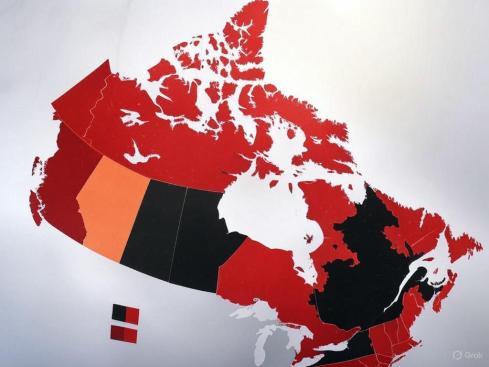
The Liberal Party of Canada’s (LPC) strategy of proroguing Parliament, seemingly to bide time for external political currents like Trump Derangement Syndrome to shift public sentiment, is a calculated maneuver that reeks of opportunism. By suspending legislative proceedings, the Liberals create a convenient pause, allowing them to sidestep immediate accountability while waiting for a wave of anti-Trump sentiment to bolster their image as a preferable alternative to the Conservative Party of Canada (CPC). This approach hinges on the hope that Canadians, distracted by U.S. political chaos, will overlook the LPC’s own inconsistencies and rally behind them as a bulwark against perceived extremism. It’s a crafty exploitation of timing, leveraging international headlines to mask domestic shortcomings, but it betrays a cynical reliance on external factors rather than a principled stand.
The LPC’s subsequent pivot to adopt key planks of the CPC platform—eliminating GST on new homes, scrapping the carbon tax, and revoking the capital gains tax—further exposes their strategy as a shameless theft dressed up as pragmatism. These policies, long championed by the Conservatives under Pierre Poilievre, were once derided by the Liberals as impractical or regressive, yet now they’re conveniently repackaged as bold, voter-friendly moves under Mark Carney’s leadership. This isn’t adaptation; it’s a bald-faced grab at populist appeal, executed with a sleight of hand that assumes Canadians won’t notice the hypocrisy. The Liberals’ willingness to jettison their own ideological moorings—once centered on progressive taxation and climate action—demonstrates a craftiness that prioritizes electoral success over coherence, revealing a party more devoted to power than to any governing philosophy.
This unctuous display underscores the LPC’s unflinching and unethical commitment to clinging to power at any cost, even if it means sacrificing integrity. Proroguing Parliament to dodge scrutiny, waiting for Trump-related hysteria to tilt the field, and then pilfering their rival’s playbook isn’t just strategic—it’s a slimy betrayal of public trust. It paints the Liberals as a party willing to bend any principle, adopt any stance, and manipulate any situation to avoid losing their grip on Ottawa. While the tactic may prove effective in the short term, especially with polls showing a Liberal surge as of March 22, 2025, it leaves a lingering stench of desperation and dishonesty, suggesting that for the LPC, the ends will always justify the means, no matter how greasy the path.

The Tesla backlash of March 2025 and the Bud Light controversy of 2023 both ignited swift, ideologically charged consumer reactions amplified by social media. Bud Light’s woes began with a Dylan Mulvaney ad, sparking a conservative boycott that cratered sales by up to 26%, while Tesla’s stem from Elon Musk’s Trump ties, alienating liberals and moderates as its stock plummeted over 40%. Both cases show how fast brand loyalty can erode when politics collide with commerce.
Yet, the responses differ sharply in tone and tactics. Bud Light faced a peaceful, effective boycott—think Kid Rock’s viral gunplay—focused on wallets, not violence, with sales dipping hard but stabilizing later. Tesla’s backlash has veered into chaos, with arson and vandalism targeting cars and dealerships, reflecting a rawer fury possibly fueled by Musk’s outsized persona and Tesla’s physical presence as a punching bag. The right shunned Bud Light; the left now torches Tesla.
Bud Light retreated, tweaking its image to appease critics, while Musk doubles down, flaunting Teslas at the White House amid Trump’s support. The beer brand took a hit but survived as a commodity; Tesla’s premium status and Musk’s defiance make its crisis more existential, blending economic rejection with a destructive edge. These sagas reveal how political tribalism can punish brands—one with a cold shoulder, the other with Molotovs.

So much of the discussion around DEI is people arguing about two or more very different ideas of what DEI is. Let’s investigate that problem – like many of the situations we face as a society today much of the furor is being caused by have multiple definitions of the same idea.
Polysemy—the fact that words or concepts like DEI (Diversity, Equity, and Inclusion) can have multiple meanings—does indeed complicate discussions about it. Supporters might define DEI as a noble effort to ensure fairness and opportunity for all, as seen in your earlier examples (e.g., accommodations for disabled neighbors or pregnant friends). Critics, however, might interpret it differently, focusing on its implementation or unintended consequences. Below is a 5-point breakdown of why DEI, as commonly applied, might not be a good thing for society, while acknowledging this definitional divide and approaching the critique thoughtfully.
1. It Can Prioritize Group Identity Over Individual Merit
-
Critics’ View: DEI often emphasizes categories like race, gender, or disability status, which can shift focus away from a person’s skills or qualifications. For example, hiring quotas (real or perceived) might lead to someone being chosen to “check a box” rather than based on their ability.
-
Supporters’ Definition Clash: Supporters might say DEI is about removing barriers, not enforcing quotas—like ensuring the autistic barista gets a fair shot. But when DEI translates into policies that seem to favor group outcomes over individual effort, it risks alienating those who value meritocracy, creating resentment instead of unity.
2. It May Undermine Equal Treatment Under the Guise of Equity
-
Critics’ View: Equity, a core DEI pillar, seeks equal outcomes rather than equal opportunities. This can lead to unequal treatment—e.g., giving extra resources to one group while others receive less, even if their circumstances differ due to personal choices or chance. Critics argue this contradicts the principle of fairness it claims to uphold.
-
Supporters’ Definition Clash: Supporters might frame equity as leveling the playing field (e.g., accommodations for a pregnant friend via FMLA). Yet when DEI pushes beyond legal protections into preferential policies, it can feel like reverse discrimination to those outside the targeted groups, fueling social division.
3. It Risks Oversimplifying Complex Social Issues
-
Critics’ View: DEI often reduces multifaceted problems—like poverty, education gaps, or workplace struggles—to identity-based solutions. For instance, a veteran’s employment challenges might stem from PTSD or lack of training, not just their veteran status. DEI’s broad brush can miss these nuances, offering symbolic fixes rather than addressing root causes.
-
Supporters’ Definition Clash: Supporters might argue DEI raises awareness of systemic barriers (e.g., for the Down syndrome bagger). But critics contend that awareness alone, without tailored solutions, can become performative, leaving deeper issues unresolved while claiming progress.
4. It Can Foster Resentment and Polarization
-
Critics’ View: When DEI initiatives spotlight certain groups for special attention, others may feel excluded or unfairly judged. For example, a non-disabled worker might resent extra accommodations for a colleague who works fewer hours, even if those accommodations are fair. This breeds a “zero-sum” mindset where one group’s gain feels like another’s loss.
-
Supporters’ Definition Clash: Supporters might see DEI as uplifting everyone (e.g., ensuring the disabled neighbor thrives). Yet if the messaging or execution seems to pit groups against each other, it can erode trust and cohesion—counter to the inclusive society supporters envision.
5. It May Encourage Dependency on Institutional Fixes Over Personal Agency
-
Critics’ View: By framing systemic change as the solution, DEI can unintentionally discourage individual initiative. If people expect workplaces to adapt to every need (beyond reasonable accommodations), it might weaken resilience or accountability—like assuming a job should mold to you rather than you rising to meet its demands.
-
Supporters’ Definition Clash: Supporters might say DEI empowers people (e.g., giving the autistic barista tools to succeed). Critics, though, worry that over-reliance on DEI frameworks could shift responsibility from individuals to institutions, reducing self-reliance and long-term societal strength.
Closing Thought:
The polysemy of DEI is key here. Supporters often define it as a compassionate, inclusive ideal—helping the marginalized shine, as in your examples. Critics, however, see it as a bureaucratic or ideological tool that, in practice, can distort fairness, divide people, and oversimplify reality. The tension lies in how it’s applied: a supporter’s vision of DEI as “opportunity for all” might not match the critic’s experience of it as “preference for some.” This gap suggests society might benefit more from targeted, practical solutions (like existing laws or community efforts) than a catch-all framework that means different things to different people.
Mark Carney’s daughter Sasha, frequently spun by the media as a cherubic “kid” in pigtails, is actually a 24-year-old Yale grad churning out freelance pieces in Brooklyn. Forget the teddy bear; she’s been writing about her non-binary identity and Tavistock Clinic visits since her teens. But why bother with accuracy when you can slap a “kid” label on her? It’s a cute, cuddly way to dodge her real story and keep Carney looking like the wise, protective dad—while hinting he’s all in on the gender ideology train that says identities can be as fluid as his old Bank of England policies.
This isn’t just lazy journalism; it’s a calculated twofer. Infantilizing Sasha strips her of agency—bye-bye, complex debates about her non-binary life or Yale-honed views—and doubles as a dog whistle that Carney’s a card-carrying believer in gender ideology. Why else let the “kid” narrative slide unless he’s nodding along to the idea that biology’s just a suggestion? It’s a slick move: keep her a helpless prop, sidestep the messy adult reality, and signal his progressive cred without him ever saying a word. Meanwhile, the media gets to skip the nuance and bank on us not noticing.
The deceit’s purpose is as clear as Carney’s Goldman Sachs resume: control the story, polish his image. A “kid” Sasha keeps the spotlight on him as the steady patriarch, not some guy whose grown daughter’s out there challenging norms he’s implicitly endorsed. It’s a bonus that this manipulation paints him as a gender ideology ally—perfect for the woke crowd—while the media rakes in clicks from the saccharine family vibe. They’re not clueless; they’re just betting we’ll swallow the sugarcoated lie over the sharper truth of a 24-year-old living their own life.











 bleatmop
 Mystro
 The Arbourist


 Dead Wild Roses
Your opinions…